Worth every moment spent with it, The Daily Socialist’s Robert Dvorak gives us an evocative tale of the beginnings of Chicago’s epic 1910-11 garment workers’ strike, ‘The Strike of the 50,000.’ A master class in labor reporting.
‘The Chicago Garment Workers Strike’ by Robert Dvorak from The International Socialist Review, Vol. 11 No. 6. December, 1910.
PERSONS who look upon the present Garment Workers’ strike in Chicago as a pure and simple labor battles are securing only an outward glimpse of the situation.
The strike itself, truly enough, was brought on by a revolt of the poor under paid girls and boys, men and women. It was a simultaneous upheaval of over 41,000 garment workers brought on by sixteen girls against petty persecution, low wages, abuse and long hours, an upheaval, unorganized at the start, which later took on the form of a fight for recognition of the union.
Behind the scenes, however, shut off from the public view, there is a mortal combat of big and small interests going on. A combat that is likely to settle, once for all, a battle of many years’ standing.
Like every other trustified industry, the production of clothing was at first limited to a number of independent manufacturers. These concerns unhampered by much competition grew to giant proportions.
Chicago, however, grew as rapidly as did the concerns. The city was soon divided into neighborhoods of various nationalities. Among these nationalities there were many venturesome persons who went into the tailoring business and made it a point to appeal to people of their own tongue.
Thus it was that gradually the business of the big concerns began to decrease. The more the city grew in population the more small tailor shops sprang up until they were growing, it seemed, over night, like mushrooms.
The big tailors tried various ways of curbing the slump in their business. They increased their volume of advertising. They hired agents. They tried every method known to the business world, but they failed to stop the growth of the cockroach tailors.
Then it was that the consolidation plan was resorted to. The big tailors held a meeting. After several meetings a new concern—one which was expected to curb the growth of the small fellows—or at least render them harmless—was born. This concern was the Chicago Wholesale Clothiers’ Association.
All of the big tailoring concerns joined the association but one. This one was the Hart, Schaffner & Marx Company, the largest of the tailoring concerns in Chicago and probably in the United States. This concern refused absolutely to have anything to do with the association, claiming that it would not have its policies dictated by any one but its own stockholders.
Backed by millions of dollars, the association began a campaign of elimination. Agencies were established in different parts of the city and outfitted with salesmen of the nationality prevalent in the particular location. In this way the little struggling merchant tailor gradually began to be pressed against the wall until from sheer despair he was forced to accept work from the association. In this way the small tailors became contractors.
Hart, Schaffner & Marx, the renegade firm being fought by the entire association, plunged into the fray with all of its marvelous resources. It also established agencies, but instead of limiting itself to the city the firm spread itself all over the country. Almost every town has today a store known as the home of the Hart, Schaffner & Marx clothes.
The fight of the association against Hart, Schaffner & Marx was a hopeless one. Everywhere the renegade firm scored a victory until the combined powers gradually weakened in their fight and settled down to a campaign of tactics and strategy.
As an initial move, the association resorted to paying the contractors a higher price for work done and gloated over the expected victorious move. For a time it looked as though the association had scored a point, but all of a sudden Hart, Schaffner & Marx sprang a surprise that came like a thunderbolt from a clear sky.
Forty-eight shops were opened by the renegade firm. All of the work was taken away from the contractors. Over 8,000 tailors were hired and placed in the shops. And again the association ground its teeth with disappointment and rage. Once again the lonely renegade had scored on the combined interests and brains.
Finding itself defeated, the association began to vent its rage on the poor scape goat of a contractor. It cut the prices and raved over even the best work done. The contractor in turn cut the wages of his tailors and charged them for even insignificant errors. Thus little by little the germs of rebellion were being installed in the shops, waiting only for a proper moment to grow into threatening proportions.
Hart, Schaffner & Marx, finding itself independent and thoroughly entrenched, decided to reap a harvest while the sun shone. It began by cutting the wages of its employes at every opportunity. The foremen picked out the speediest workers in the shop and made pacemakers out of them by boosting the piece work rates until the highest figure possible was reached.
The foremen and superintendents were given bonuses every time they increased the productive capacity of the shop without increasing the payroll. Whenever a foreman happened to increase the number of garments produced in his shop and also decreased the expense of the firm he received an even higher bonus. This made the foremen money crazy and established a system in the shop that brought suffering and may yet be the means of damaging the firm itself.
Driven crazy with the bonus plan, the foremen resorted to the vilest methods ever installed in a shop. They gave orders to the floormen to shut off the water before and after dinner so that the employes, the majority of whom in many shops were girls, would have no occasion to leave their work.
A pass system was established in most of the other shops, where the employes objected strenuously to having the water shut off, and every worker had to first secure a pass in order to get a drink. Girls who were looked upon as leaders of the other workers in the shop were given positions as foreladies, with instructions to get out as much work as possible.
Bonuses were held in front of the foreladies also and they in turn generally did their best to grind the employes in order to win a bonus.
Gradually the employes in the shops began to gain courage and dissatisfaction began to walk rampant in the establishments. Then in order to smooth the ruffled feathers of the workers the piece work system was resorted to. The speediest and most experienced workers were placed on a piece-work basis. Their rates were increased from week to week until the high water mark was reached.
As soon as the foremen saw that the pace-maker was doing as much work as he or she was capable of, the rate was gradually lowered, but the same amount of work was required. The dissatisfaction, which had been quieted temporarily with the increased rate, began to grow once more.
There were complaints from married men and married women about the low wages. Person after person pleaded for a higher salary, complaining that the money earned was far from sufficient for a livelihood.
Girls and women who were earning but three to six dollars a week were told to take some of the work home with them in the evening. Many did this and worked until late into the night in an attempt to earn sufficient money to live on during the week.
Many of the girls working with needles sewing on buttons or other work, bought hundreds of needles at one time and threaded these at home so as to be able to work faster in the shops and thus make more money.
As soon as the girls made what the firm regarded as too much money, they forced the button sewers to draw the needle through the button six times in stead of three, as had been the custom. This increased the work on the button without increasing the pay. The girls objected, but were dismissed for their pains and blacklisted in many instances so that they could not secure work in any of the other Hart, Schaffner & Marx shops.
The rate and wage cutting system was becoming so general that secret meetings of the tailors were not uncommon. The indignities showered upon the employes were reviewed and discussed at these meetings and the rebellion gained a new impetus.Not satisfied with cutting the rates and wages of the tailors, the firm instituted a system whereby the employes were charged from five to fifteen dollars for the least damage done to a garment. Lost spools, bobbins and other implements were charged up to the workers and taken out of their wages.
During the slack months, the piece workers were forced to report for work. They sat around in the shops, work or no work, earning no money, but stifling in the close, dust laden atmosphere of the fabric smelling shops.
When the pre-season months, those that constitute the busy time in the clothing industry, arrived, things changed as if by magic. Every employe was driven at top speed. Girls who had worked late into the night at home, threading needles or doing other work in order to make more money and sidestep the ten-hour law, came down to work next morning almost ill. None, however, were ever allowed to go home when sick.
Girls who asked permission to go home when sick were given some powders—good for every ailment from an earache to a sick stomach. If these powders failed to cure and the girl fainted, as happened several times each day, a doctor was summoned. But never, under any circumstances, was a girl or boy given permission to go home when sick, at least not until more substantial evidence than a sickly appearance or a mere statement was given.
The fine, or charge system, instituted in the shops was the most abominable possible and was the basis of most of the grievances since listed by the strikers. Every employe was forced to punch the time clock three times a day. Failure to punch the clock cost the employe 25 cents.
Work in the shops began at seven thirty. The clocks had to be punched five minutes before the starting time and the punchers be upstairs at their respective places ready to work. If any of the employes punched the clock one minute late, he or she was “docked” fifteen minutes’ time.
In order to avoid being “docked” the employes had to be down at the shops at least fifteen minutes before starting time. Some came even earlier. This was just what the company wanted. As long as the workers came down earlier there was no need of putting in extra elevators and clocks.
The cutters suffered as many indignities as did the tailors. Fifty cents was being paid the cutters for the cutting of one suit. They were not supposed to cut more, but the foreman piled up the goods four and five layers high and made the price rate read, 50 cents for one cut. In this way the cutters made five garments ready for the tailors for the price of one.
Less goods was given the cutters to cut from. The inch of goods given extra, above the size required for a suit, was taken off and the cutters forced to spend more time matching the goods in color and stripe.
If a presser even slightly clouded the garment with his iron he was charged the full price of it. When the cutter even slightly cut into the garment line of the goods he was charged the full price of the coat or pants.
In one instance where a poor tailor, receiving fourteen dollars a week, slightly damaged three pair of pants, the company charged him $12. He had a family and could not afford to lose almost a whole week’s pay. The employes took up a collection and later raffled the trousers off among themselves. There was no harm done them and the winner is wearing them in public every day.
It was such petty persecution by the foremen and cutting in pay that finally brought the great revolt. It came when a foreman attempted to make a forelady from one of the speediest girls in his shop.
The girl had no objection to being a forelady, but she did refuse to accede to the bonus system offered her by her boss. She would not listen to a cutting of the piece work rate of the girls in the shop and absolutely refused to ask them to work at home. She rebelled and finally threw the job at the feet of the boss. This girl was persecuted from that time on.
One day sixteen of the girls in the shop felt ready to “do or die.” The leaders, Clara Massallotti, Bessie Albramovitch [Abramowitz], Rosie [Annie] Shapiro, had the girls well in hand. Clara Massallotti, only 17 years old, came to the boss and told him that she had enough of the persecution. He laughed at her and told her to go back to work. They argued back and forth until the girl pulled out a little whistle. Before the boss could stop her she had blown it.
Sixteen hands dropped their work. Sixteen aprons went off as one and sixteen girls put on their wraps and left the shop. The boss raved, argued, threatened and entreated. His voice fell on deaf ears. The girls walked out of the building determined to enter it never again until better conditions had been established.
With tears in their eyes the girls walked into the office of Robert Noren, president of district council N0. 6 of the United Garment Workers, 275 La Salle street. To him they told their story. He listened patiently and saw that there was a good chance of striking for a union. He telegraphed his opinion to New York.
The sixteen girls did not remain idle. They went to the other shops and told their story. The result was that the next day almost a thousand girls were on strike in the various shops. They told other girls and before the week was over 2,000 girls were walking the streets of Chicago, blowing whistles and calling others to their aid.
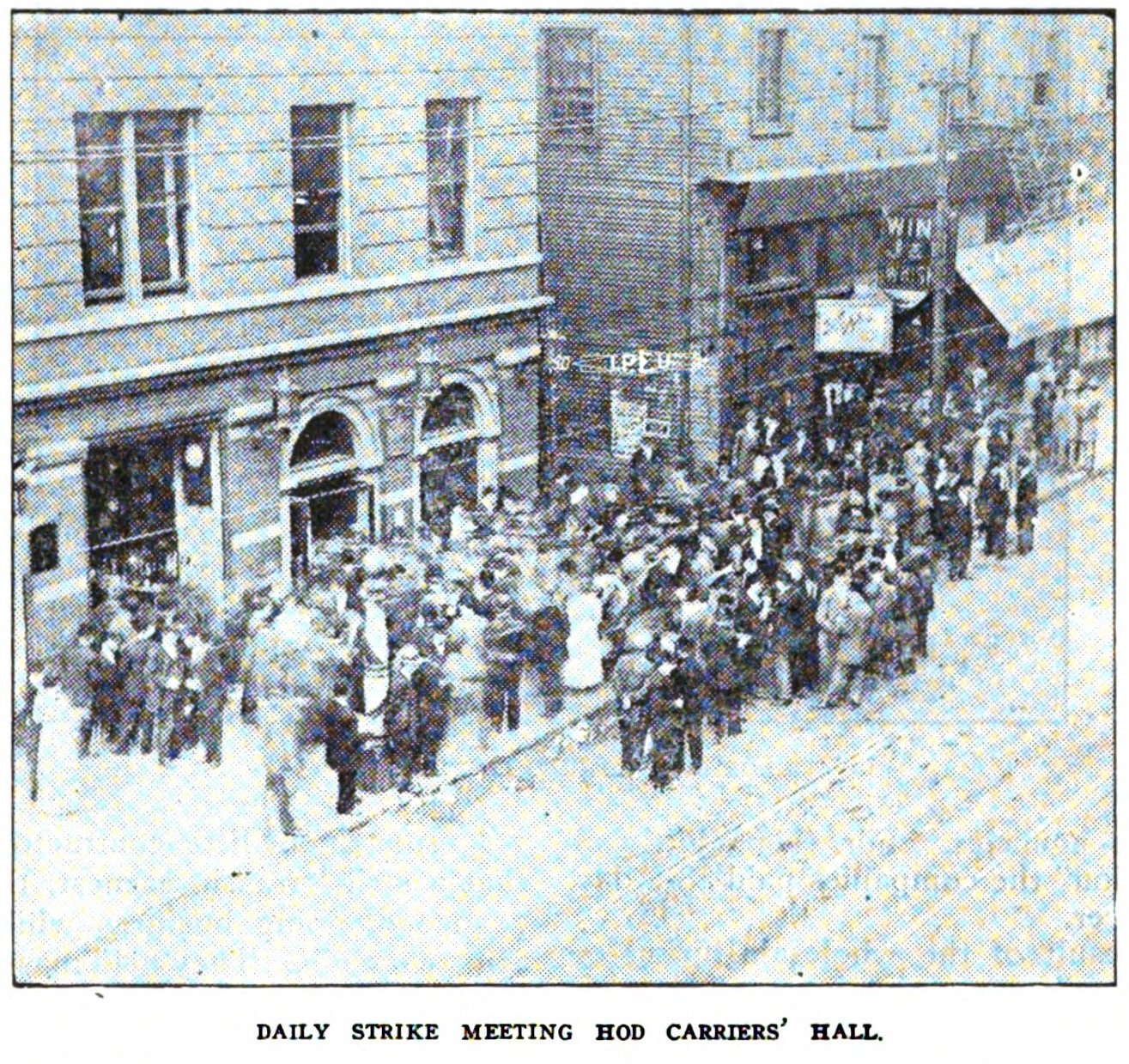
Then came a telegram from New York, and with it word from T. A. Rickert, International President, authorizing a strike of the garment workers. President Noren took immediate action and the thousands of tailors who had been waiting impatiently for such an order, walked out. Before the strike had lasted three weeks 41, 000 garment workers had left the shop.
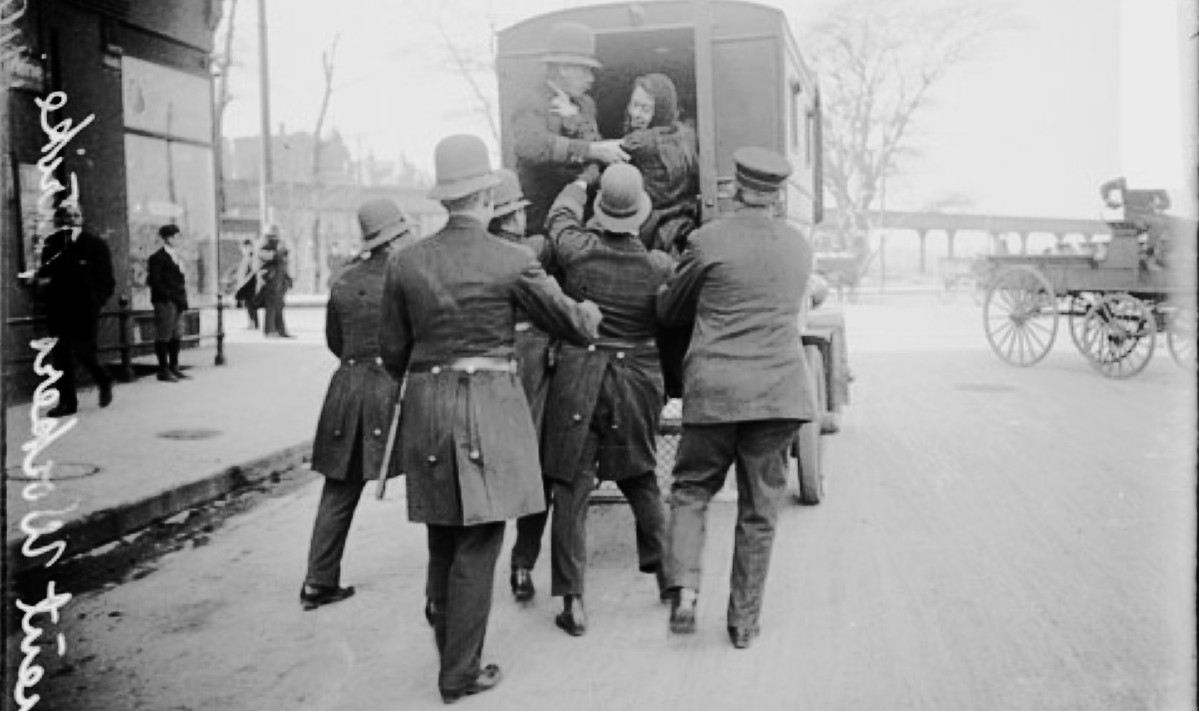
Meanwhile the manufacturers had not been idle. A call was sent into the police headquarters. The police, as has been their habit for years, responded willingly. Foot and mounted policemen were assigned to strike duty and persons who dared to stop near any of the strike bound shops did so at the risk of broken heads or ribs.
Not satisfied, the strike bound concerns hired private sluggers from the McGuire and White and the Mooney and Boland detective agencies. For this additional “protection” the companies paid $8 a day per slugger.
The result of the wholesale hiring of “protection” was a riot in every part of the city each day. Strikers heads, and even those of people not interested in the struggle, were broken on a wholesale basis each day with clubs and revolver butts, As many as 40 persons were arrested at one time, on their way home from a mass meeting.
At least three girls were brutally clubbed in the streets for daring to reprimand policemen for their brutality. One girl, Stazie Kunes, received a smash from one policeman, number 2453 from the Hinman station, which crushed her lower jaw and broke her teeth.
Hundreds of cases of brutality could be listed in the seven weeks of the strike. Over 275 persons were arrested. Nearly 50 were beaten so bad that they had to receive medical treatment. At least ten of the strikers have been in bed ever since the first week of the strike.

The brutality of the police and sluggers hired by the strike-bound concerns aided the strikers in one respect. It secured them the sympathy of the public and many influential persons. Now the strikers have determined to never go back to work until the firms agree to recognize the union.
As soon as the little contractors realized that a strike was in earnest, they saw a chance of doing business while the big firms were idle. They held mass meetings in their various localities and voted to stick with the strikers. They unionized their shops by signing up with the union and began to manufacture clothing as fast as the shop forces would allow.
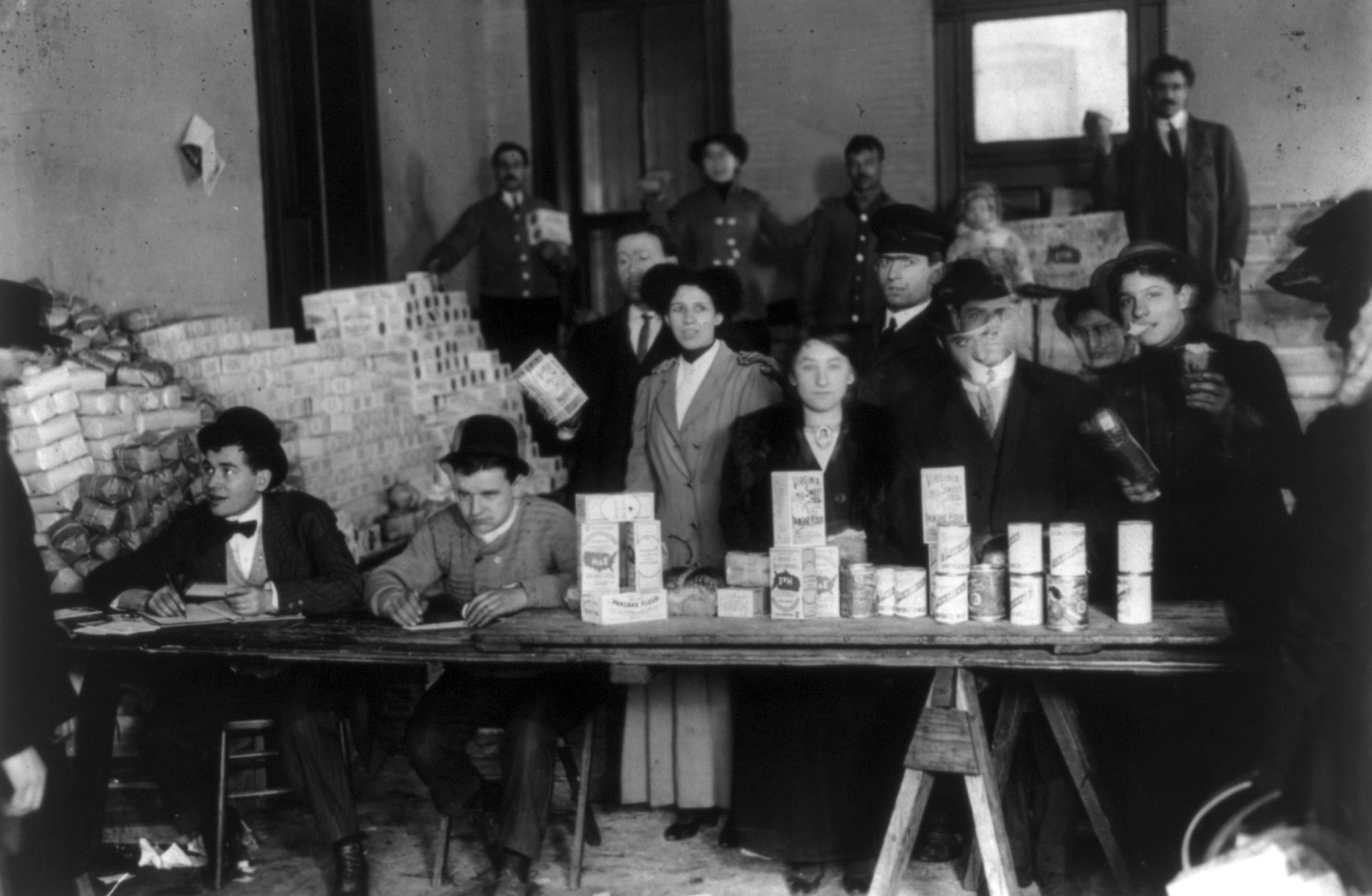
Many of the small tailors even went so far as to secure financial aid for the striking garment workers and urged the various business men in their neighborhoods to do the same. They did this with the hope that Hart, Schaffner and Marx would be defeated and would be forced to unionize its shops.
The union, from the very first week of the strike, realized that all of its energy had to be directed against Hart, Schaffner and Marx. It realized that the big concern was the leader. If it was unionized the others would soon follow. Therefore, all forces at the present time and throughout the strike have been looking to Hart, Schaffner and Marx and its forty-eight shops. The other 100 or more strike-bound concerns are practically ignored. They are the fringe hanging unto the main garment—Hart, Schaffner and Marx.
While the little fellow is lining up with the strikers in the fight, the Clothiers’ Association is forced to line up with the Hart, Schaffner and Marx concern, but it is lining up shrewdly, realizing that sooner or later the renegade will have to enter the association, secretly, however, hoping that it will be wiped out of the field of competition.
The International Socialist Review (ISR) was published monthly in Chicago from 1900 until 1918 by Charles H. Kerr and critically loyal to the Socialist Party of America. It is one of the essential publications in U.S. left history. During the editorship of A.M. Simons it was largely theoretical and moderate. In 1908, Charles H. Kerr took over as editor with strong influence from Mary E Marcy. The magazine became the foremost proponent of the SP’s left wing growing to tens of thousands of subscribers. It remained revolutionary in outlook and anti-militarist during World War One. It liberally used photographs and images, with news, theory, arts and organizing in its pages. It articles, reports and essays are an invaluable record of the U.S. class struggle and the development of Marxism in the decades before the Soviet experience. It was closed down in government repression in 1918.
PDF of full issue: https://www.marxists.org/history/usa/pubs/isr/v11n06-dec-1910-ISR-gog-Corn-OCR.pdf
 Revolution's Newsstand