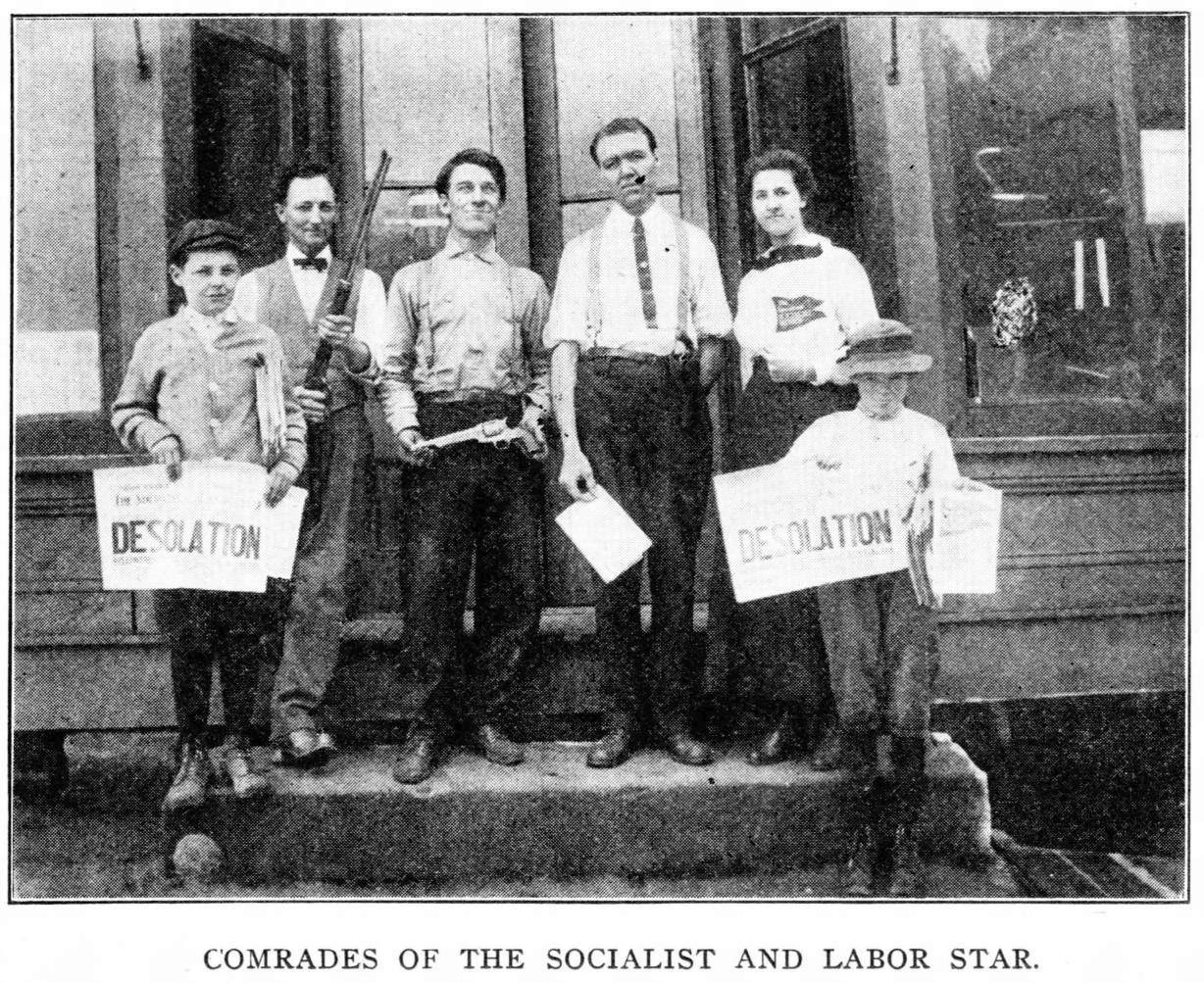
An important article setting some history straight by West Virginia Socialist and an editor of the Labor Argus repudiating Socialist Party grandees, including Eugene Debs and Victor Berger, for ‘whitewashing’ the U.M.W.A. leadership’s betrayal of the red neck miners in their ‘settlement’ of the Paint Creek/Cabin Creek War of 1913.
‘Betrayal of the West Virginia Rednecks’ by Fred H. Merrick from International Socialist Review. Vol. 14 No. 1. July, 1913.
IT WILL be hopelessly impossible within the narrow confines of this brief article to give the reader more than a skeleton of the real “inside” story of the great strike raging in West Virginia, which the greed of coal operators, subserviency of political officials, especially the courts and sheriffs, brutality of heartless degenerates known as “Baldwins” or “mine guards,” drum-head court martials of the militia, duplicity of their own attorneys, misrepresentation by newspapers, treachery of many officials of their own union and the crowning act of all, the betrayal or misrepresentation of their cause to the Socialists of America by a committee elected by the National Committee to investigate conditions in West Virginia—all have utterly failed to break.
To all the horrors which a strike of a year’s duration in tents on the bleak winter mountains of “Little Switzerland” means, was added the base conduct of those labor and so-called “Socialist” parasites who today make their living as advisors of the toilers without themselves undergoing the privations incident to toil and revolution. Volumes could and undoubtedly will yet be written on this phase of the West Virginia struggle which is far more vital than the spectacular battles which have been described again and again.
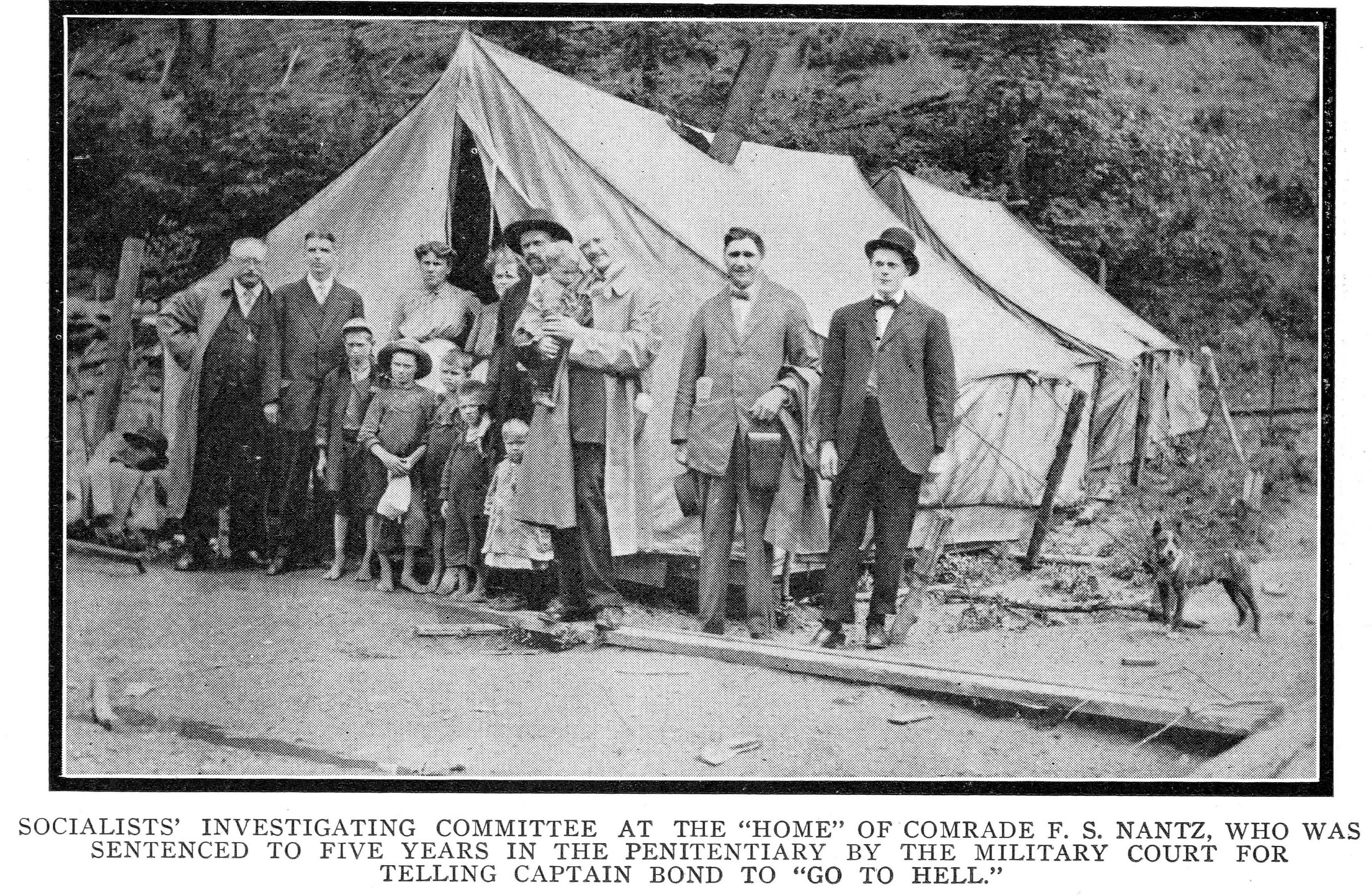
It is not unfair to say that the facts merely suggested here will never find publicity through the orthodox labor or Socialist press, but if the reader has his class conscious curiosity sufficiently aroused by this brief resume to thoroughly investigate the sordid tale of the betrayal of the West Virginia “red necks” as many of the officials and organizers of the U.M.W. of A. contemptuously refer to the West Virginia miners, the purpose of this story will have been accomplished. Before passing judgment on the harshness of some of the terms used in this article examine each statement of fact carefully and see if such conduct should not be described in terms calculated to arouse the militant toilers of America, whether the object be our formerly “beloved ’Gene,” who seems to have fallen by the wayside, or our genial friend from Milwaukee.
The West Virginia strike may roughly be divided into three distinct stages:
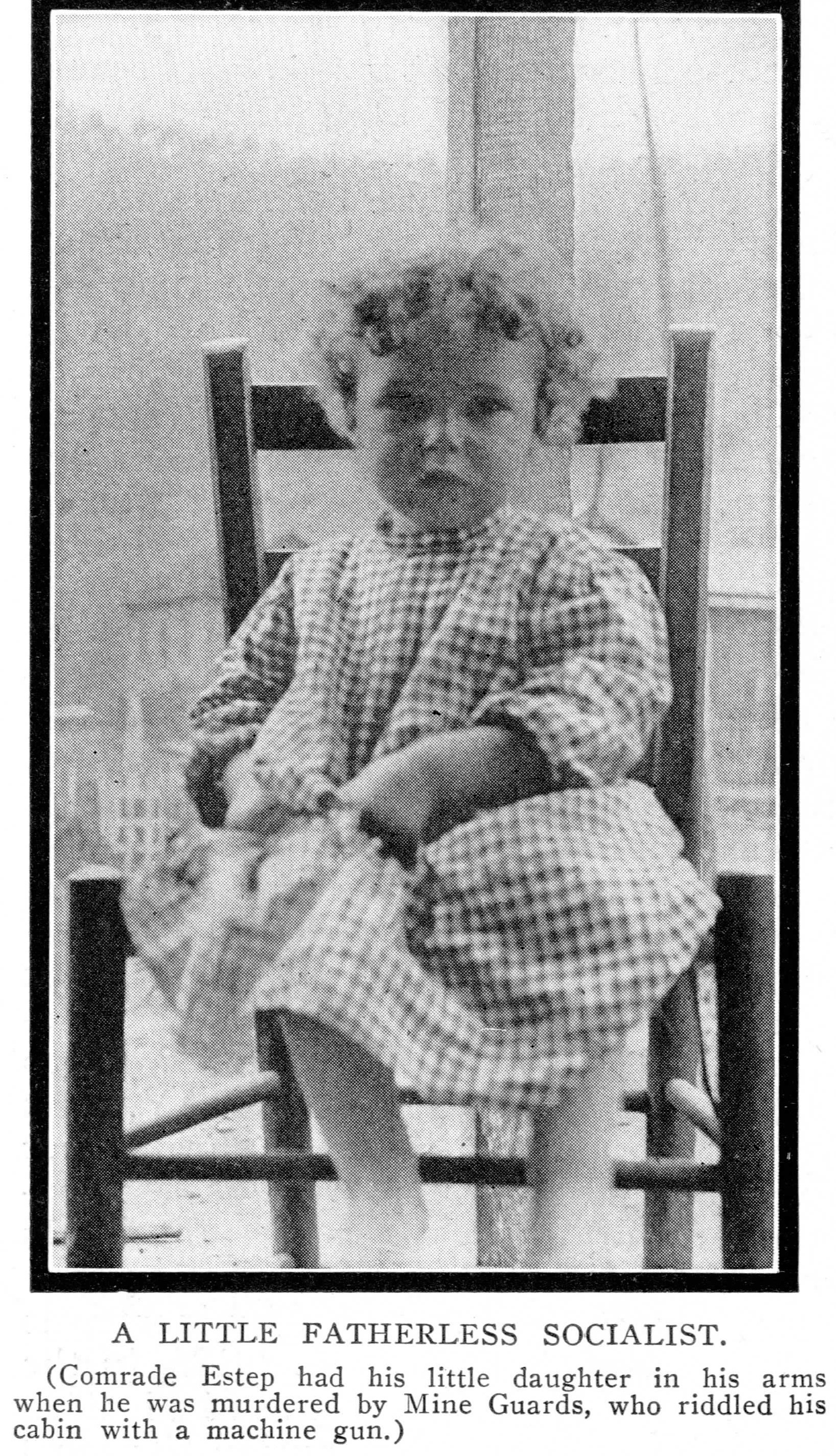
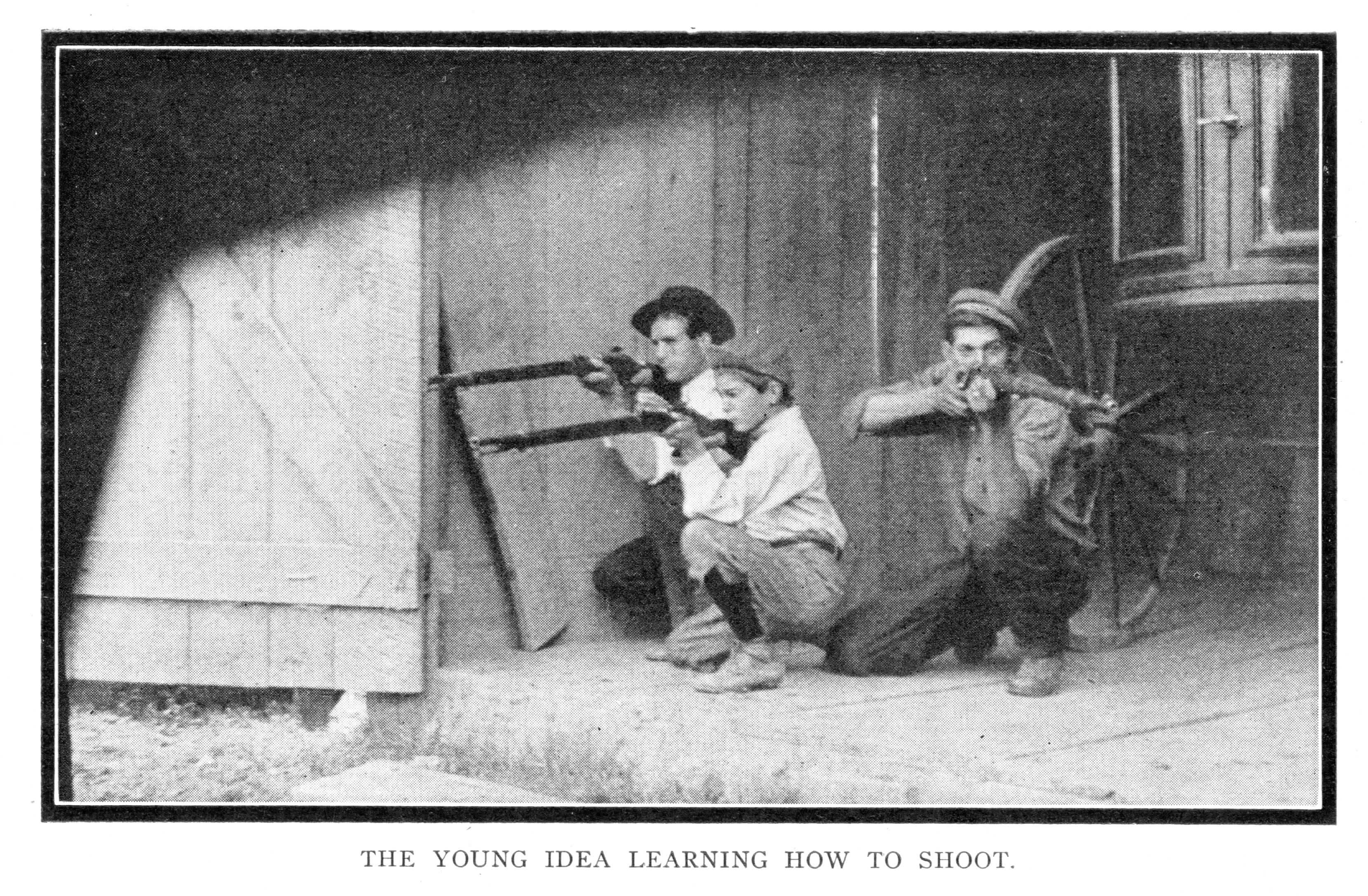
1. The unorganized strike stage when the miners aided by the local Socialists made their valiant fight at a time when the officials of the U.M.W. of A. did absolutely nothing to help. Towards the latter part of this period “Mother” Jones appeared and helped her “boys” to “fight like hell.” The method of breaking the strike employed during this time was confined entirely to the physical brutality of Baldwin mine guards and the less efficient National guard or militia. The miners were able to handle this sort of “suppression” with some first-class “direct action.” During this period the miners scored a decisive victory.
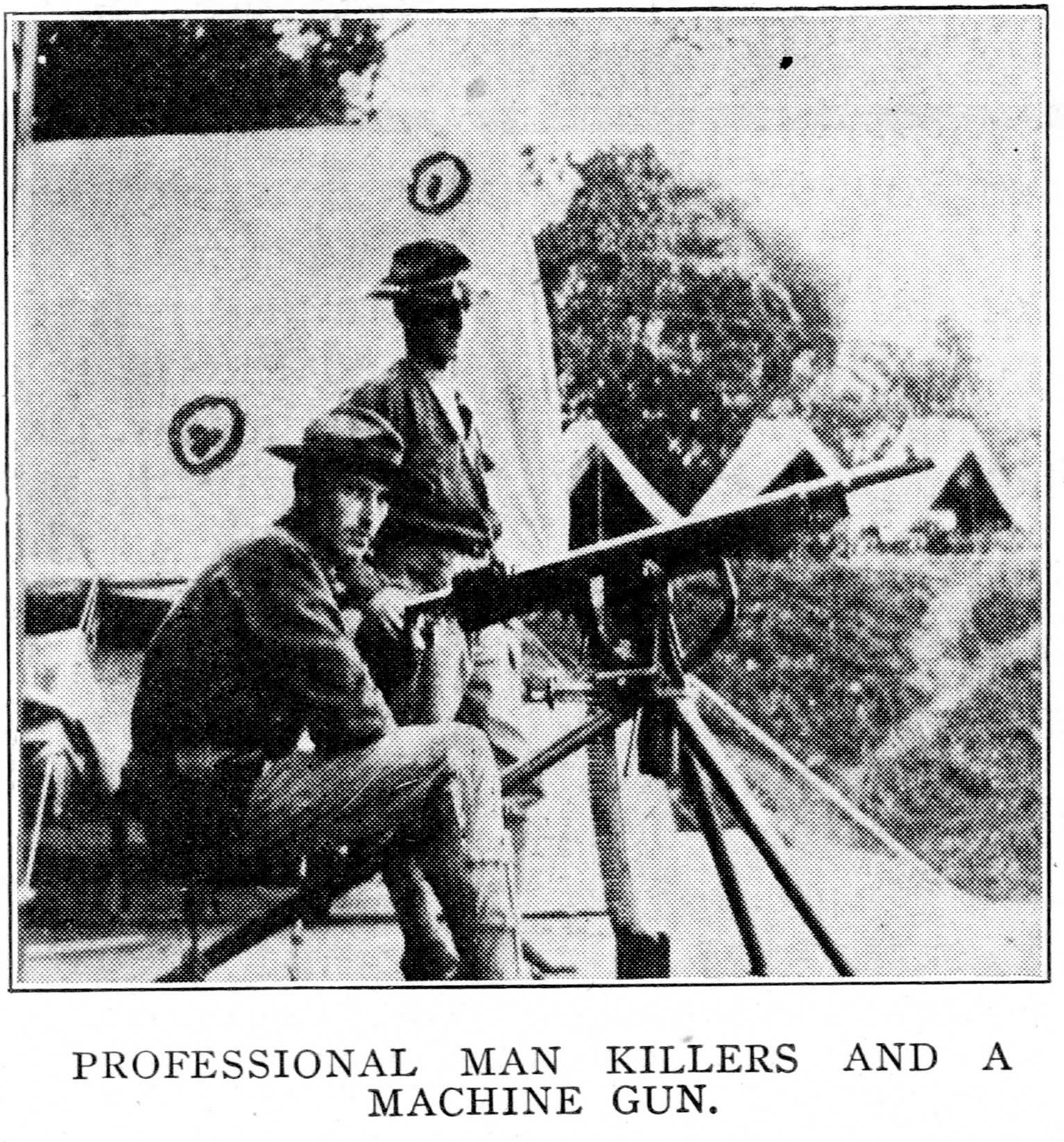
2. Immediately following election in November different tactics were employed. Certain treacherous officials of the union deliberately asked for martial law. Following this they attempted to compromise the strike which the militia was unable to break alone. The climax of this period dominated by the officials of the U.M.W. of A. came with Hatfield’s notorious deportation ultimatum of April 27th, which was endorsed and supported enthusiastically by the officials of the U.M.W. of A. from President White down through Frank Hayes, Thomas Haggerty and Joe Vasey. However, the tactics employed of attempting to break the strike with the machine of the U.M.W. of A. failed miserably and another trick was employed.
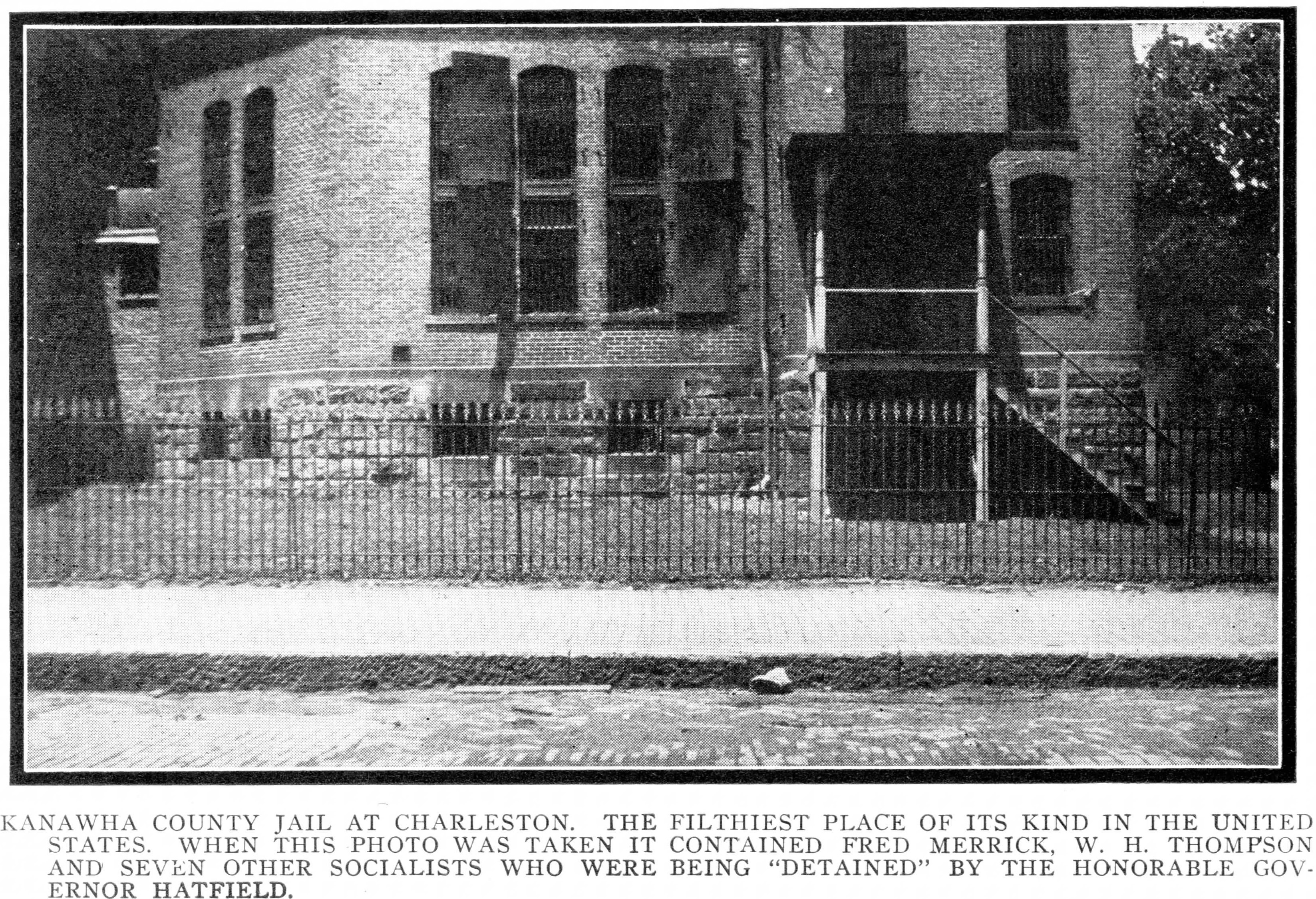
3. This period is marked by the advent of the Socialist National Investigating Committee which endorsed the conduct of Governor Hatfield for the most part thereby giving a clean bill of health to the officials of the U.M.W. of A. who had accepted Hatfield’s “settlement,” thereby becoming the agents through whom the operators hoped to accomplish a “settlement” which police brutality, the diplomacy of Hatfield and the treachery of U.M.W. of A. officials had failed to accomplish. Due to the splendid common sense education on Socialism the miners had received for two years through the columns of the Charleston Labor Argus, edited by fearless Charles H. Boswell, the miners and local Socialists received the committee not as heroes, but as ordinary human beings. They refused to accept the “settlement” because its sponsor had been whitewashed by the committee, just as before.
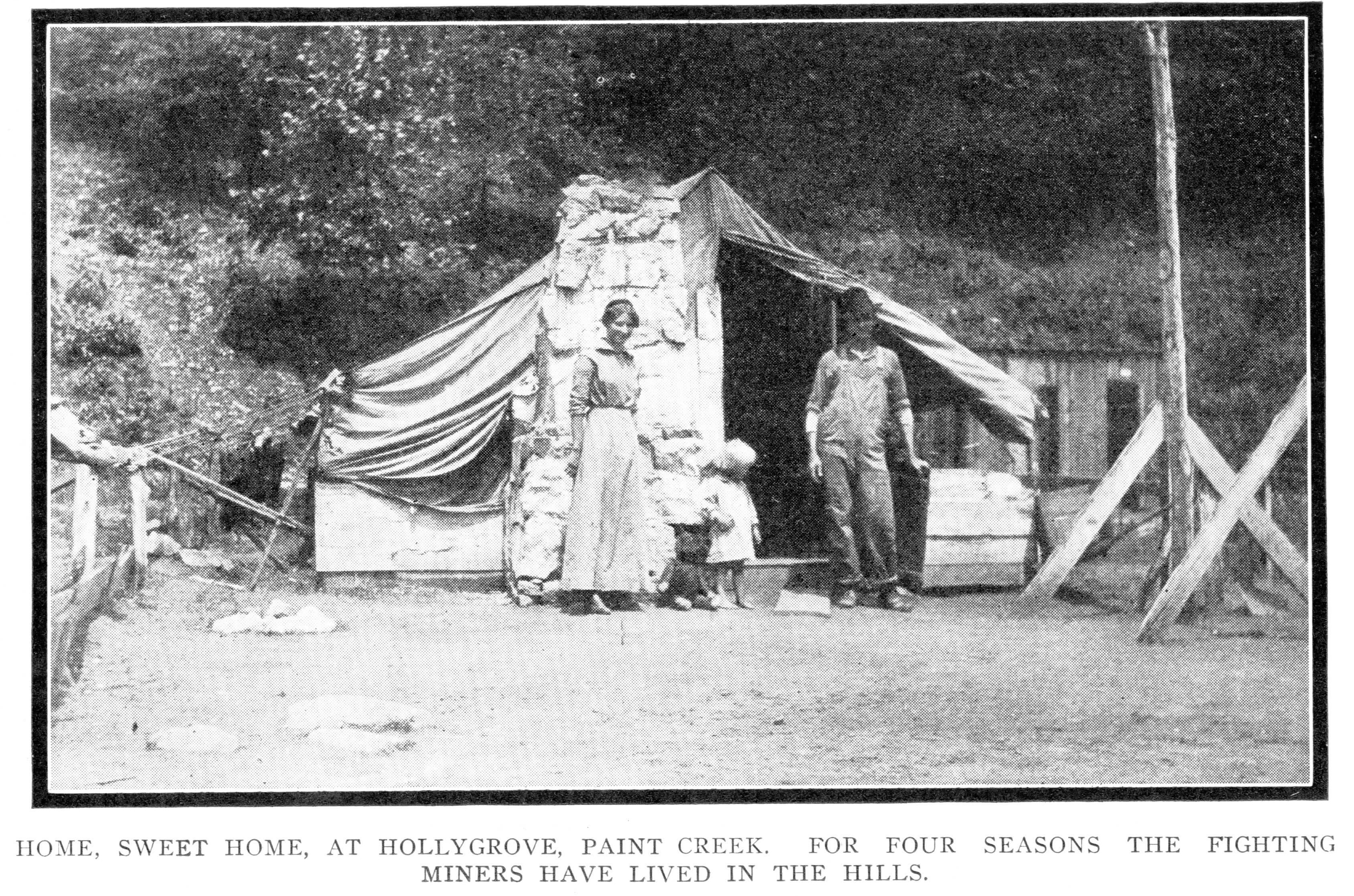
The first period has been adequately dealt with by the capitalist magazines where it received more attention than was ever given it by the Socialist press, who seemed afraid of it for some reason.
The second period is marked by successive steps of compromise which are a disgrace even to the black record of the U.M.W. of A., who have so often betrayed the West Virginia miners that it has become an old story. Let us get a birds eye view of how the machine of this organization pulled the sting out of the demands of the miners so gradually that the miners themselves did not realize that it was being done.
1. In the early Spring of 1912, a convention of miners was called at Charleston, where it was understood the demands of the miners would be the same as else- where in the United States and were to include an EIGHT-HOUR DAY. As West Virginia coal is mined cheaper per ton than any other coal there is less reason for working more than eight hours than there is in other states.
2. Another convention of miners was held in Charleston in April, 1912. In the interim the Cleveland scale had been adopted and at this convention the local officials, with the acquiescence of the national organization, persuaded the miners to modify their demands to ONE-HALF the Cleveland scale and, from an EIGHT- HOUR toa NINE-HOUR DAY. Following the strike, the miners kept up such a hot fight that the union officials were apparently afraid to attempt any more compromises until following the court martialing of “Mother” Jones, Brown, Boswell and other Socialists. Immediately after Hatfield’s inauguration on March 4th, with everyone apparently intimidated, things temporarily quiet, President White, on March 26th, walked into the Governor’s office without authority of the miners to change their already com- promised demands, and submitted a type-written proposition to the governor upon which he proposed to sign a contract binding every miner in the state of West Virginia for three years. In this proposition PRESIDENT WHITE HAD USURPED THE POWER TO DROP THE DEMANDS OF THE APRIL, 1912, CONVENTION FOR IN- CREASE EQUAL TO HALF OF CLEVELAND SCALE.
By submitting this proposition of economic demands to an officer of the political State to act as a go-between for operators and miners he had also made a very dangerous compromise. The moral effect of his act was to impress the miners with the idea the governor was a disinterested third party who would do justice to the two parties engaged in class war. Hatfield was not long in taking advantage of the opportunity offered. He called the operators in and they submitted a counter proposition in which White’s offer was still further modified. Hatfield then submitted through the press to the public a “suggestion” of settlement which was the basis the operators offered to settle on.
The National officials of the union called a convention April 22, 1913, at Charleston, of delegates from Paint and Cabin Creeks and Coal River strike zones. When this convention was convened it was found that more than 90 per cent of the delegates and two officials of the union were bitterly opposed to the governor’s proposition, which was simply the bare ultimatum of the operators. These delegates for days arose and rehearsed the year of bitter suffering as conclusive argument why they should not go back on such a basis of compromise. Day after day the officials argued and coaxed and threatened. The “pay-roll’’ worked the streets and hotel lobbies at night like ward heeling politicians, recalcitrant delegates were doped in saloons and every dirty trick known to labor union politics was attempted. On Wednesday evening Harold W. Houston, at that time Secretary of the Socialist party of West Virginia and attorney for the U.M.W. of A. made a radical Socialist speech which was applauded vigorously by the miners. He won their confidence.
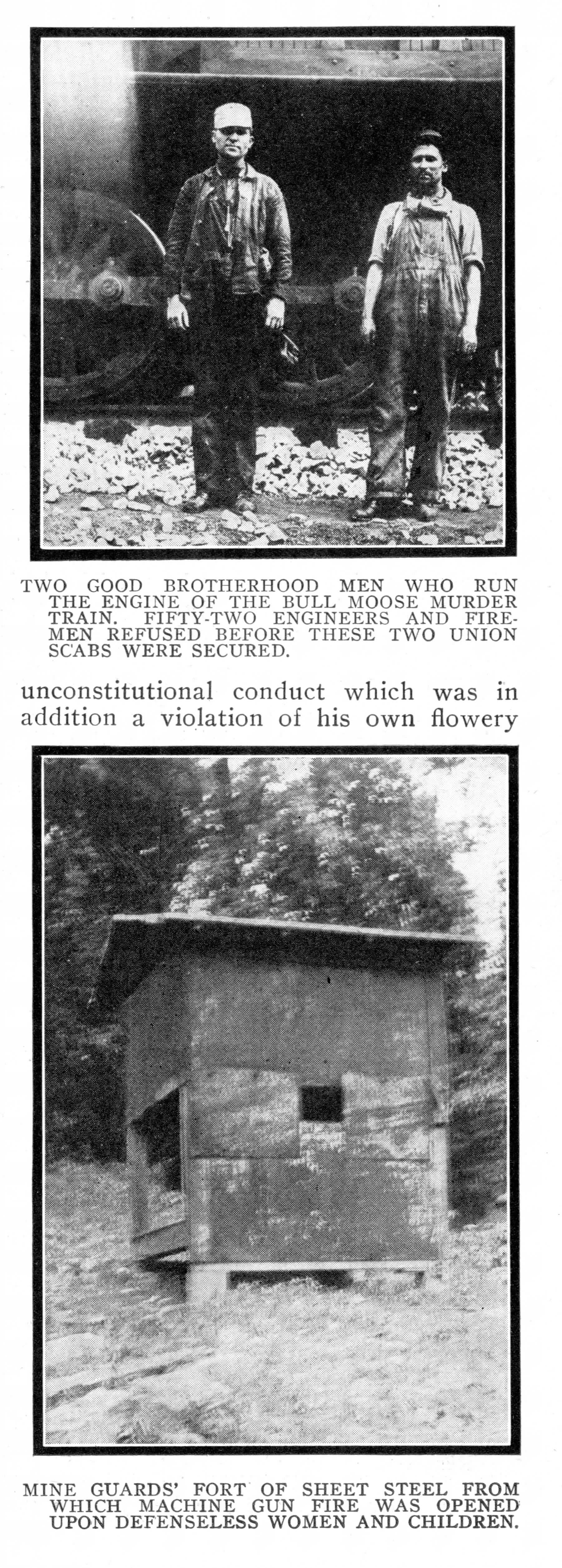
But Friday, April 25th, rolled around and the “God damn red necks couldn’t be controlled,” a prominent official put it. The miners wouldn’t accept the compromise. Hatfield became impatient over the inability of Haggerty, Vasey & Company to deliver the goods, and he issued his ultimatum of April 25. With this as a club the officials tried to scare the “red necks,” but men who had fought Baldwin guards and faced machine guns and dum-dum bullets weren’t much afraid of the threats of a Hatfield. So the last trick was pulled from the stacked cards of craft union politics. Harold Houston was approached. He was made to believe that it was the best thing for the miners to go back. He was then told that he was the only one the miners had confidence enough in to listen to and that if he would advocate their acceptance of the proposition the delegates would accede. Houston weakened and agreed that on condition that a communication be sent the governor interpreting “discrimination” to mean that no striker should be refused employment he would advise acceptance. This was done and the miners reluctantly followed the advice of their trusted lawyer “leader” and adjourned April 26th with the distinct understanding that the national officials would stand by them against any discrimination—that “all or none must return to work.”
But the operators saw that the miners had begun to weaken and they gave Hatfield to distinctly understand that the “agitators” would not be taken back. And despite the months of persecution and the imprisonment of many Socialists, there were scores more on the creeks. Hatfield, true to his capitalist interests, immediately issued his now famous 24-hour ultimatum of April 27th threatening deportation to all miners and sympathizers unless every miner in the strike zone was at work Monday morning, April 28th, and in this, distinctly said regarding the reemployment of all the strikers, “It would be presumptuous for me to tell employers whom they should employ.” Everyone understood immediately that the “agita- tors” would not get back. Hundreds refused to apply for work as being a violation of the action of the convention of April 22nd, and the solemn pledges of the national officials that they would stand by the men and support them in a continuance of the strike if they did not all get back.
Despite the governor’s outrageous and unconstitutional conduct which was in addition a violation of his own flowery promises, Joe Vasey, who had been conveniently left in charge of the situation by Haggerty, issued a statement to the press which was published Monday morning as follows: “At 9:30 p.m. Governor Hatfield called up the President at Clarksburg.” Yet with the villain responsible for these outrages present, Vice-President Hayes, whose “Socialism” has been used as a bait for the radical miners for years, introduced Hatfield to the miners in a disgustingly laudatory fashion and the governor then proceeded to make a speech characteristic of the finished politician, in which he said he was the laboring man’s governor and that “By God the interests don’t control me.”

Following this was the advent of the Socialist National Investigating Committee. This committee’s report should be reviewed at length, but that is impossible here. Harsh terms must be used in dealing with it, but ample proof can be adduced for every charge including personal witnesses if necessary.
The writer charges that when Debs says that the conduct of the committee was received with rejoicing and enthusiasm he either ignorantly or intentionally misrepresents the facts as scores of witnesses can be produced to prove the contrary.
The writer further brands as absolute falsehood the statement that the court-martialing of “Mother” Jones, Brown, Boswell, Parsons and others occurred under Glasscock. Hatfield was inaugurated on March 4th. The Governor had “full control of martial law and under Hatfield’s administration the drumhead court martial sat on March 7th and placed on trial 51 persons. The sessions of this court continued until March 12th. More than this, it can be proven that the committee’s attention was called to this error before they left Charleston and yet they deliberately returned to Chicago and sent broadcast to the country a statement they had been informed was unqualifiedly false. Witnesses can be produced to prove this also.
Numerous other glaring misstatements could be shown did space permit. However, the important point is that the committee was impelled to whitewash Hat- field because officials of the U.M.W. of A. had endorsed Hatfield’s conduct and the Paint-Cabin Creek “settlement” of April 28th. If the Socialist committee condemned Hatfield, it would lead to condemnation and exposure of the “settlement” and the treachery of officials of the U.M.W. of A. Vote wooers do not wish to offend influential craft union leaders.
Send your subscription to the Labor Argus, Charleston, W. Va., and help the fight. Seventy-five cents a year. In clubs of ten, 50c.
The International Socialist Review (ISR) was published monthly in Chicago from 1900 until 1918 by Charles H. Kerr and critically loyal to the Socialist Party of America. It is one of the essential publications in U.S. left history. During the editorship of A.M. Simons it was largely theoretical and moderate. In 1908, Charles H. Kerr took over as editor with strong influence from Mary E Marcy. The magazine became the foremost proponent of the SP’s left wing growing to tens of thousands of subscribers. It remained revolutionary in outlook and anti-militarist during World War One. It liberally used photographs and images, with news, theory, arts and organizing in its pages. It articles, reports and essays are an invaluable record of the U.S. class struggle and the development of Marxism in the decades before the Soviet experience. It was closed down in government repression in 1918.
 Revolution's Newsstand