
A fine introduction to the ebbs and flows in the history of what was once a center of U.S. labor: Ohio’s bituminous coal fields, birthplace of the United Mine Workers of America. William R. Traux brings the story up to the beginning of the 1932 strike. That strike, and its ‘traitorous leadership,’ along with the Depression and the results of the ‘Jacksonville Agreement’ would reduce the industry, and the U.M.W.A., to a shadow of its former self.
‘The Ohio Miner After Forty Years’ by William R. Truax from Labor Age. Vol. 21 No. 5. May, 1932.
THE condition of the Ohio miner today is as bad, if not worse, than before 1890 when the United Mine Workers of America was born. After more than 30 years of bitter strife and sacrifice, his life, and the lives of his wife and children, are still as insecure and as hard as they were back in 1873 when a few miners, gathered in convention, seeking to better the intolerable conditions of their lives, asked that they be given true weight for the coal they mined; that they be given shorter hours; and that all men in mines be eligible to citizenship in the United States. The purpose of this article is to give a brief history of the struggle of the miners to better their conditions; to tell of the great victories won for them by the U.M.W. of A. when it was headed by honest and courageous leaders and of how those victories are now lost largely because of the corrupt and cowardly officials who today head this once great Union.

In 1891 there were about 250,000 miners in the coal industry. Of these nearly 32,000 paid dues into the U.M.W. of A. In 1892, although it was a year of great depression in the industry and the union membership had dropped to 20,000, the miners were granted the right to place a check-weighman on the tipple to see that they were not robbed of the weight of the coal they mined.
Yet conditions kept getting worse and on April 10, 1894, a convention was called by the remaining union miners who now numbered only about 13,000. These few sturdy members, however, decided to call a strike of all the miners of the country. About 125,000 answered the call, and in the course of the fight to establish the miners union throughout the country more than 180,000 became idle.
In Ohio the operators succeeded in bringing the injunction law into use and many miners in the state were thrown into jail. The cases of these miners were fought and won in the courts by Major William McKinley who was later to become President of the United States.
During the year 1896 the average yearly wages for miners in Ohio were from $213.20 to $319.20. To a large extent this low wage was brought about by the operators getting the miners to leave the union by promises of steady work and threats of blacklisting. Thus by the beginning of 1897 the membership of the U.M.W. of A. had dwindled to 9,731.
But in 1898, after the 8-hour day had been established, the union, under the leadership of such men in the International as Mitchell, White and Hayes, and the state leadership of Haskins, Green, Sullivan and Moore, the union grew with great strides. All of these men had the interest of the organization at heart and had the complete confidence of the members. This is why, when Frank Hayes left the office of International President in 1919, we had a membership of more than 600,000 dues paying members with 31 districts organized including every coal producing state and part of Canada.

Notwithstanding the small membership of 1897, and the depression in the industry because of over-development, a convention was called in June. Many of the local unions were unable to pay the expenses of their delegates to this convention and they had to bear their own expenses as best they could. Many stole their way on freight trains.
A strike call was issued for July 4. It was this strike that paved the way for the wonderful achievements of 1898 when the miners were granted the 8-hour day, an increase in wages, a closed shop agreement and the Inter-State Joint Conference, which, with the exception of the years 1906, 1910 and 1914 when the conference failed and the settlements were made by the different districts, up until 1927, has made each agreement.
In 1914, after a long and bitter struggle, the miners in Ohio succeeded in establishing the Mine Run Law whereby they were paid for all coal mined and loaded. From this time on the industry grew in the state and the conditions of the miners and their families became better. Through the united efforts of the miners, mining laws were placed upon the statute books of Ohio and the Ohio Industrial Commission was created which provided that the workingman should be compensated for the time lost because of accident, and in the case of fatal accident, his dependents were provided with funds to maintain and educate his children.
By 1924 the union in the state had grown to 44,333 members who produced 30,096,983 net tons of coal working only 143 days and were paid $22,539,841. Through the three years of the Jacksonville agreement the average membership of the union was 41,205 who produced an average of 28,506,920 tons of coal for which they were paid $20,822,964. To such an extent had the conditions of the miners improved in the state by April 1, 1927, when the miners union in Ohio met with its first reverse in the 29 years of its existence.

The operators now claimed that they could no longer meet the competition of the southern coal fields if they continued to pay union wages. After many attempts to have the scale of wages adjusted by agreement the miners failed and the operators decided to run the mines of the state under the open shop plan. They at once began a fight-to-the-death on the union in the state. They pooled vast sums of money and began operation at the Webb Mine of the Cambria Colliers company in Belmont County. They imported unskilled workers from the south and started to mine coal at great cost.
Traitorous Leadership
This is when the weakness and faithlessness of our unintelligent leadership was first demonstrated. Men who were kept at the top of the union in Ohio at great cost to the miners, men who were paid great salaries, men who were maintained in office for just such emergencies failed the members whose confidence they held. Certain of the members and a few of the officials in the sub-districts submitted plans of compromise which had they been accepted would have saved the union. But again stupidity, or worse, had its way and orders were issued that there was to be no backward step at any cost. Any member, local or official, objecting to this action was expelled. In the eastern Ohio sub-district 25 the largest locals had their charters revoked for accepting a call to the convention called by the Save-the-Union group, relief was cut off to the members unless they would sign and agree to support the action of the International.
Here was the leadership fighting with the membership over control of the state organization while the actions of the operators were forgotten entirely. The result was that in a short time men who had built their homes and reared their families in these hills saw their all slipping away; strangers were filling their places in the mines, moving into the villages occupying their homes, driving them to despair.
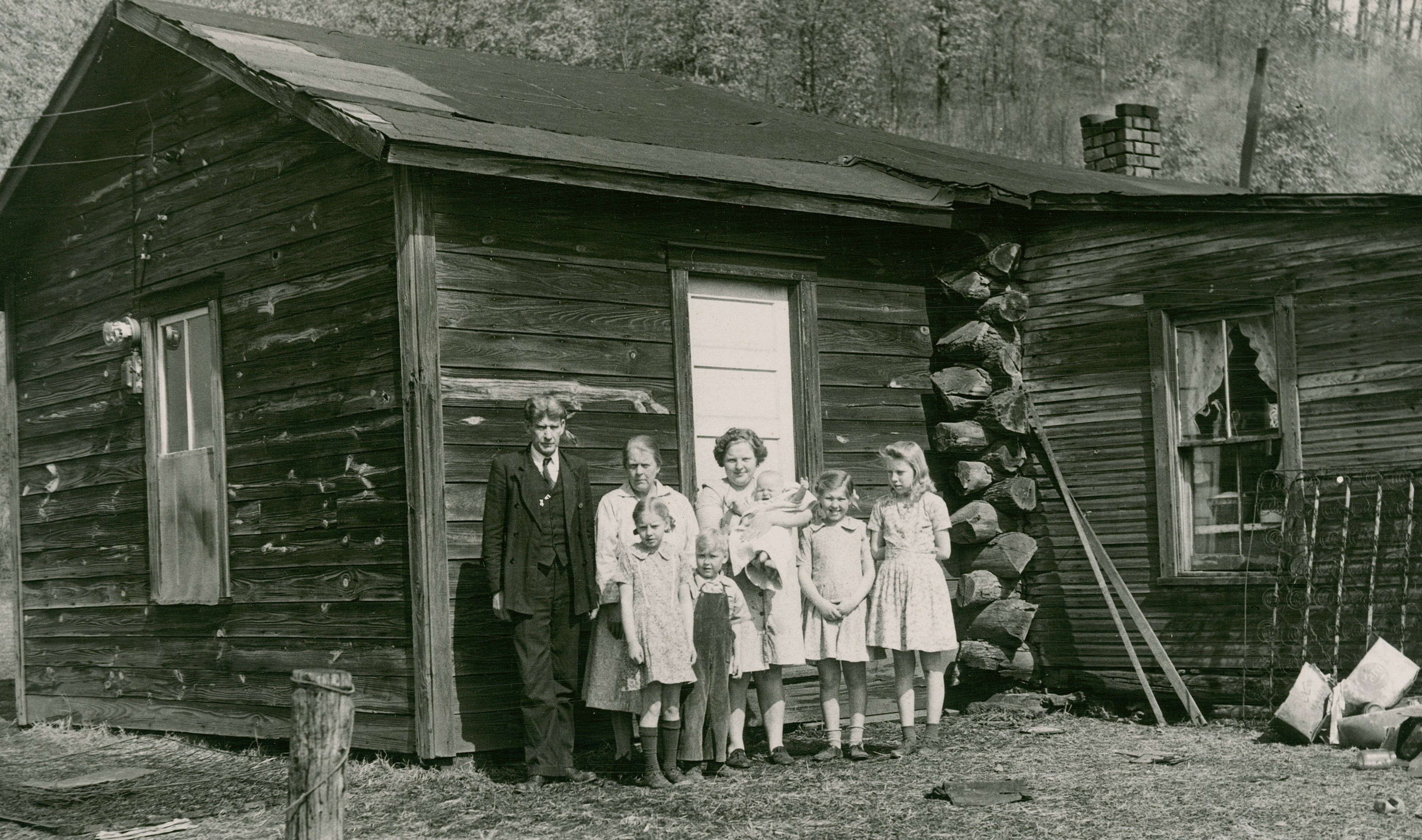
Then, when the operators made their age-old promise of steady work with good wages the local miners made a real backward step. By promise of future rewards the operators enticed many of the former machine men back to cut coal. True, most of these were not real union men. They had belonged to the union only because they could not help themselves and not because they understood or believed in the union. When they went back, they were at first paid the 1917 scale with the promise of steady work. But these rates continued only a short time.
Once they had got most of the mines in operation again the operators began slashing wages, breaking down the working conditions that had been won by all the years of struggle. They refused to pay yardage, or to pay for all dead work; they reestablished company stores and all the evils of open shop labor. Today the miners of Ohio are working for less pay per ton than in many of the non-union fields of West Virginia and Kentucky. All conditions have been entirely done away with. Two men are now forced to work in space for one—even in 8 foot entries this prevails. The miners of Ohio must now work the old standard of hours. Drivers are paid at some mines at the rate of 5 cents per car of coal pulled to the pass-way until he has pulled 60 cars; all cars over 60 he must handle without pay. At many mines the state laws are being evaded. Loaders are paid not by the ton for weighed coal as according to the law he should be, but he must load his coal at the rate of 80 cents per car of three tons. At other mines the custom of pulling the coal by beast has been discontinued and the men must push or pull their coal to the passageway. Some must unload stone cars to get cars to load coal. In some of the mines the miners must use coke forks in the place of shovels to load coal. In addition most of the companies cheat the men of their weight. At every mine men are checked off for the doctor; in some places this is as much as $3.00 per month. Powder sells higher now than it did when we were making good wages. Men who ask to be paid for coal that is loaded and lost on the roadway in the mine are discharged at once.
Such is the condition in which we find the Ohio miner on April I, 1932. He has been called out on strike. But he is being led by the same leadership that led him down to defeat in 1927, and the outlook is not bright.
Labor Age was a left-labor monthly magazine with origins in Socialist Review, journal of the Intercollegiate Socialist Society. Published by the Labor Publication Society from 1921-1933 aligned with the League for Industrial Democracy of left-wing trade unionists across industries. During 1929-33 the magazine was affiliated with the Conference for Progressive Labor Action (CPLA) led by A. J. Muste. James Maurer, Harry W. Laidler, and Louis Budenz were also writers. The orientation of the magazine was industrial unionism, planning, nationalization, and was illustrated with photos and cartoons. With its stress on worker education, social unionism and rank and file activism, it is one of the essential journals of the radical US labor socialist movement of its time.
PDF of full issue: https://www.marxists.org/history/usa/pubs/laborage/v21n05-may-1932-labor-age.pdf
 Revolution's Newsstand