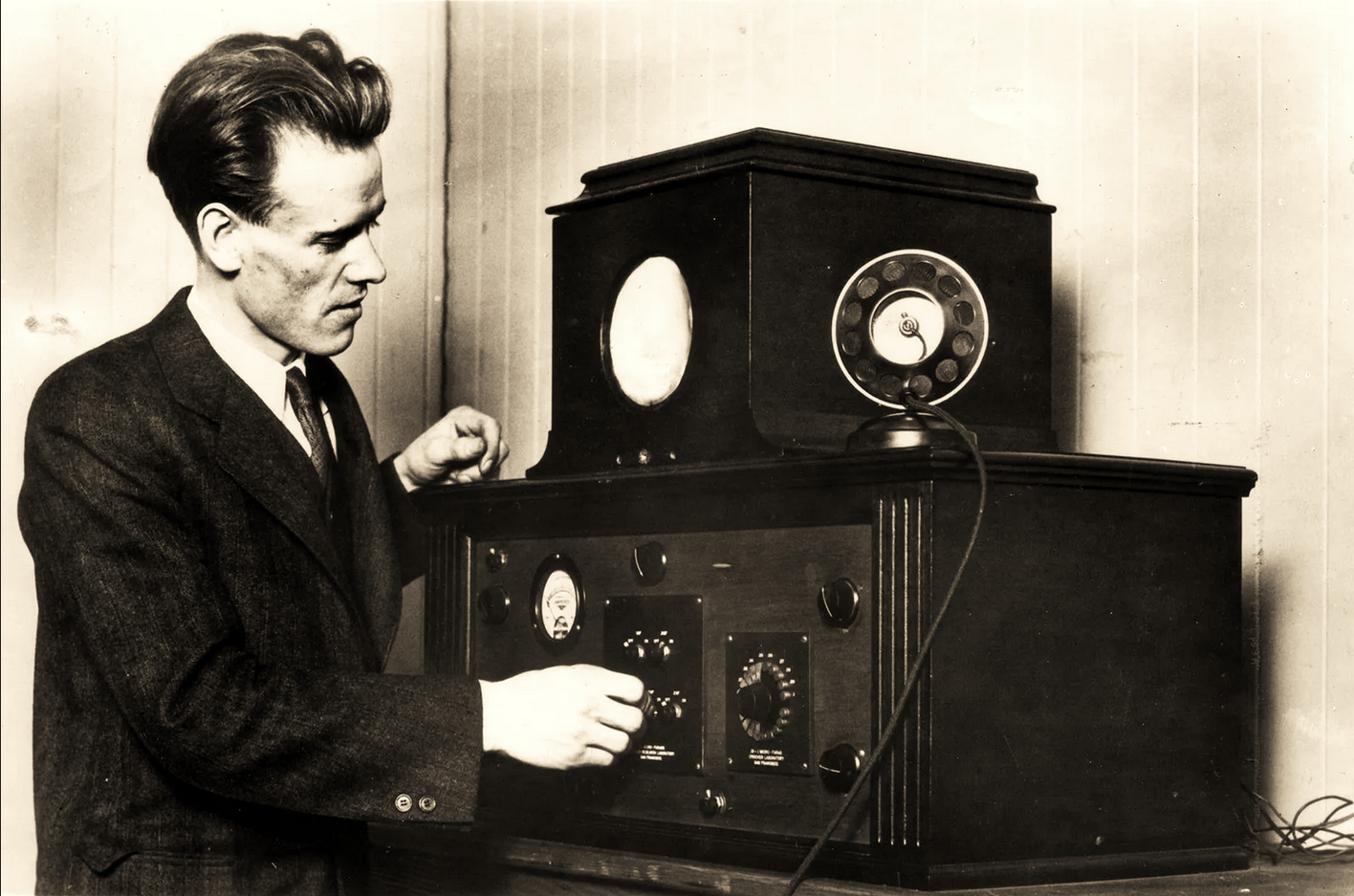
‘What the Heck is Television?’ from Young Spartacus. Vol. 3 No. 1. March, 1934.
Ordinarily, I don’t listen to the football games on Saturday afternoon, since I have no radio. One afternoon however, I was sitting in a restaurant eating. (A radio was going full blast.)
Columbia had the ball on Pittsburgh’s forty yard line; it was the last quarter, the score being 0-0. Columbia lined up for a forward pass formation. The ball began the rounds- the people in the restaurant were very calmly munching away at their liverwurst sandwiches, and sipping the tea in a glass.
Suddenly a shout went up. The radio roared, corned-beef was dropped, tea spilled. We all waited in suspense to find out what had happened. Had Columbia made the touchdown? Ten seconds went by twenty, forty and yet the voice of the announcer could not be heard because of the noise of the cheering spectators at the game. It was full fifty-five seconds before we discovered that Columbia had fumbled the fall, it had been caught by Carter of Pittsburgh and carried to Columbia’s ten yard line in what the announcer described as “a most spectacular clash.”
From the point of view of the mathematicians of the life insurance companies those fifty-five seconds cost the people of this country several hundreds or even thousands of years. The killing suspense of those. five seconds less than one minute, surely shortened the life span of all listening in.
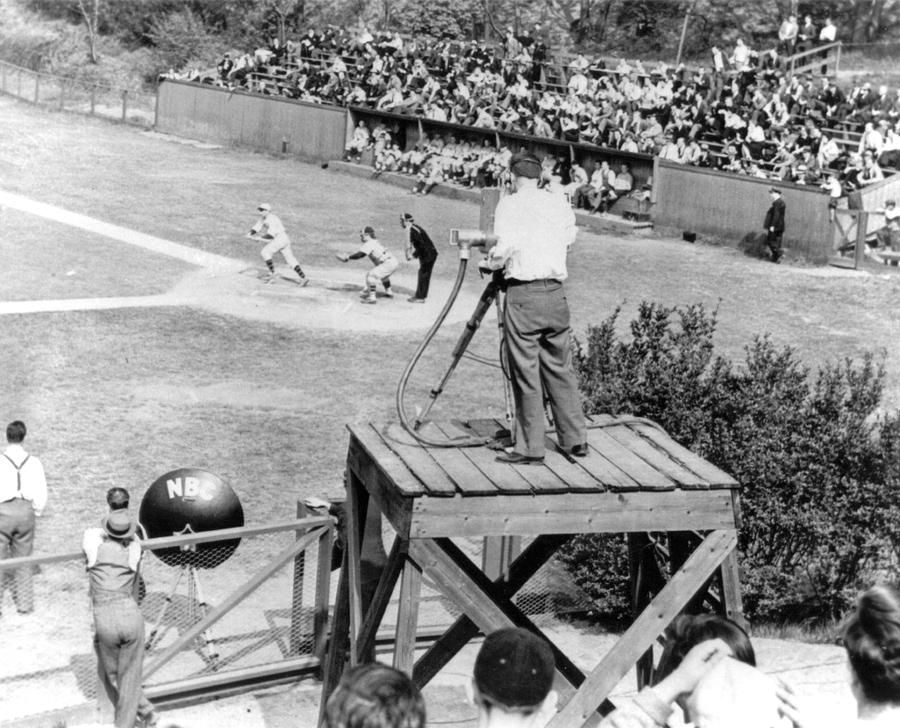
Yet what most people did not know, and will not know until they read YOUNG SPARTACUS, is that the years lost to society because of those fifty-five seconds, was absolutely unnecessary. They should have shown the game by television.
A fact which is unknown to all except a few is that the satisfactory transmission of a moving scene or picture by means of television is now an accomplished and reproducible fact. Even such difficult scenes as baseball games or football games can now be successfully sent out and received in perfect shape by means of radio-television. The products of research and development along these lines have been in the “commercial stage” for the past few years, but have not been put on the market or sold to the public because of the fear that not enough people have the money to buy these sets to make the whole venture commercially feasible. In the meantime the information remains locked in the vaults of the large radio companies of the country, particularly the Radio Corporation of America.
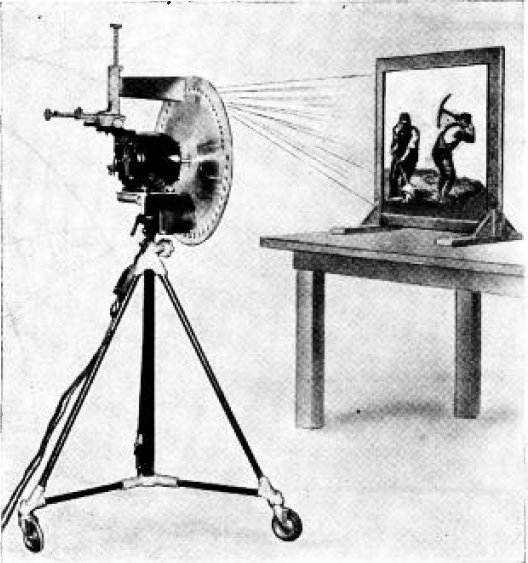
In order to send a picture of a moving scene, (man walking across the room) what must be done first is that a series of pictures of the walking man must be taken, exactly as is done in the movies. Each picture must be transmitted or sent out on the air before the next picture is taken. In order to transmit a complete picture satisfactorily it is necessary to break the picture up into a great many squares and transmit information regarding each of these in turn. Formerly, the method of accomplishing this was by means of a so called scanning disc (a rapidly rotating scanning disc that made television so poor and distorted). Today, there has been developed a method of “scanning” (breaking the picture up into the tiny squares) that completely eliminates all moving parts.
“The analysis of the picture into its component elements and its subsequent synthesis into the corresponding image on a screen are now done by purely electrical methods. All mechanically moving parts with the subsequent possibilities of mechanical failure as actually existed in previous systems have been completely eliminated. Perfection has by no means been attained, but television today is far beyond the stage at which radio reproduction was when it was placed before the public.”
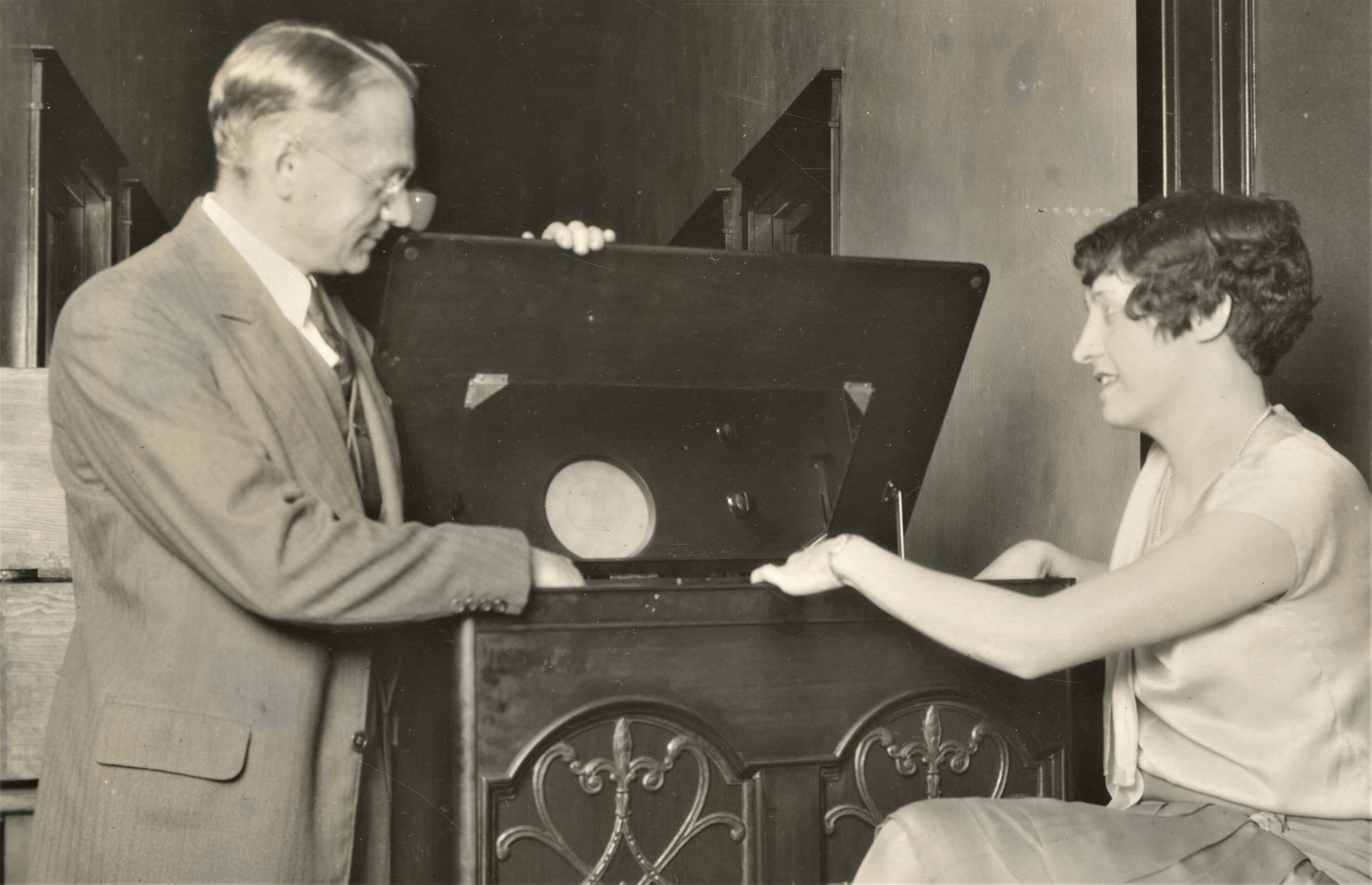
Why then is so little heard about these latest developments except in the form of rumor? The capitalists who have subsidized the work realize that the wages of the workers has been so depressed that they cannot purchase an article such as this, whose cost at present (unless mass production could be introduced- which would require masses to buy the sets) would amount to several hundred dollars. Just another of the contradictions of capitalism.
Young Spartacus was first published by the National Youth Committee, Communist League of America (Opposition), in New York City. A semi-monthly from 1931 until the end of 1935. The Spartacus Youth Clubs and then the Spartacus Youth League would be organized and publish Young Spartacus before the movement entered the Socialist Party and Young People’s Socialist League in 1936’s ‘French Turn.” For must of its run, as with its parent organization, Young Spartacus was aimed at supporters and the milieu of the Communist Party and the Young Communist League of which it viewed itself as an opposition. Editors included Manny Garrett, Martin Abern, Max Shactman, Joseph Carter, and George Ray.
PDF of full issue: https://www.marxists.org/history/etol/newspape/youngspart/YS1934/mar1934.pdf
 Revolution's Newsstand