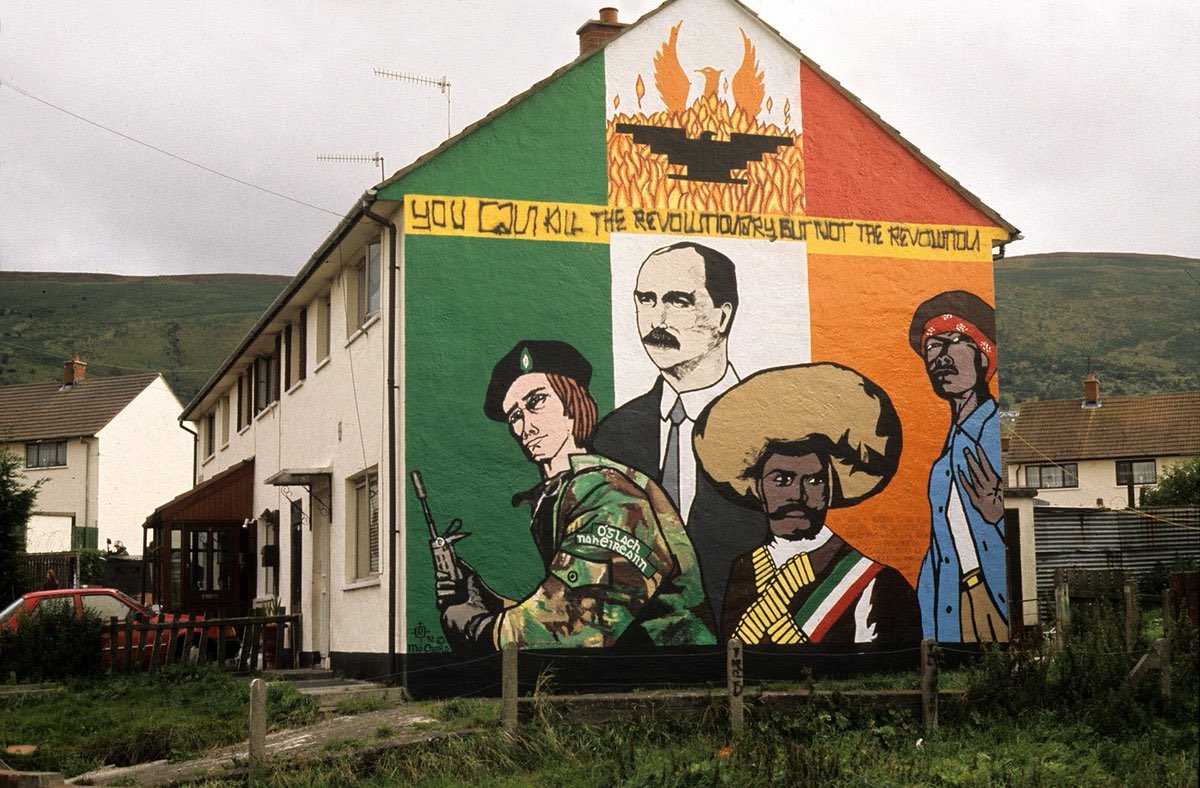
James Connolly was born 155 years ago on born June 5, 1868. Here, Jack Carney, Connolly’s old comrade from the Irish Transport and General Workers’ Union, pays tribute to the ‘great man’ on the second anniversary of the Easter Rising. Transcribed in full for the first time.
‘James Connolly Murdered by British Imperialists: An Appreciation of a Great Man’ by Jack Carney from Truth (Duluth, Minnesota). Vol. 2 No. 14. Friday April 8, 1918.
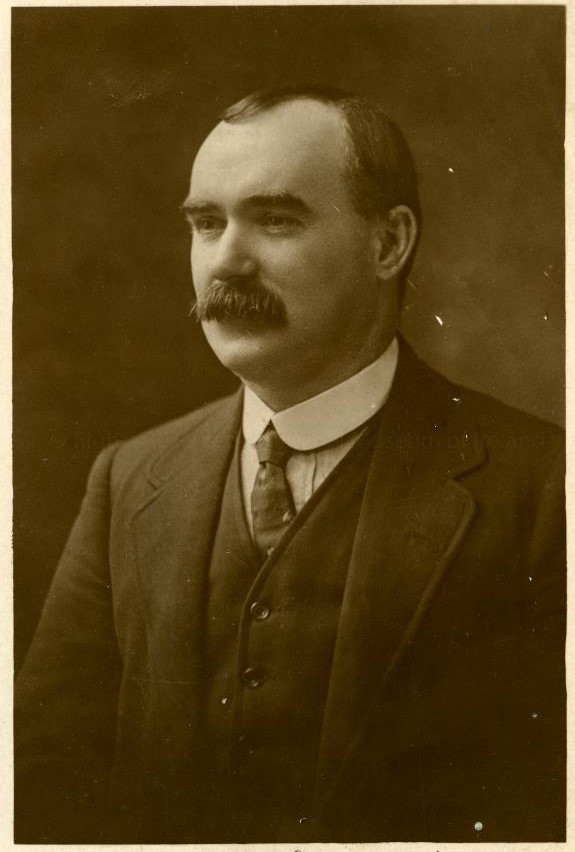
In the Socialist movement we have a code of ethics for ourselves, a code far superior to that of any other organization or church. Comrades in the movement are bound together by a morality that the world has yet to find. So strong is the love of comradeship, that I have seen a man refuse hundreds of dollars, offered by the capitalist, and work for starvation wages for the movement. I have seen a man go out in the early hours of a cold winter’s morning, and stand outside the mills of Belfast and endeavor to organize the poor working girls. I have seen him tired out after a day’s hard work and then at night stand upon the soap box and again appeal to the workers to get together. I have seen that man out with the workers in time of strike, seen him eat dry bread and drink weak tea. I have seen him in the midst of a baton charge, and I have seen him in prison, being brutally treated. So weak was he that he had to be carried out. I have seen all this done for the sum of ten dollars per week. Gifted with an extraordinary intellect, possessed of a fine tongue, with organizing abilities that would have netted him a fortune in any capitalist firm, yet this man plunged into the workers’ fight and gave all that lie might help in the great Cause. Such a man was James Connolly.

Many in America have told me that “Jim” was alright but he was so unsocial. James Connolly was never unsocial. One thing he did not like, and that was when men and women would surge around him after a lecture. He was peculiarly modest, but never unsocial. I have seen him leave a banquet and you would find him ten minutes after, surrounded by fifty or sixty mill girls, and to all these girls he was not Jim, he was “papa.” Sometimes he would stop outside a factory and wait until the girls were leaving, and then you would see all the girls fighting to get hold of ‘papa.’ He was fond of his home life, is very rarely seen, but that love, strong as it was, never stopped him from doing his work for the Socialist movement.
When the Dublin strike of 1913 was arousing all England, the Daily Mail, owned by Lord Northcliffe, sent their representatives to Dublin, and in my hearing offered James Connolly $125 an article, for a series of ten articles. Connolly turned around and said in reply: “When the class I belong to rejects me, then I may consider your offer; until then I would rather lose both my hands than allow any capitalist sheet to make capital out of the misfortunes of my fellow workers.” Mind you, this offer was made, when Connolly was receiving an allowance from the union of $2.50 per week. Because in Ireland, in the Irish Transport Union, officials and men alike go on strike pay.
There is one humorous story that Connolly used to tell, although the story is one on himself. In the latter part of the reign of Queen Victoria, it was decided that to send some Royal personage to Ireland might have the effect of pacifying those “turbulent Irish”. So, the Queen came, and of course a fine procession was arranged, bands, soldiers, sailors, dukes and duchesses, marquis and marchioness, all turned out to improve the populace. Some of the Sinn Feiners and Socialists decided that this procession must be either stopped or made to look ridiculous, so another procession was arranged to precede the royal procession by about ten minutes* A big black coffin was carried, followed by numerous coaches full of wreaths. The coffin contained a white inscription, “The death of the British Empire,” and the wreaths were sent to decorate the coffin at the graveside. The procession started, preceded by four bauds. All the people turned out to see the royal procession, as they thought, but when they saw the coffin, well, their old Irish hearts warmed up, old memories were revived, and the work of the royal procession was practically killed. They arrested the ringleaders, including Connolly, hut when they got them to the police station, the chief of police did not know what to charge them with. They sought through all the law books, and found that they could not prosecute. But one detective turns to Connolly, and asked him if lie had a license to drive a cab, and of course Connolly had not got one, so he was fined $10 and costs. Connolly said he never felt so humiliated in all his life, because it was no good refusing to pay the fine, as there was no principle involved.
During the Dublin strike he was arrested for making, a speech, and the magistrate in delivering sentence took occasion-to give him a lecture. He said that he was sorry that such an intellectual man as Connolly should be in the position that he was. He told him how much good he could do, if he would, in other words, sell himself. Connolly, with all the sarcasm that only a Connolly knew how to deliver, replied: “You state that you are sorry for me. In return I want to express my regret for you. You are worse off than myself. When I leave prison, I shall say that which I believe to be true, but when you leave this court, you can only say the things that the Government allows you to say. When you took the oath of office, you swore away your very soul, and upon your lips was placed a padlock, and it is only when you say the things that the Government want you to say, that the padlock is removed. I would rather starve in the gutter, than accept such a position as yours. When you die, men will remember you with curse on their lips; when I die, they will at least know that I fought for Ireland; you stood by her oppressors.” The magistrate delivered the maximum sentence of six months. Connolly refused to eat or drink while in prison, and after a hunger strike of eight days, he was finally released. On arrival at Belfast, he was greeted by over fifty thousand people, and many carriages escorted him to the meeting place. The Belfast press sent out the story amongst the Orangemen and Protestants, that Connolly was being paid by the Catholic Church to destroy Belfast industries so when Connolly arrived at the station, bricks and stones fell like drops of rain. I was asked to take the chair at the meeting. I woke up ten minutes after the meeting was over, with a lump on the back of my head as big as Bunker Hill. At the same time the Belfast papers were stating that Connolly was in the pay of the Catholic Church, the Dublin papers were stating that Larkin was in the pay of the Protestant crowd, so you see how the workers are divided.
At the beginning of the war, I was walking down the Streets of Belfast with James Connolly, when I took occasion to remark that there were more girls being prosecuted for street walking than there had been for some time. He replied, “Close your factories down, declare war, glorify your soldiers, give them bounties and turn them loose amongst unemployed girls, and there you will find prostitution running, wild.” Such was the case in Belfast, and the man who was out day and night, organizing the girls, to try and get them higher wages to keep them away from the streets was decried both by Nationalist and Unionist politicians as a traitor to Ireland.
I remember him being asked once, was Socialism opposed to religion. He asked the questioner if he had any daughters and if so, where did they work and how much did they receive. The man replied that his daughter was earning $1.75 per week and the man who employed her was a good true Irish Protestant. If the father had not earned good wages, the daughter would have had to go the way of many other girls. Connolly replied: “We are not opposed to Christianity; we are opposed to those who make it impossible to carry out the ideals and precepts of Christianity.” On another occasion a man threw a big steel bolt at his head. Connolly replied: “The man who throws bolts illustrates how far we have got to go yet.”
I could write a book on various incidents dealing with James Connolly. He lives enshrined in the hearts of thousands of Irishmen and women. Never have I known him to be smiled upon by Dame Fortune. Always struggling to keep the wolf from the door, but ever ready to assist the workers, whenever lie was needed. The Socialist movement in Ireland is making rapid progress. Over twenty years ago James Connolly was the “lone” speaker in the city of Dublin. He then planted the seeds of the Irish rebellion of 1916. The work of James Connolly will never die; it will bear its fruit in due season. The capitalists who think that by denying a free press, free speech, and the casting of men into prison, they can stop the growth of the Socialist movement, are like King Canute who tried to stop the waves of the ocean. Men like James Connolly only go to show how well grounded are the Socialists, and that although at times a few weeds do crop up here and there, still the movement grows on. When the history of this war comes to be written from a working-class standpoint, the name of James Connolly will stand out | as the name of one who died true to the cause of Industrial democracy and peace.
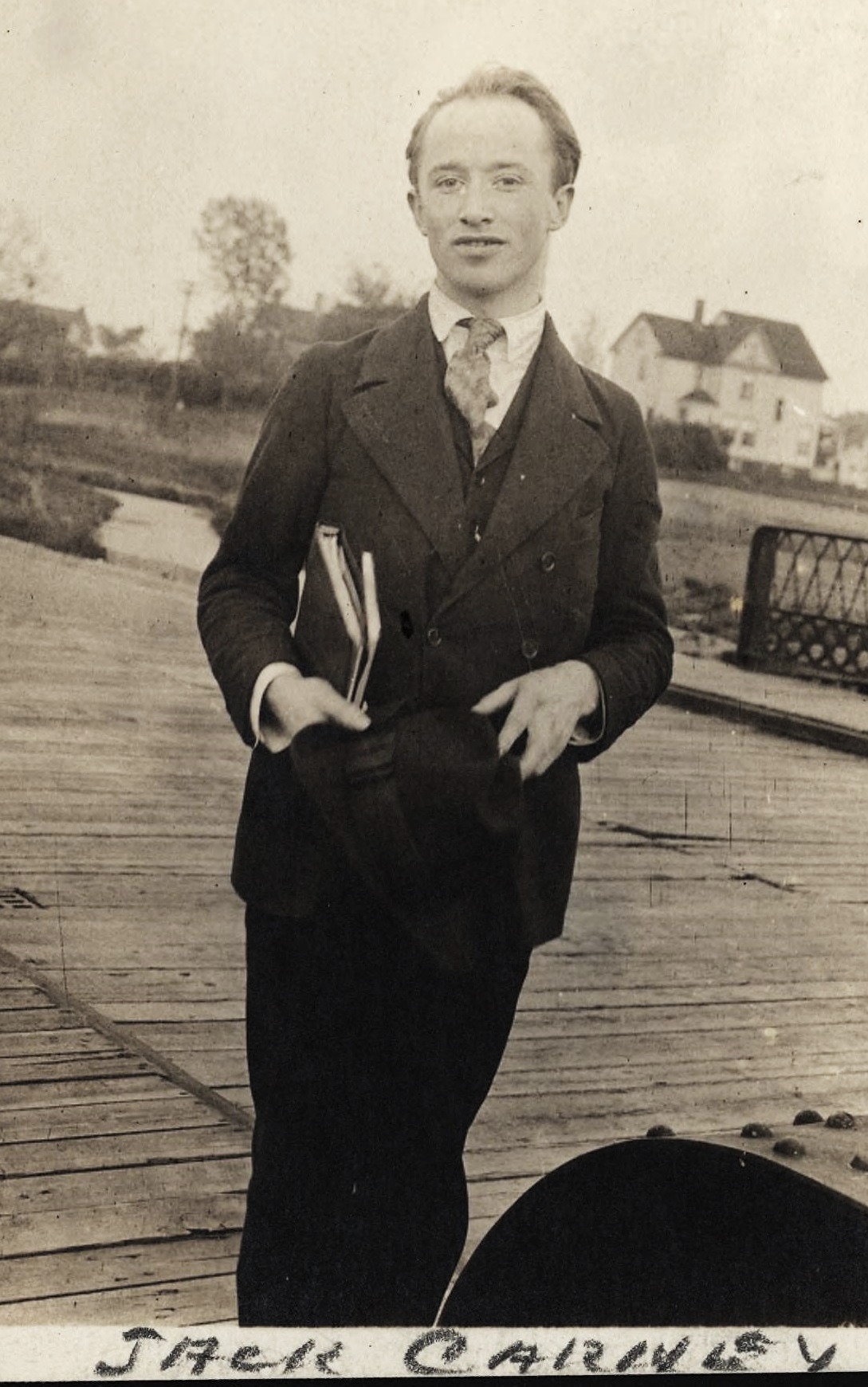
Dublin-born Jack Carney (1887-1956) was a member of the Irish General Transport Workers Union under Larkin and Connolly, who he worked closely with, and an editor of its paper, ‘The Irish Worker’. Emigrating to the U.S. shortly after 1916’s Easter Rising, he became a member of the Socialist Party and editor of the Duluth paper ‘The Truth’ before becoming a founder of the Communist Labor Party in 1919. Returning to Ireland with Larkin in 1922, he was an official of Workers’ Union of Ireland (WUI) and helped edit the Irish Worker, organ of the Irish Worker League. A delegate to the Sixth World Congress of the Comintern, Carney was active in defense of the Spanish Revolution. He later moved to London where he continued work as a left journalist until his death in 1956.
Truth emerged from the The Duluth Labor Leader, a weekly English language publication of the Scandinavian local of the Socialist Party in Duluth, Minnesota and began on May Day, 1917 as a Left Wing alternative to the Duluth Labor World. The paper was aligned to both the SP and the IWW leading to the paper being closed down in the first big anti-IWW raids in September, 1917. The paper was reborn as Truth, with the Duluth Scandinavian Socialists joining the Communist Labor Party of America in 1919. Shortly after the editor, Jack Carney, was arrested and convicted of espionage in 1920. Truth continued to publish with a new editor JO Bentall until 1923 as an unofficial paper of the CP.
Access to full paper: https://newspapers.mnhs.org/jsp/viewer.jsp?doc_id=mnhi0031/1H1BG65B/18040501&page_name=1
 Revolution's Newsstand