
Walter Nef, Secretary-Treasurer of the I.W.W.’s Agricultural Workers Organization #400 reports on the 1916 campaign to unionize harvest labor in the wheat belt.
‘Job Control in the Harvest Fields’ by Walter T. Nef from the International Socialist Review. Vol. 17 No. 3. September, 1916.
FOR the first time in the history of the United States a successful organization of migratory workers has been built thru the grain growing states of the middle west.
The organization of the despised harvester has demonstrated that these men actually had backbone and the spirit to fight in an organized body to eliminate the 15th century conditions they were forced to work and live under while garnering one of the main sources of the country’s wealth.
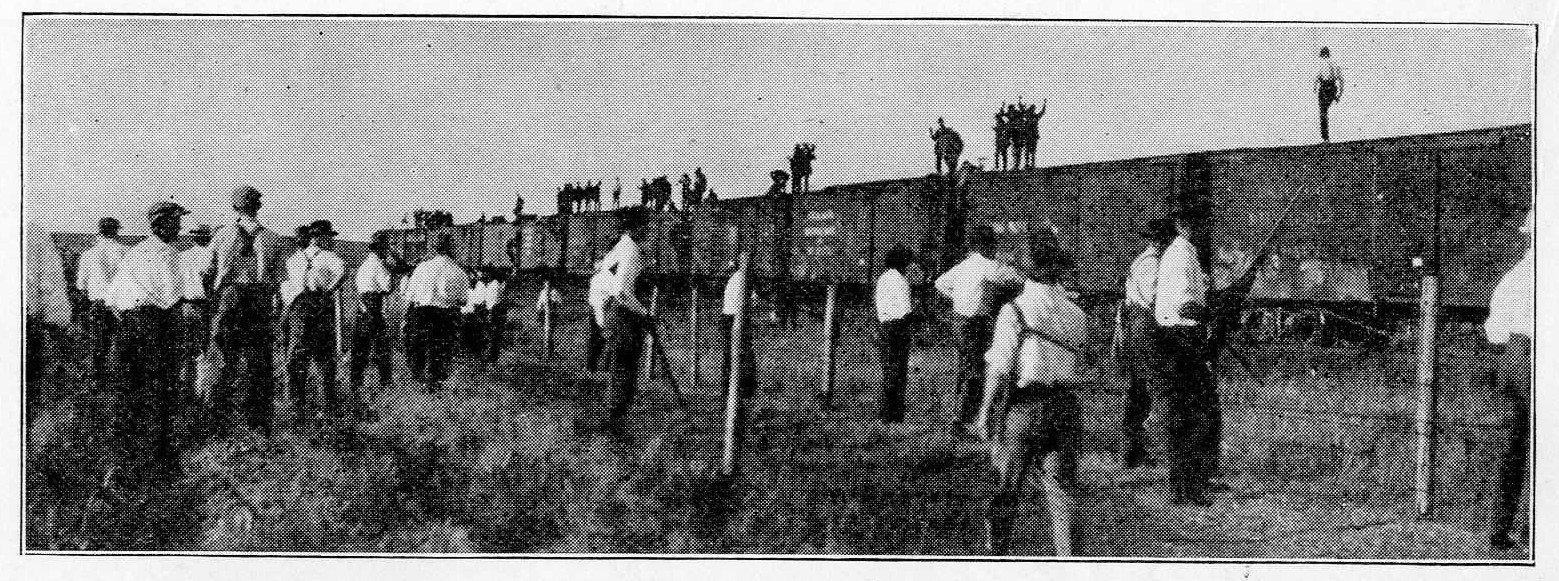
The Agricultural Workers’ Organization of the I.W.W. in which the harvesters are organized, has flung out the greatest picket line the sun ever looked down upon, extending from Kansas City, Mo., to 300 miles north of Aberdeen, S.D. Every picket carries organizers’ credentials, and the unorganized harvest hand is out of luck this summer unless he kicks in and helps in the struggle for job control.
Four thousand eight hundred harvest hands signed up during the month of July and they are joining at the rate of 300 per day at the present writing. The result of this solidarity is that wages have been raised and working conditions greatly improved, but it has been a bitter struggle all along the line, as the union harvest worker has had to face the bitter hostility of every element in the grain growing states which is interested in keeping the men unorganized and defenseless. Again, gamblers, boot-leggers and holdup men follow the harvest from Oklahoma to the Canadian line and in former years the unorganized harvesters have fallen easy victims, but, there is a new deal of the cards this year, as the A.W.O is rapidly eliminating these types of vultures, who are finding employment as gun men, vigilantes and deputies in various towns in the harvest belt.
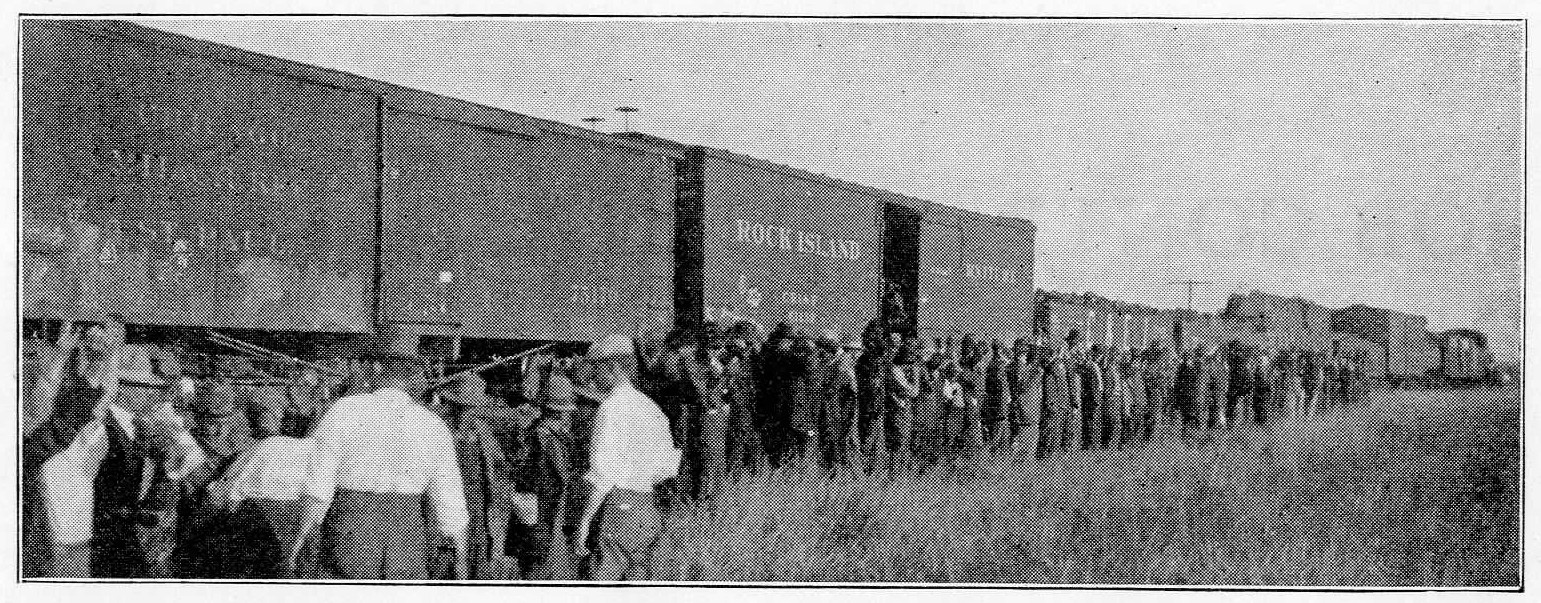
In Aberdeen, S.D., the Commercial Club is using these gun men to convoy groups of unorganized men to various localities, where they are forced to work at such wages and under such conditions as the farmers may dictate.
These unorganized groups stick close together and wear yellow tickets as marks of identification, so that their gun men protectors may see that none of their flock get away.
It has been the experience of the union delegates that the “yellow ticket men,” once they get away from their kind shepherds, are always anxious to line up in the union, for the reason that, as a rule, they are fleeced and shorn in every conceivable manner.
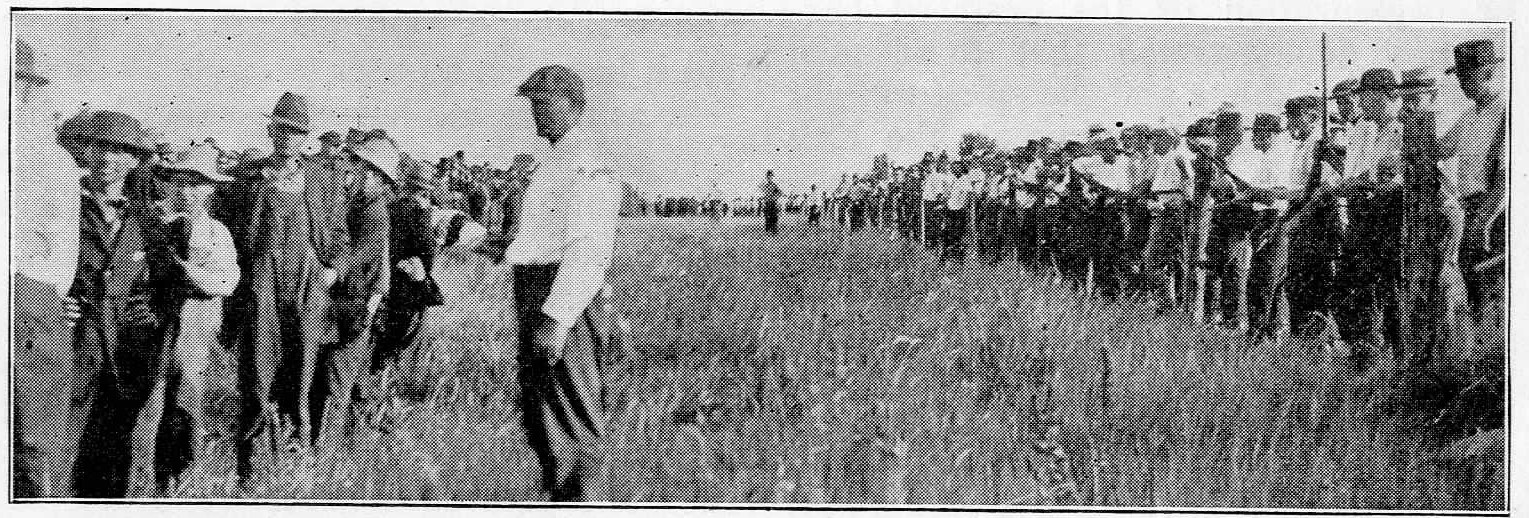
At many places along the line the union harvesters are receiving a cordial welcome. At other points they are treated as hoboes and hold-up men. In Mitchell, S.D., all incoming freight trains are met by deputies, gun men and vigilantes at the point of rifles. Harvesters are searched. Those without union cards are allowed to proceed and the union men are turned back. If it were not for the fact that so many union men have been crippled and maimed by these thugs, the futile attempts to sift the organized from the unorganized would be amusing, because many organized men do not carry their cards, but send them on ahead. By so doing, they not only succeed in getting by, but often pick up much information valuable to the organization. Men of all nationalities, occupations and trades make up this migratory army of union workers who are on the job with both feet and hard fists fighting for job control.
The most serious accident of the season so far, occurred recently near Yankton, S.D. Three harvesters were killed outright and thirty wounded as a result of a railroad wreck. Prompt relief was rendered and everything done by the organization to make the survivors as comfortable as possible.
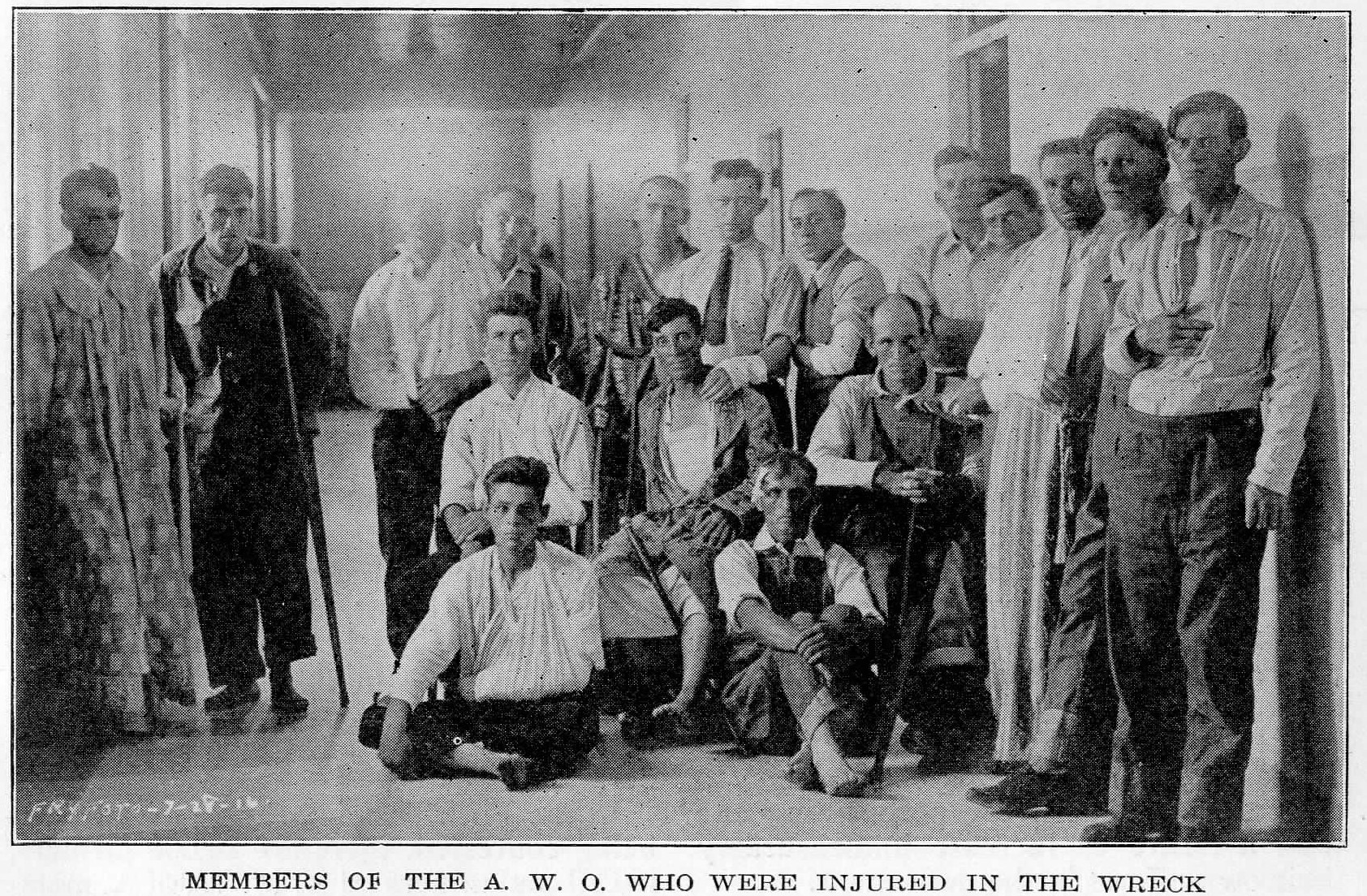
The cause of the accident was reported as unknown, but there is good grounds for a growing belief that the engineer deliberately buckled up the empty box cars in order to jar up the men. The matter is now being investigated by the organization.
Owing to the partial failure of crops in many localities the organization is finding it hard work to maintain the scale, but in spite of all handicaps the A.W.O. will close the harvest season 20,000 strong and will then be in a good position to organize in other fields and industries.
The International Socialist Review (ISR) was published monthly in Chicago from 1900 until 1918 by Charles H. Kerr and critically loyal to the Socialist Party of America. It is one of the essential publications in U.S. left history. During the editorship of A.M. Simons it was largely theoretical and moderate. In 1908, Charles H. Kerr took over as editor with strong influence from Mary E Marcy. The magazine became the foremost proponent of the SP’s left wing growing to tens of thousands of subscribers. It remained revolutionary in outlook and anti-militarist during World War One. It liberally used photographs and images, with news, theory, arts and organizing in its pages. It articles, reports and essays are an invaluable record of the U.S. class struggle and the development of Marxism in the decades before the Soviet experience. It was closed down in government repression in 1918.
PDF of full issue: https://www.marxists.org/history/usa/pubs/isr/v17n03-sep-1916-ISR-riaz-ocr.pdf
 Revolution's Newsstand