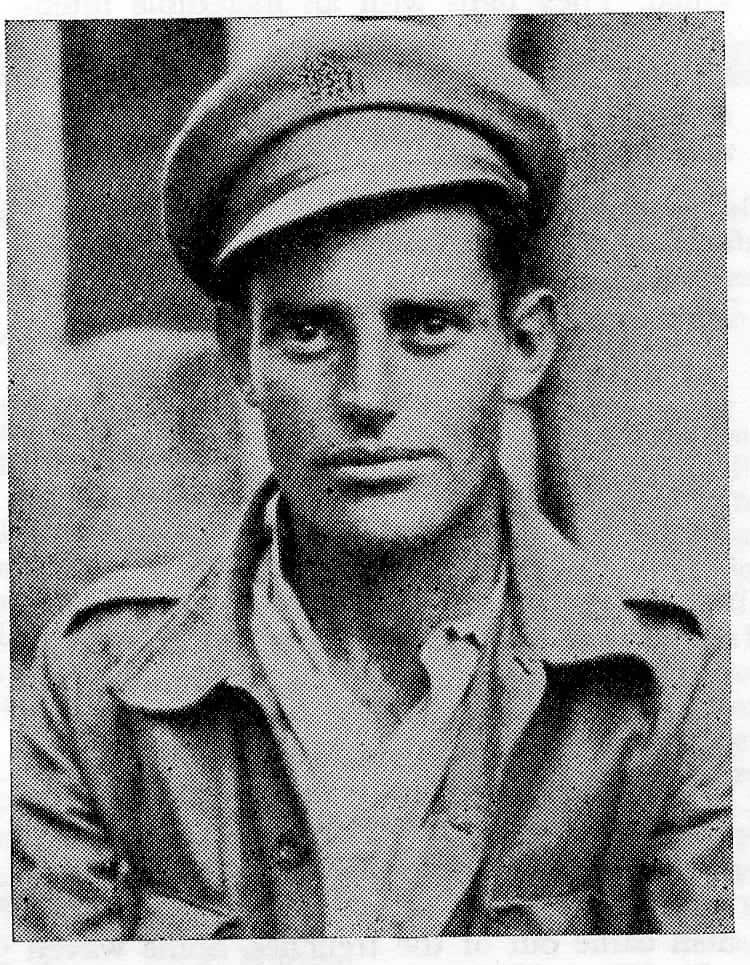
An I.L.D. organizer is killed by fascists in Spain. Henry Griffin Eaton was a class traitor who sacrificed his life for his convictions. His father was wealthy former Los Angeles mayor Frederick Eaton, known for beginning the long history of corrupt water usurpation in the city. His son joined the Communist movement in 1933 around Southern California’s agricultural strikes. He later became field organizer of the International Labor Defense for the region. Sailing to Spain in March, 1937 and fought with the Washington Battalion of the XV International Brigades, serving in Company C as a Commissar. He was killed at the desperate battle Belchite on September 3, 1937. A short biography and I.L.D. comrade and excerpts of letter from Henry below.
‘Henry Griffin Eaton: He Died in Spain’ by La Rue McCormick from Labor Defender. Vol. 13 No. 10. November, 1937.
HENRY GRIFFIN EATON, Field Organizer for the Southern California District of the International Labor Defense, was killed in action in Spain in the early part of September, 1937, fighting for the Loyalist cause.
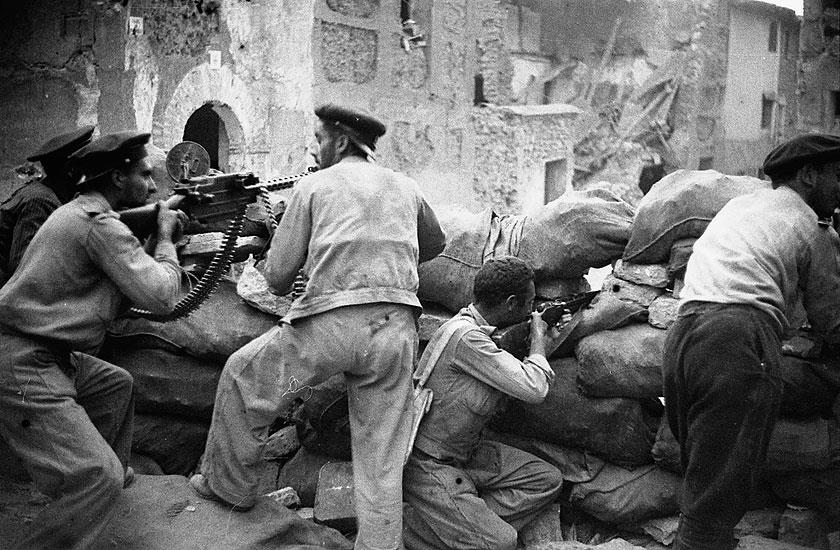
Another California boy described his death: “In the special bombing parties at Quinto, we volunteered together with eight others. There was no fear in his eyes- he was always conscious of his convictions. Death meant nothing. Outside of Belchite, our American Company was given the duty of making an open attack on one point of the city. We didn’t go 25 feet before a bullet ended Eaton’s life instantly. The effectiveness of the enemy’s fire was so obvious that we retired. That evening a few comrades went out and placed Henry on a stretch er and brought him in. A grave was dug, and during the day I inscribed appropriate words on a wooden slab. Ten minutes before a night attack on Belchite, we held services for Henry Eaton. The services were closed with these remarks, that we name our Company the HENRY EATON COMPANY and that we pledge to CARRY ON! With our heads unbowed, we raised our hands in an anti-fascist “Salud-Pasaremos.”
Henry Eaton came from a long line of Americans truly interested in better conditions for the mass of the people. His mother is a high-principled, courageous woman. She listened to the long letter of tribute dry-eyed and said “He wanted to go. I am glad I did not oppose him. He believed in this cause and threw his whole self into it. There is nothing but glory in a death like his.” She is a member of the Daughters of the American Revolution.
Henry’s grandfather, Henry Slosson, re-enlisted each year of the Civil War. He saw it through although it cost him his health. He died of tuberculosis. Mrs. Eaton says “I know he thought he was fighting to free the slaves.”
Fred S. Eaton, the father of Henry Eaton, was Mayor of Los Angeles from 1889 to 1900. Before he became Mayor he was a City Engineer and as such did a real service to posterity in laying out all of the City parks.
In 1933 Henry went to study the conditions of the share-croppers. He toured the whole south, riding freight trains and walking. He attended Commonwealth College at Mena, Arkansas, and then returned to California hoping to write of his experiences. He and his mother were evicted from their home and since he could find no remunerative channels for his literary talents, he was forced to temporarily give up this ambition. He became active in the Epic movement, and then threw himself into the agricultural strikes. It was here that he was contacted by the International Labor Defense. He was arrested in El Monte during the strike of the straw berry pickers and acquitted after two trials.
Because of his great interest in the Mexican people and the fact that he knew some Spanish, he was sent into Orange County during the citrus strike. He organized several branches of the International Labor Defense and made contacts which enabled the families of the strikers to get on relief although the authorities had previously refused them aid on the ground that they were not citizens.
In the spring of 1937, he made several trips to Santa Monica during the Douglas Aircraft sitdown strike. On the day when the “400” were arrested he happened to be on the sidewalk and because he didn’t move fast enough to suit a police officer was arrested on a charge of “Resisting Arrest.” He defended himself when the case came up, and dwelt so much on his American ideals and rights that the jury would not convict. After a petition campaign for dismissal the prosecution did move to dismiss when the case came up a second time. About a week later Henry left us to volunteer to fight in the anti-fascist army of Spain.
Mrs. Alice Eaton has lost a loving and devoted son. The world proletariat has lost a courageous fighter. The International Labor Defense has lost a splendid organizer. The Communist Party has lost one who persistently maintained that “Communism is Twentieth Century Americanism.”
We cannot and will not let this sacrifice be in vain.
WE PLEDGE TO CARRY ON THE FIGHT AGAINST REACTION AND FASCISM TO THE END!
Excerpts of Letters
Some time before we went into action, one of our Brigade commanders came to speak with us. He said there would be days when we would have no food, no water, days of blistering heat when we would advance under grilling machine gun fire hour after hour, days when we would fall asleep on the graves of our dead comrades, nights when we would make rapid marches without rest. I did not laugh out loud, but it all sounded incredible. Yet it happened much more thoroughly than he described. We slept with our dead comrades. There were days when we had no time to throw an inch of soil over them, we had to save every ounce of strength for our job. We became numb automatons, unable to feel because horror had surpassed our ability to meet it. But we could think, and our minds said “This is a grimy business. We are filthy with it, but we are not the ones. who started it. The Fascists started it, the Fascists forced this role upon us. War must be ended forever. War must be tom up by the roots. War and Fascism are synonymous.”
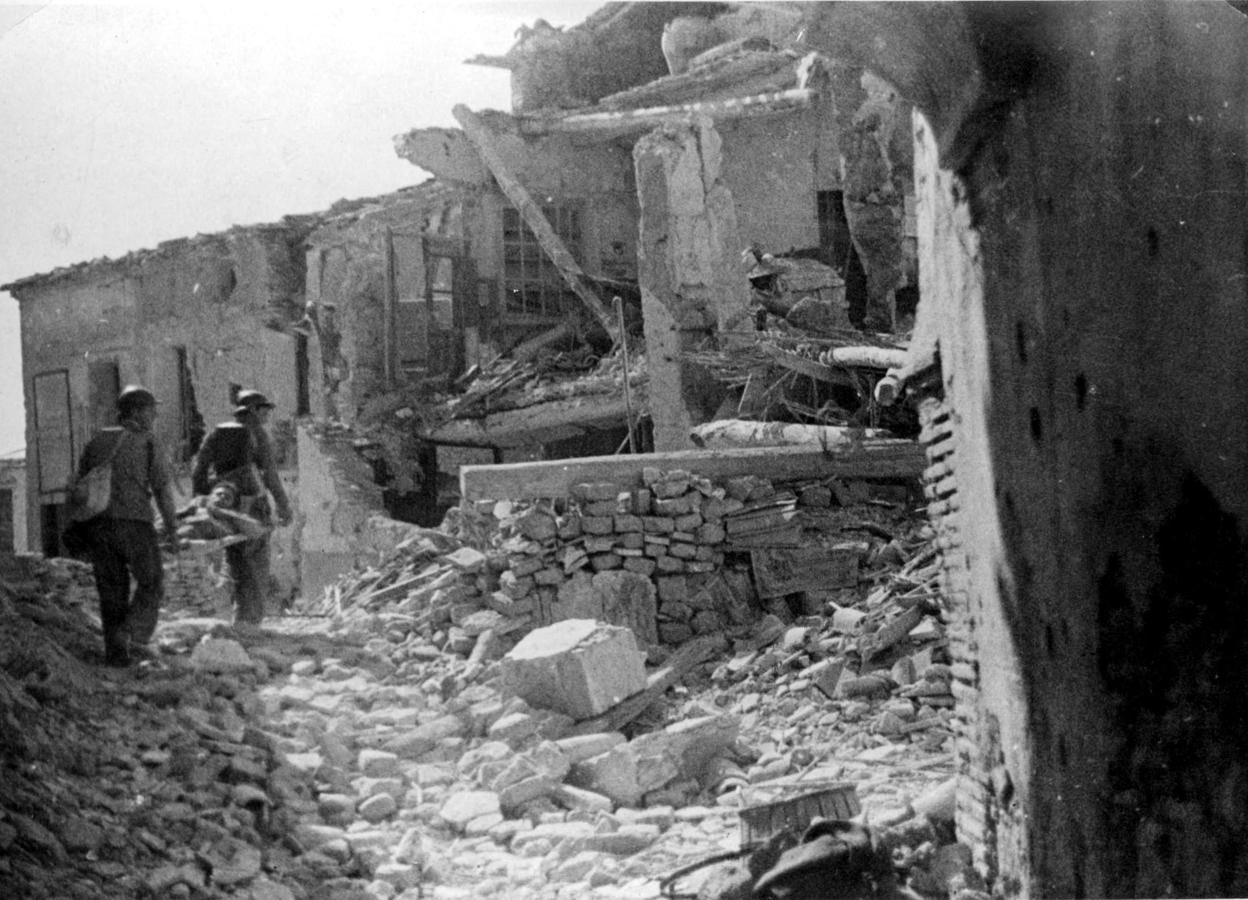
One experience that would seem to have moved a stone proved absolutely how numb my feelings had become. Our company was in a gully waiting to go up into the line when a fleet of Fascist planes appeared overhead. We dug our faces into the earth, our bodies prone. That swish that takes the pit out of one’s stomach was heard as bombs began to drop. No thunder could be so deafening, coming closer, closer, the filthy stench of high sulphurous explosives choking in our mouths. Closer, closer, shaking the earth so our bodies could not hold to its soothing protectiveness. Then crash, and a weight is bearing me into the soil, a faint moan. I knew then the comrade lying next to me had been thrown on my back. A slight convulsion, and the moaning stops. The silence is more deafening than the bombardment. Shoving up, I am free of the weight upon me. The air is so thick, like a grey sulphurous fog, which is almost impenetrable. Then I look at the body of my comrade. The seven letters from his sweetheart in Detroit, which I had delivered to him the day before are around him. I pick up my diary. The top is blown off…
I and ten others volunteered to go up to the walls of one building while artillery engaged the machine guns and throw nitroglycerine into the windows. This was the only way to stop the rain of death that poured from the tower and balconies. A tank of gasoline was roll ed into the door then we threw our bombs and there was a tremendous explosion. Even to the last the Fascists kept firing. Between first and second dashes, we made to the church walls a man was killed. They fight with an incredible intensity. The flames consumed the whole interior, though the outer structure still stands, a monument to great mediaeval architects and stone masons.
In the darkness later, as the flames softened, it seemed through the open door that thousands of candles were burning on the altar and around the sacred heart.

I was not with those who first entered the town which was why I volunteered on the bombing expedition. On the third day we took up a position on a high mountain above the town where the remaining Fascists were making their last stand. We waited behind our parapets, unable to advance over the flat stretch and watched our artillery and tanks sending over a terrific gale of fire. But yet the Fascists’ machine guns were not silenced. Suddenly the sky was filled with Fascist planes, dropping bombs, then cries from the Fascist trenches: A VIVA ESPANA! Then our planes came dropping papers and the fire from the Fascists ceased. Two, three, four. men came out of the trenches. Some waved white flags. They went back, desultory fire ensued. We ordered all fire on our side to cease. We called. VENGA, CAMARADAS. Again a few appeared, then went back. Then by twos and threes they came running towards us. There was a little fire, probably from their officers behind them. Then we came slowly toward them. More of them appeared on the sky line. Soon both of us were running, hundreds on both sides, running to meet each other. I saw those ahead embracing. I said to myself, “I cannot embrace a Fascist.” But when the young soldiers came toward us, their white exhausted faces looking so eager into ours, falling on our necks, what could we do? It was such a relief, so beautiful a victory, ending with so few wounded, so little a loss of life.
I have tried to give you a few of the pictures we see on every hand as we move across the battlefields of Spain, hoping always to see the dawn that is rising behind the mountains ahead. We are running as fast as we can, gathering momentum with every step, as the workers of the world push forward with us. Salud!
HENRY
Labor Defender was published monthly from 1926 until 1937 by the International Labor Defense (ILD), a Workers Party of America, and later Communist Party-led, non-partisan defense organization founded by James Cannon and William Haywood while in Moscow, 1925 to support prisoners of the class war, victims of racism and imperialism, and the struggle against fascism. It included, poetry, letters from prisoners, and was heavily illustrated with photos, images, and cartoons. Labor Defender was the central organ of the Scottsboro and Sacco and Vanzetti defense campaigns. Editors included T. J. O’ Flaherty, Max Shactman, Karl Reeve, J. Louis Engdahl, William L. Patterson, Sasha Small, and Sender Garlin.
PDF of full issue: https://www.marxists.org/history/usa/pubs/labordefender/1937/v13-%5B11%5Dn10-nov-1937-orig-LD.pdf
 Revolution's Newsstand
My great great uncle Henry Eaton. My beautiful great great uncle. My light and my hope. In solidarity on this most important day of national general strike.❤️
LikeLiked by 1 person