
Valuable information on the Crimea in the first years of the Revolutionary period first published in Izvestia in June, 1920.
‘The Crimean Tartars and the Revolution’ by N. B. from Soviet Russia (New York). Vol. 3 No. 11. September 11, 1920.
In an article in Nos. 48 and 49 of “The Life of Nationalities” devoted to an ethnographic review of the Crimean peinsula, Comrade Gaven writes:
“The population of the Crimea is extremely heterogenous. The numerically predominant part (about forty per cent) consists of Crimean Tartars, with an admixture (a small percentage) of Turks. Then follow, according to their numerical strength, the Russians and Ukrainians, Greeks, Germans (about 40,000), Jews, Armenians, Bulgarians, etc. In the large cities of Crimea the Russians (including the Ukrainians) are predominant, but in the village and in small towns the Tartars compose from seventy to eighty per cent of the population.”
As to the social differentiation of the Crimean population, the Crimean Tartars are, in their vast majority, peasants who devote their labors to gardening, cattle breeding and agriculture. The Tartar bourgeoisie consists largely of small and middle artisans and merchants. The bourgeoisie is comparatively poor and not numerous, and is therefore of no importance as a social-economic force. But the numerically tiny class of Tartar landed proprietors (mirzas) possesses immense riches and owns large estates, enormous orchards and vineyards. The Crimean Tartar peasantry belongs to the poor peasantry. “Fisthood” is strongly developed, but in the role of “fists” (kulaks) there appear mostly Greek and Armenian merchants and usurers. This is one of the economic causes of the hatred which the Tartar peasants feel toward the “unbelievers”, chiefly, toward the Greeks. The cultural level of the Tartar peasantry is very low.

Until the October revolution they were in complete spiritual subjection to their priests (mullas), who are either ignorant and superstitious or conscious impostors. The class of city workers is still in the embryonic stage among the Crimean Tartars. This class is composed of a small number of proletarians of the shop-counter, office employes and laborers, that is, of that section of the proletariat which is the hardest to assimilate the ideas of the class struggle and of communism. The industrial proletariat — this vanguard of the proletarian revolution — is not to be found among the Crimean Tartars.
The division of the Crimean Tartars along political lines in 1917 was as follows: the liberals, chauvinists and social-nationalists united into a “people’s party” (Milli Firka), which started among the masses of the Tartar population an extensive oral and printed agitation in favor of the formation of a Crimean-Tartar democratic republic. From the very first day of its appearance on the political scene with the slogan of national self-government, the Milli Firka party absolutely forgot the fact that over half of the Crimean population was non-Tartar. The Milli Firka party set out to agitate for the convocation of a representative organ of the Crimean Tartars, and the elections took place while Kerensky was still in power. The Tartar parliament, the Kurultai, assembled in the historical Bakhchisarai, in the palace of the Khan. In November, 1917, on a motion of the Milli Firka party, the Kurultai formed the so-called Crimean-Tartar Government, with Mufti Chelibeyev as premier.
This imitation government, uniting all the bourgeois and nationalist elements of Crimea, became a reliable support for the international counterrevolution in Crimea. “As a result of sanguinary battles, the troops of the ‘Crimea-Tartar Government’ were destroyed by the revolutionary detachments of the sailors of the Black Sea fleet and of the Sebastopol workmen. The Kurultai was dissolved by the Sebastopol Military-Revolutionary Committee, which took over the power until the convocation of a provisional congress of Soviets.” Such was the sad ending of the first adventure of the Crimean Tartar chauvinists. “The leaders of the Milli Firka party went into hiding and continued their black work. Creating conflicts between the unenlightened masses of the Tartar peasantry and the Soviet troops, they succeeded in raising a wall between the toiling Tartars, on one hand, and the workers and peasants of other nationalities, supporting the Soviet power, on the other hand.” They roused national hatred, and, thanks to this, they overthrew the Soviet rule in Crimea.” “But shortly after this insurrection a change began in the state of mind of the Tartar workmen and peasants.”
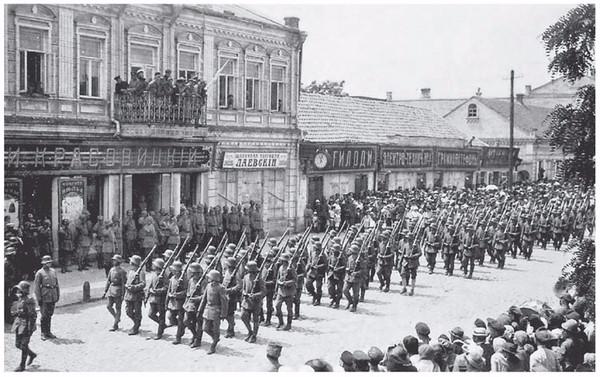
In the spring of 1918, together with the German troops, the leaders of the Milli Firka party and the members of the cabinet of the ‘Crimean Tartar Government’, who had escaped from the Bolsheviki, reappeared in Crimea. They were so sure that the aims and plans of the German imperialists did not conflict with their own aims that they immediately took steps to govern the Tartar people. The second premier of the Tartar cabinet, Jafed Seydamet — an adroit adventurer who posed as a Socialist Revolutionist — delivered public speech in which he lauded the merits “of the great monarch, who, sword in hand, has defended the interests and rights of the enslaved peoples.” A petition which was signed by the president of the Kurultai was presented to Emperor Wilhelm, in which the “elected representatives of the Tartar people” appeared in a disgustingly, cringing attitude towards the then leader of international reaction.
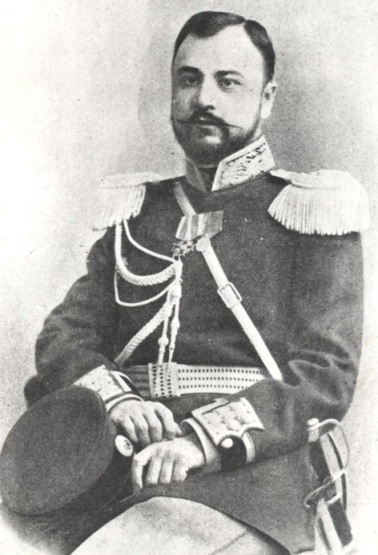
Soon after the occupation of Crimea by the German hordes, the Czarist General Sulkevich appeared suddenly on the scene and unceremoniously dismissed the Kurultai cabinet, declaring himself the ruler of Crimea. The rule of the “usurper” Sulkevich, which was supported by German bayonets and by the Crimean, including the Tartar, landed proprietors who returned to their estates and began to inflict punishments on the peasants who were involved in the seizure of the estate lands, was a better lesson for the Tartar poor peasantry than the Bolshevik agitation.
About the same time in the Crimea appeared a new oppressor in the person of the Entente imperialism, which based its calculations and plans °n the victory of Kolchak and Denikin, who adapted the slogan “a united and indivisible Russia.” The Kurultai was again left empty handed.
In the beginning of 1919, when the Soviet Power was again established in the Crimea, a decided change in favor of the Soviet power occurred even in the views of the leaders of the Milli Firka party, thanks to the cautious policy of the Crimean communists, who tried to attract to active participation in their work of the Soviets the more conscious Tartar workmen and peasants, and one of the most eminent leaders of the Milli Firka, in an article in the Krumsky Kommunist, pointed out that the “Bolsheviki succeeded in appraising with mathematical precision the hopes and aspirations of the Mussulman people” and have thus shown “great statesmanship.” At the June (1919) conference of the communist organizations of the Crimean Tartar delegates were present from seventeen units, representing a membership of over 400 and considerably more sympathizers. — Petrograd Izvestia, January 30.

Soviet Russia began in the summer of 1919, published by the Bureau of Information of Soviet Russia and replaced The Weekly Bulletin of the Bureau of Information of Soviet Russia. In lieu of an Embassy the Russian Soviet Government Bureau was the official voice of the Soviets in the US. Soviet Russia was published as the official organ of the RSGB until February 1922 when Soviet Russia became to the official organ of The Friends of Soviet Russia, becoming Soviet Russia Pictorial in 1923. There is no better US-published source for information on the Soviet state at this time, and includes official statements, articles by prominent Bolsheviks, data on the Soviet economy, weekly reports on the wars for survival the Soviets were engaged in, as well as efforts to in the US to lift the blockade and begin trade with the emerging Soviet Union.
PDF of full issue: https://www.marxists.org/history/usa/pubs/srp/v3n08-aug-21-1920-soviet-russia.pdf
 Revolution's Newsstand