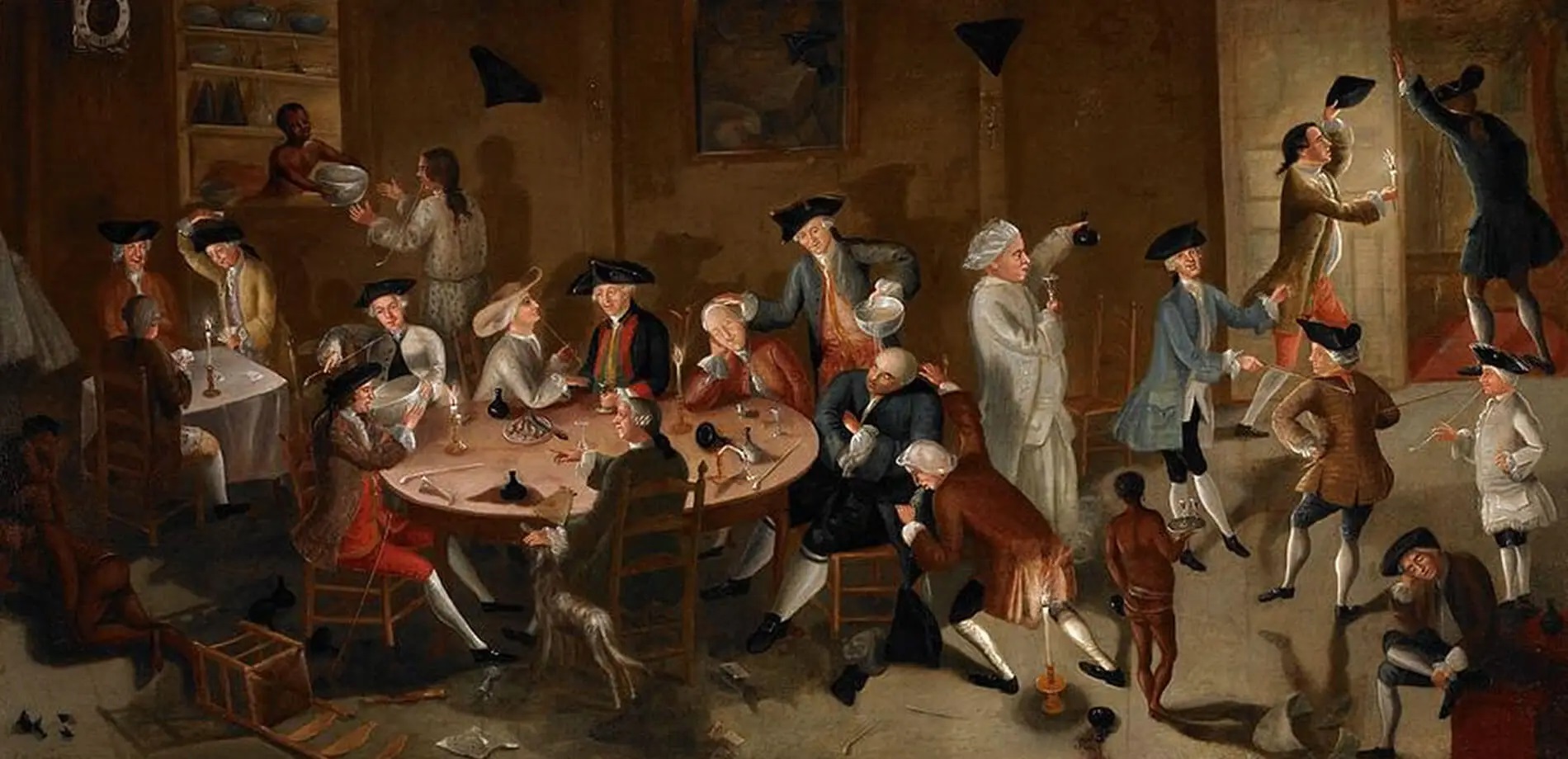
An absolutely fascinating social history of brewing in the American colonies and its decline with the expansion of slavery. Written by Engels’ correspondent, the Marxist historian and Brewery Workers’ leader Herman Schlüter, this is the third chapter of his large, invaluable, history of the industry and its unions in the United States
Marxist historian Herman Schlüter (1851-1919) was born in Schleswig-Holstein and joined the left wing of German Social Democracy as a teen and helped publish newspapers and magazines of the SPD. A correspondent of Engels’ both in Germany and later when Schlüter emigrated to the US in 1889 where he joined the editorial board of the New Yorker Volkszeitung. At first he was a member of the the Socialist Labor Party, later he joined the Socialist Party, which he represented at the Amsterdam Congress of the Second International in 1904. An anti-opportunist and anti-revisionist, he contributed to the debate in Marxism in both Germany and the US. However, it is Schlüter’s historical works, mainly of the proletarian movement in the US and England, that are his lasting legacy.
‘The Beer-Brewing Industry in the American Colonial Period’ by Hermann Schlüter from The Brewing Industry and the Brewery Workers’ Movement in America. International Union of United Brewery Workmen of America, Cincinnati. 1910.
1. NEW ENGLAND.
IN view of the extensive use of beer in England and the importance of the brewing industry at that time, it is but natural that with the settling of North America by the English the preparation and consumption of beer was brought over to this country.
In December, 1620, the Pilgrim Fathers landed in the harbor of Plymouth. When a small party went on shore to reconnoiter and found no water to quench their thirst, one of them laughingly remarked that it was a pity they had not brought along some beer from the supply on board the Mayflower. The Christmas festival was celebrated on board the Mayflower, it is reported, with a good drink of beer, a proof that the Puritans of that time, unlike their successors, knew how to combine their religious observance and convictions with the use of alcoholic beverages.
In the first year of the settlement the colonists planted the grain necessary for brewing beer, but with poor result, for the soil of Massachusetts was not well suited for the raising of barley. They therefore imported the materials for brewing, and also some beer itself, from England. In the year 1629 forty-five barrels of beer and four hundredweight of hops were brought to Massachusetts Bay at one shipment. Malt was also imported after the attempt to make it from maize had been tried with but slight success. A poem of that time informs us that the Pilgrim Fathers had such a tremendous thirst after alcoholic drinks that for want of beer they made intoxicating beverages out of pumpkins, parsnips, and shavings of walnut wood.

John Jenney was the first professional brewer who came to Plymouth, in 1623, but it is not known whether he pursued his trade in the colonies. In the beginning, brewing in America was naturally a domestic occupation; the colonists brewed beer, just as they baked bread, for the use of their own families. The government of the colony, however, soon discovered that the taxation of beer was an excellent means of meeting the public expenses. As early as 1637 the General Court of Massachusetts enacted a law’ imposing a fine of one hundred pounds on any person who should brew “beer, malt, or other beverages” without a license; it is possible that this referred only to the brewing of beverages for sale, while brewing in one’s house for household use was free to all. At this time the same authorities granted a monopoly of brewing to a certain Captain Sedgwick, who had already erected a brew-house “at his own expense,” as was strongly emphasized.
The saloon license and the advantages which it gives to the authorities were also soon discovered by the shrewd Pilgrim Fathers. In 1634 the first tavern license was issued in Boston to one Samuel Cole, to whom the right of selling beer was granted. Two decades after the founding of the colony there existed a number of places where one could get a draught of beer f6r money and a few pleasant words.
The government of the colony made various regulations in regard to the preparation, price, and sale of beer. In 1637 the brewers of Massachusetts were forbidden to sell stronger beers to tavern keepers than such as cost eight shillings a barrel. In 1640 it was decreed that no one should be allowed to brew beer unless he was a good brewer. The price of beer was also regulated. Beer that sold for threepence per quart had to contain six bushels of malt per hogshead; beer for twopence per quart, four bushels; at one penny a quart, two bushels; and less proportionately. In 1645 the price of beer was fixed at twopence a quart. In 1677 is was officially decreed in Massachusetts that beer which contained three bushels of malt per barrel was to be sold at threepence a quart. Every additional bushel of malt per barrel raised the price of beer one penny. In spite of all their piety, the Pilgrim Fathers seem at an early time to have known the adulteration of beer. In 1677 the General Court of Massachusetts established a regulation according to which beer might only be prepared from good barley malt. Additions of syrup, raw sugar, or any materials other than malt were punishable with a fine of five pounds for each offense. The authorities also looked out for the comfort of travelers and in October, 1649, the General Court issued an order that each hotel keeper must keep good beer, so that travelers should not be compelled to buy expensive wines.
In spite of the fact, already mentioned, that barley could not be raised to great advantage in Massachusetts, so that most of the malt had to be imported, beer was in the middle of the seventeenth century an important staple of trade in this colony. A historical writer remarks that beer was at that time the favorite drink of the colony. Large quantities of beer brewed in Albany, New Amsterdam, and other places were shipped by way of Boston.
In the meantime, beer-brewing had been introduced in the other New England colonies. In 1638 was opened the first tavern in Rhode Island, which was used also as a brewery and a grocery store. In 1640 Ipswich built its own municipal malt-house, but it was ordered that no one was to malt old wheat except for his own use. We learn that in 1641 Watertown erected a malt-house and that the raising of hops was then common. This city had at that time, two breweries.
The demand for malt was mostly supplied by importation from Europe. The colonies, however, imposed a duty on malt and in the year 1665 Boston merchants who imported malt appealed to the General Court for a reduction or abolition of the tariff. Their requests were fruitless. On the contrary, a few years later, the General Court increased the import duty from one penny a bushel to seven pence. The intention was to protect the home product, in spite of the fact that barley did not thrive in Massachusetts.
It can hardly be said that Connecticut had in the first century of its settlement a complete beer-brewery. Here the greatest efforts were made to produce malt from maize for home brewing; but they met with very little success.
The first license for beer brewing in New Hampshire was granted in 1670 to Samuel Wenthworth, who lived in Portsmouth.
Beer-brewing spread wherever the colonists dispossessed the red men from the land. The wider the white man’s territory, the greater the domination of the beverage prepared from barley, hops and water.
2. NEW AMSTERDAM.
To a far greater degree than in the New England colonies, beer-brewing was developed during the first century of the colonial period in New Amsterdam, the present New York. The brewing industry flourished on Manhattan Island at that time to a higher degree than it ever has since then, and the fame of New Amsterdam beer was widely extended. The first Dutch settlers of Manhattan were familiar with the preparation of beer, for in Holland the art of brewing was widespread. There is no doubt, therefore, that the first inhabitants of Manhattan brewed their own house beer, but shortly after the settlement brewing became an independent industry. As early as 1612 Adrian Block and Hans Christiansen erected at the south end of Manhattan Island a row of buildings, of which one soon became a beer-brewery. This was the first brewery in America, and the building is of further interest because the first white child in New York was born under its roof. This child was Jean Vigne, who later became famous as a brewer, and played an important part in the public life of the colony.
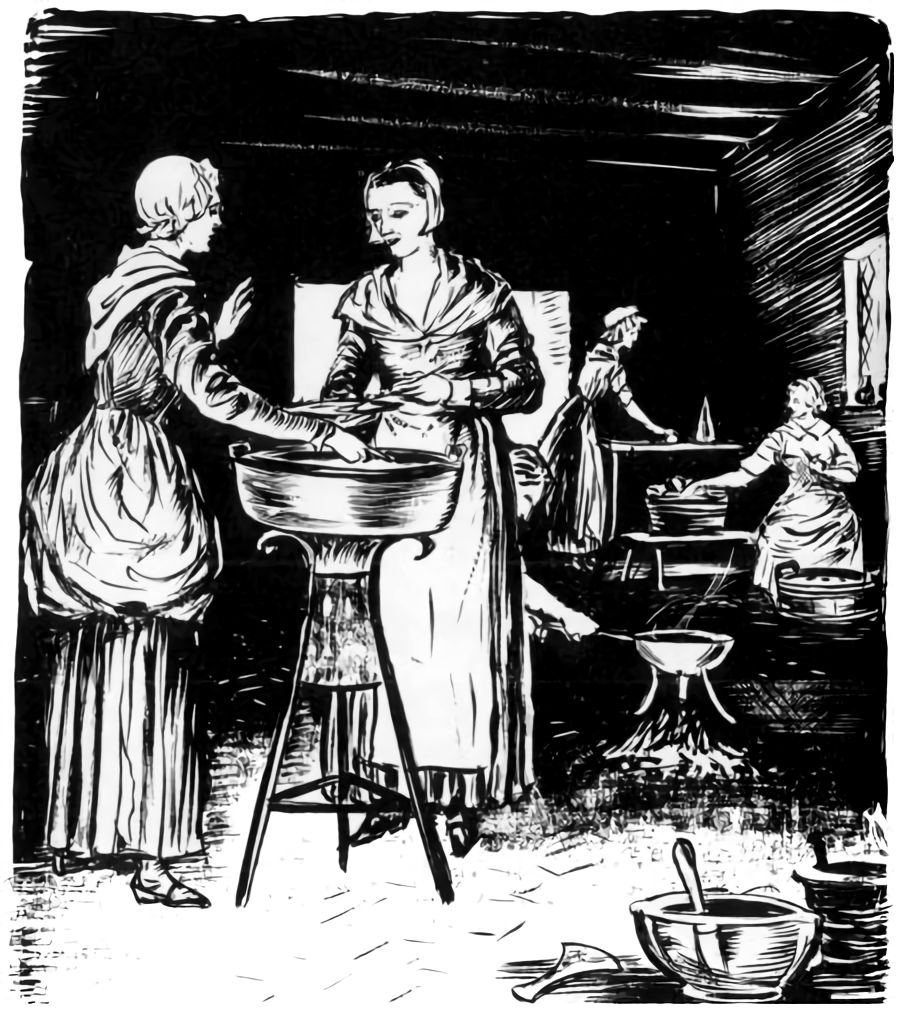
This first brewery in New Amsterdam was followed by several others. Their success induced the government of the colony to erect its own brewery. The erection of this first public brewery in America was begun in 1632, during the administration of Peter Minuit, and was completed under his successor. Van Twiller. This government brewery stood on the so-called West India Company’s farm, and was situated in the Marckveldt, the present Whitehall street. In March, 1633, this brewery sold beer for the first time to the colonists. The “state beer,” however, was sold only until 1638. Private breweries had by that time made such progress that the government institution was not able to meet their competition and closed its doors. The building was converted into a warehouse.
Under Governor Van Twiller, who was a jolly fellow and liked a good swig, the number of drinking places increased greatly in Manhattan, and with them also increased drunkenness. The first “saloon” was opened under Minuit, Van Twiller’s predecessor as Governor of New Amsterdam. But at that time in all of these drinking places there was sold more wine and whiskey than beer. The mother country was careful to see that her sons across the sea were well provided by the importation of all kinds of spirituous drinks.
In the year 1638, when Wilhelm Kieft took the place of the jolly Van Twiller as Governor, he felt himself compelled to take steps against drunkenness. In the first year of his administration, he forbade the retail sale of wine and whiskey by tavern keepers, so that they could sell only beer. The result of this measure was a considerable revival in brewing and the sale of beer. This fact suggested to Kieft, who was not only a pious man, but, as so often happens, also a shrewd business man, the idea of putting a tax on beer, in order to replenish the empty coffers of state. The business sense of Kieft was shown in the prohibition of the sale of wine or whiskey in taverns, because this gave the monopoly of the sale of these drinks to the West India Company — that is, to the government. How little the measure was prompted by a desire to prevent drunkenness is evident from the fact that Kieft set up a distillery, the first in this region.
In June, 1644, Kieft and his advisers decided to put a tax on beer. The income derived from it was to be used for clothing the soldiers and repairing parts of the fortifications which had fallen to ruin. Besides the governor, the colony had a kind of popular representative body, and this body protested against the tax because it had been imposed without their consent. But Kieft disregarded the protest and issued a proclamation giving the details of the tax. For every half-barrel retailed by the tavern keepers two guilders (80 cents) was to be paid to the state, the brewer and the tavern keeper each paying half. Every citizen who brewed beer for home use was to pay at half the rate. Wine and whiskey were also taxed proportionately.
This was the first instance of the taxation of drinks in America, but the example was soon followed by the New England colonies. The measure did not end with imposing a tax, but included various regulations as to the preparation and sale of drinks. The system of concessions and licenses for the retailing of alcoholic drinks was developed. The price and quality of beer were minutely prescribed. It was provided that no liquors were to be sold during the hours of church service, and every evening at nine o’clock the ringing of the city hall bell gave notice that all taverns must close. A kind of supervision of the brewing itself was introduced; the brewers had to inform the governor as to the quantity of beer they had produced before they could get permission to sell it.
The taxation of drinks was such a convenient way of providing funds for the state that Governor Kieft, soon after the imposition of the first tax, raised the amount to three guilders ($1.20) per barrel. This increase of the tax was also effected without the consent of the popular representatives — the “eight men,” a kind of assembly. If the introduction of the tax made bad blood, the raising of it intensified the agitation. Brewing as an independent industry had developed greatly. The brewers had all become rich and were considered “good citizens” and therefore exercised a great influence. A general opposition arose against the tax and against the manner in which it had been imposed. In order to pacify the brewers and tavern keepers, the governor permitted them to add the tax to the price of the goods which they made and sold, so that not the brewer nor the dealer, but the consumer, would have to bear the burden. But the agitation had gone so far that the brewers and dealers refused to pay the tax, basing their action on the fact that the consent of the “eight men” had not been given to its imposition, and this was a violation of the rights of the citizens. But Kieft paid no attention to this argument and he forced the brewers to pay the tax by simply confiscating the supply of beer in their cellars and giving his soldiers an opportunity to get a good drink. In 1642 the governor set up a government inn, which he tried to further by granting all sorts of privileges. A monopoly was created for the accommodation of travelers who came for the most part from New England and Virginia to New Amsterdam. Strangers were not permitted to stay more than one night with a private family, and were thus compelled to stay at the government inn, and pay money for their accommodation.
In the year 1647 Kieft was recalled and Peter Stuyvesant succeeded him as governor of the colony. It was demanded that he revoke the tax on beer, but on the contrary a new tax was imposed and new regulations promulgated for the control of brewing and selling. Stuyvesant ordered a complete separation of the business of selling from that of brewing; the brewers were forbidden to retail their product, and the tavern keepers were not allowed to brew their own beer, which had up to that time been customary. Governor Stuyvesant tried to encourage the coming of visitors to the city by seeing to it that there were good hotels where they could stop.
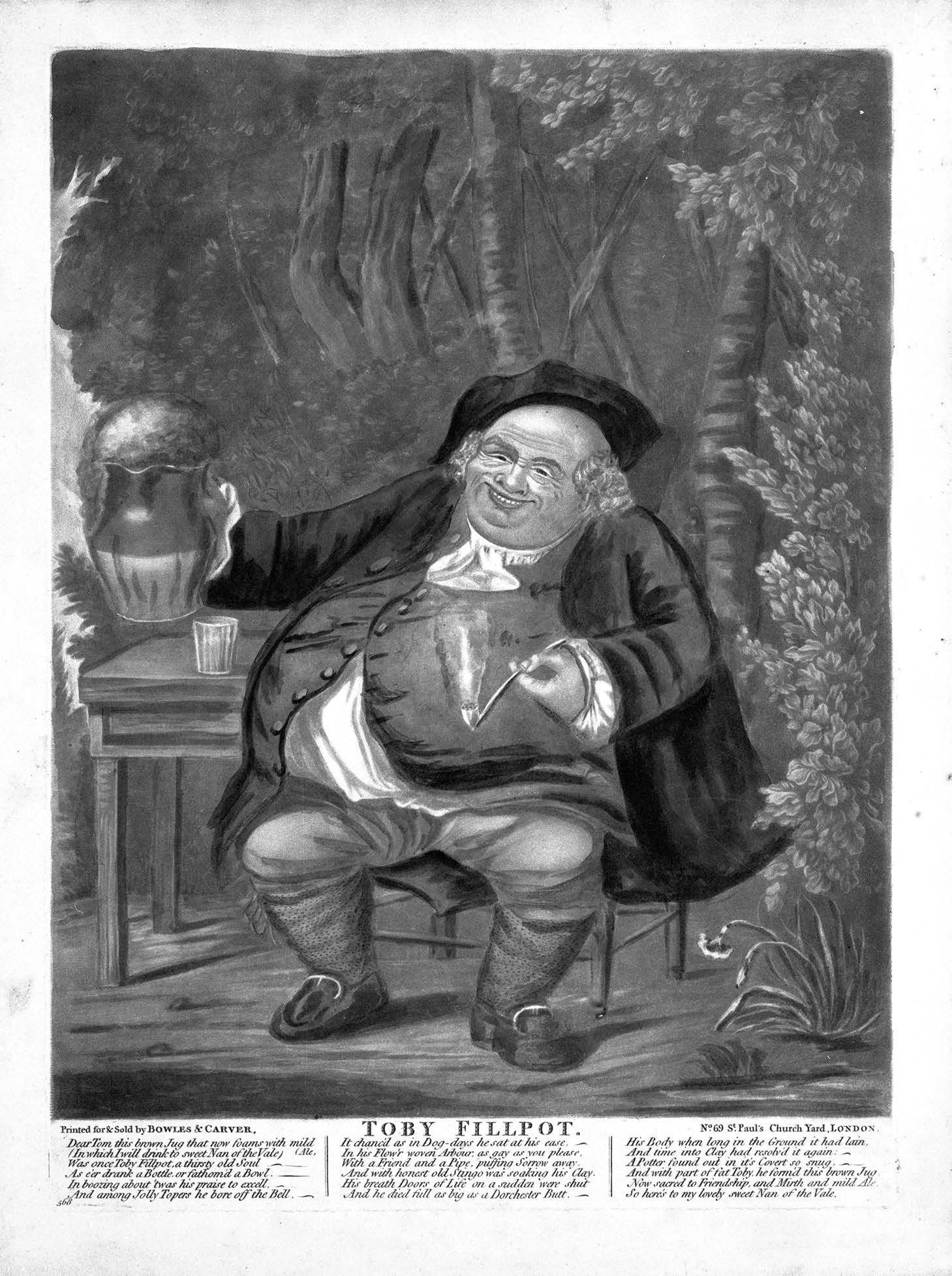
It would seem that about this time the consumption of spirituous drinks was comparatively high in New Amsterdam. According to a report of Stuyvesant, about the year 1651, a quarter of the city of New Amsterdam consisted of whiskey-saloons, tobacco stores, and beer houses. Perhaps this should not be taken literally, but the fact remains that the consumption of intoxicating drinks was enormous. The income from the tax on drinks amounted to four gulden per head for each man, woman, and child. Governor Stuyvesant, to whom drunkenness and love-making on Sunday were an especial horror, tried to oppose the excessive use of alcoholic drinks, but at the same time kept the interest of the treasury always in mind. The tavern keepers were forbidden to sell wine, beer, or other “strong waters” to any but travelers or boarders. Any transgression of the law was punished by revocation of the license and every customer who got a drink unlawfully had to pay a fine of six Karolus guilders ($29). Tavern keepers and grocers were compelled to get licenses in order to sell drink, the payment for which went into the coffers of the colony. The tax on beer was constantly increased, but Stuyvesant did not permit the brewers to raise the price of beer. He evidently feared that the consumption of beer would fall off and that the revenue would suffer. The high taxation, however, led to the making of bad beer and the drinking public complained loudly that with each increase of the tax the brewers made the beer thinner and worse. This induced Stuyvesant finally to permit the price of beer to be raised in proportion to the increase of the tax. At the same time he issued exact regulations for the preparation of the beverage. According to these regulations, beer in New Amsterdam at that time was made of barley, wheat, or oats. When there was a dearth of any one of these grains, its use in malting was forbidden. The law recognized three different grades of beer. For the best, six bushels of malt per hogshead were prescribed, for the second grade four bushels, and for the third grade two. Complaints in regard to bad beer were considered by a court composed of the burgomaster and schoeppen.
In the end Stuyvesant was worsted in his battle with the brewers. The popular representation, upon which the brewers had great influence, finally voted to have the tax law repealed.
Although New Amsterdam, which was raised to the rank of a city in 1653, had but a small population (in 1677 it had only three or four thousand inhabitants), still the number of its independent brewers was very large, and these played an important part in the public life of the city. William Beekman, who for forty years held public offices in New Amsterdam, was a brewer. He ran a brewery which had been built in 1654 and which was situated at the corner of William and Beekman streets, both of which are supposed to have been named after him. In the year 1653 there existed a brewery which belonged to Petrus Rutgers. In 1683 two brothers Bayard operated a brewery in the city. Leonard Lispenard and Van Courtlandt were brewers in New Amsterdam and their names are perpetuated in the names of New York streets. An influential member of the burgomasters’ council of the city was a brewer named Martin Krieger. The town house was originally the “Stadt Harberg,” the beer of which has been mentioned in the documents of that time as being “as good as what can be had in the old Fatherland.”
Another tavern of that time was located at the present 9-11 Broadway. At No. 1 Broadway, Peter Kohrs had a tavern. The present Stone street was called Brouwer straat, because a number of rich brewers had their homes there.
In September, 1664, the Dutch turned over New Amsterdam to the English. The first English governor of the colony also fixed his attention upon the brewing industry. In a bill introduced by him it was provided that no one should brew beer for sale who had not acquired a sufficient skill and knowledge in the “art and mystery of beer-brewing.” He also extended the license system.
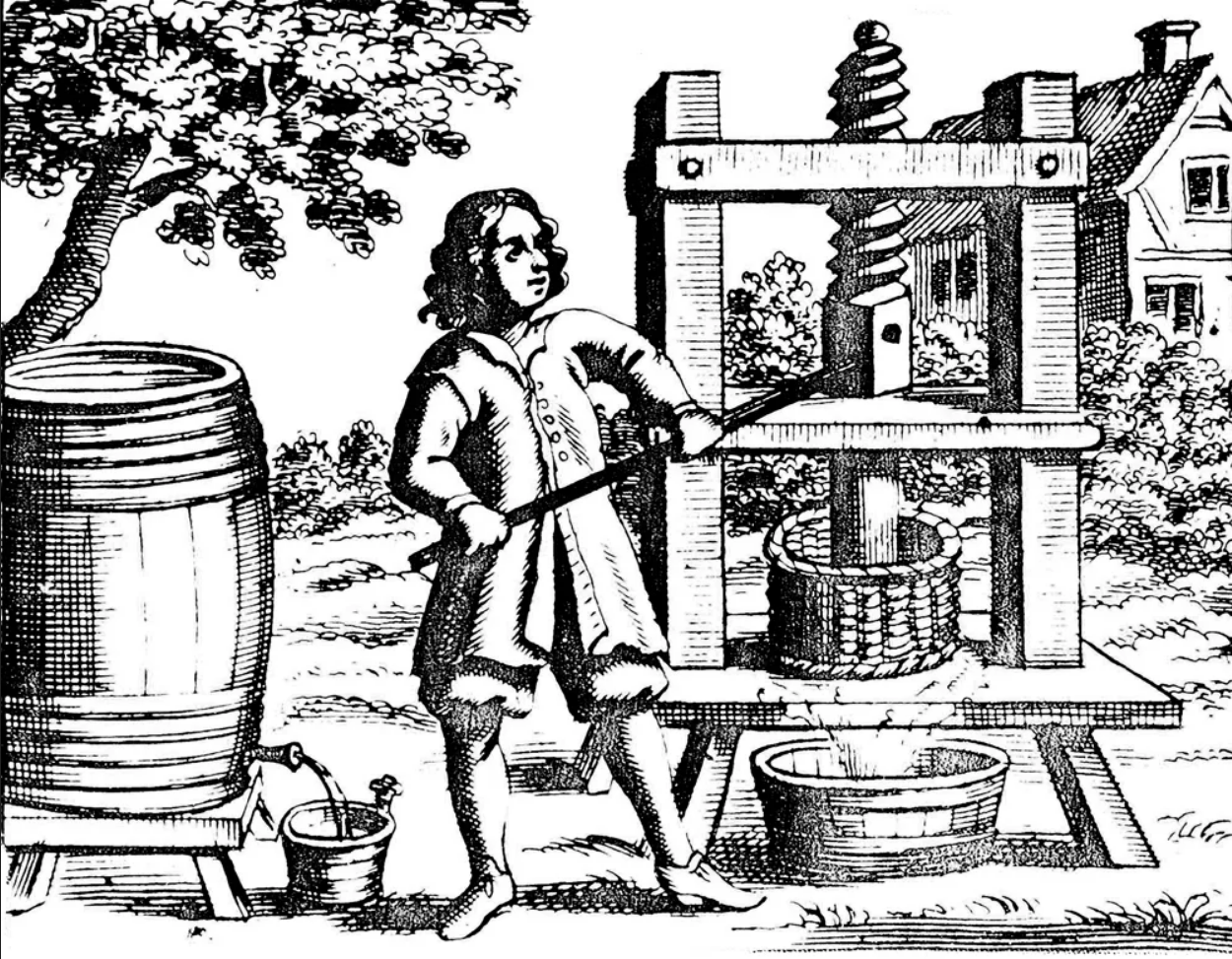
In the meantime numerous breweries had grown up in the environs of New Amsterdam. In 1655 we find one on the East River, in the neighborhood of the present Thirty-fifth street. The present Albany, then called Beaver-wyck, was founded in 1630, and but three years later a brewery was started there, which in the year 1649 produced 330 barrels of beer. The Albany beer became quite famous for its good quality. Aert Teunison established the first brewery in Hoboken, which he conducted until 1648, when he was killed by the Indians. In Pavonia a brewery already existed in 1654.
The Dutch as well as the English settlers of that time, as can be seen, were not Prohibitionists. In New Amsterdam as well as in New England brewing grew with the growth of the colonies, and it would seem that the consumption per capita of the population was greater than today.
3. THE MIDDLE AND SOUTHERN COLONIES.
As has already been said, not only in antiquity, but also in our own times, the barbarous peoples of Asia and Africa have had intoxicating drinks, mostly produced by the malting of some kind of grain. The Nubians have from the earliest times used a beverage made from a certain kind of barley, which resembles the Berlin “Weissbier” and has a sourish taste. African explorers tell also of Negro tribes who use malted grain for brewing. Maize and other grains are still used by many uncivilized tribes for the preparation of beer. A common method of setting up fermentation is for the women to sit around a vat and chew the grain and then spit it back into the vat.
It is not unlikely that the first colonists in America, especially in the Southern colonies, learned the use of maize for beer-brewing from the Indians. In Roanoke Island, a part of the present North Carolina, for instance, where an unsuccessful effort was made from 1584 to 1586 to found an English colony, an attempt was made to prepare malt from maize.
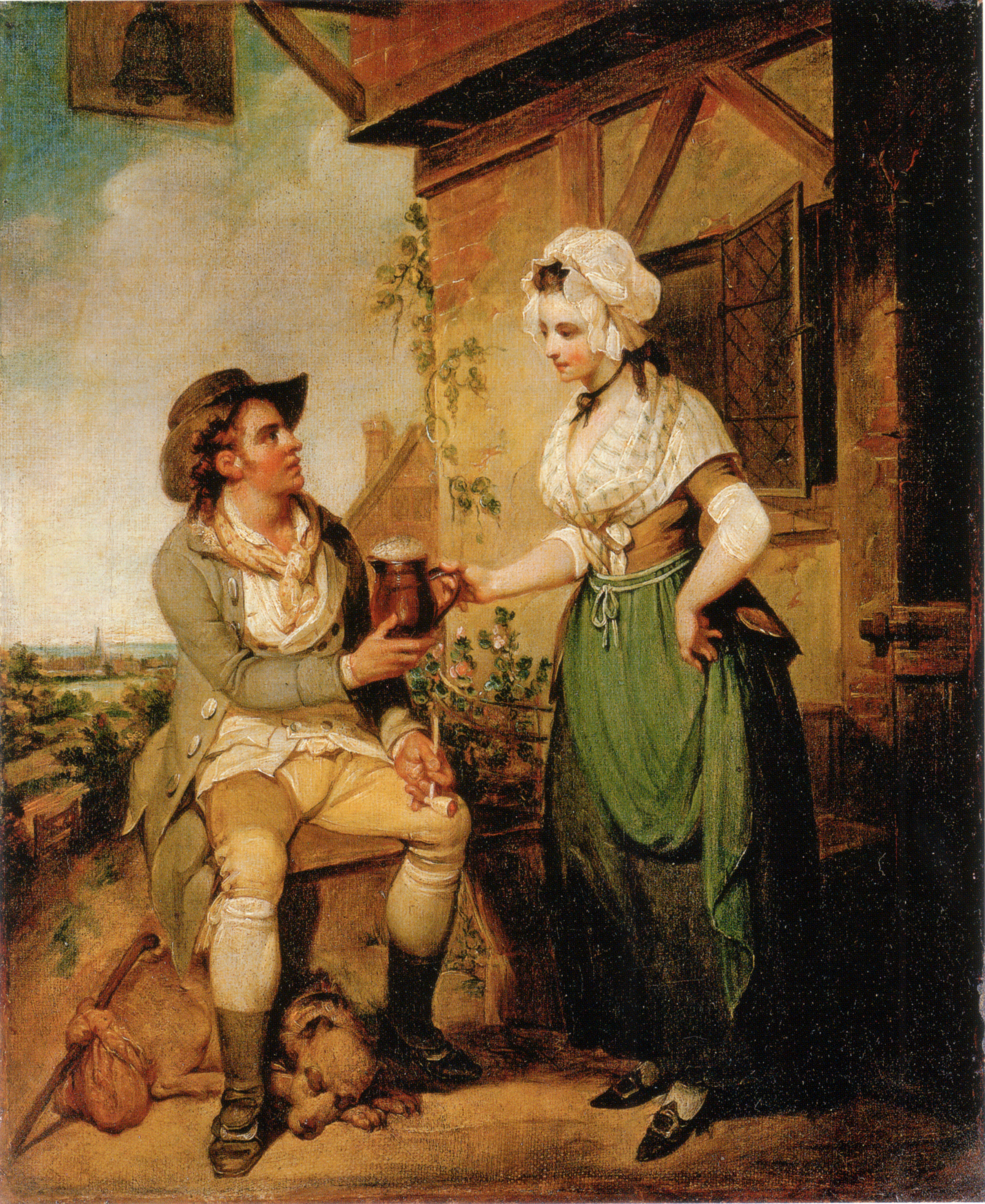
Beer-brewing was introduced into Pennsylvania by William Penn himself, who preferred malt beverages to “fire water” and who erected a brewery near his residence in Pennsbury in 1683. It was he who made the “Quaker beer” famous. Before the end of that century the first brewery was established in Philadelphia, the owner being one William Framton, whom William Penn describes as “a very able man who had erected a large brewhouse in order to provide good drink for the people up-river and down-river.” Another brewery of the time in Philadelphia was the Morris brewery, which was erected in 1687. In 1682 the first Assembly of Pennsylvania fixed the price of malt beer at twopence a quart and that of molasses beer at one penny a quart.
In the neighboring colony of West New Jersey beer-brewing flourished at this period. A malthouse was set up in Perth Amboy in 1683, but they lacked an experienced brewer and wrote to England to get one.
By the beginning of the eighteenth century the production of beer in Pennsylvania had reached such proportions that in 1704 the general government of the province took steps to encourage the cultivation of domestic hops. To this end a duty was imposed on imported hops. In 1718 a price regulation was introduced. The judges of the province were ordered to fix the price of beer four times a year, and to cause the officer of the court to go into the streets and cry out the price which they had decided upon and also to see that it was placarded on the courthouse door. Violations of the price regulations were severely punished. For the first offense a fine of twenty shillings was imposed, but for further violations the fine was five pounds ($25), which was not a small sum in those days. At the same time the seller forfeited the right to sell alcoholic drinks for the space of three years.
Beer commanded much attention in the legislation of Pennsylvania at this time. In 1721, in order to promote the production and use of beer, the Assembly forbade the sale of any other alcoholic drinks, a measure which contributed not a little to the growth of the brewing industry in Philadelphia.
Delaware and West New Jersey were first colonized by the Swedes; they brought the art of brewing from their mother country, and their women brewed beer for household use. Other beverages were also used, especially cider, rum, and home-made brandy. In the year 1654 it is reported that the Swedish colonists prepared “a strong and remarkably clear beer out of maize,” which was a favorite drink not only among the whites, but also among the Indians, although the latter on the whole preferred “fire water.” As early as 1660 there were independent brewers in Delaware, and in Burlington, N. J., there was already in 1698 a brewery which prepared beer for sale.
An historical writer of that time gives a list of the beverages which were then drunk in America. Among others he mentions “manatham,” which was made from small beer, rum, and sugar; “tiff” or “flip,” prepared in the same manner, with the addition of a piece of toast and butter; “hotch-pot,” a beverage made of warmed beer with the addition of rum; and “sillibub,” which was a mixture of warm milk and beer.
Then there was small beer, which was made from syrup by heating some water and adding a quantity of molasses and a little malt. The brew was then thoroughly shaken and afterwards a small quantity of hops and yeast was added and the whole was put in a barrel and allowed to ferment. The following day the beverage was cleared and was ready for use.
In the Southern provinces the climate was unfavorable to beer-brewing. Barley did not grow well, or became too hard for malting on account of the heat. Most of the early attempts at beer production failed, partly for lack of good material and partly for lack of good brewers. The cheapness of various kinds of distilled liquors also hindered the development of brewing. In Virginia as early as 1652 a certain George Fletcher obtained the exclusive right to prepare a certain kind of beer, which was not very popular. But before this, in the forties, a number of government breweries had been established, though with little success. Later beer was imported, but it did not keep well, on account of the climate. Cider, which was imported from New Jersey, took the place of beer in Virginia ; but much rum and wine was also consumed, as well as fruit brandy, which was prepared at home. Beer-brewing in Virginia never developed beyond the stage of household brewing, and even that took place only in the houses of the rich.
General Oglethorpe tried to establish a brewery in Georgia in 1740 in order to provide beer for his soldiers; to promote this enterprise he forbade the sale of rum and other spirituous liquors. His brewery was located in Jekyl and his beer is said to have been fairly good. In the end, however, the undertaking failed, on account of the obstacles presented by the climate and by the cheapness of rum.
It is related that when Oglethorpe made an expedition with his soldiers down the river he used a peculiar method to keep his men together. The soldiers were embarked in a number of small boats, and on one of these the General placed the entire supply of beer. The men in the other boats had to row pretty vigorously in order to keep near the one carrying the beer. If they did not reach it in time they had to quench their thirst with river water.
In the first blossoming of the brewing industry in America, which we observe during the first century of the settlements in New England, New Amsterdam’, Philadelphia, etc., the South had no part. In Baltimore the first brewery was established in 1744 and the second did not follow until 1761; these also had no particular success.
4. THE DECLINE OF BEER-BREWING IN THE COLONIES.
We have seen that in the first century of the history of the American colonies beer-brewing had flourished in certain parts. About the beginning of the eighteenth century the development of the industry met with a check, and beer-brewing rapidly declined until finally it lost all significance.
In Pennsylvania beer-brewing held its importance longer than in the other colonies, on account of the numerous German population and the good quality of the product. New York and Massachusetts also still exported beer, especially to the West Indies, as late as 1730; but after that the export declined rapidly.
In Philadelphia brewing continued a little longer because the product manufactured there, especially the ale and porter (the latter was manufactured for the first time in 1774), had gained a remarkable reputation. But even there this industry could not escape the general decline. At the beginning of the Revolutionary War the exportation of beer from Philadelphia did not exceed a thousand barrels a year.
The cause of this sudden decline of such a flourishing industry must be sought in economic changes and was connected with the increase of negro slavery in the Southern part of America and especially in the West Indies.
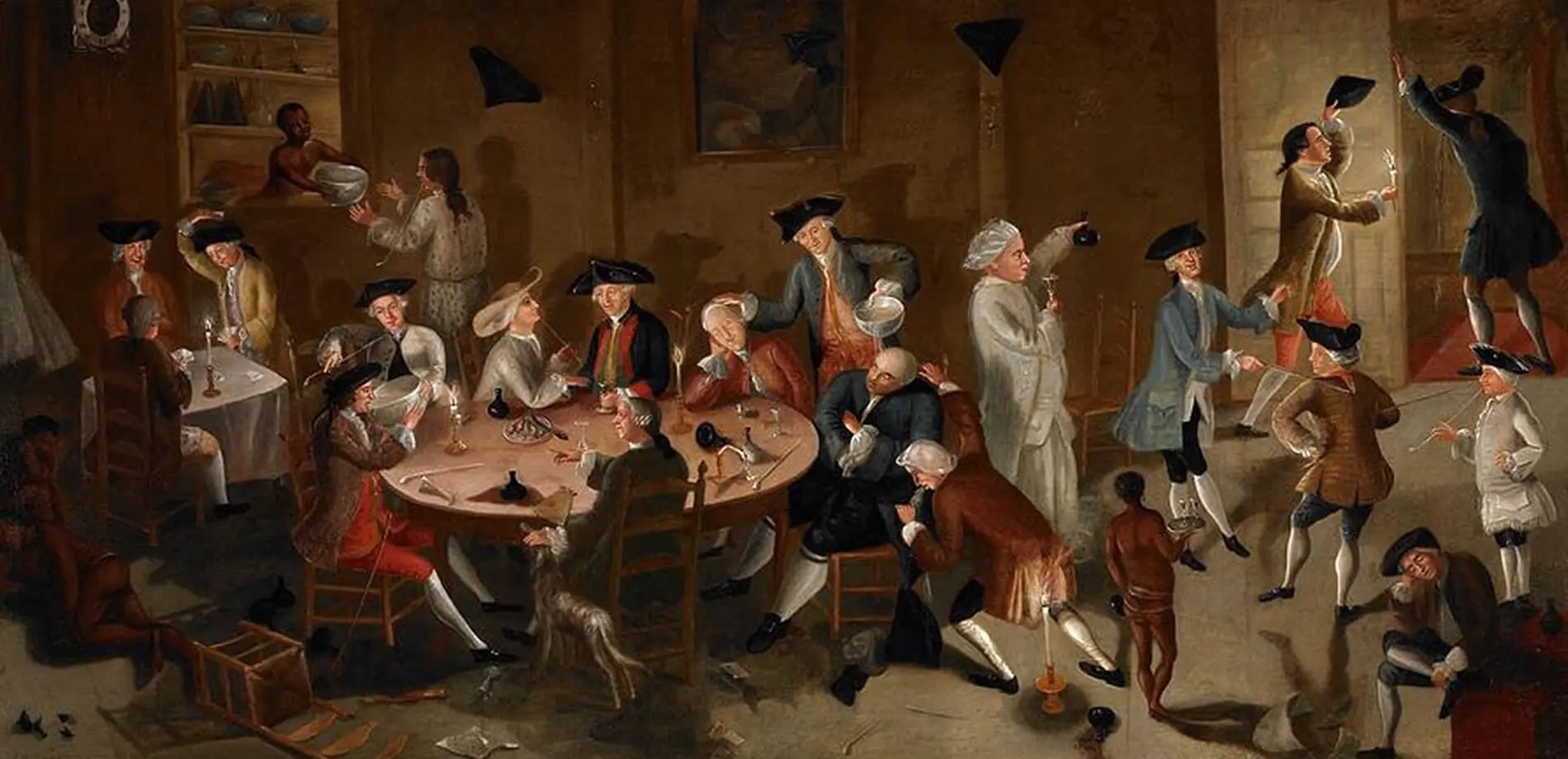
There were, however, additional causes for the decline, especially the increase in the cost of beer by reason of taxes and licenses, which were intended to fill the colonial treasuries. In order to avoid increasing the selling price, under these exactions, the brewers turned out an inferior product. In the year 1736 complaints came from Boston that “There is no good beer to be had here.” Other beverages took the place of beer in daily use. As early as 1700 it is reported from New England that cider was being manufactured in great quantities and that it was gradually displacing beer. About 1730 cider was the common drink of the people in New England, and it could be obtained almost everywhere at a price of three shillings a barrel. In addition to this, about 1745, tea became a household beverage in America.
But all this was only of minor significance in connection with the downfall of the brewing industry. The main cause, which led to the entire extinction of the beer industry in America, was the driving out of beer by a stronger drink — West India rum, which was produced from sugar-cane raised by the labor of negro slaves.
The New England shipowners and merchants discovered about this time that the negro slavery of the South might also become a beneficial institution for them. They found that the juice of the West Indian sugar-cane could be transformed into rum much easier in the cool climate of New England than in the tropical heat of the West Indies. Consequently they sent their ships to the islands and had them laden with molasses and brought back to the home port. Here the molasses was turned into rum, and rum became cheap. Pious and God-fearing men though they were, they took care that this cheap rum should come into general use and crowd out the drinks formerly in vogue. But rum served especially a higher — let us say a Christian purpose. For the cultivation of sugar-cane in the tropics negro slaves were employed, for whom the plantation owners paid good prices; they were imported from the West Coast of Africa, and the chief means of payment was Christian rum, for which the savage chiefs of tribes traded their black living chattels. This brought about the following favorable situation for the shipowners and merchants of New England: They got molasses from the West Indies and took it home. Here it was made into rum of a better or worse quality — principally worse. Ships were then loaded with this product and sent to the African Coast, where the cargo of rum was exchanged for a cargo of negro slaves; occasionally these Christian New Englanders did not hesitate to seize negroes by force or to tempt them to drink and carry them away to the ships while they were under the influence of rum. With this shipload of living freight they again went to the West Indian islands, and here the planters again exchanged their slaves’ product, molasses, for more slaves. Laden with the juice of the sugar-cane, the ship then returned to New England, and then the same round began again — ^new rum was made, new human flesh was bought with it, which again was exchanged for molasses, naturally at a great profit. And this trade laid the foundation of the capital of many honored families in the New England seaport towns.
Massachusetts and Connecticut took a large part in this trade, but both were surpassed by Rhode Island, which was most heavily interested in this traffic. The wealth of Newport grew rapidly in consequence of this rum and slave trade. Rum became so cheap for home consumption that beer practically vanished before it. For the lumbermen in the forests of New England and for the fishermen who had to remain for weeks at sea, and whose fare consisted of indigestible salt pork and maize, the warming rum was anyhow a better drink than the thin beer of that time. In the hard-working strata of the population, rum drove out beer entirely. Distilleries appeared everywhere, and not only the juice of the sugarcane, but also other materials, especially the sugar-maple and maize, were used for the production of spirituous drinks. In 1738, according to a report of that time from Boston, the quantity of rum produced there was surprisingly large, and the price remarkably low. For less than two shillings one could buy a gallon of rum. In all the rural districts of New England there were distilleries, whose products flooded the land. Occasionally the fact was realized that the intellect of the people was being clouded by the excessive use of alcohol. In 1727 distilling was prohibited in Connecticut, because “it made molasses dear and spirituous drinks are usually unwholesome.” But this did not last long. Six months later the measure was repealed because “it drove business to the other colonies.”
The flood of cheap spirits which spread over America at this time was not confined to New England. New York and other colonies did not let this good business escape them, and house distilling developed tremendously. Beer and the breweries could not stand against this flood, and even the production of wine, which had just begun to develop in some places, was sacrificed to it.
The decline of brewing continued up to the outbreak of the Revolutionary War. So little remained of this industry that its flourishing condition in the preceding century was hardly remembered. The quantity of fermented drinks was negligible in comparison with the measureless amount of spirits which was being drunk by all classes of the population.
In the laws of the colonies various attempts were made to check the decline of brewing and to revive the industry. Taxes were removed from beer, for they had made easy the triumphal march of rum. Premiums were offered to promote the domestic cultivation of hops, and attempts were made through appropriate measures to promote the production of malt and to stimulate beer-brewing. But the cheapness of rum and the advantages its manufacture brought to the possessing class counted for more than all the legislative regulations. Finally brewing in America again became a house industry, for domestic consumption. Only a few independent breweries survived this period of decline.
The Brewing Industry and the Brewery Workers’ Movement in America by Hermann Schlüter. Published by the International Union of United Brewery Workmen of America, Cincinnati. 1910.
Contents: Preface, The Beer-Brewing Industry, Introduction, Beer-Brewing Industry in the Middle-Ages, Beer-Brewing in the American Colonial Period, The Modern Beer-Brewing Industry, Brewing as a Great Industry, The Brewery Workers Movement, Prior to Organization, Beginnings of Organization, Permanent Organization, The Founding of the United Brewery Workmen and First Victories, The Struggle of 1888, The Development of the United Brewery Workmen, The American Federation of Labor and the Brewery Workmen, Labor Union and Political Organization, Hygienic Conditions of Brewery Workmen, Achievements and Prospects, Prohibition and Sunday Closing, Workingmen and Prohibition, Taxes and the Brewing Industry. 346 pages.
PDF of full book: https://books.google.com/books/download/The_Brewing_Industry_and_the_Brewery_Wor.pdf?id=jTGC_SB962oC&output=pdf
 Revolution's Newsstand