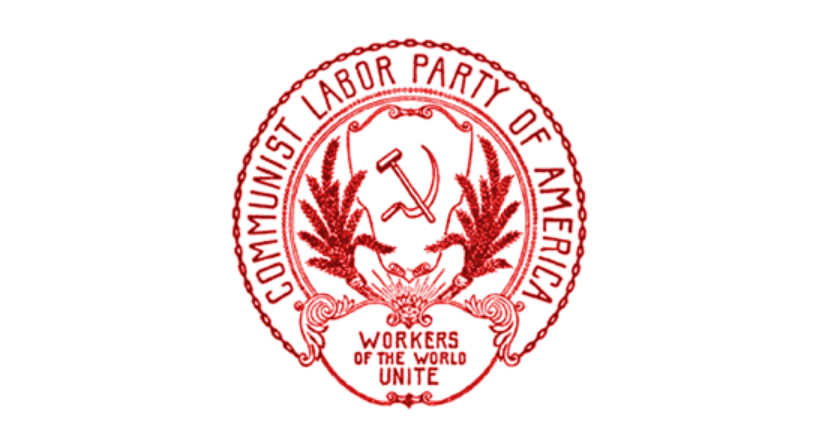
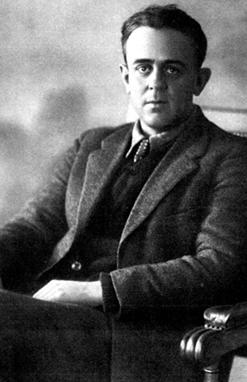
The split in the nascent U.S. Communist was consummated even before its launch, with the large majority, mainly grouped around the Language Federations and led by Louis Fraina held no hope for the Socialist Party and wished to constitute itself immediately. While those grouped around John Reed and Alfred Wagenknecht favored an attempt to win the Socialist Party for Communism, where a majority of activists had recently voted for the Left Wing. After failing to win the leadership of the stacked and undemocratic 1919 Emergency Convention, the C.L.P. tendency, leaning syndicalist and Midwestern, withdrew and held a rival conference to both the S.P. and the Communist Party of America. Below is a list of delegates, the Party officers they elected, and the Platform and Program of the Communist Labor Party adopted on September 5, 1919 and taken for the C.L.P. aligned ‘Ohio Socialist.’ The C.L.P. only lasted eight months before joining with Jay Lovestone and Charles Ruthernberg’s C.P.A. dissidents to form the United Communist Party. It would not be until late 1921 that the majority of Third Internationalist would find themselves in a common, officially recognized Communist Party.
The Founding of the Communist Labor Party: Delegates, Elected Officers, Platform and Program Adopted September 5, 1919.
ELECTED OFFICERS
National Executive Secretary:
Alfred Wagenknecht (Former SPA State Secretary, Ohio)
National Executive Committee:
Max Bedacht (San Francisco, CA)
Alexander Bilan (Cleveland, OH)
Jack Carney (Duluth, MN)
L.E. Katterfeld (Cleveland, OH)
Edward Lindgren (Brooklyn, NY)
Alternates to National Executive:
L.K. England (Moline, IL);
Edgar Owens (Moline, IL)
Organization Director:
L.E. Katterfeld
Labor Committee:
Charles Baker (Ohio)
L.K. England (Illinois)
Benjamin Gitlow (New York)
R.E. Richardson (Utah)
Arne Swabeck (Washington)
International Delegates:
John Reed (Editor of Voice of Labor, New York)
Alfred Wagenknecht (Former SPA State Secretary, Ohio)
‘Platform and Program of the Communist Labor Party of America’ from The Ohio Socialist. No. 85. September 17, 1919.
PLATFORM

1. The Communist Labor Party of the United States of America declares itself in full harmony with the revolutionary working class parties of all countries and stated by the Third International formed at Moscow.
2. With them it thoroughly appreciates the complete development of capitalism into its present form of Capitalist Imperialism with its dictatorship of the capitalist class and its absolute suppression of the working class.
3. With them it also fully realizes the crying need for an immediate change in the social system; it realizes that the time for parleying and compromise has passed; and that now it is only the question whether all power remains in the hands of the capitalist or is taken by the working class.
4. The Communist Labor Party proposes the organization of the workers as a class, the overthrow of capitalist rule, and the conquest of political power by the workers. The workers organized as the ruling class shall, through their government, make and enforce the laws; they shall own and control land, factories, mills, mines, transportation systems, and financial institutions. All power to the workers!

5. The Communist Labor Party has as its ultimate aim the abolition of the present system of production, in which the working class is mercilessly exploited, and the creation of an industrial republic wherein the machinery of production shall be socialized so as to guarantee to the workers the full social value of the product of their toil.
6. To this end we ask the workers to unite with the Communist Labor Party for the conquest of political power to establish a government adapted to the communist transformation.
PARTY AND LABOR PROGRAM
Part I
The Communist Labor Party of America declares itself in complete accord with the principles of Communism, as laid down in the Manifesto of the Third International formed in Moscow.
In essence, these principles are as follows:
1. The present is the period of the dissolution and collapse of the whole system of world capitalism. Unless capitalism is replaced by the rule of the working class, world civilization will collapse.
2. The working class must organize and train itself for the capture of state power. This capture means the establishment of the new working class government machinery, in place of the state machinery of the capitalists.
3. This new working class government — the Dictatorship of the Proletariat — will reorganize society on the basis of Communism, and accomplish the transition from Capitalism to the Communist Commonwealth. Communist society is not like the present fraudulent capitalist democracy — which, with all its pretensions to equality, is merely a disguise for the rule of the financial oligarchy — but it is a proletarian democracy, based on the control of industry and the state by the workers, who are thereby free to work out their own destiny. It does not mean capitalist institutions of government, which are controlled by the great financial and industrial interests, but organs of administration created and controlled by the masses themselves; such as, for example, the Soviets in Russia.
4. The Dictatorship of the Proletariat shall transfer private property in the means of production and distribution to the working class government, to be administered by the workers themselves. It shall nationalize the great trusts and financial institutions. It shall abolish capitalist agricultural production.
5. The present world situation demands that the revolutionary working class movements of all countries shall closely unite.
6. The most important means of capturing state power for the workers is the action of the masses, proceeding from the place where the workers are gathered together — in the shops and factories. The use of the political machinery of the capitalist state for this purpose is only secondary.
7. In those countries in which there is a possibility for the workers to use this machinery in the class struggle, they have, in the past, made effective use of it as a means of propaganda, and of defense. In all countries where the conditions for a working class revolution are not ripe, the same process must go on.
8. We must rally all groups and proletarian organizations which have manufactured and developed tendencies leading in the directions above indicated and support and encourage the working class at every phase of its struggle against capitalism.
Part II
1. The economic conditions in every country determine the form of organization and method of propaganda to be adopted. In order efficiently to organize our movement here, we must clearly understand the political and economic structure of the United States.

2. Although the United States is called a political democracy there is no opportunity whatever for the working class through the regular political machinery to effectively oppose the will of the capitalist state.
3. The years of Socialist activity on the political field have brought no increase of power to the workers. Even the million votes piled up by the Socialist Party in 1912 left the Party without any proportionate representation. The Supreme Court, which is the only body in any Government in the world with the power to review legislation passed by the popular representative assembly, would be able to obstruct the will of the working class even if Congress registered it, which it does not. The Constitution, framed by the capitalist class for the benefit of the capitalist class, cannot be amended in the workers’ interest, no matter how large a majority may desire it.
4. Although all the laws and institutions of Government are framed and administered by the capitalists in their own interests, the capitalists themselves refuse to be bound by these laws or submit to these institutions whenever they conflict with these interests. The invasion of Russia, the raids into Mexico, the suppression of governments in Central America and the Caribbean, the innumerable wars against the working class revolutions now being carried on — all these actions have been undertaken by the Administration without asking the consent even of Congress.

The appointment by the President of a Council of National Defense, the War Labor Board, and other extra-constitutional governing bodies without the consent of Congress is a direct violation of the fundamental law of republican government. The licensing by the Department of Justice of anti-Labor strikebreaking groups of employers — such as the National Security League, the American Defense Society, the Knights of Liberty, the American Protective League — whose express purpose was the crushing of labor organization and all class activities of the workers, and who inaugurated in this country a reign of terror similar to that of the Black Hundreds of Russia — was entirely opposed to the principles of the American Government.
Moreover, the War and its aftermath have demonstrated that government power does not reside in the regularly elected, or even the appointed officials and legislative bodies. In every state, county, and city in the Union, the so-called “police power” is shown to be superior to every law. In Minnesota, Wisconsin, and many other states, so-called Public Safety Commissions and similar organizations were constituted by authority of the Governors, made up of the representatives of Chambers of Commerce and Employers’ Associations, which usurped the powers of Legislatures and municipal administrations.
6. Not one of the great teachers of scientific Socialism has ever said that it is possible to achieve the Social Revolution by the ballot.
7. However, we do not ignore the value of voting, or of electing candidates to public office — so long as these are of assistance to the workers in their economic struggle. Political campaigns, and the election of public officials, provide opportunities for showing up capitalist democracy, educating the workers to a realization of their class position, and of demonstrating the necessity for the overthrow of the present capitalist system. But it must be clearly emphasized that the chance of winning even advanced reforms of the present capitalist system at the polls is extremely remote; and even if it were possible, these reforms would not weaken the capitalist system.
Part III
1. In America, the capitalist class has never had a feudal aristocracy to combat, but has always been free to concentrate its power against the working class. This has resulted in the development of the American capitalist class wholly out of proportion to the corresponding development in other countries. By their absolute control of the agencies of publicity and education, the capitalists have gained a control over the political machinery which is impossible to break by resorting to this machinery.
2. Moreover, in America there is a highly-developed Labor movement. This makes it impossible to accomplish the overthrow of capitalism except through the agency of the organized workers. Furthermore, there is in America a centralized economic organization of the capitalist class which is a unit in its battle with the working class, and which can be opposed only by a centralized economic organization of the workers.
3. The economic conditions of society, as Marx foretold, are pushing the workers toward forms of organization which are, by the very nature of things, forced into activity on the industrial field with a political aim — the overthrow of capitalism.
4. It is our duty as Communists to help this process, to hasten it, by supporting all efforts of the workers to create a centralized revolutionary industrial organization. It is our duty as Communists, who understand the class struggle, to point out to the workers that upon the workers alone depends their own emancipation and that it is impossible to accomplish this through capitalist political machinery, but only by the exercise of their united economic power.
PROGRAM
1. We favor international alliance of the Communist Labor Party only with the Communist groups of other countries which have affiliated with the Communist International.
2. We are opposed to association with other groups not committed to the revolutionary class struggle.
3. We maintain that the class struggle is essentially a political struggle, that is, a struggle by the proletariat to conquer the capitalist state, whether its form be monarchical or democratic-republican, and to replace it by a governmental structure adapted to the Communist transformation.
4. Communist platforms, being based on the class struggle, and recognizing that this is the historical period of the Social Revolution, can contain only one demand: The establishment of the Dictatorship of the Proletariat.
5. We favor organized party activity and cooperation with class conscious industrial unions in order to unify industrial and political class conscious propaganda and action. Locals and Branches shall organize shop branches, to conduct the Communist propaganda and organization in the shops and to encourage the workers to organize in One Big Union.
6. The Party shall propagandize industrial unionism and industrial union organization, pointing out their revolutionary nature and possibilities.
7. The Party shall make the great industrial battles its major campaigns, to show the value of the strike as a political weapon.
8. The Party shall maintain strict control over all members elected to public office — not only the local organizations, but the National Executive Committee. All public officials who refuse to accept the decisions of the Party shall be immediately expelled.
9. In order that the Party shall be a centralized organization, capable of united action, no autonomous groups or federations independent of the will of the entire Party shall be permitted.
10. All Party papers and publications endorsed by the Party, and all educational and propaganda institutions endorsed by the Party, shall be owned and controlled by the regular Party organization.
11. Party platforms, propaganda, dues, and methods of organization shall be standardized.
CONVENTION DELEGATES
ARKANSAS: Fannie Crowell, Argenta. W.K. Tennyson, Beebe.
CALIFORNIA: Kasper Bauer, San Jose, Max Bedacht, San Francisco, James H. Dolsen, San Francisco, Edric B. Smith, Oakland, Irene M. Smith, Los Angeles, John C. Taylor, Oakland.
COLORADO: Harry Intemann, Denver, Fred Underhill, Denver.
DELAWARE: Beatrice M. Sedgwick, Edge Moor.
FLORIDA: John Sprunk, Tampa.
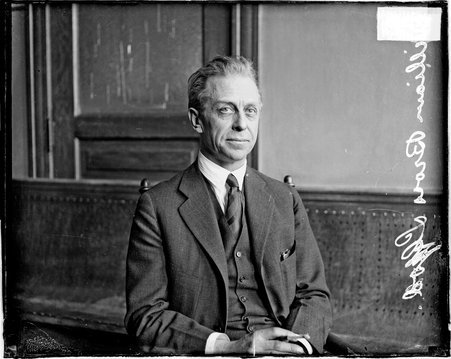
ILLINOIS: O.J. Brown, DeKalb, N. Juel Christensen, Chicago, L.K. England, Moline, H.E. Greenwood, Chicago, Samuel F. Hankin, Chicago, William Bross Lloyd, Winnetka, Charles Krumbein, Chicago, William Lugge, Belleville, O. Alfred Olsen, Rockville, Edgar Owens, Moline, Dr. Karl F.M. Sandberg, Chicago, Perry H. Shipman, Rock Island, A.D. Swargessi (Alt.)
INDIANA: George A. Cameron, Terre Haute, Morris K. Friedman, South Bend, W.F. Jackson, Indianapolis, John Zimmerman
KANSAS: Gertrude C. Harmon, Kansas City, Ludwig E. Katterfeld, Dighton.
KENTUCKY: E.B. Austin, Jr., Louisville, Emil Von Allmen, Louisville.
MICHIGAN: Marlin Kirin, Detroit.
MINNESOTA: Clara Strong Broms*, St. Paul, Jack Carney, Duluth, Charles Dirba*, Minneapolis, Carl Haglund*, Duluth, H. Holm*, St. Paul, Carl Skoglund*, Minneapolis, Joseph Ungar*, St. Paul.
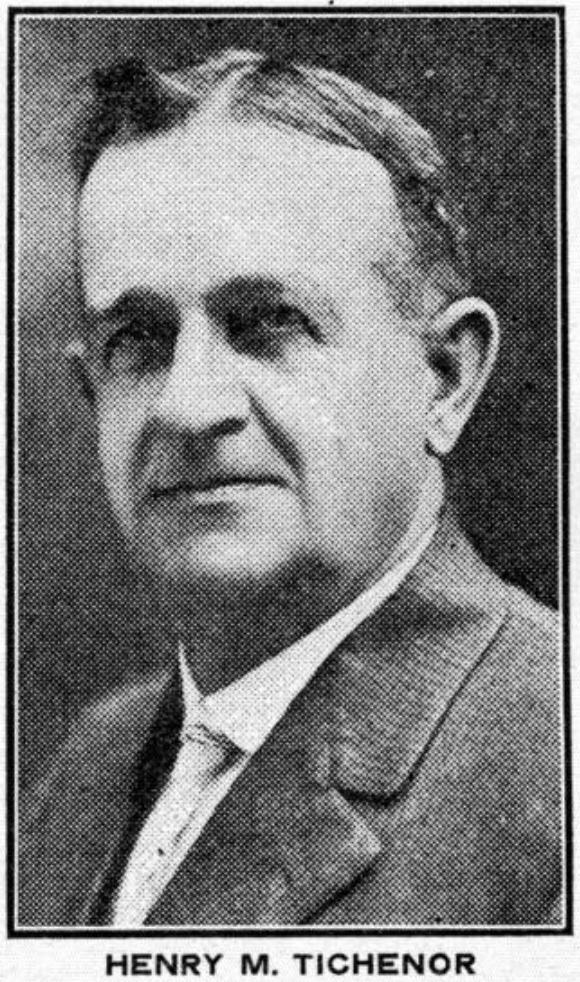
MISSOURI: Henry Tichenor, St. Louis, E.D. Wilcox, Kansas City.
NEBRASKA: William Chase, Omaha, Edward Rutlege, Omaha.
NEW JERSEY: Fred Harwood, Newark, Henry Petzold, West Hoboken, Louis F. Wolf, Wehawken.
NEW YORK: L.B. Boudin*, Brooklyn, Thomas Crimmins, Syracuse, Benjamin Gitlow, New York, Fannie Jacobs, Brooklyn, Edward Lindgren, Brooklyn, Sarah J. Lindgren, Long Island, Ludwig Lore, New York, Irwin B. Klein, Yonkers, John Reed, Croton-on-Hudson, Morris Zucker, Brooklyn.
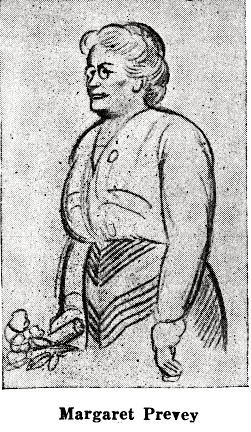
OHIO: Charles Baker, Akron, Alexander Bilan, Cleveland, Charles Bonsall, Salem, Lotta Burke, Cincinnati, Tom Clifford, Cleveland, Thomas Davies, Hubbard, J.F. Denson, Warren, M.J. Jeannero, Canton, Joseph A. Johnson, Toledo, Clifford King, Hamilton, William O. McClory, Tiflin, Marguerite Prevey, Akron, Minnie Rivkin (Alt.), Cleveland, C.E. Ruthenberg*, Cleveland, E.S. Smith (Alt.), Warren, Alfred Wagenknecht, Cleveland, Lawrence A. Zitt, Cleveland, Edward Smith (Alt.), Cleveland
OREGON: Victor Saulit, Harlin Talbert, H.S. Warren
RHODE ISLAND: Joseph M. Coldwell, James P. Reid
TEXAS: B.H. Lauderdale
UTAH: E.T. Hyde, R.E. Richardson
VIRGINIA: E.M. Dutton
WASHINGTON: Kate Greenhalgh, Knute Evertz, Aaron Fishelman, J. McSlarrow, Arne Swabeck
WEST VIRGINIA: Edwin Firth, J.H. Snyder
STATE NOT KNOWN: Bolding, Jackman
FRATERNAL DELEGATES: W.W. Cox [Workers International Industrial Union], Noble C. Wilson [Terre Haute, IN].
(* withdrew from convention)
 Revolution's Newsstand