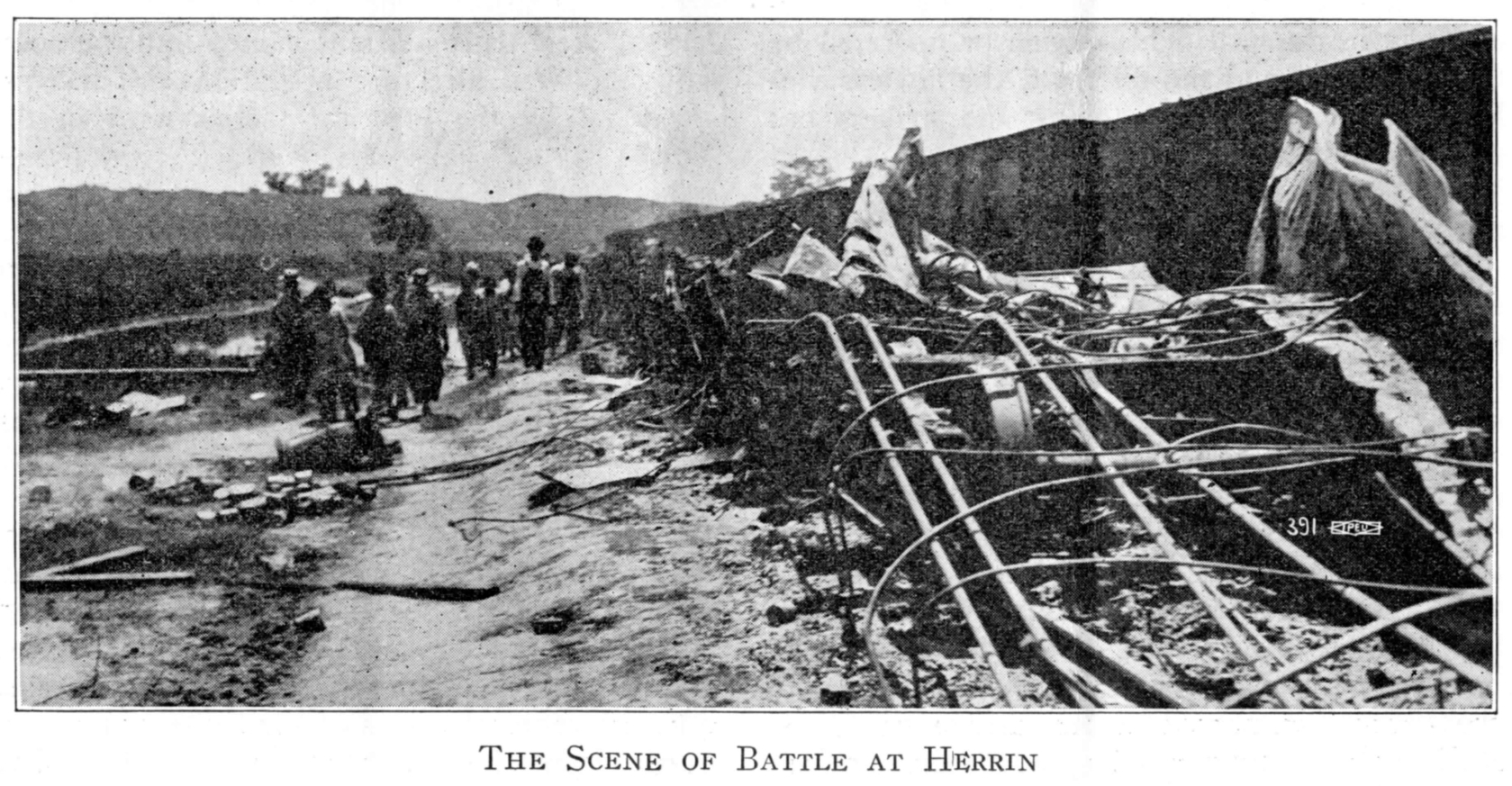
Given its implications and consequences, the events of one hundred years ago in the mining community Herrin, Illinois is rarely spoken of, even today. However, Herrin still silently reverberates over the labor, and all liberation movements. Before Herrin, the predominate force facing strikes were hired guards, Pinkertons, and deputized gangs under the direct pay of the bosses. After Herrin, the force we faced was largely the National Guard and the state directly. Why? During 1922’s national U.M.W.A. strike, in disregard to a previous agreement, 50 armed scabs were brought into the mines at Herrin commanded by notorious strike-breaker C.K. McDowell. Those gun thugs killed several strikers shortly after their arrival and were subsequently met with a terror equal to their crimes. Armed miners surrounded the scabs in a fierce gunfight, took their surrender, burned down the mine, and then meted out an enraged justice on the survivors. At least 20 scabs, including McDowell died on June 21, 1922 showing that our side could strike real fear as well as theirs.
‘Herrin: A Warning’ by Earl R. Browder from Labor Herald. Vol. 1 No. 6. August, 1922.
THE miners of the United States have had bitter experience with the gunmen and private detectives hired by the operators. Particularly in the coal fields owned or operated by the steel trust and the oil trust, the lawless violence of private armies against the strikers has gone the limit. Ludlow, Cabin Creek, Calumet, West Virginia, are still open wounds inflicted upon the miners.
Williamson County, Illinois, has been a peaceful spot during all the recent coal strikes. But the Southern Illinois Coal Co., operating a strip-mine between the towns of Marion and Herrin, suddenly became militantly active in June, against the strikers. After working, under agreement with the union, only upon uncovering the coal while the strike was on, they suddenly announced they would begin to mine the coal itself. The union men immediately walked off the job. Armed private detectives and strike breakers were immediately rushed in, and scab operations commenced under charge of C. K. McDowell, a gunman who had “seen service” in the mine strikes of Colorado and whose record was familiar to the strikers.
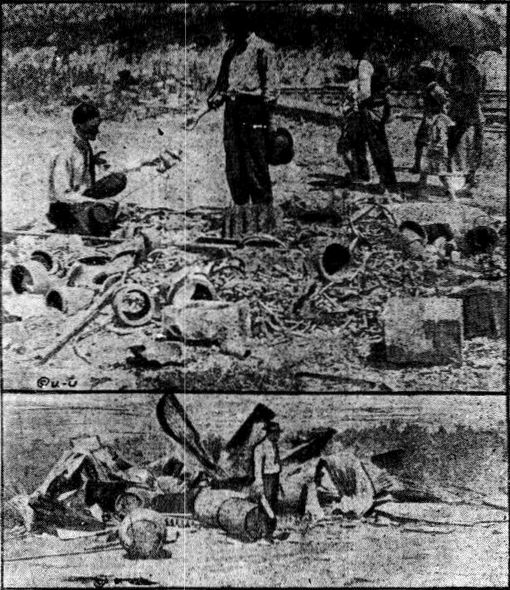
Then the information began to spread about that the steel trust had put money into the company and was directing operations. This was borne out by the identical tactics used in the West Virginia coal fields operated by the steel trust. Armed guards began to terrorize the inhabitants; public roads were closed; even representatives of the Chicago newspapers and of the State government, were stopped, and allowed to pass over the highways only under the permit of McDowell. The miners appealed to the State to remedy these conditions. The adjutant general of the State militia sent Colonel Hunter to Williamson County to investigate.
Hunter came, and was also stopped on the highway. When he inquired about the conditions at the mine, the matter of guns and ammunition stored there, etc., McDowell answered “this is being kept for ducks.” When appealed to by the representatives of the State· and county to withdraw the gunmen, he replied: “I’ve broken other strikes, and I’ll break this one.” Hunter reported to Lester, the ostensible owner of the mine, that the gunmen were threatening the peace of the community, and action must be taken to curb them. He made this statement over the long distance telephone in the presence of the union officials.
Nothing was done. The gunmen ruled unchecked. The scab operations went on. On Wednesday, June 21st, the union miners sent a delegation to visit the mine to try to get the workers there to join the strike. According to one of the strike breakers, when interviewed in the hospital, the gunman McDowell in charge of the operations, saw the committee approaching through the woods surrounding the mine, raised his high-powered rifle and saying, “That looks like a man; let’s see if it is,” he fired, killing George Henderson, one of the strikers’ committee, and another guard fired, killing Joe Picovich.
The news of these wanton murders spread throughout the county. Coming on top of all the previous terrorization, intimidation, insults and provocations, with the remembrance of West Virginia fresh in their minds, it roused the entire county to action. Thousands of miners flocked to the scene on the next day, and a battle ensued. When it was over the gunmen were either dead, wounded, or missing.
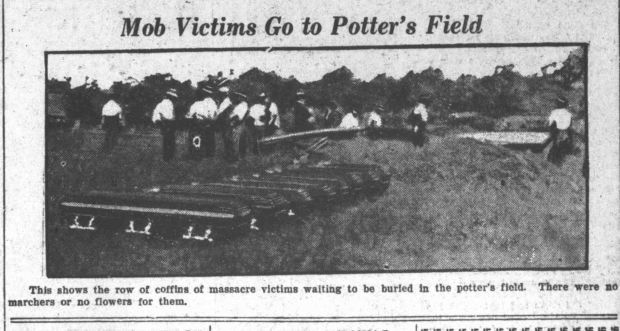
The coroner’s jury which investigated the matter immediately after the battle, brought in a verdict placing the responsibility squarely upon the coal company which had imported the hired gunmen. The facts of the authority of the state having been flouted by these capitalist agents, of newspaper reporters having been threatened with violence by the detectives, of public roads having been closed to traffic, and the brutal and cold-blooded murder, of Henderson and Picovich, of the warning given by Colonel Hunter to the adjutant general that the gunmen would have to be curbed, and the failure of the State to act; all these things combined to make such a clear case that even the capitalist newspapers have had to quit printing “news” and fall back upon editorials in order to condemn the miners of Williamson County.
The people of Williamson County all know the merits of the battle. When a correspondent met the Mayor of Herrin and asked him for some particulars, the Mayor said: “As a matter of fact, the mine office is at Marion, and the mine is closer to there than to Herrin. So Herrin does not deserve, according to your point of view, the honor or the blame.”
Williamson County as a whole considers it an honor that it prevented a repetition of the West Virginia slaughter of strikers. When they had the old challenge of the steel trust thrown in their faces they met it and wiped it out. Herrin stands as a warning to the predatory capitalists, that the use of private armed force is not entirely a one-sided game; it is a warning to the Government that it cannot continue to wink at murders committed by detectives in order to break strikes.
When the striking workers have to face the armed forces of the Government thrown into battle for the capitalists, that is one problem which has yet to be solved. But the use of private armies, detectives, thugs, and gunmen, has been met by the miners of Herrin, and a challenge has been accepted. It is a warning that the times have changed.
The Labor Herald was the monthly publication of the Trade Union Educational League (TUEL), in immensely important link between the IWW of the 1910s and the CIO of the 1930s. It was begun by veteran labor organizer and Communist leader William Z. Foster in 1920 as an attempt to unite militants within various unions while continuing the industrial unionism tradition of the IWW, though it was opposed to “dual unionism” and favored the formation of a Labor Party. Although it would become financially supported by the Communist International and Communist Party of America, it remained autonomous, was a network and not a membership organization, and included many radicals outside the Communist Party. In 1924 Labor Herald was folded into Workers Monthly, an explicitly Party organ and in 1927 ‘Labor Unity’ became the organ of a now CP dominated TUEL. In 1929 and the turn towards Red Unions in the Third Period, TUEL was wound up and replaced by the Trade Union Unity League, a section of the Red International of Labor Unions (Profitern) and continued to publish Labor Unity until 1935. Labor Herald remains an important labor-orientated journal by revolutionaries in US left history and would be referenced by activists, along with TUEL, along after it’s heyday.
Link to PDF of full issue: https://www.marxists.org/history/usa/pubs/laborherald/v1n06-aug-1922.pdf
 Revolution's Newsstand