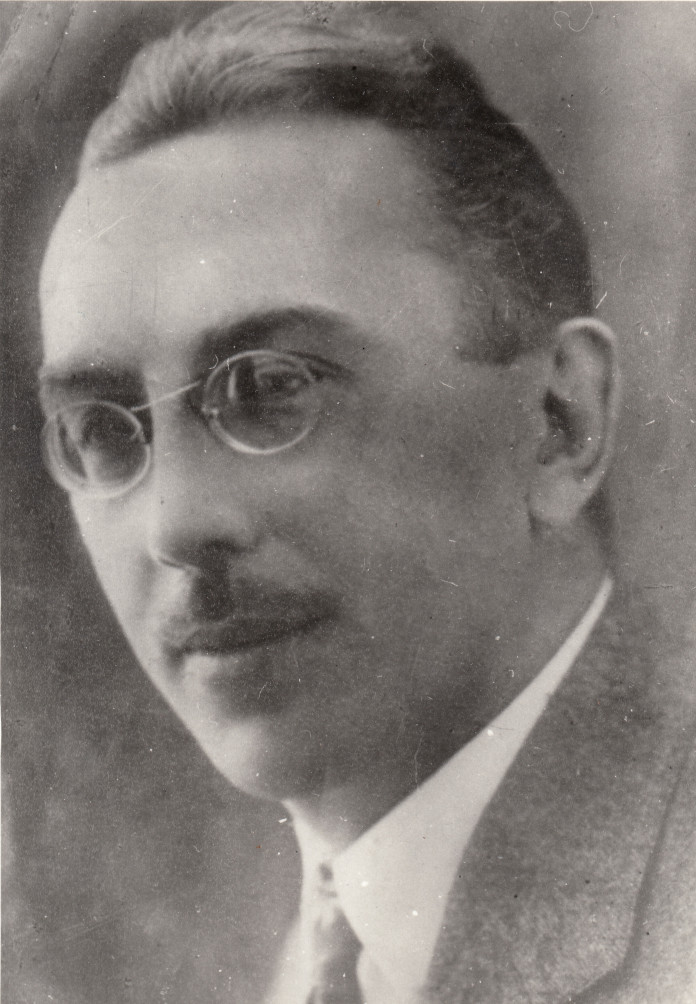
An intervention into the debate on the N.E..P. and industrialization from early 1924. Valerian Ossinsky (Obolensky) was a leading early Soviet economist and Left Communist, later ‘Democratic Centralist,’ in the years after the Revolution. One of the signatories of the The Platform of the 46, he was a lead voice of the Opposition on economic matters in the debates of 1923-1924. Like a number of Oppositionists, Ossisnsky was moved to the diplomatic corp, becoming ambassador to Sweden. Breaking with the Opposition in 1925, he was elected to the Central Committee with much of his work with Gosplan and in agricultural planning. He aligned himself with Bukharin in the collectivization debate, but retained his membership in the Party, with academic work largely replacing Party and state activities. Arrested in October, 1937 during the Purges, Ossinsky was a witness in the trial of Bukharin and Rykov. He was executed on September 1, 1938 as an ‘agent of fascism’ who had plotted with Bukharin and others to kill Lenin, Stalin, and Sverdlov in 1918.
‘Resolution on the ”Immediate Tasks of Economic Policy” by Valerian Ossinsky from International Press Correspondence. Vol. 4 No. 20. March 14, 1924.
Submitted by Comrade Ossinsky to the Meeting of the Party Nuclei Bureaus and of the Active Party Workers of the Moscow Organization.(1)
In view of the fact that the resolution of the Political Bureau of the C.C. on the “Immediate Tasks of the Economic Policy”(2) represents mainly an exposition of the resolutions adopted by the 12th Congress of the Russian CP. with the addition, however, of some new proposals of doubtful worth, and the omission of some questions which have become ripe, the Meeting considers it necessary to amend the resolution of the Political Bureau in the following fundamental respects:
1. It is necessary, not only to bring forward the questions regarding the fundamental and decisive significance of knitting together the nationalized industries and the peasant economy, but also to explain the reasons for which this knitting together has not been realized during the past period and the reasons why the connecting of the villages with the private home industry and with private commercial capital have developed more successfully. The fundamental reasons for all this are: the lack of a plan uniting the work of all the branches of state economy, the casualness and the unsystematized work of the leading organs, and in connection with this, the disharmony and crudeness prevalent in the work of the whole economic peripheries.

Though reproaching “a number of economic organs” for having incorrectly applied the directives of the 12th Congress, and for having raised the prices higher than was justified, the resolution loses sight of the fact that such a reproach implies also the lack of leading on the part of the highest organs in the commercial activity of the economic organs. The reproach in the first place must therefore be directed against the highest organs.
2. Setting aside the question as to whether, under the conditions of the Nep, crises are unavoidable, or whether it is only so-called “depressions” which are unavoidable, it is necessary to state that the present crisis has nothing to do with such unavoidable economic disturbances. It is not the result either of a sudden reduction in the demand from the peasants, resulting from a bad harvest (which might be a possible cause of a depression and could not be overcome), or of a change in the movement· of world prices. It is also impossible to explain it by pointing out the disparity between industrial and agricultural production, a disparity which, it is alleged, results from objective factors. If the development of the State industry is proceeding in an elementary way, and’ is not balanced by the development of agriculture, this is due to the lack of a plan of management.
The principal causes of the present crisis are: a) the chaotic nature of our industrial construction; b) the casual and improper credit policy; owing to the latter, in the period of spring and summer 1923, the financial means of the State Bank were totally engaged in operations of industry and wholesale trade on unsound bases and without retaining a reserve for the autumn period of grain crop.
The resolution must be modified, in order to state the real causes of the crisis and in order to make clear the concrete faults committed; to screen these faults means to prevent their being corrected.
3. In the resolution of the Political Bureau, there is no mention of the question of the administration of industry, which has a tremendous importance among the actual tasks of economic policy. It is necessary to put forward and work out concretely the question of establishing a close connection between the trusts, which at present in fact are autonomous, on the one hand, and the Supreme National Economic Council on the other, as well as the task of creating a firm and well-connected system of state economy on the basis of an economic plan and of a correct leadership of the State enterprises. This will strengthen to the highest degree the position of our State Economy in its struggle against private capital and also in regard to a real knitting together of the State Industry with the villages.
4. The resolution of the Political Bureau, in one of its Points, lays down a totally incorrect task, namely to include in the calculation of the price of products merely “the necessary minimum profit.” Such a task implies a revocation of the resolution of the 12th Congress, a transition to the position of a common, bourgeois “fiscal economy”, it excludes the possibility of basing the State budget on incomes deriving from industry. The corresponding task can only be formulated as follows: “obtaining the greatest profit with a given average price and with the obligation to strive to reduce the price by means of enlarging and perfecting the working capacity”.
5. The resolution of. the Political Bureau does not give a correct estimation of the successes of private capital in general and, in particular, of private commercial capital which has already come into possession of 14% of the wholesale trade,15% of the wholesale-retail and 80% of the small trade, and has also accumulated large sums in goods and stable values. It is necessary to dedicate far greater attention than hitherto to the work in the sphere of commerce. In connection with this it is necessary (see Comrade Lenin’s article on Cooperation), in the fight against private commercial capital, to bring to the forefront the co-operative organizations, elaborating a plan of increased credits to them, both by supplying them with goods from the State industry and also with financial means.
6. The demand for an active trade balance put forward in the resolution occupies a very extended, but completely injustified position. This demand, in its essence, means: to export as much as possible, to import as little as possible and furthermore only to import means of production. To accumulate the difference in the form of a gold fund.
Regard, however, must be had to the following:
a) Soviet Russia cannot allow herself the luxury of spending means for the transition from bank notes to metal currency, but must spend these means for productive purposes;
b) the import of the necessary industrial raw materials (cotton) is to be developed as much as possible;
c) the private importation of articles for mass consumption in which we are lacking could be the principal and most profitable weapon for the State in its fight against speculation in goods;
d) the importation of articles for peasants’ consumption is a very important means for developing our export. from this point of view it is necessary not to strive at the greatest preponderance of exports over imports, but at maintaining a solid equilibrium between the first and the second.
On the other hand, to the extent to which Soviet Russia obtains foreign loans and will be able to commence a large scale importation of means of production, and. partially also of articles of consumption in which she is lacking, her commercial balance can become a negative one without any detriment to the development of the productive forces, because her financial balance will be a positive one.
It is necessary, not to proclaim the abstract slogan of an active trade balance, but to proceed towards elaborating a rational import plan and to make a large use of goods intervention (i.e. partial importation from abroad of goods which we lack and of those of which the price has particularly increased.)
7. The lack of a well thought out credit policy, the practical autonomy of the State Bank (for instance the abolition of credits to industry which took place in autumn without the consent of the State Planning Commission and the Supreme National Economic Council), the attempt, instead of aiming at a general economic plan, to regulate economy from the financial center, the failure of these methods of a unique “planning” – all this demands decisive steps towards including the plan of the distribution of credits into the general economic plan, and also a corresponding modification of the mutual relations between the State Bank and the State Planning Commission.
8. The central question of the proletarian economic policy in the sphere of industry is the work for systematically improving the position of the working class. Successes in this direction are the most important guarantee for industrial successes. Measures for raising the standard of life of the workers and also for strengthening, reviving and freeing our trade unions from the stultifying influence of the “Party absolute tranquility” must be elaborated on a larger scale and more carefully.
It is necessary also to bring forward. and to elaborate the question of measures for the fight against unemployment, a question which has been totally omitted from the resolution of the Political Bureau. It is also necessary to remark, that the establishment of plannedness in our economic construction, introducing it into the system of our State Industry, will, by facilitating the accumulation of productive resources on the Part of the State, become a powerful factor, reducing unemployment and raising the standard of life of the proletariat.

9. The fact that the resolution of the Political Bureau recognizes the necessity practically to carry out the resolutions of the 12th Congress regarding the State Planning Commission, and in general regarding the establishment of a planned administration of economy, can only be welcomed. But to the natural question, why this was not done after the 12th Congress, the resolution gives an evasive answer which is not to the point, and which provokes grave reflections regarding the future. The resolution connects the possibility of a planned administration with the introduction of a stable values, and thereby seeks to explain the dilatoriness in executing the resolutions of the 12th Congress, by the necessity of first of all carrying out the currency reform. Such a presentation of the question is incorrect and dangerous because, without the general and uninterrupted equilibrating of the finances with the other elements of the State and national economy, there can be no talk of securing a real stable currency. It is incorrect to assume that the pre-requisites for the planned administration of economy can be prepared piece-meal. It is precisely this way of handling the matter which, from to time to time, causes a sharp disparity in the fundamental factors of economy and which appears to be one of the main causes of the present crisis, which, to a considerable extent, seems to be a crisis of disparity and of lack of prevision.
10. The tremendous importance and the complicated nature of the questions which the resolution of the Political Bureau places before the Party for discussion, necessitate a detailed handling of all their points in the press, the publishing of the most important figures and material regarding all the most important questions of economy, the edition of special manuals and the like – all of which has not been done up to the present. The discussion on the economic construction was introduced in such a way, that it cannot be correctly developed and utilized by the outlying sections of the Party, and by the mass of the rank and file nuclei. If we wish to have a really general Party discussion, these faults and omissions must be immediately remedied.
1) This resolution was rejected by an overwhelming majority at the above meeting which took place on the 29th December.
2) This was published in our Special Number “Russian Party Discussions” I, Vol. 4, No. 7. of 29th January last, page 40.
International Press Correspondence, widely known as”Inprecorr” was published by the Executive Committee of the Communist International (ECCI) regularly in German and English, occasionally in many other languages, beginning in 1921 and lasting in English until 1938. Inprecorr’s role was to supply translated articles to the English-speaking press of the International from the Comintern’s different sections, as well as news and statements from the ECCI. Many ‘Daily Worker’ and ‘Communist’ articles originated in Inprecorr, and it also published articles by American comrades for use in other countries. It was published at least weekly, and often thrice weekly. The ECCI also published the glossy magazine ‘Communist International’ edited by Zinoviev and Karl Radek from 1919 until 1926 monthly in German, French, Russian, and English. Unlike, Inprecorr, CI contained long-form articles by the leading figures of the International as well as proceedings, statements, and notices of the Comintern. No complete run of Communist International is available in English. Both were largely published outside of Soviet territory, with Communist International printed in London, to facilitate distribution and both were major contributors to the Communist press in the U.S. Communist International and Inprecorr are an invaluable English-language source on the history of the Communist International and its sections.
PDF of issue: https://www.marxists.org/history/international/comintern/inprecor/1924/v04n20-mar-14-1924-inprecor.pdf
 Revolution's Newsstand