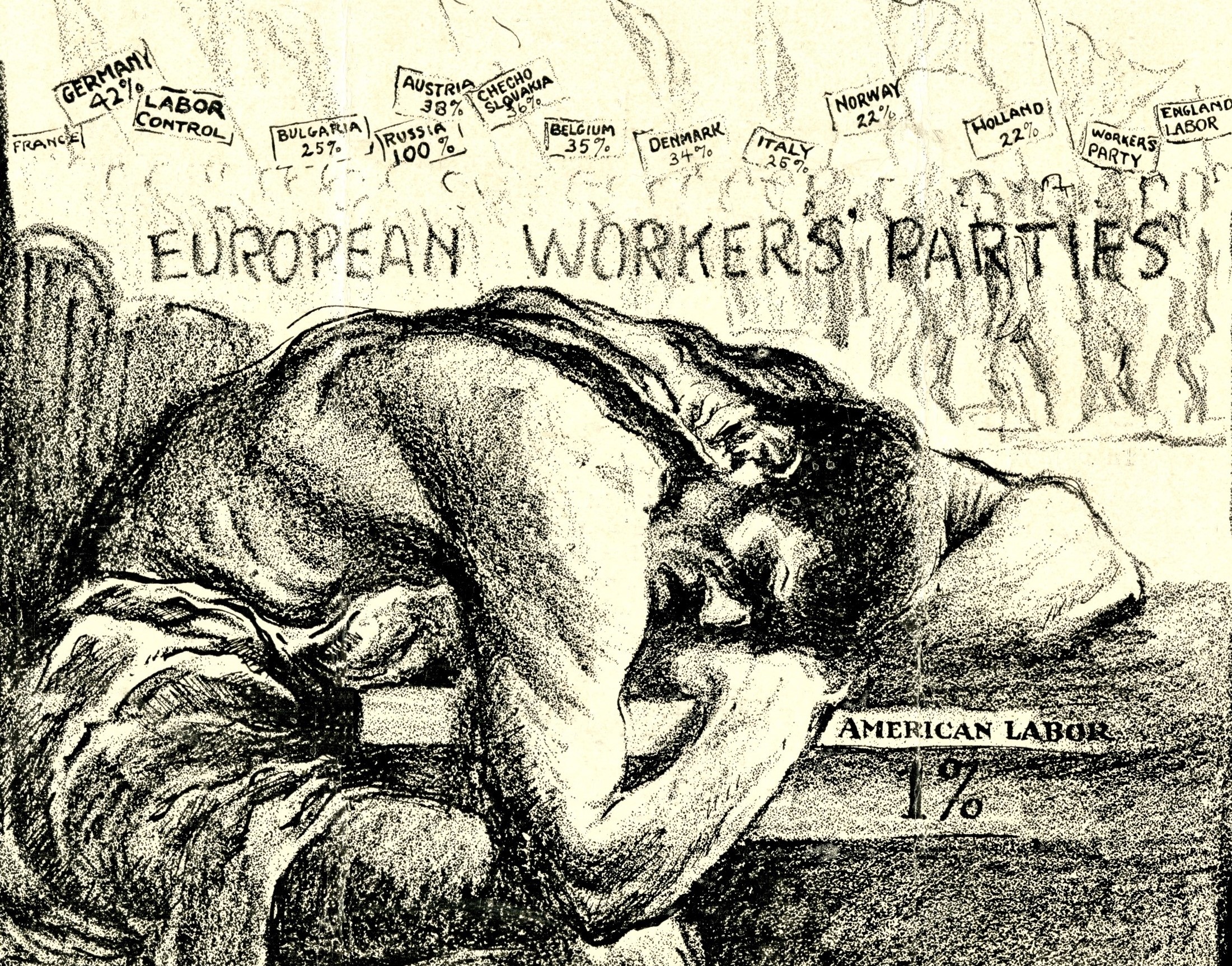
Arne Swabeck spent much of 1922 in Soviet Russia, attending as a U.S. delegate both the Fourth World Congress of the Communist International and the Second World Congress of the Red International of Labor Unions (Profintern). Like the Comintern Congress, the Profintern gathering was confronted with the retreat of the European labor movement, the rise of fascism in Italy, and the subsequent inauguration of the United Front policy. Swabeck reports.
‘The R.I.L.U. World Congress’ by Arne Swabeck from Labor Herald. Vol. 2 No. 1. March, 1923.
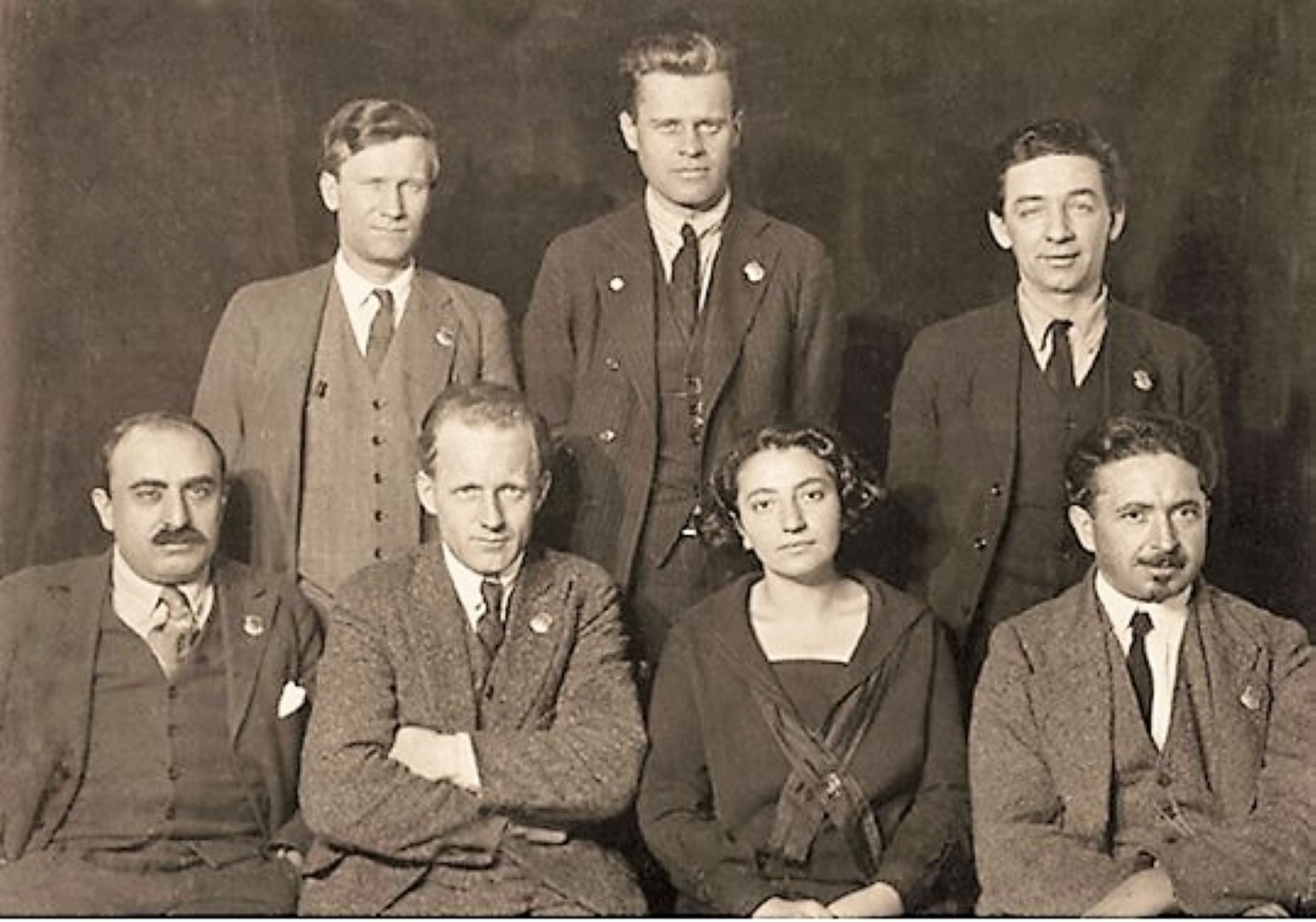
IN the large hall of the Moscow Labor Temple about 213 delegates, representing 42 countries, were gathered for the Second Congress of the Red International of Labor Unions in November, 1922. It was a momentous gathering. Delegates had come from all over the world. It was not simply a European-American gathering. There were representatives also from Australia, Africa, Japan, China, Java, Turkey, India, and from all over the Far East.
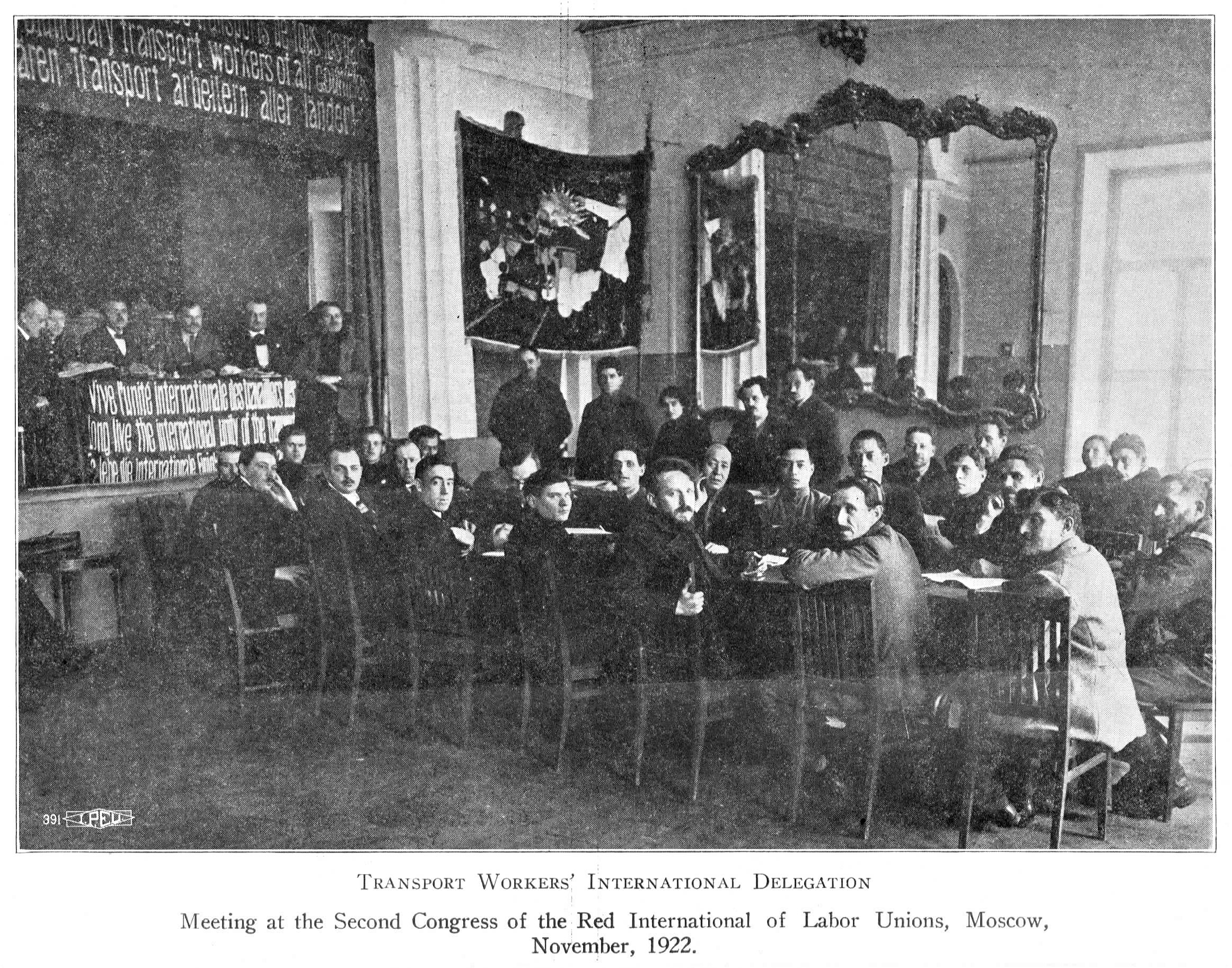
The delegates were workers, serious-minded and intent upon their mission. There were none of the kind so familiar in American convention; corpulent, heavy-necked, with diamond rings and big black cigars. There were no sleek, highpaid, officials to look calmly and unconcernedly upon the life-and -death problems of the workers. No, these delegates all were working men whose fate is bound up with the fate of their class. Many of them seemed to have come directly from the shops. Others bore the scars of battle with the Fascisti and other hoodlums of the White Terror.
Serious Problems to be Faced
Fifteen months had elapsed since the First world Congress. Now the reports of this period were brought together. They showed the similarity of the problems which arose in every country during this time. Everywhere was the same capitalist attack against Labor, carried on internationally, and aiming at the complete destruction of labor organization. Everywhere were the same methods in this attack, only varying in the countries with a high, and those with a low, valuta. And in every country this attack had wrought havoc to the labor unions.
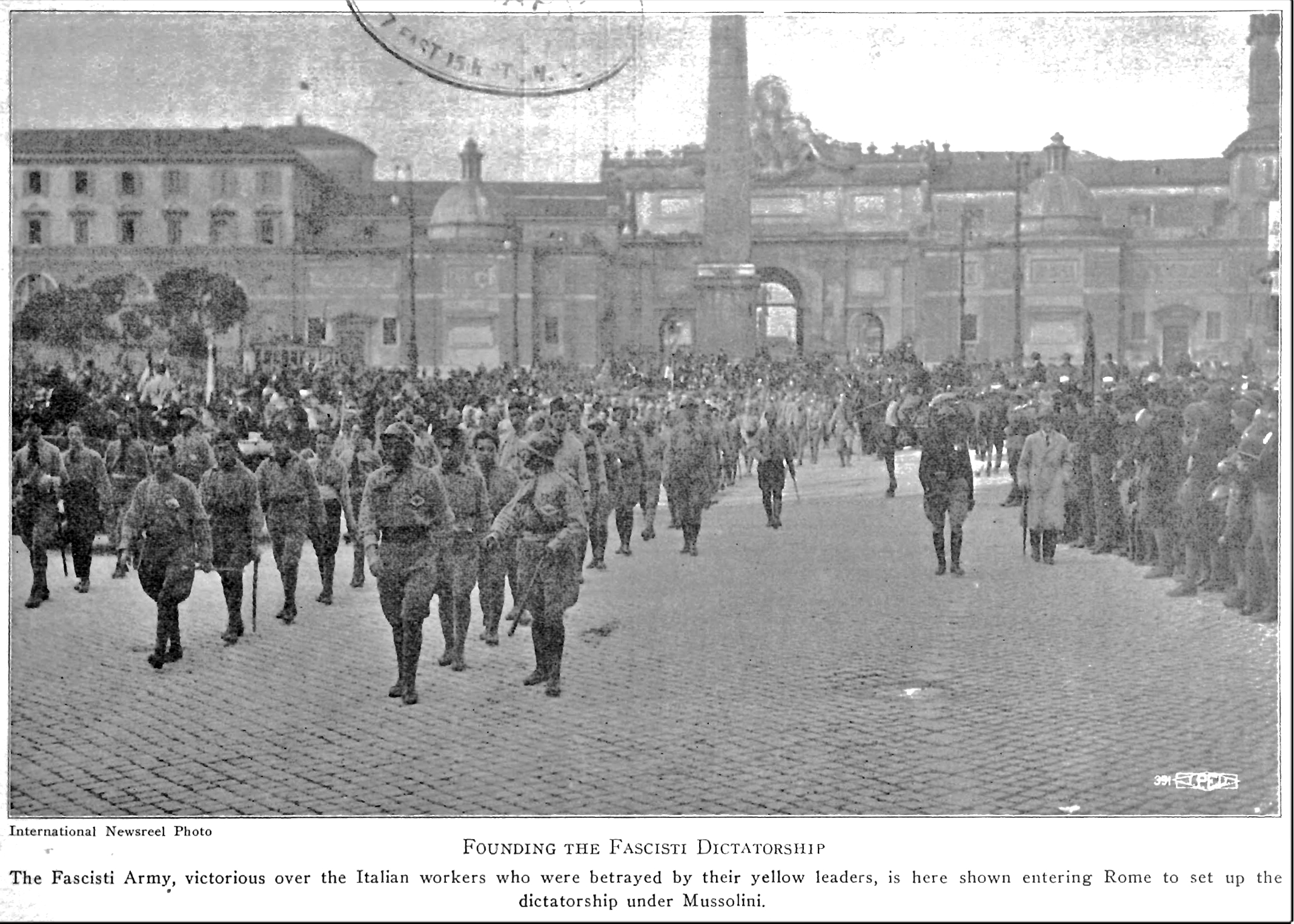
The outstanding features of the offensive against Labor were the new strike breaking organizations, and the special instruments of suppression, such as the Fascisti. In every country these new weapons had been brought into the struggle by the capitalist forces, to a greater or lesser degree, in addition to the well-known police, army, and court powers. In almost every country real wages had been forced down considerably; the eight-hour day had been violently attacked and in many instances abolished; working conditions had generally deteriorated; and the unions had lost heavily in membership.
The external cause of the workers’ retreat during the year was the terrific capitalist offensive. It was worsened by two principal factors within the labor movement. One was the desertion by thousands of the new recruits, who had been swept into the unions during the rapid growth just after the war, and who now weakened in the hour of trial. This was accentuated by the glaring inefficiency and treachery of the trade union bureaucrats, to whom belongs most of the “credit” for the success of the capitalist attacks. Instead of rallying the organized masses to resistance, they hurried to the rescue of the capitalists, they entered into agreements for collaboration with them. They tied the labor movement to the chariot of capitalism, and restrained the workers from the struggle to maintain their union rights and to improve their conditions.
The Struggle for Solidarity
Between the First and Second Congresses the militant workers in every country had been forced to struggle for the unity of the labor movement. The reactionary officialdom entered into compacts with the capitalists, either tacitly or openly, and viciously attacked the revolutionary and militant workers who advocated the struggle for better conditions and workers’ control. This attack upon the militants, coming simultaneously with the capitalist offensive, amounted to stabbing the labor movement in the back. The bureaucrats were determined rather to split the unions than to find themselves in the minority.
Large scale expulsions were resorted to in some countries, as in Germany ; in others, as France, the national movements were split wide open by the reactionaries. Many national unions were destroyed entirely by reckless bureaucrats. The great task of the revolutionary minority in every country had thus become the struggle for solidarity against the splitting efforts of the reactionary officialdom.

Sad to relate, even some of the anarcho-syndicalists who, at the time of the organization of the Red International adhered to it, and professed full support to the Russian Revolution, were reported to have adopted the same dastardly policy of suppression of militant policies and expulsion of their exponents.
Facing Facts and Finding Solutions
Thus the problems confronting the Second Congress were of a most grave nature. Never before had the trade union movement of the world found itself in such a serious condition. Attacked by all the combined forces of capitalism, betrayed and disrupted by the corrupt bureaucracy, its powers of resistance had gone away down. How can trade union unity be restored and preserved? How can a united fighting front of all the workers against the capitalist class be built up? How can the unions be reinvigorated and the workers filled with tl;i.e will and the power to struggle? How can we reestablish the elementary rights of unionism, and progress towards the control of production by the working class? These were some of the questions that loomed large at the Congress.
The great tasks of the Congress were to examine the situation in each country and outline a policy for each which would merge into the general international policies. Weaknesses were mercilessly dug out and exposed, and nothing was concealed or blurred over. Particularly did the Congress drastically repudiate the policies of secession advocated still by a few rebels, and which result only in isolation from the organized masses. In every question practical and realistic solutions were found.
The sad plight of the trade union movement was forcefully presented by the analysis made of the various countries. The loss of membership alone was terrific. In France the decrease had been from 2,000,00 in 1920, to about 600,000 in 1922; in Italy the membership had dropped from 2,500,000 to 800,000. The unions in Great Britain have lost 1,200,000 members. Similar conditions were noted in Spain, Switzerland, Sweden, Norway, Denmark, etc. In Hungary where, during the Soviet rule the unions had 1,450,000 members, there are now but 200,000. In our country the loss is well known.
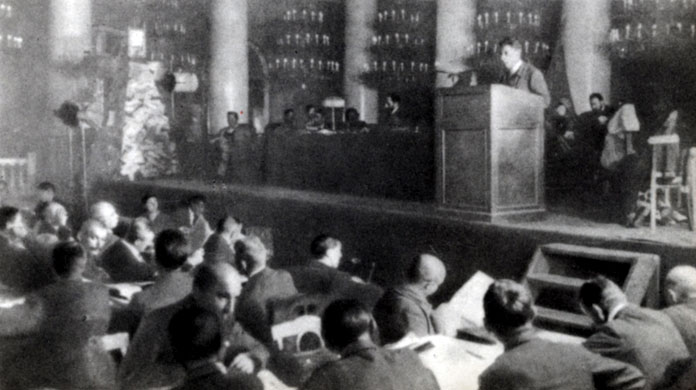
In France the reactionary officialdom had clone particular damage. In 1920, while the unions were still strong, the revolutionary minority had gained great support and seriously promised to take the lead of the French labor movement. The old standpatters were furious, and launched a campaign of expulsions and provocations. Some of the militants also had a tendency to play into the hands of the reactionaries. They were too easily provoked. In December, 1921, and January, 1922, the bureaucrats expelled a great block of unions and forced the split. The division was about in half, approximately an equal number going to each side. All attempts of the revolutionary group (C.G.T.U.), which adheres to the Red International, to establish a united front of both organizations to defend the workers, have been refused by the reactionaries. The Congress approved the tactics of the United Front in France, and urged all the French workers to force the unity of the trade unions over the heads of their reluctant leaders.
In Germany the misery and ruin brought about by the war and by the Versailles Peace, has hurled the working class into the fathomless depths of poverty. Real wages have decreased to 10% or 15% of pre-war times. This terrible pressure has at least compelled the workers to remain in their unions in spite of incompetent leadership. The Majority Socialist trade union leaders made their peace with the capitalists, just as the bureaucrats in other countries; declaring that the enemy is to the “left,” in other words that they would fight against the revolutionists but not against the capitalists, they started a campaign of expulsions of the militant trade unionists, particularly the communists. Whole unions that voted against the bureaucrats were thrown out. There was grave danger of the unions being wrecked by this reckless crew.
The Splitters Blocked
It is especially in Germany that the tactics of the Red International of fighting against splits has been successful. In spite of the malicious and terrific attacks of the yellow Socialist leaders, the unity of the organizations has been on the whole maintained. This is one of the reasons why the German unions have not lost so largely in membership as the unions of other countries.
Whenever unions and individuals were expelled they, according to the tactics adopted at the First Congress, began a struggle for reinstatement into the national unions. No dual unions were allowed to be established, nor were the expelled unions allowed to disband. They refused to recognize the expulsion and appealed to the rank and file over the heads of the officialdom for reinstatement. These tactics were a great success. Not only were a great many expelled unions brought back into the mass organizations, but the entire campaign of expulsions was discredited. It proved to be a boomerang to the reactionaries, opening the eyes of the rank and file to their disruptive activities.
A great movement has been developed in Germany for the establishment of workers’ control in the industries. This is especially expressed by the shop councils ( Betriebsrate), which are becoming active and militant throughout Germany. The revolutionary unionists are the leaders of this movement, which held a national congress in Berlin almost simultaneously with that of the Red International in Moscow. About 1,500 delegates attended, representing 4,000,000 workers. The bureaucracy bitterly opposed it, and threatened dire consequences if it were held. The Betriebsrate is distinctly against the reactionaries and for a revolutionary policy.
The United Front Against Capitalism
Against the wholesale wrecking-attempts of the reactionaries, the Second Congress put forth the slogan of “Trade union unity” and the “United front of Labor against the common enemy.” On several occasions in the past year, a united front has been proposed by the Red International to the Amsterdam International, for specific struggles such as to protect the Spanish workers against the White Terror, to prevent the split in France, to help the locked-out metal workers in Great Britain, to support the Italian workers against the Fascisti, and to help the French miners in their struggle. All were rejected by Amsterdam. But the Second Congress decided to continue the policy of willingness to make common struggle in every fight with other working class organizations against the capitalists.
These slogans ran like a red thread through all the important resolutions adopted. Practical plans were laid for carrying them into action. In countries where parrallel unions exist, if adhering to the Red International they were instructed to unite; if any one is of the Red International it was instructed to work jointly with the militant minorities in the conservative unions and to do all its power to establish a united front in all actions to defend the workers, as a preliminary to obtaining organizational unity.
No secessionist tendencies were tolerated at this Congress. It was made a supreme duty of the militants to remain within the mass unions. There they must carry on the struggle for the immediate demands of the workers who, day by day, will be driven by the capitalist oppression toward the position of the revolutionists. Only in this manner is it possible to weld the labor movement into a single fighting unit, capable of carrying on a revolutionary struggle when the time comes.
The issues upon which the united front was proposed include; active struggle for the eight hour day, for higher wages, to defend the union rights, against the present heavy taxation of the worker, for development of the shop committees movement, to prepare the working masses for effective struggle against the onslaughts of the employers and their organized agencies of strikebreaking and the fascist brigands, for control of production and seizure of factories to prevent the growing economic chaos.
The American Problems
The American independent unions which adhere to the Red International were told to make an organized campaign for re-entry into the A. F. of L. as organized groups. When some of their advocates held that this body was too conservative for them, and could not be reformed they were told: “If that is true it merely indicates that you must give up for the time your hopes of social revolution, since without the masses in the trade unions the social revolution is impossible.”
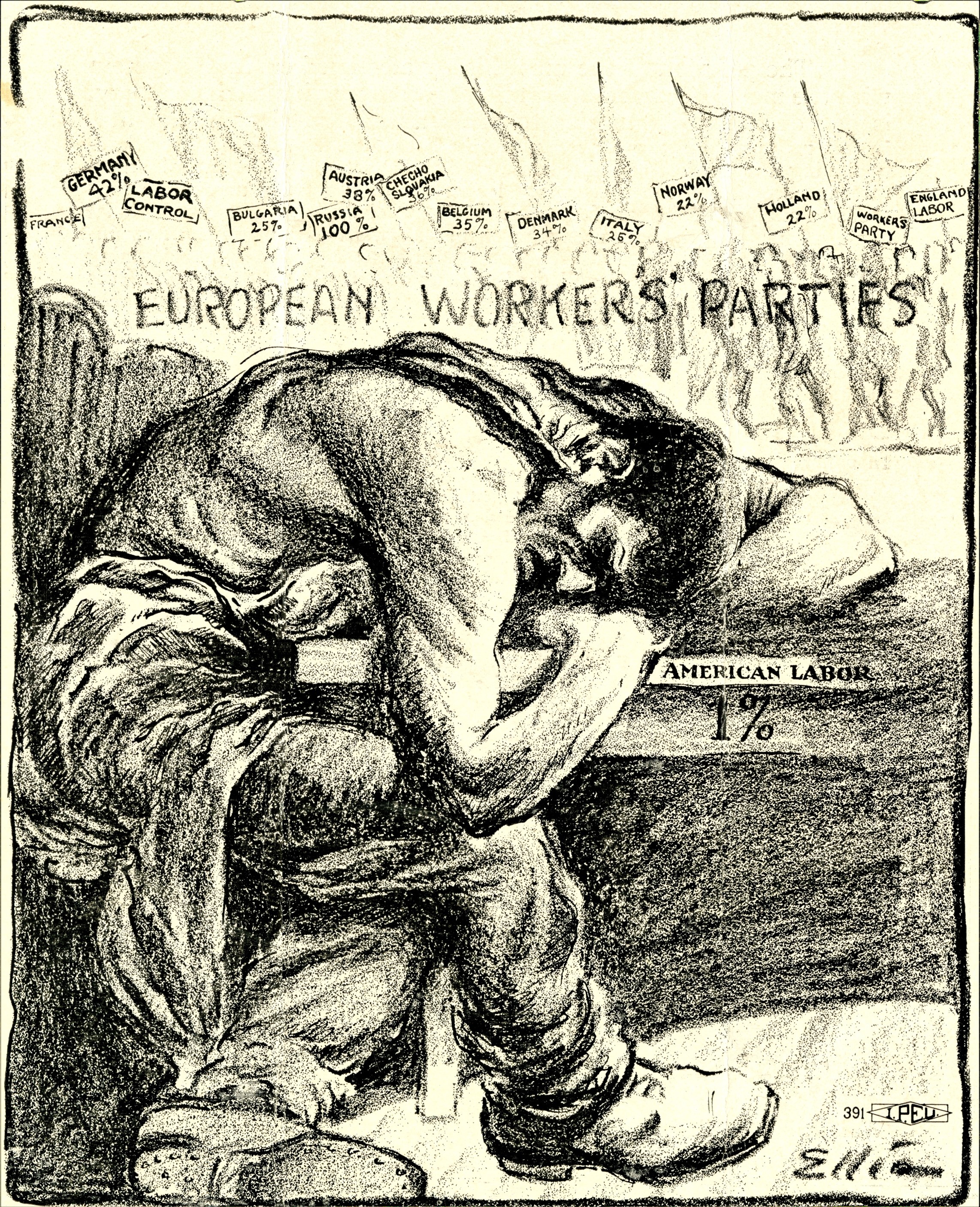
The work of the Trade Union Educational League was highly commended at the Second Congress. Although no short comings ‘Yere overlooked, it was pointed out that its policies were correct and its performance has been beyond expectations. All militants and revolutionists were urged to give it full cooperation, including those in the independent unions, to make an ever more aggressive campaign for the complete realization of its policies. The League was named the official representative of the Red International of Labor Unions in the United States.
Throughout the Congress one great idea dominated all thought, deliberation, and decision. That was the unity of all the revolutionary forces of the working class against capitalism. All the revolutionary unions of the world are to be united: with all the revolutionary elements within the existing conservative unions-not for their destruction, but for their strengthening and their transformation into effective instruments for the establishment of the power of the workers, of the social revolution.
The Labor Herald was the monthly publication of the Trade Union Educational League (TUEL), in immensely important link between the IWW of the 1910s and the CIO of the 1930s. It was begun by veteran labor organizer and Communist leader William Z. Foster in 1920 as an attempt to unite militants within various unions while continuing the industrial unionism tradition of the IWW, though it was opposed to “dual unionism” and favored the formation of a Labor Party. Although it would become financially supported by the Communist International and Communist Party of America, it remained autonomous, was a network and not a membership organization, and included many radicals outside the Communist Party. In 1924 Labor Herald was folded into Workers Monthly, an explicitly Party organ and in 1927 ‘Labor Unity’ became the organ of a now CP dominated TUEL. In 1929 and the turn towards Red Unions in the Third Period, TUEL was wound up and replaced by the Trade Union Unity League, a section of the Red International of Labor Unions (Profitern) and continued to publish Labor Unity until 1935. Labor Herald remains an important labor-orientated journal by revolutionaries in US left history and would be referenced by activists, along with TUEL, along after it’s heyday.
PDF of full issue: https://www.marxists.org/history/usa/pubs/laborherald/v2n01-mar-1923.pdf
 Revolution's Newsstand