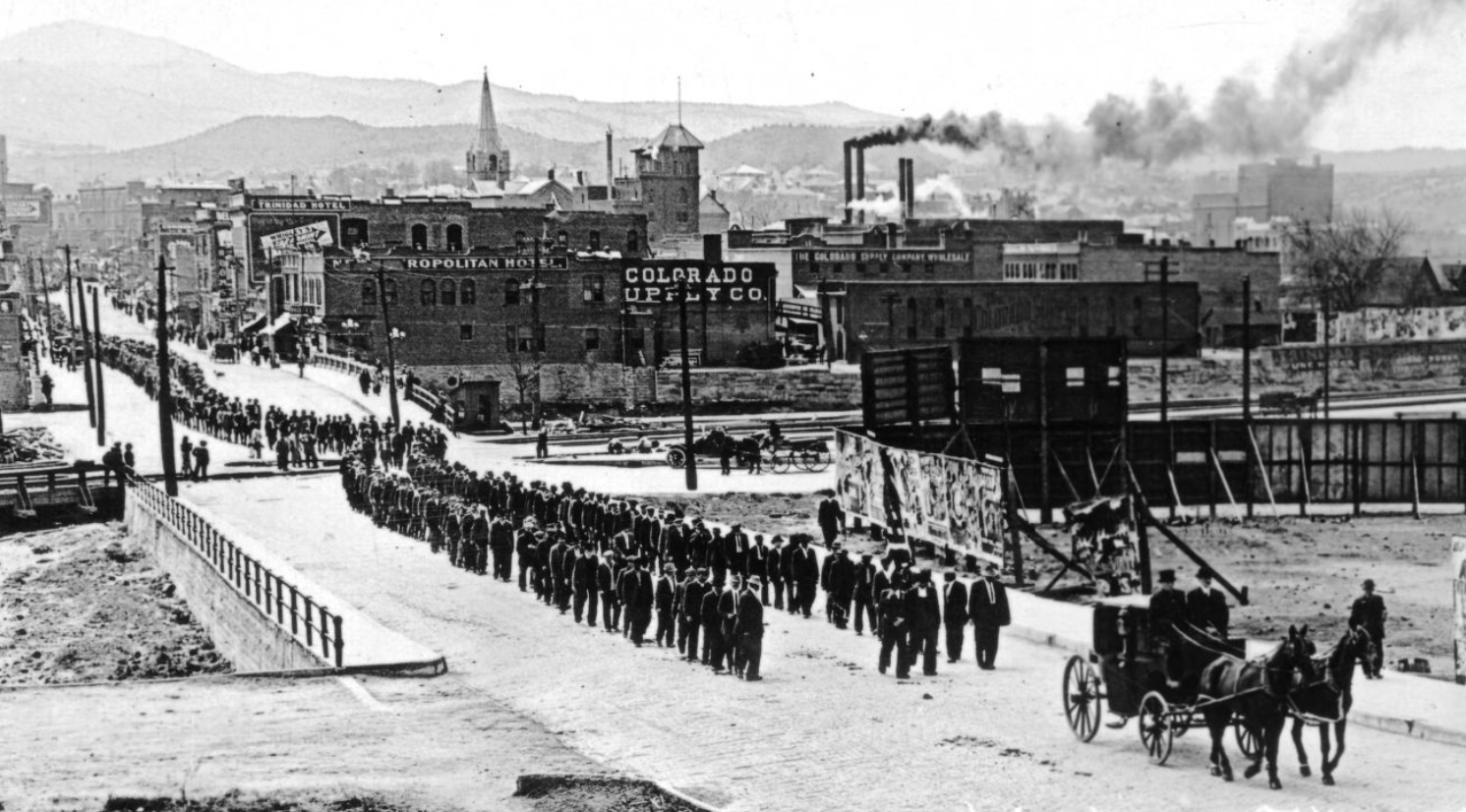
Louis Duchez writes on how stop the ‘cossack’s club’ from coming down on strikers and determines that the problem to solve is the problem of the scab.
‘The Cossack’s Club’ by Louis Duchez from International Socialist Review. Vol. 11 No. 4. October 1910.
WERE you ever on strike? Sure, you’ve been—or else you’ve never been a workingman, or woman. Very well! It’s you am talking to.
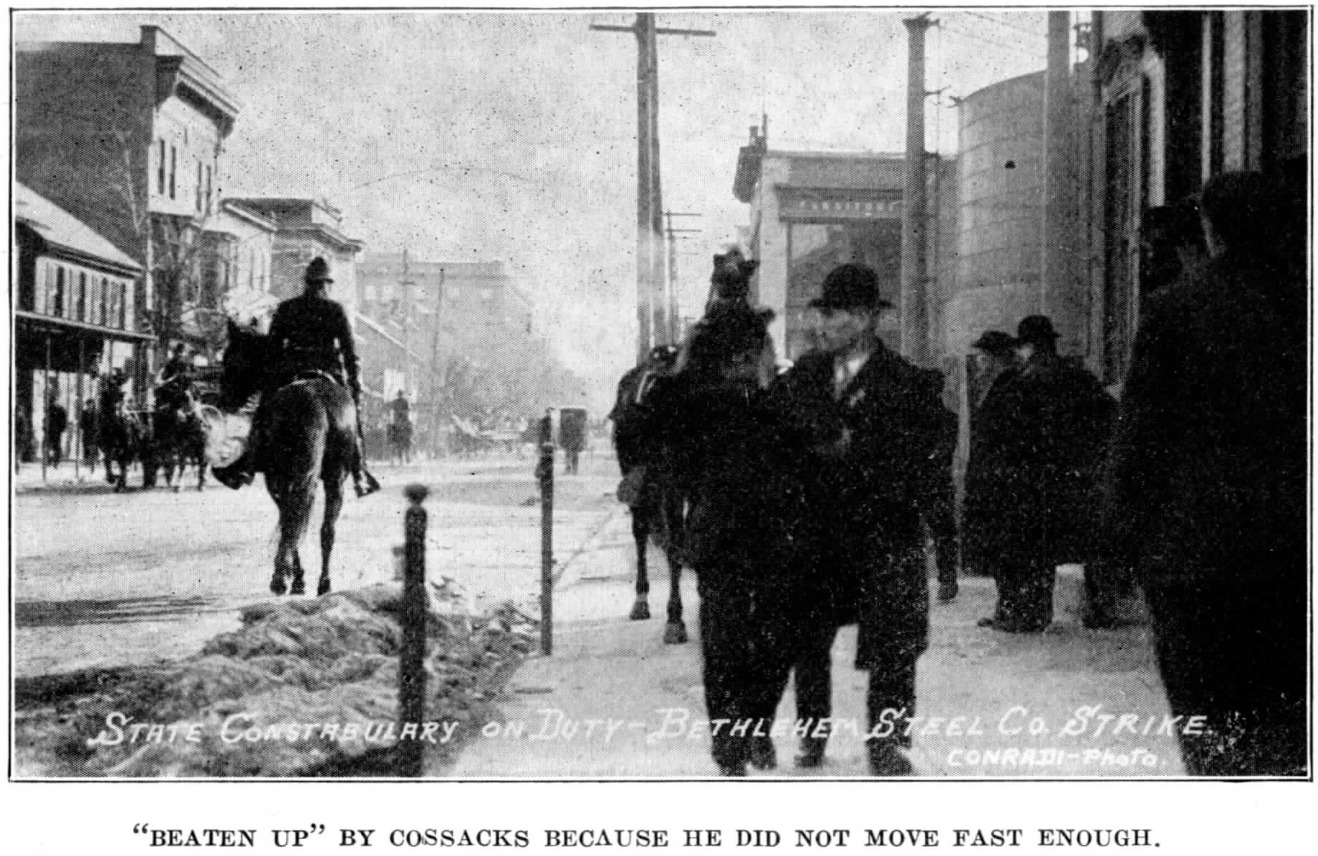
Now, have you ever been clubbed by a Cossack? Have you ever had these brutal servants of capitalism ride into you and your fellow workers on strike, like so many sheep, and club right and left and shoot without reserve?
Perhaps the Cossacks have not been established in your state yet? Then you’ve had similar dealings with the militia, the local “cops” or the deputies of the firm you were striking against. They’re all about the same thing. They are part of the capitalist machine to keep you and your class—my class—in submission—in slavery.

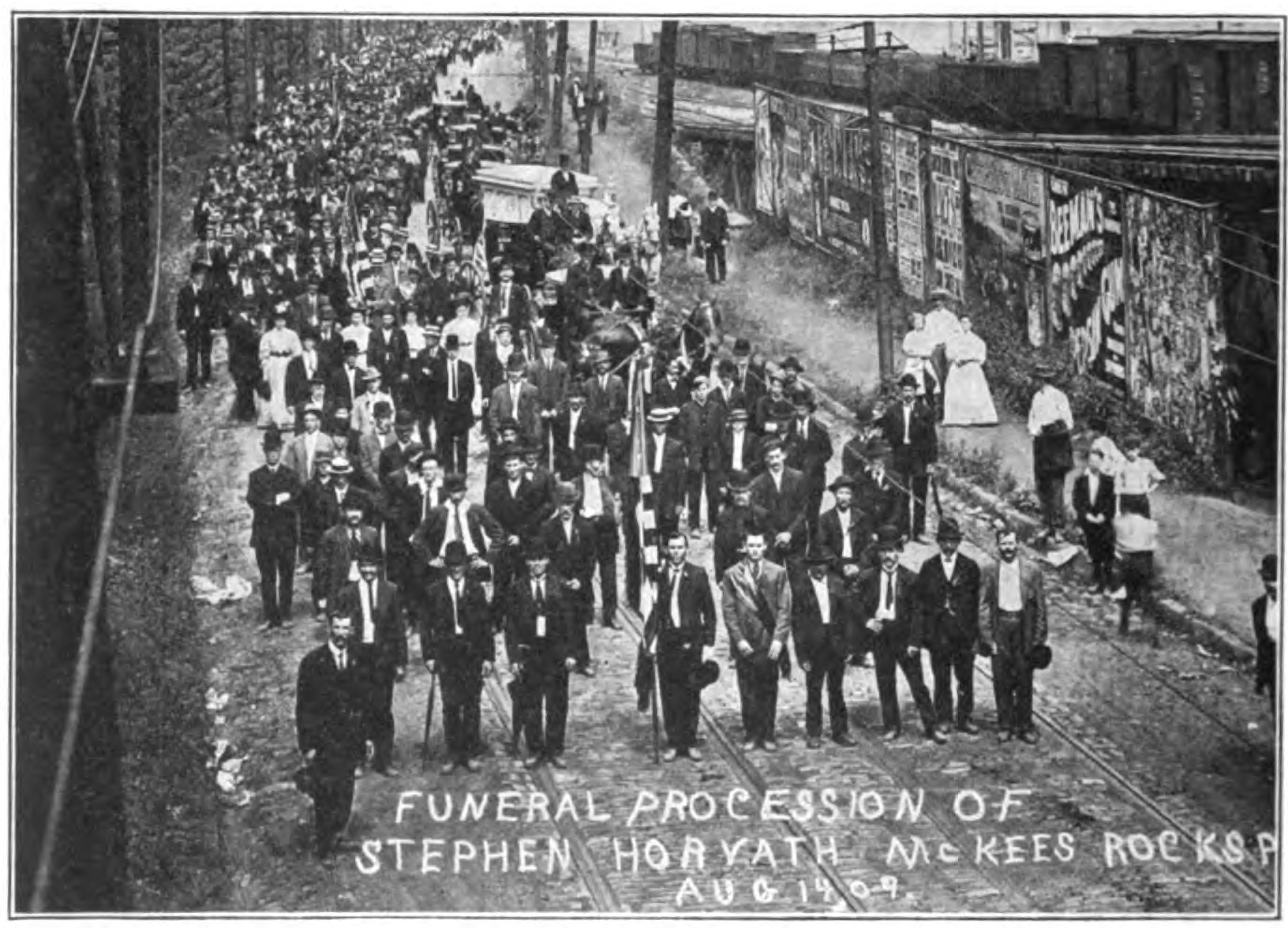
Well, I’ve had them club me when I was on strike! I’ve seen “the man on horseback” come “over the hill.” And I’ve seen the bloody trail he left behind, I’ve seen it at McKees Rocks, at Butler, at New Castle and elsewhere in Pennsylvania. —
But that won’t do you any good, will it? Personally, I’m tired thinking and talking about the brutalities of the capitalist system. I know thousands of other wage-slaves that are, What we want to know is the way out.
And since the Cossack, the militiaman, the “cop” and the “iron police” deputy’ are an important item in our struggles, let us deal with them here. I will point out clearly, and definitely, what I believe to be the best method to handle these fellows who are so quick to club and shoot in defense of the property of those who exploit us so mercilessly.
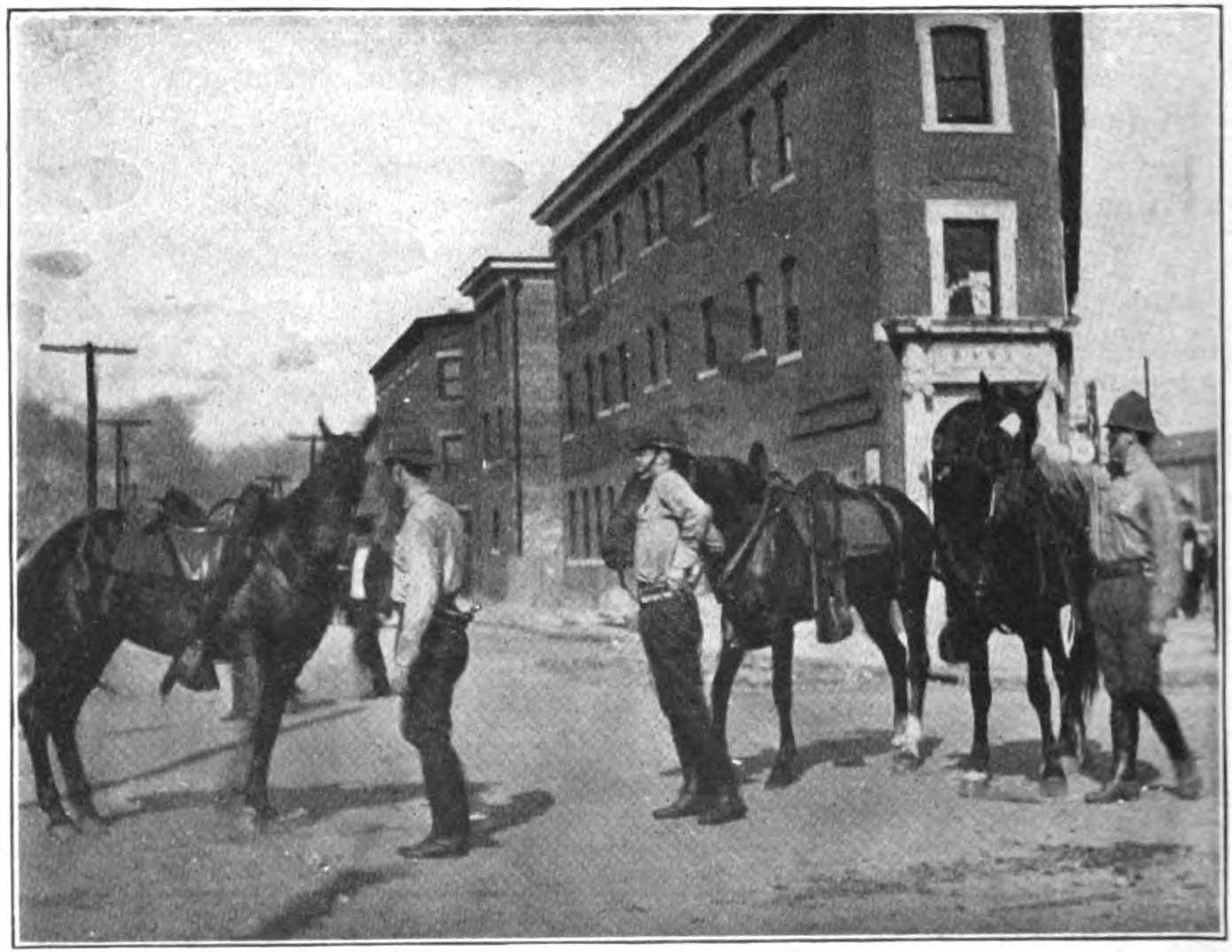
Distribute Socialist literature among them and tell them that they ought not club and shoot down members of their class? No! You might do that, though, too — it wouldn’t hurt. Elect men to office who would do their best to keep the Cossacks and militia and deputies away from the scene of the strike? That may be done. If it will work to the advantage of the workers, it should be tried.
But I have another method in mind, however, which I think, would be more effective,
Listen. To begin with, the reason why the Cossack, the militiaman or the thug is sent in where a strike is in progress, Is because the workers have furnished the opening. I mean by that that they are there to protect scabs. The same is true with the injunction. As Austin Lewis says, “the injunction is effective only for the protection of scabs.”
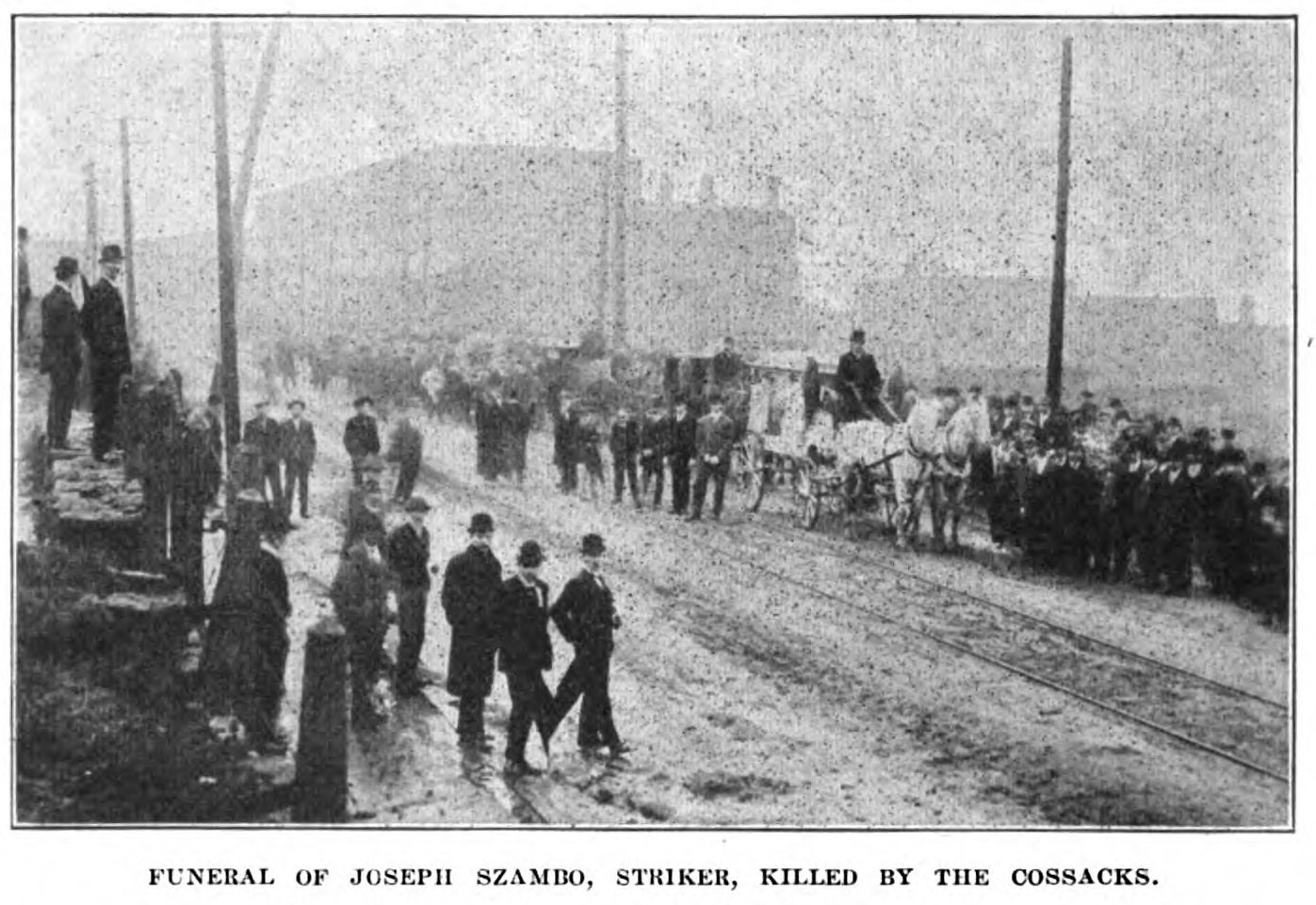
In a nut shell, then, in order to solve the problem of the Cossack, the militiaman and the thug, and all of the violence and brutalities that go with them, we must first solve the scab problem. That is, we must keep the scab off the job, and, finally, get rid of him entirely.
That seems like a hard problem at first thought. But it isn’t so hard—in comparison to the whole working class problem. For its solution we must first turn to the labor union and think a little along that line.
Comrade Lewis again says in his article on the injunction in the September issue of the Review: “It is the business of the labor organization to reduce the number of scabs, to eliminate the scab, in fact. In so far as this is not done, to that extent the labor organization does not effect its purpose. The first problem is obviously to get rid of the scab and that is essentially a labor union problem.”
To do this the essential thing is CLASS SOLIDARITY, followed by the complete economic organization of labor’s forces.
We have had so many examples of the desire for CLASS SOLIDARITY on the part of the rank and file of the workers during the last year in this country, and examples of the marvelously growing spirit of revolt, that it is unnecessary for me to emphasize their willingness along that line. What I want to do is to outline the constructive program which WILL probably be followed in solving, not only the Cossack problem, but the big problem of labor in general.
Here it is. Since the insecurity of the worker’s employment is the secret of the capitalist’s power over the working class, the “immediate demand” is to remedy this “insecurity.” And here POWER is necessary. Higher wages won’t do it, neither will better working conditions in general. Though we must and will demand those and fight hard for them.
The first and most important demand is the shorter work day. Continue this process until there is no competition amor» the workers for jobs. Then there’ll be no scabs. After the hours of labor have been so reduced that everybody that wants a job may have it, then demand, according to the power to compel, higher wages until the boss is left out in the cold, so far as profits are concerned.
The Cossack, the militiaman and the thug would not take chances of getting their heads knocked off for a mere living, when they may enter the industrial army and get the product of their labor, at other jobs.
Some day—and it is not as far away as some of us think—just such a program as I have simply touched upon, will be put forth by the entire working class with vigor and power. Whether the constructive program will be carried out step by step, I am unable to say, I don’t think it will, however, I think that economic pressure and capitalist oppression will stimulate the Social Revolution sooner than that.
At any rate, the outcome will be Industrial Democracy. As comrade Austin Lewis says: “Organization, effective labor organization on the industrial field, is the great need of the hour.” In the midst of the turmoil and temporary chaos, which the Social Revolution will bring, the workers will look to the labor unions as the centers of social cohesion.
Let us get ready for the GREAT CHANGE.
The International Socialist Review (ISR) was published monthly in Chicago from 1900 until 1918 by Charles H. Kerr and critically loyal to the Socialist Party of America. It is one of the essential publications in U.S. left history. During the editorship of A.M. Simons it was largely theoretical and moderate. In 1908, Charles H. Kerr took over as editor with strong influence from Mary E Marcy. The magazine became the foremost proponent of the SP’s left wing growing to tens of thousands of subscribers. It remained revolutionary in outlook and anti-militarist during World War One. It liberally used photographs and images, with news, theory, arts and organizing in its pages. It articles, reports and essays are an invaluable record of the U.S. class struggle and the development of Marxism in the decades before the Soviet experience. It was closed down in government repression in 1918.
PDF of full issue: https://www.marxists.org/history/usa/pubs/isr/v11n04-oct-1910-ISR-gog-Corn-OCR.pdf
 Revolution's Newsstand