‘Miners’ Wives Organize to Win Strike and Save the Union’ by Rebecca Grecht from Labor Unity. Vol. 2 No. 5. June, 1928.
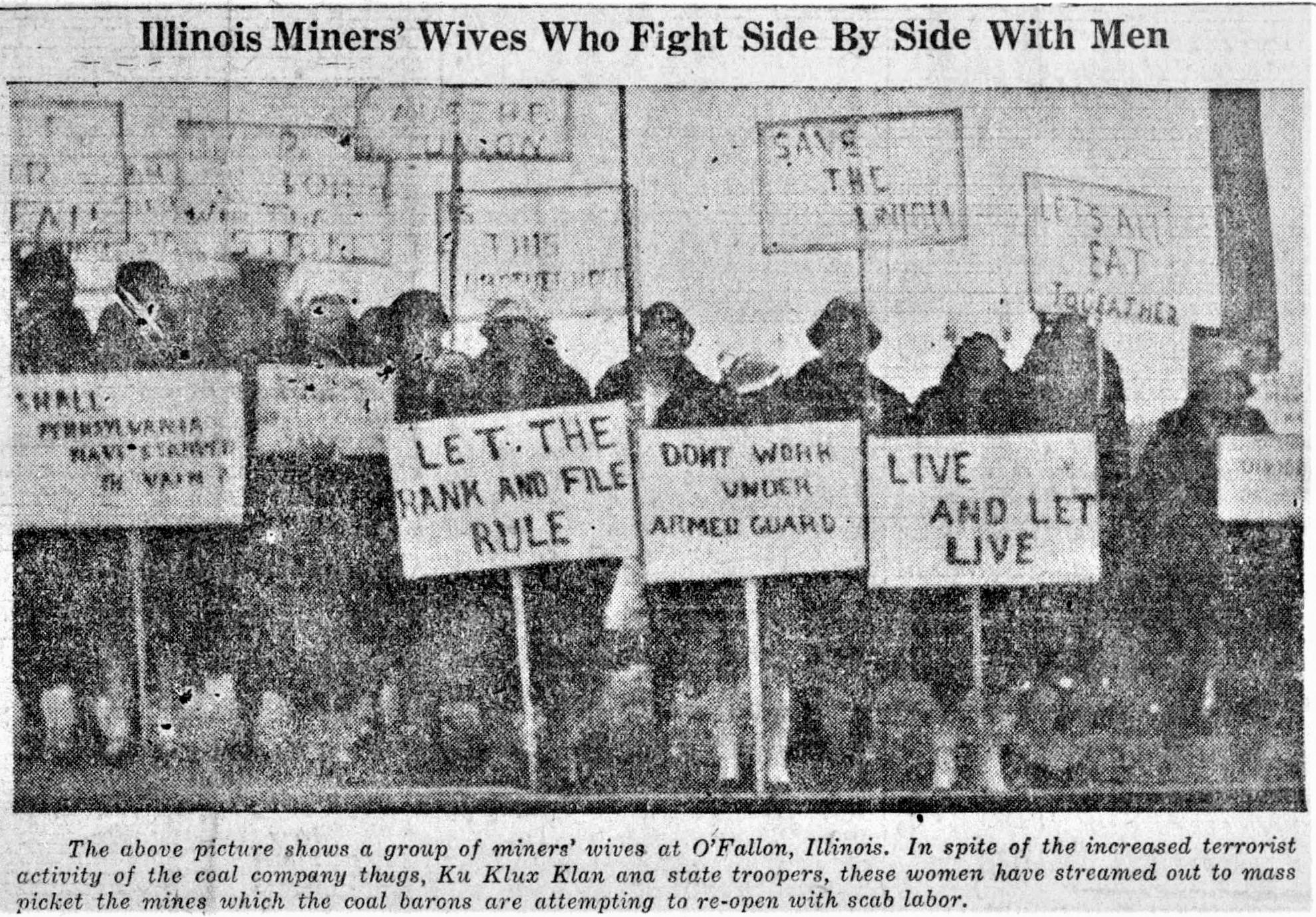
ONE of the most outstanding features of the miners’ strike in the bituminous coal fields of Pennsylvania, Ohio and other states is the remarkable awakening of the wives and daughters of the miners, the rising wave of organization and activity which is sweeping over the women in the strike districts.

It is true that there have been instances of splendid action by miners’ wives in past strikes. Women in the mining camps have always had a certain reputation for militancy and courage. But at no time before have they participated in strike action on such a scale as today, nor have they ever before taken so keen an interest in the strike and in the union, or been so purposeful and determined in their organization.
A new era is unfolding for the women in the coal fields: an era in which they begin to see that their tasks as wives and mothers do not remove them from the struggles of their men, but place greater responsibility upon them, calling them to participate actively in the fight.
Women who had never before taken direct part in strikes, waiting merely as onlookers, almost, until some settlement was reached, are today engaging in relief work and joining their men in mass picketing. Women who had seldom talked to more than two or three neighbors at a time, are going from camp to camp, organizing the women in them, speaking at meetings. Women who had never before concerned themselves with strike issues and problems and had bothered little about differences between right wing and left wing, progressives and reactionaries, are demanding information and explanation, taking their position with the progressives, fighting for their policies against the treacherous, corrupt bureaucracy in the union.
This is not an accident. For over a year, these women have been heroically enduring the most terrible hardships they have ever experienced.
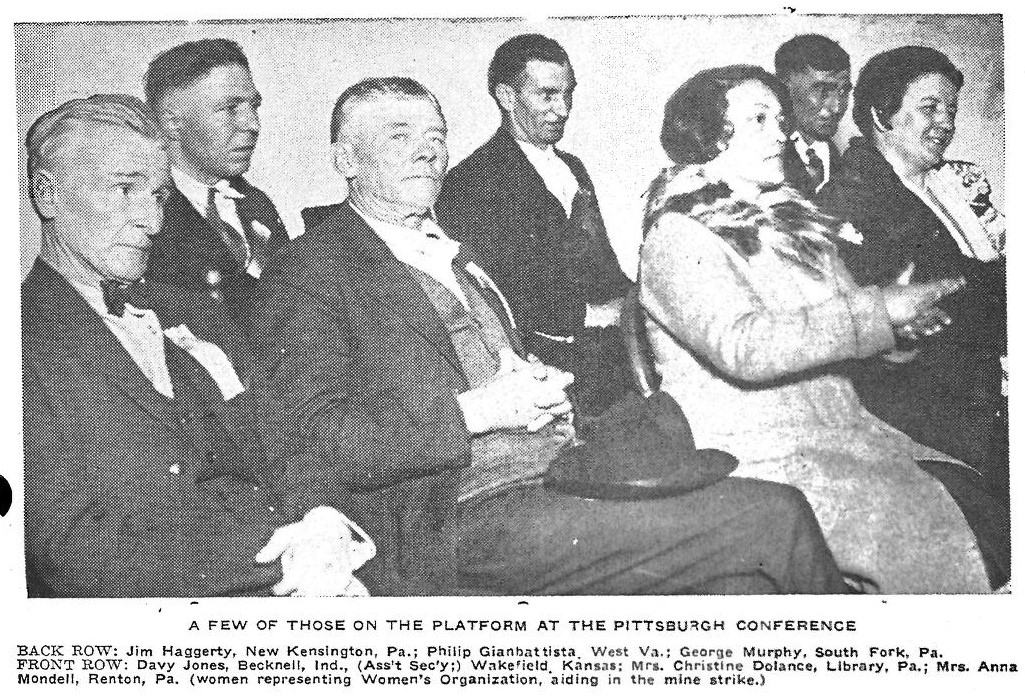
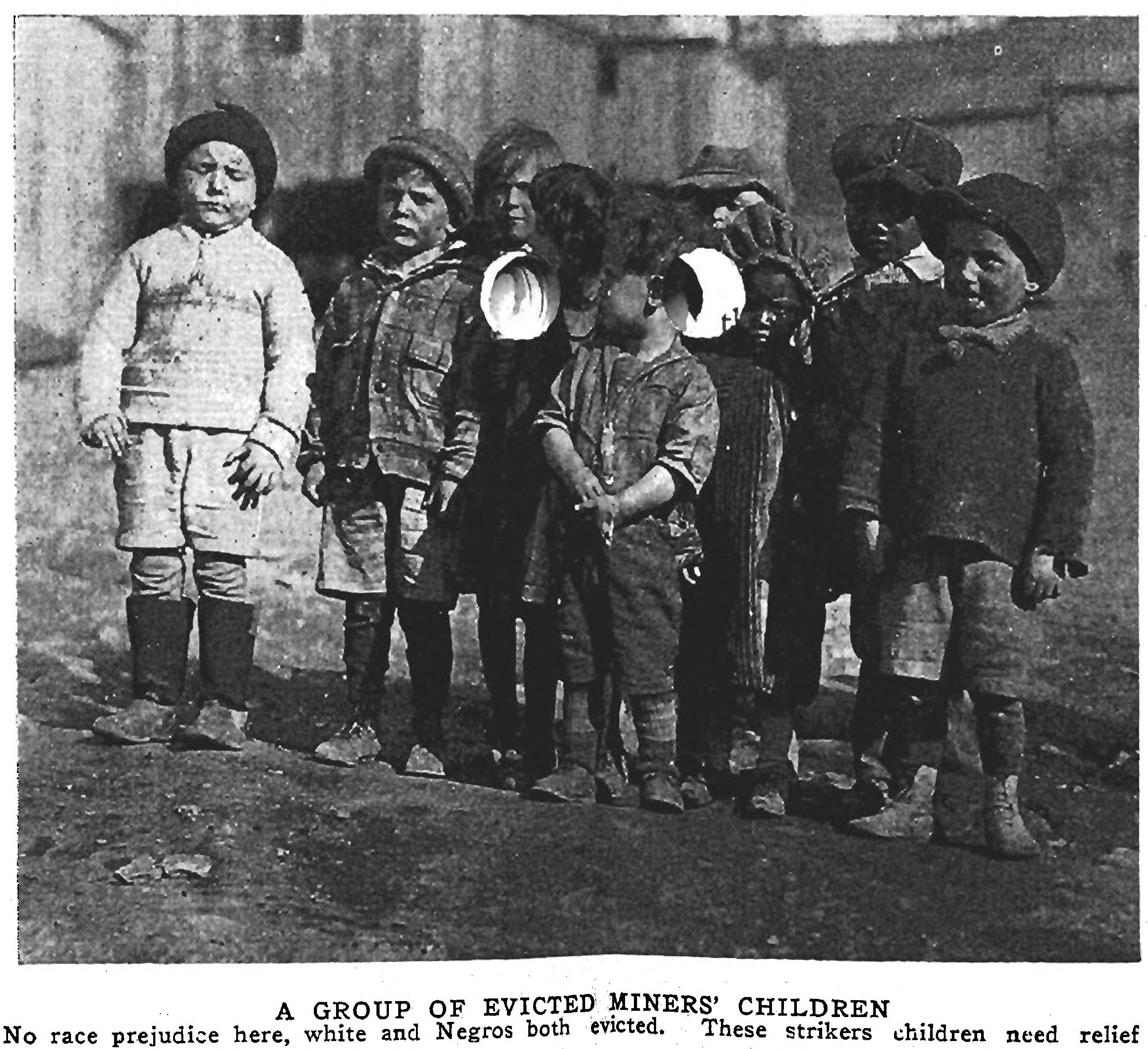
The women’s fight against starvation, evictions, terrorism by state troopers and coal and iron police, the sight of their children, ill-clad and undernourished, all this has stirred them profoundly, roused them to action to defend their men and their little ones, as well as themselves.
As month after month has gone by, the increasing hunger and terrorization and continuous betrayals by the reactionary leaders of the United Mine Workers of America has made the women in the mining camps realize that the disastrous policies of the Lewis machine are bringing starvation to their doors and destroying the chance for decent home conditions for themselves and their families.
The organization of the women in the mining camps began several months after the lockout on April 1, 1927. The reactionary officials of the union in District 5 of the U.M.W.A. (western Pennsylvania), making a grand flourish of mobilizing all forces for the strike, organized “Ladies Auxiliaries”, especially in the Allegheny Valley, and established a district executive board to which these auxiliaries sent representatives. The auxiliaries, concerned themselves at first with raising money for food and clothing, and helping in the distribution of relief.
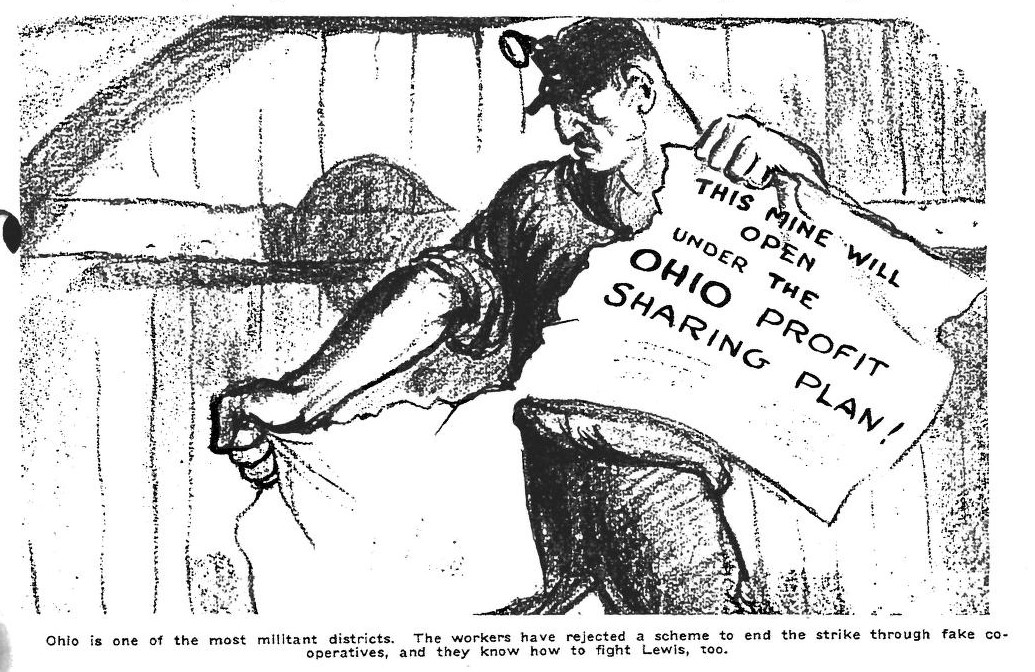
But as the struggle developed, and the Save-The-Union movement was started among the miners, the women, also, became more militant, and raised progressive slogans in the auxiliaries.
The result was an immediate campaign against them. They were threatened with expulsion from the auxiliaries and the withdrawal of relief; In the various camps the wives of the reactionaries, cowardly and corrupt, banded together against the “Hunkies” as they call the foreign-born women militants, and wherever they held the offices in the auxiliaries, refused to grant any rights to the women who opposed them.
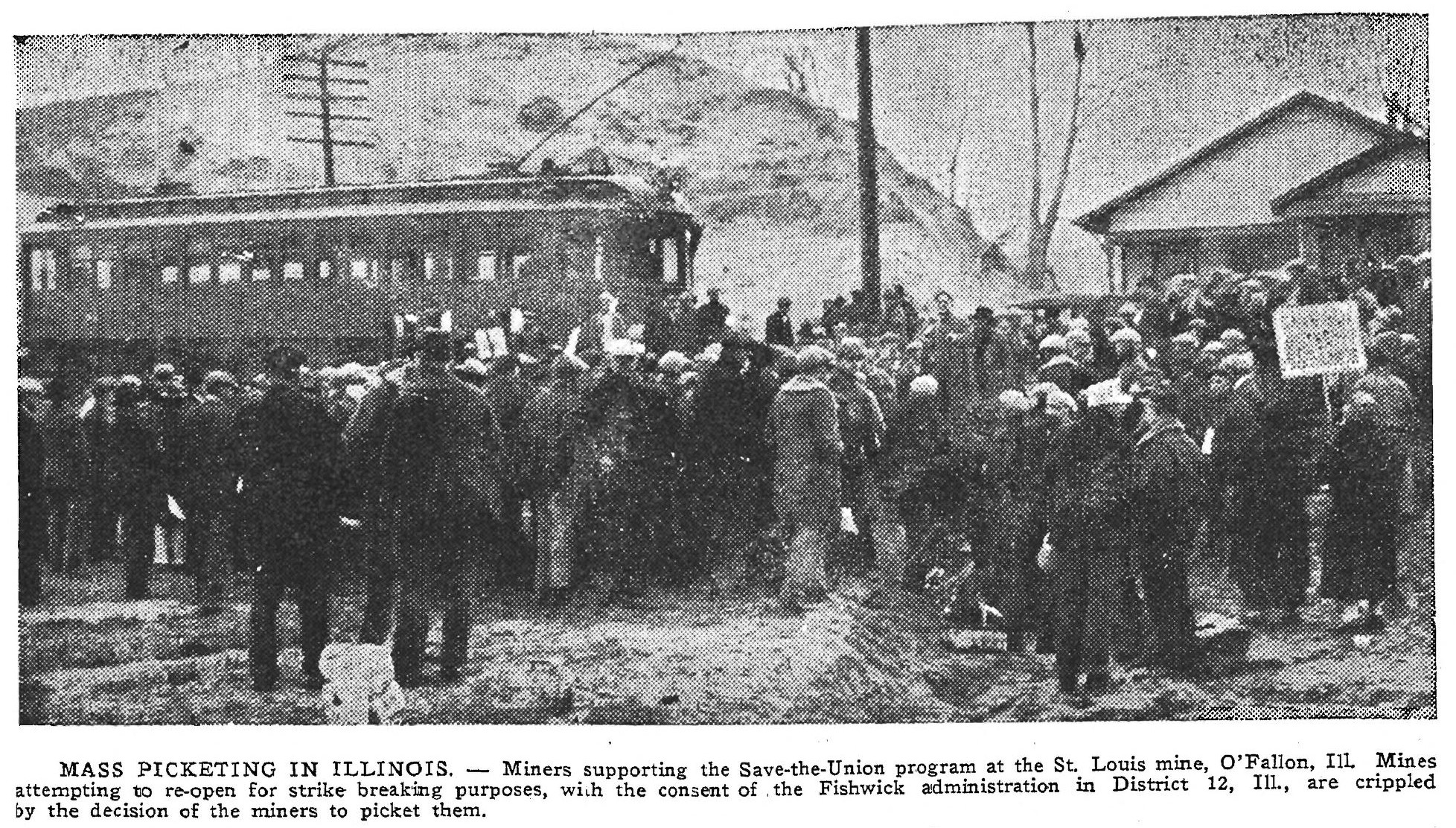
The progressive women of District 5 answered these threats by organizing a Mine Women’s Progressive Committee and sending a delegation of miners’ wives to the National Save-The-Miners Union Conference held on April 1 in Pittsburgh.
New Progressive Auxiliaries
When this miners progressive conference issued the slogan, ”Organize the Miners’ Wives and Daughters to Help Win the Strike and Save the Union” a great impetus was given to the work in every strike district.
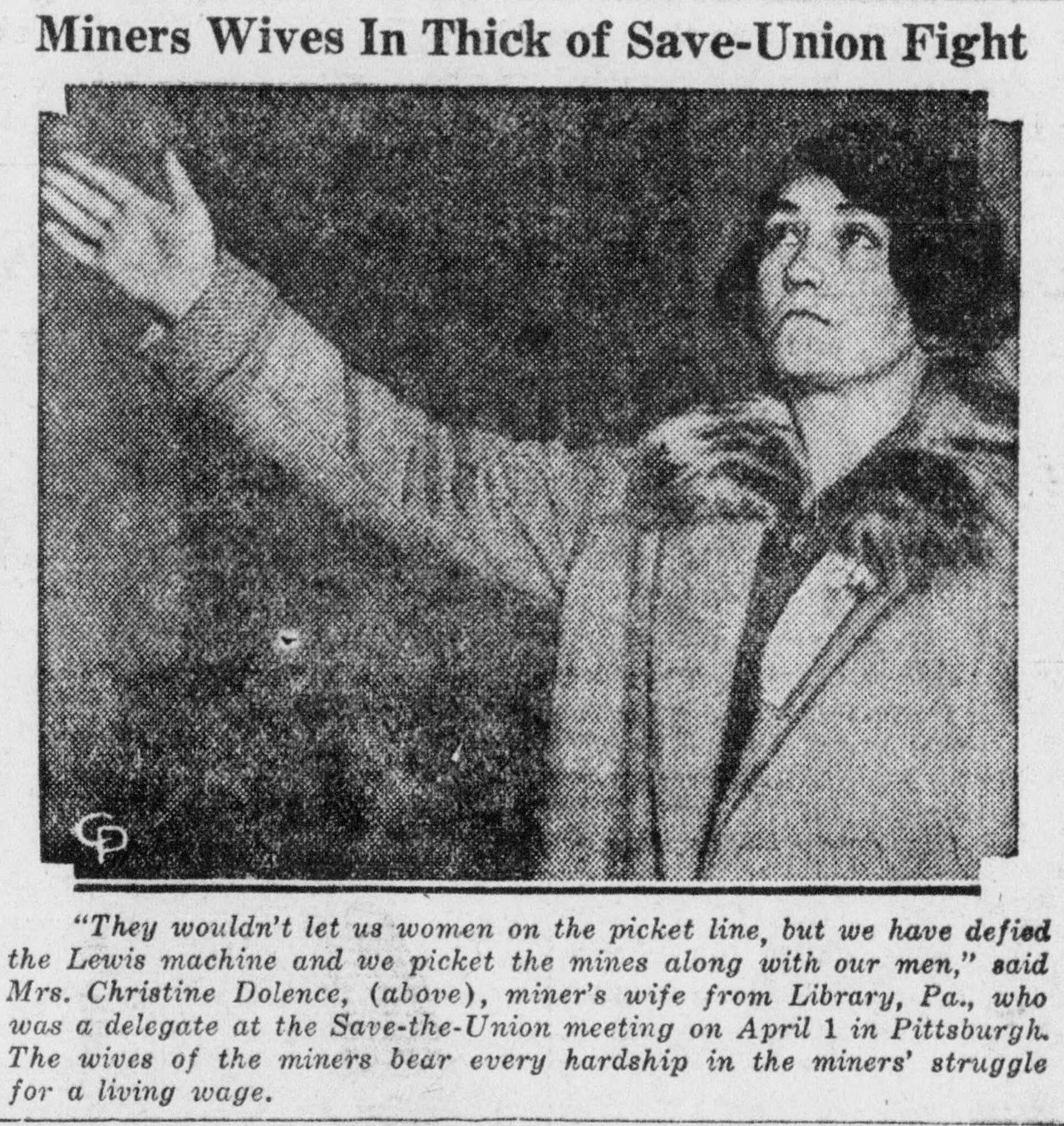
New auxiliaries under progressive lead were rapidly established in western Pennsylvania. In Indiana, for the first time since the strike began, auxiliaries were formed in Clinton and Bicknell. The progressives in Illinois have organized four women’s strike circles— in Staunton, Belleville, Wilsonville, and Springfield, and report that three others are planned. From District 2 in central Pennsylvania, comes the news that the women are all prepared for organization, impatiently waiting for an experienced worker to help them make a start. Plans are in progress to organize the women in Eastern Ohio, among the most courageous and active fighters in the mining region. The spirit of militant organization is spreading among the women in the strike area as the struggle becomes more intense and the miners solidify their ranks.
But it is not only organizationally that the awakening among these women manifests itself. Back of this eagerness to establish some body through which they may function in a systematic manner, lies a determined spirit of struggle, and readiness to battle together with their men.
The women in the mining camps have become energetic fighters. In the mass picketing which fallowed the April 1 conference, as part of its intensification of militant activity, women played an important part. There has not been a single picket line organized by the progressives on which the miners’ wives and daughters have not taken their place. And they have not been merely silent observers; on the contrary, they have proven themselves so effective in encounters with the scabs that they have become the targets for bitter assaults by the Coal-and-Iron Police, state troopers, and other political agents of the coal operators.

These forces of “law and order” have instituted a reign of terror in the strike region, making every attempt to intimidate the striking miners and their courageous women. Tear gas bombs, brutal beatings, arrests: these are the methods employed.
Defy Poison Gas
In Meadowland, near Pittsburgh, women on the picket line have received daily doses of tear gas without flinching. One miner’s wife Angelina Frank, a strong peasant woman from Jugoslavia, enraged at the brutality of the state troopers, beat one of them up, and then, happy in her accomplishment, declared a holiday for the progressives, postponing her washing and other housework. In Bentleyville, where a 62-year old miners wife had her scalp opened by a tear gas bomb; in Library, where the sheriff threatened to arrest every woman picket; in Avella, Trevethyn and other centers in western Pennsylvania, similar attacks have occurred and arrests are made.

Babies In Jail
The Ohio coal fields have witnessed the same tactics. Women have been clubbed and arrested in Hocking Valley and in eastern Ohio just as in Pennsylvania. An outstanding example of the splendid courage and fighting spirit of the miners’ wives was given in St. Clairsville, Ohio. Following a march upon the county jail in protest against the imprisonment of progressive miners, fifty-one women were arrested. Three days they spent in jail, jammed into a space that could comfortably accommodate only four people, and with only one cot for every three women. Five babies from three to seven months old, were brought into the jail to be nursed by their imprisoned mothers: a baptism in American justice and liberty. These actions, however, have completely failed to intimidate the women, for they are more determined than ever to carry on the struggle.
Not only in the organized fields, but in the unorganized sections of Pennsylvania, where the miners struck April 16 in response to the call of the Save-the-Union Committee, terrorism has been rampant. Millsboro, White Valley, Yukon, Export, have been the scene of vicious slugging of women. No questions were tolerated, no explanations given. The appearance of women on the picket line, or even on the public highway near the mine, is the signal for Coal-and-Iron Police, state troopers, and deputy sheriffs to put their clubs and, tear gas bombs into action. They even enter the houses to do their job, as Mrs. Mary Martinelli of Slickville discovered, when five state troopers marched upon her porch and clubbed her severely when she protested against their slugging of pickets.
Many other instances of police brutality could be given but the women are not intimidated by it.
Reactionary Tactics Fail
Police brutality has not been the only weapon used against the women, either. Reactionary union officials, attacking} the progressives, cut off relief for miners’ families and stop the supply of milk for their babies. Reactionary women, especially in western Pennsylvania, are employing any and every means to break up progressive auxiliaries. The district board is packed with reactionaries and every right of representation and expression is refused the progressives. In New field, a progressive stronghold, several truck loads of reactionary women were brought from other centers to the meeting of the auxiliary. When these created a disturbance and broke up the meeting, ten of the women supporting the Save-the-Union Committee were arrested and wait a grand jury hearing. In Rural Ridge, also a progressive camp, similar action was tried, and this time the reactionaries brought state troopers with them. None of these attempts have swerved the militant women from the course they were following. A big majority of the members in the thirty or more auxiliaries and strike circles in Pennsylvania, as well as all of those organized in other states, support the progressive moment.
They Take Initiative
One of the most astonishing achievements in this moment is the development of initiative among the women. There is Mrs. Carboni, progressive leader in Bentlyville; she was a quiet, reserved woman six months ago, concerned only with the immediate problems of her home. Today she is one of the best speakers and organizers, visiting camps to establish progressive women’s circles.
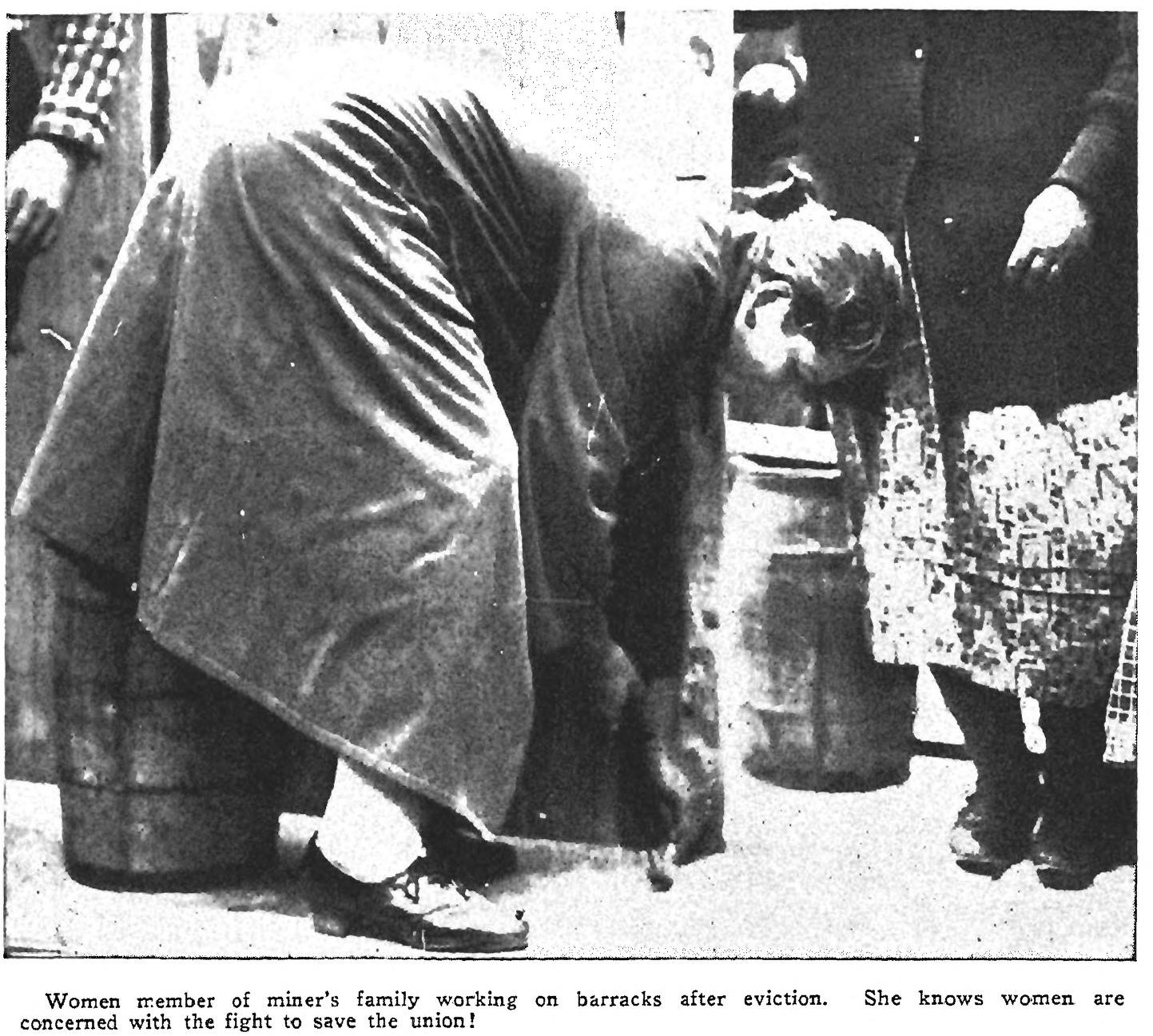
In Renton there are Mrs. Mondell and Mrs. Strekor, through whose work one of the most militant and active auxiliaries, with a membership of more than a hundred, has been built up. They are now acting practically as field organizers, mobilizing truckloads of women to travel from Renton to White Valley, or Export, or Vandergriff, in the unorganized regions, to set up new progressive women’s organizations.
Many other names could be mentioned, for this long and bitter strike has developed leadership among the miner’s wives. They are learning how to speak and organize, and are losing whatever sense of helplessness and inferiority they may have had. They are gradually gaining more and more understanding of the problems of the miners, so that progressive slogans are no longer mere phrases, but battle-cries that the militant women know are fundamental in their struggle.
Lesson Taught By Miner’s Wives
Thus the activity of the miners’ wives and daughters in the bituminous coal strike fields has proven how powerful a factor the women in the mining camps can become when organized. The progressive miners now realize fully that their fight must have the co-operation of their womenfolk. And the women have demonstrated their readiness to be organized and drawn into the struggle to hasten victory.
In 1924 Labor Herald was folded into Workers Monthly, an explicitly Party organ and in 1927 ‘Labor Unity’ became the organ of a now CP dominated TUEL. In 1929 and the turn towards Red Unions in the Third Period, TUEL was wound up and replaced by the Trade Union Unity League, a section of the Red International of Labor Unions (Profitern) and continued to publish Labor Unity until 1935. Labor Herald remains an important labor-orientated journal by revolutionaries in US left history and would be referenced by activists, along with TUEL, along after its heyday.
Link to a PDF: https://www.marxists.org/history/usa/pubs/labor-unity/v2n05-w24-jun-1928-TUUL-labor-unity.pdf
 Revolution's Newsstand