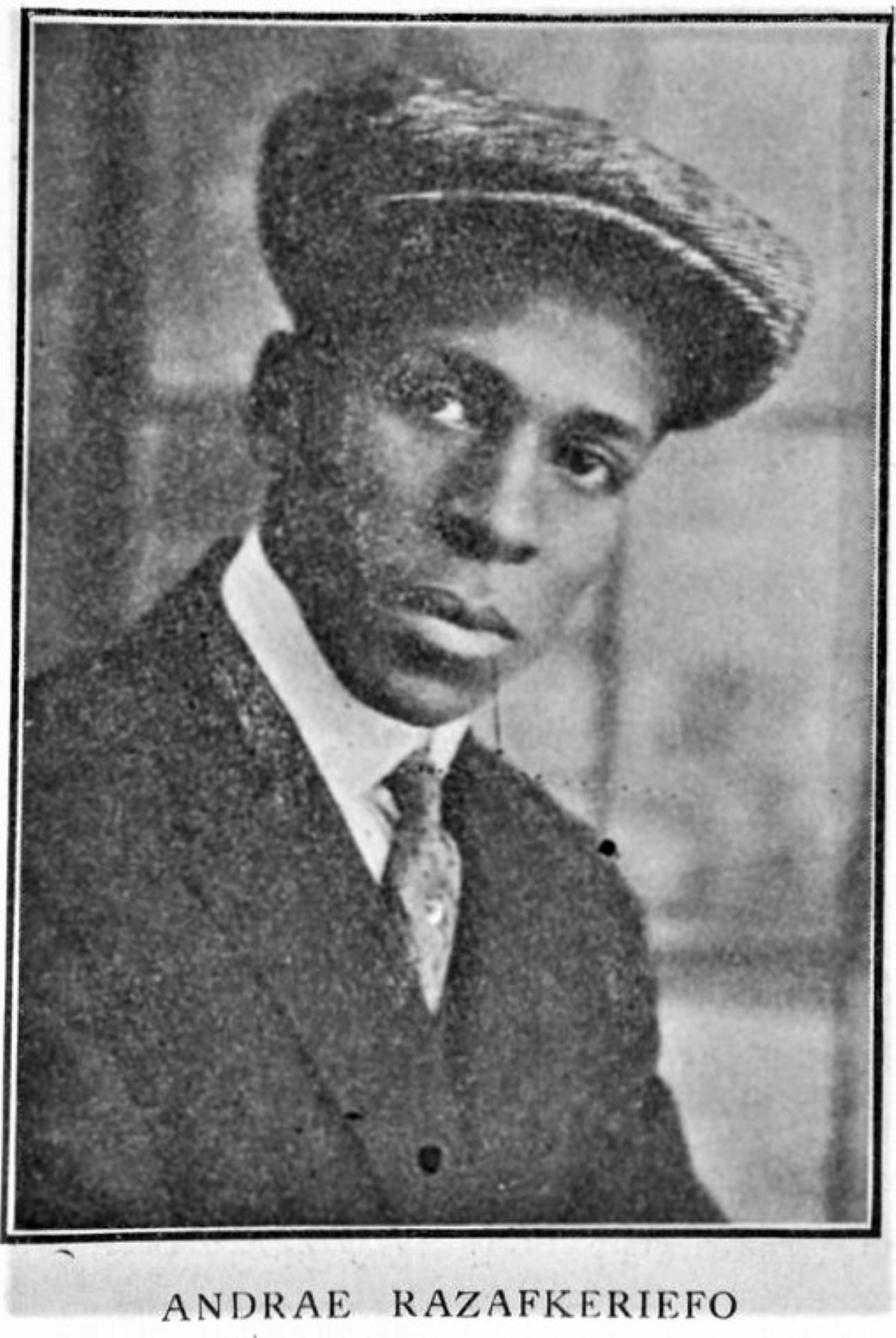
Best known as Andy Razaf, one of Tin Pan Alley’s leading Black songwriters, a member of the Songwriters Hall of Fame, author of “Ain’t Misbehavin’” and “Honeysuckle Rose” among many hundreds of others. Less well known is that before Claude McKay, Madagascar-born Andrea Paul Razafkeriefo was the premier poet of the New Negro movement, with magazines like the ‘Negro Voice,’ ‘New Negro,’ and the African Blood Brotherhood’s ‘Crusader’ hosting his work. Here are all of those published by the ‘Crusader,’ edited by the (arguably) founder of Black Communism in the U.S., Cyril V. Briggs. The poems and missives include some extraordinary work with themes such as the Tulsa pogrom, ‘passing,’ the Irish Revolution, striking workers, ‘Race First,’ imperialism, police brutality, and Black culture along side odes to leaders such as Hubert H. Harrison, Toussaint Louverture, Madame C .J. Walker, and John E. Bruce. A treasure of words opening up the world of early 20th century Black radicalism.
The ‘Crusader’ Poems of Andrea Paul Razafkeriefo (Andy Razaf), 1918-1922.
Men of Our Times, Andrea Paul Razafkeriefo. March, 1919.
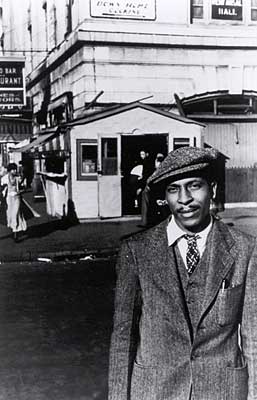
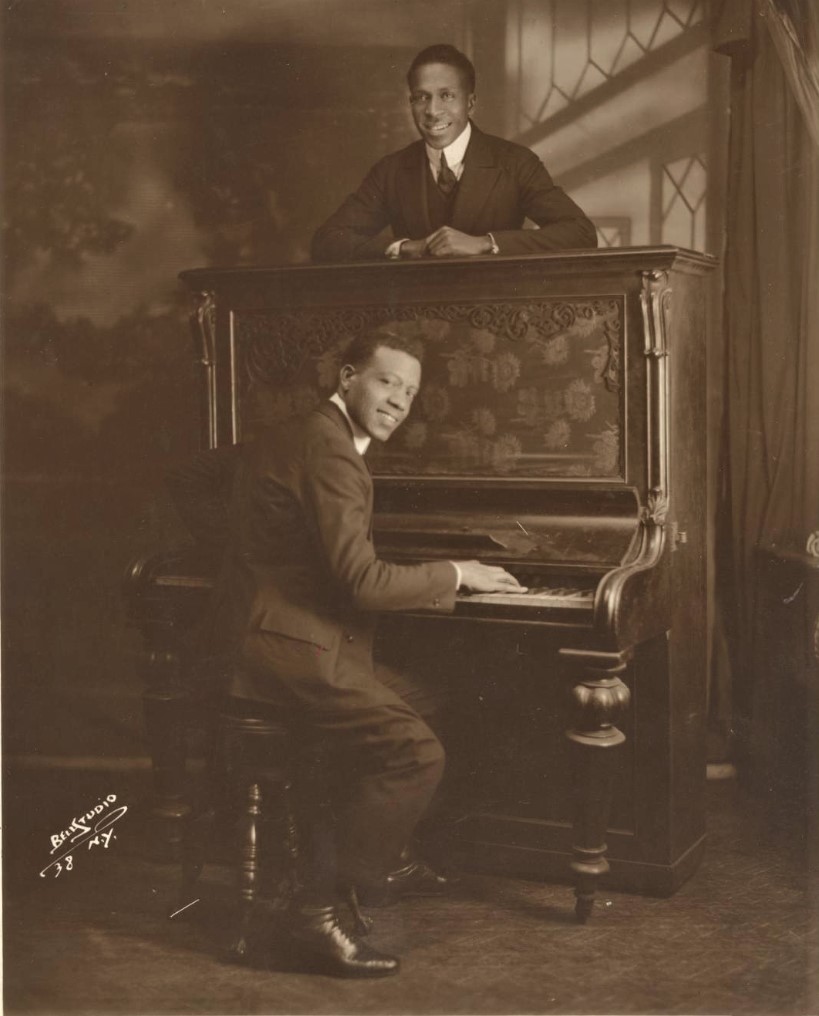
Andrea Paul Razafkeriefo, poet, Song writer and leading Afro-American humorist, whose poems and humorous articles monthly add to the joy of living for several hundred thousand people throughout the world, was born at Washington, D. C. on December 16, 1895 of native African and Afro-American parentage. He is a grandson of the late Captain John L. Waller, United States Consul to Madagascar, on his mother’s side and a grandnephew of Ranavaloua lll. late queen of that island, on his father’s side. who was a graduate of the Royal Military Academy of France and fell in battle for Malagasy freedom shortly before the birth of his son. Mr. Razafkeriefo must have inherited his poetical ability from his mother, who is a poetess of great merit; and his musical talent from his father who was a great musician. He early began his communion with the Muses, writing his first verse “The Boys in Blue”, at the age of nine. He began writing songs at the age of fifteen and though he has written at least an hundred numbers of all sorts he has approached music publishers but twice, preferring to write for the amusement of himself and friends. In 1913, at which time he was but seventeen. His song, “Baltimo” was published by Kendis Music James Co., of New York. And was a sensational hit in Shubert’s “Passing Show” of that year, at the Winter Garden. Not being wise to the tricks of the game he apparently did not derive from his song all the benefits that should have accured. For the past few years he has spent most of his time with poetry, contributing to local magazines and newspapers, mainly The Crusader and The Voice. He has, however recently written an immense song-hit. “The Fifteenth infantry”. which though just published is creating a great sensation throughout the country. He was happily married in 1915 to Miss Annabelle Geneva Miller of Charleston. S. C.
October, 1918.
Why I Am Proud.
My color has stamped me as lazy;
One picked out by Nature to shirk;
But the wonders performed by the Negro
Could have only been done through work.
My color stands for a people
Whom you have called evil and wild.
Yet never a land have we stolen
Or a weaker race defiled.
My color stands for Achievements
The greatest the world has known;
A race, which for its endurance
Will ever stand alone.
My color stands for Religion,
The kind which the white man needs;
For creeds which are not only spoken
But are expressed in deeds.
My color stands for Forgiveness,
A virtue from Heaven above;
For a race which meets oppression
With patience and with love.
My color stands for Loyalty.
The kind which is ne’er uncouth;
For a race which has given an “Attucks’
But never an “Arnold” or “Booth”.
My color stands for Meekness,
A trait which has wrought much scorn;
But wasn’t this brought to mankind
When Christ, our Lord, was born!
My color stands for Sincerity,
A brotherly love complete;
A race which has not yet fallen
To the level of low deceit.
My color stands for Valor,
The kind which has stood the test;
For a people whose dusky soldiers
Have ranked with the nation’s best.
My color stands for Honesty,
For those who would till the soil;
Rather than come into riches
Through other than honest toil.
My color stands for Music,
For Poetry and Art;
Three talents enriched, reinspired
By the warmth of the Negro’s heart.
My color stands for a People
Contented with their own,
Who only ask the rights of men
And to be let alone.
My color stands for a dreamer,
Who builds in the empty air;
A people whose faith in the future
Has carried them through despair.
So if you are a Negro-
From the hilltop shout it loud—
For one of such a noble race
Should evermore be proud.
Untitled.
Negroes go to battle
-Like children go to lunch
Yea, they’re very naughty
When fighting in a bunch.
They’re savage and inhuman,
Without restraint, and law.
For Proof—just hike to Flanders
And ask the Germans so!
Untitled.
God made the world.
The white man found it
And quickly built a
fence around it;
He let in the devil and locked up well,
And ever since the world’s been hell!
November, 1918.
“A Parting Word.”
If Jim-Crow cars must still convey me home
When I return from fighting o’er the foam, If I am still to fill the worthless job
And be the same old plaything for the mob; If after all my sacrifices and pain,
Your segregation laws would still remain—
Then better would it be for me to crave
A little spot in Flanders as my grave.
The Fatal Dream.
A Heinie boy lay dreaming,
His checks were bathed in tears;
For he beheld a vision
Of sauerkraut and beers.
He sighed aloud, though sleeping,
For he had suffered much;
He even swore and cursed the day
That fate proclaimed him Dutch.
Then came another vision
That filled his soul with gloom;
He saw his dear limberger
And smelt its sweet perfume.
He ‘woke and in his anguish
A trench rule he defied,
For he stood up, and then came—BANG!
And our poor Heinie died.
Sammy Rice.
Right across the way from me
Lives little Sammy Rice,
And though he is a Colored boy
I think he’s very nice,
We always chum together,
And share our sweets and toys—
I do not see how it is wrong
To play with Colored boys!
At school he’s on the honor roll,
And he deserves it, too.
For few white boys could stand the things
That Sammy must go through.
Insults are heaped upon him
On the grounds and in the class,
But he keeps bravely plugging on,
and never Fails to pass.
His people are the kindest souls
That I have ever known;
Each time I call, they welcome me
As though I were their own.
And when my mother hears that I
Have dared to call on Sam,
She slaps my face and tells me
What a horrid boy I am!
December, 1918.
John E. Bruce.
Ethiopia looks with smiling face
Upon a man—a leader of his race—
Who stands undaunted. without shame or
pause
And speaks out boldly for a noble cause;
Who only knows and plays an honored part,
And only speaks when guided by his heart;
Who hates the coward and the hypocrite,
His name reads in the book of fame—
“Bruce Grit”
Hubert H. Harrison.
Speaker, editor and sage,
Thou who wrote a brighter page
In the Negro’s book of thought—
What a change thy work hath wrought!
Men with timid intellect
Who would never circumspect,
Woke to think and did rejoice
At the thunder of thy “VOICE”.
Men with longing in their breasts
Struggled with a new unrest;
Scornful ones who ne’er would heed
Paused to listen and to read.
Men, made cowards by despair,
With a laugh, came forth to dare.
For thy manly tongue and pen
Made them bold, proclaimed them Men!
Mme. C. J. Walker.
Ye who lack ambition
And the hope to rise
Think of this great woman
And her enterprise.
She, once chained by Poverty
Fought and broke her bands
Cleared the way to riches
With her naked hands.
Yes, she had a purpose
Naught on earth could swerve,
Thus she went in business
Started out on—nerve.
And to-day she triumphs,
Hers is wealth and fame,
Thus she proves that Fortune
Favors worth—not name.
Since, O’ Ethiopia
She has paved the way
Why not start to follow
In her path to-day?
Business men and women
Are our greatest need,
We who imitate her
Do a worthy deed.
February, 1919.
Touissant L’Overture
So great was he that in his fullest hour
He nursed no thought of riches or of
power,
Thus did this noble Black look with a
frown
On what Napoleon cherished most—a
crown.
He broke no oaths, he used no tyrant’s
rod
He stood for freedom and he stood for
God
(Full master of himself as well as others)
He dealt with foes as though they were
his brothers.
In spite of treachery which sealed his
Doom
And sent him to a prisoncell—his tomb:
He leaves a name that ever will endure
Such was the CONQUERER- L’OVERTURE
March, 1919.
The Peace Conference.
T’would seem that folly once again will
plan
(Behind closed doors) the future fate of
man
Yea, folly—ever foolish, ever blind.
So graciously, extravagantly kind;
To rid the world of war. has now designed
To speak—in SECRECY—the people’s
mind.
Ah Folly! Fool thou art! Dost thou not
know
That thou wouldst plant the seed of greater
woe?
If thou wouldst dare to hold a people’s
court
Yet view their future destiny as naught;
They (who four years of hell new things
have taught.)
Will rise and take the things, for which
they fought!
April, 1919.
“Don’t Tread on Me.”
There is a wondrous symbol
Which has come from ’cross the sea
It’s worn by every member
Of the Fifteenth Infantry:
A snake, curled up, prepared to strike—
And one can plainly see
That, by its threat’ning attitude
It says, “DON’T TREAD ON ME!”
O! race! make this your battle-cry—
Engrave it in your heart
It’s time for us to “do or die,”
To play a bolder part.
For by the blood you’ve spilled in France
You must—and will—be free
So, from now on. let us advance
With this, “DON’T TREAD ON ME!”
Dixie Songs.
I cannot see why colored folk keep singing “Dixie” songs, in spite of Southern prejudice and all its countless wrongs. Though constantly, on post and tree. they’re hanging them in Dixie, The Negro sings “I want to be back home in dear old Dixie.” Now is there something in the water that we folks are drinking? Or are we still allowing “Massa Charles” to do the thinking? Does Ireland sing “God save the King”? Do Frenchmen “Hoch der Kaiser”? Your answer shows quite plainly that white men, at least, are wiser.
The Case of Johnnie Johnson.
Little Johnnie Johnson was the talk of all around the town. The story of his actions circulated miles aroun’. Whenever he was passing all the whites would stop and stare and wonder why he walked so straight with such a lordly air. Oft they would ask “What is the matter with that colored chap? If he keeps pushing back his head his neck is going to snap!” There was a firmness in his voice, a strange light in his eye that grew more evident each day and here’s the reason why: THERE WAS A CRUSADER MAGAZINE in Johnnie’s Home!
Foreign Subject.
It’s nice to be proud of yourself and nationality but there’s a certain kind of pride that ever puzzles me. And that’s the foolish kind of pride which often is displayed by men, born on the other side, who are of darker shade. “I am a foreign subject.” you’ll often hear them boast and they will clink their glasses. giving some “white” race a toast. And thus we see the clever way the Anglo-Saxon works his game, how he divides a people who are one and all the same. The Negro, who thinks for himself, comes to this sane conclusion: That Black men, guilty of this fault, are victims of Delusion. No matter what you call yourself, no matter where you’re from. if you are black, you’re put down as a Negro and then some. The day this fact is realized by every colored man we will have the Anglo-Saxon living on installment plan.
May, 1919.
To a Certain Policeman.
Hail to our bully policemen
The Heroes of the town
Who spend their time abusing
And knocking Negroes down
Who blindly wield their night-sticks
Spurred on by racial hate,
And thus betray Democracy
Their uniform and State.
All honor to these policemen
Who ever seek the chance
To thank Black men in Harlem
Whose sons have gone to France.
By cursing at their women
While passing on their way,
And beating up their children
Engaged in harmless play.
All glory to these officers
And may they stay at home
For they would run like cattle if sent across the foam;
For lack of moral courage
Makes cowards out of those
Who, just because of Color,
Would make a race their fees.
All homage to these officers
Whose actions help to teach
The Hun to say that “Yankees
Should practice what they preach.”
Were they dismissed, the Kaiser
Would meet a heavy loss
For they with guns and night-sticks
Should win his Iron Cross.
June, 1919.
“Our Cullid Leaders.”
Today our colored leaders are as fearless as can be. in fact in gameness, they outshine the jellyfish or flea. Why Douglass was a piker—even valiant L’ouverture; who never faced the hardships modern leaders must endure. For instance. old time leaders were appointed by their race, today they go to the “white folks” when they seek that lofty place. in other words. in olden days. our leaders were inspired. while on the other hand. Our modern leaders now are hired. Again our early leaders were outspoken—sometimes rough and never knew the word “retreat” or feared the white man’s bluff, but leaders of the present day don‘t believe in manly pranks; they‘re “modest. unassuming” and are fond of “closing ranks.” What’s more. those old time leaders were not business-like nor neat. 0ft times in rags (and hungry) they would lecture on the street, which showed that they were quite stupid too contented in their ways and not as brainy as our lenders in these modern days.- Today we find our leaders chewing on the best cigars. dressed to death and owning mansions, buying stocks and touring cars. going on their “special missions” thro’ the land and o’er the sea so this shows our modern leaders more enterprisingly. Now. dear reader, I will finish tho there’s more that I could say of these honest, fearless leaders who are leading us today. But I’d like to say in closing: it you‘re ever in a tray and you spy a leader—save yourself and run the other way!
April, 1921.
Two Whites at the Show.
(During the Act)
“Those actors are not colored,
Look for yourself and see-
Here, take my opera glasses:
They’re just as white as me.
You say that they’re mulattoes?
Go on! You’ve lost your sight!!
Why any fool can look at them
And see that they are white!”
(On the Street)
“What man? Those are the players
We’ve just been looking at?
Why these are colored people-
Say you’re talking through your hat!
By Jove! You’re right- The jokes on me-
But what a funny race!
If I were doing such great work
I’d never hide my face!
August, 1921.
Black Tulsa’s Answer.
If we on Flanders fields could die
To save white men, then tell us why
We should not have the right to strive
At home; to keep black men alive
From lawless mobs?
When mobs attack, defense is just,
We merely keep the nation’s trust-
Yea, we would hold from out the dust
Our land’s fair name.
O’ silent church, O’ lying press,
Speak up against this lawlessness-
Alas! ’tis you, alone, to blame
For this, our country’s greatest shame-
Speak out or Truth shall write your name
Down with the mobs!
October, 1921.
Civilization.
With all your Christian churches
And all your lofty creeds
With all your modern progress
The hurt of man still bleeds.
With all your law and order
Which you proclaim a cure,
You’ve doubled greed and hatred,
The world is more impure.
With all your boasted culture
Your armies you have led
To scientific slaughter
And left ten millions dead.
With all your talk of Justice
And grand Democracy,
The weak are still exploited
And robbed of liberty.
If hypocrites amongst you
These statements would deny,
Let them come forth and answer,
And I will ask them why
Are Africa and Ireland
Beneath the tyrant’s feet,
Deprived of rights and freedom,
That, which all men hold sweet?
Why are unhappy Egypt
and India kept down;
Enslaved, forced to contribute
Toward an alien crown?
And what of valiant Haiti,
Whose liberty has fled;
Because of Southern Crackers-
What of her murdered dead?
What of your leading nations,
Their mob-rule and unrest;
Their crimes, which are increasing,
Which has the Bible blessed?
Tear down your Jim-crow churches,
Burn up your lying creeds;
And find a true religion
Which you’ll express in- deeds!
They Did Not Know.
They did not know that I was there
And witnessed all they did and said;
Nor did they hear me laugh aloud
At some who mourned me, now, when dead.
I saw the friends and relatives
Who had neglected me in life
Come to my funeral to weep
And offer comfort to my wife.
Somebody sang my favorite hymn,
And to the organ’s doleful strains
I saw a long procession come
For one last view of my remains.
The Browns, the Jacksons, Smiths and Hills-
Folks who had slandered me for years-
Around my casket sadly passed,
Their mournful faces bathed in tears.
It seemed most every person there:
Brought flowers. It was nice of them,
But ah! who knows? I might have lived
Had I but had the price of them!
January-February, 1922.
Labor Lines.
Hark to the song the money-hogs sing:
“Keep them idle, unemployed,
Till their morale is destroyed,
Then they’ll work for anything.”
The worker dared to use his head
And for the crime was called a “Red.”
One servant should be made to do
(For one man’s pay) the work of two.
The boss said, “show me references
And you can do my chores.”
The new employee made reply:
“I will, but where are yours?”
The ideal workingmen are they
Who will accept starvation pay,
Who’ll work all hours, day and night
And never seek their wrongs to right.
Is autocracy destroyed?
Ask the millions unemployed.
“Are Bolshevickies really bad?”
Asked little Charlie Capers.
His father chuckled, “Yes, my son,
According to the papers.”
“To me, an honest business man,”
Said wise old Hiram Sprout,
“Is just a lucky, clever crook,
Who hasn’t been found out.”
The Question.
The papers say Ireland will be
A free state. But will she be free?
For you know and I know
How free was the CONGO-
Yes, I’m from MISSOURI- show me!
Just Thinking.
DURING the war everyone who owned a flag-pole raised “Old Glory,” and every-one who owned aa apartment-house raised the rents.
California is so blue over the ‘”yellow peril” that we are expecting her to eventually induce Burbank to change the color of oranges.
Why don’t landlords find a way to attach snakes to the valves of radiators? Their hiss sounds would fool the tenants so completely that they could then take the furnace out entirely.
New Yorkers are cleverly being taught the various colors, such as red, black and green. Daily, they can be seen following their subjects in the shuttle at Times Square. We can truthfully say that the Interboro has adopted educational lines.
Since John Barleycorn’s death millions of folk have become spiritualists and are actually communicating.
Reno would go out of business if unhappy married people would only move to Rhode Island, where they would find Providence.
Let the Reformers change “Thou shalt not,” to “Thou shalt work” and our country will get somewhere.
The Subway Sun claims to be published “now and then.” Quite frequently, the trains are run on the same schedule.
George Washington, father of his country, never told a lie, but his child is not so particular.
If the leading nations would leave the “fighting” as well as the “declaring” of wars exclusively to those who make them, that would be enough disarmament for the world.
The trouble with all Peace Conferences has been that they have always talked “pieces” instead of Peace.
Few people realize what a noble and profitable position the elevator man has. He is forever uplifting Humanity and gets a raise on every trip.
No doubt, the storekeeper charges us a deposit on milk bottles to keep us from eating them. If wages continue to come down and rents to go up, his little ruse may fail.
Disarmament.
O, Gentlemen I why not disarm
The hordes who daily do us harm,
Who ply their trade, relentlessly
On suffering Humanity?
Disarm the bed-bug,
Disarm the flea,
Disarm the mosquito,
The cootie and bee.
Disarm the barbers of their tongues
And back-yard songsters of their lungs.
But while there’s money to be got
By sending folks off to be shot;
Just keep your side-arms at your hips
And hold on to those battleships.
For, my last pair of socks, I’ll bet
That we are booked for more wars yet.
The Reason.
The conference is quite ill at ease
In regards to their friends, the Chinese.
There’s no country finer
To exploit than China-
The Japs must not get all the cheese.
“Shuffle Along.”
(A rhymed review)
Dusky maidens, snappy and cuteiful,
All in costumes, gorgeously beautiful;
Dances, abundantly flavored with novelty
Heart-gripping, side-ripping, clean, wholesome
comedy.
Voices, melodious, characteristic
In Negro-sweetness, soulful and mystic.
Songs that will capture you, haunt and enrapture
you,
Scenes that will please your eyes,
Each one a real surprise.
MILLER and LYLE, SISSLE and BLAKE
What a wonderful quartette these clever boys
make!
They didn’t go wrong when they created-
“SHUFFLE ALONG.”
If and Is.
If snow was only sugar
And rain was only wine;
We’d pray for stormy weather
And hate the sun to shine.
Bot snow is snow-not sugar;
And rain is rain, not wine;
And that’s why stormy weather
makes us complain and whine.
Race First.
“Race first” was Sammy Johnson’s cry,
There was no person ‘neath the sky
As proud of being black as he-
At least, he said so constantly.
Of course, right here, I’m forced to tell
That Johnson had something to sell;
A book to serve the Negro’s needs,
A history of his great deeds.
And like “hot cakes” the book did go,
Till he became quite rich, you know.
Today he owns a flat or two,
That’s what his talk “Race First” did do.
But he has new opinions now,
Says he, “I was a stupid cow,
“Race First” was too irrational–
Today I’m international.”
The Crusader was published in New York City between 1918 and 1922, becoming the paper of the The African Blood Brotherhood for African Liberation and Redemption and the earliest Black Communist publication in the US. Founded by Cyril V Briggs, who had arrived to the city from the Caribbean in 1905, at first it was the journal of the Hamitic League of the World, a Pan-African group led by George Well Parker. Increasingly in sympathy with the Russian Revolution and new Communist International, in October 1919 the paper announced the African Blood Brotherhood and its adherence to Marxism. In June 1921, The Crusader officially became the journal of the ABB and the Black publication of the US Communist movement. Antipathy with Marcus Garvey’s movement led the Communist Party, at the insistence of Claude McKay, to withdraw support and Its last issue was in January, 1922. The African Blood Brotherhood with dissolve into the Workers Party of America with many activists joining the American Negro Labor Congress in 1925.
 Revolution's Newsstand