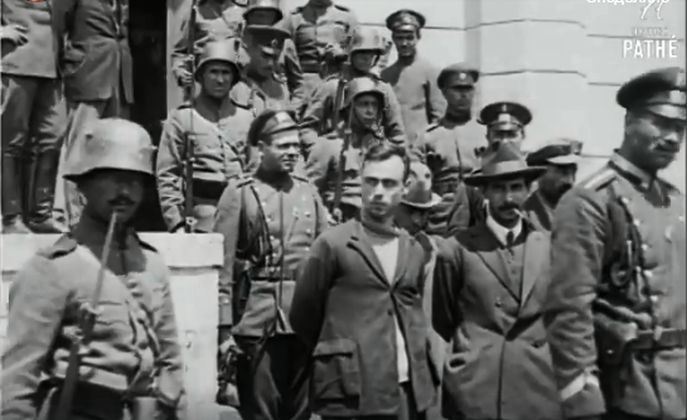
Accused of the assault in 1925 on Sofia’s St Nedelya Cathedral in which 200 people, most members of the Bulgarian elite, were blown up at the funeral of General Konstantin Georgiev, Bulgarian Communist Marko Friedmann and his comrades walk to their deaths.
‘Marko Friedmann, How A Revolutionist Died’ by A Witness from the Daily Worker Saturday Supplement. Vol. 2 No. 148. July 4, 1925.
SOFIA, Bulgaria—On May 27th, at eight o’clock in the morning the “attempters” Friedmann, Koeff and Sadgorsky who were sentenced to death by the court martial, were hanged.
The execution of the sentence took place on a free place in the eastern suburbs of Sofia. At least 60,000 people and representatives of the foreign press and the embassies were present. The place was guarded by strong departments of gendarmes and soldiers. The execution was filmed.
Faced Death Daily.
On May 27th at six o’clock in the morning the prison commander informs the prisoners that the execution will take place at eight o’clock. In the room of the director the prisoners are allowed to see for the last time their relatives. When the wife of Friedmann begins to cry, he calms her with the words: “Do not cry, this is the fate of every revolutionist. That you should have known in the beginning. You know that I was sentenced to death every day. Twice I was seriously injured; I myself took poison but it had no effect, I knew my fate beforehand and I will therefore calmly bear everything.”
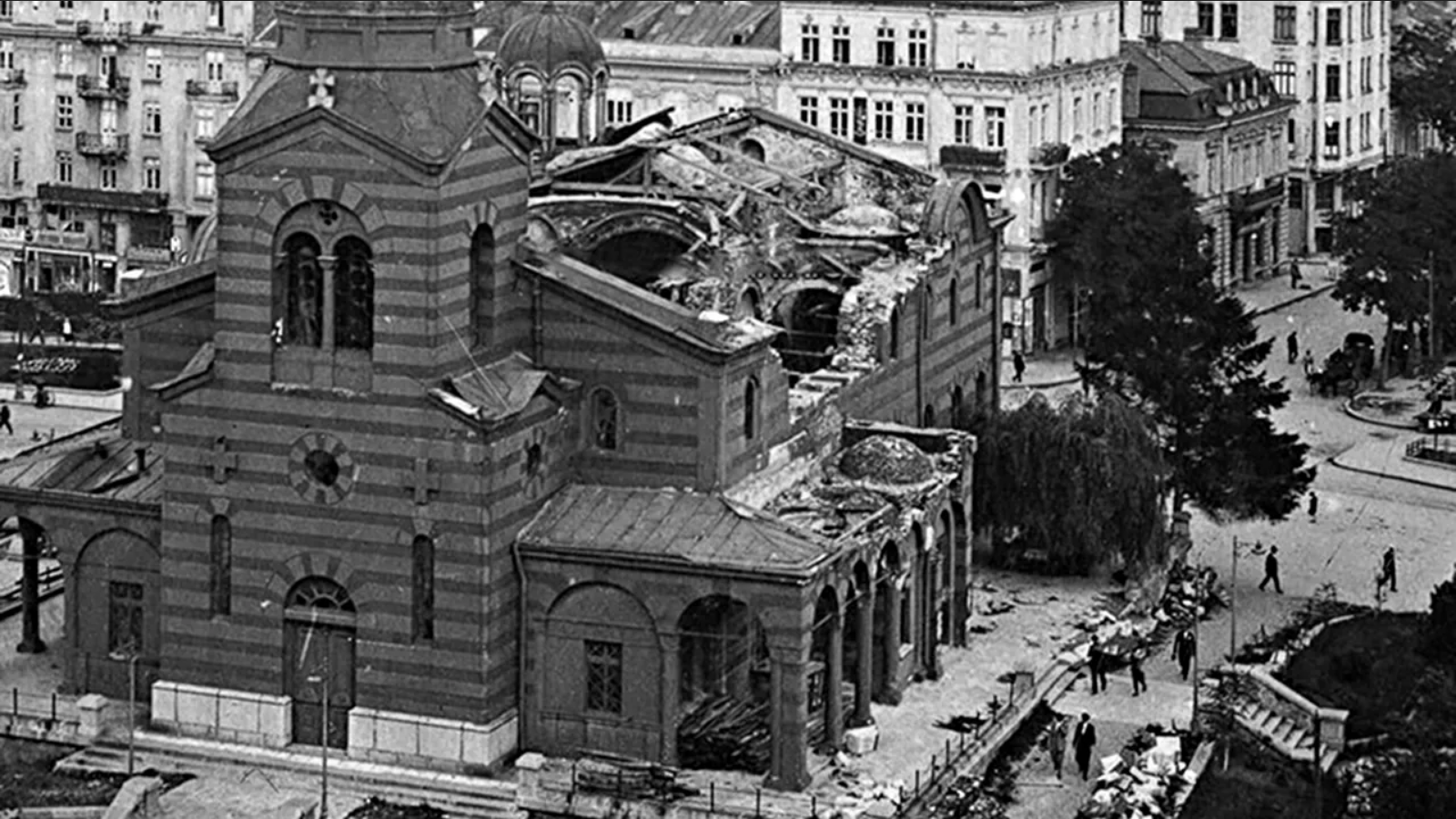
Then Comrade Friedmann turns to the prison commander; ”I regret that the king has not fulfilled the request of an honest fighter to be shot openly instead of hanging on the gallows.”
When his mother says that 160 men have been killed in the attempt, Friedmann replies: ”I have nothing to do with the attempt, l am not responsible for those victims.” He asks for a cup of chocolate and drinks it down calmly.
At a quarter to eight the prisoners are taken to the place of execution in a lorry. The secretary at the court reads the sentence. The accused remain completely calm and Friedmann shows himself particularly courageous.
Regrets Nothing.
The state attorney asks the prisoners for their last wishes. Friedmann asks them not to persecute his family. The little money that he has in his pocket, is for the hangman. He knew what he had done. He declared aloud that he had been actually working illegally according to his convictions. He regretted nothing. But he had nothing to do with the attempt.
Koeff wants to write a letter to his brother. The writing lasts a long time and Friedmann calls impatiently; “It is high time, I cannot wait any longer!” Koeff and Sadgorsky confess to the priest. Comrade Friedmann only bows politely to the priest and says that he needs nothing from him.
Dies Calmly.

The state attorney asks the prisoners to say their last good bye. Koeff and Sadgorsky remain motionless, while Friedman bows to the audience and then turns to the gallows. “Is this mine,” he asks and climbs as the first on the table under the cord where he calmly waits till it is his turn.
Koeff is hanged first. Then Sadgorsky. Friedmann looks at it calmly. When his turn comes, he wipes the dust from his shoes, takes off his coat and proud and calm, as he was before, he received the gipsy who puts the cord around his neck. “Pay attention,” he says to him, “I have given you a tip.” “I understand my job” the gipsy answers and takes the table away from under Friedmann’s feet.
Passed Life for Workers
The dead bodies are taken down and given to their relatives for burial. The public gradually goes away. There is a general excitement. Many give loud comment on the happenings, others laugh. But the majority keep silent and walks slowly to the town.
Marko Friedmann was 33 years old, lawyer, former member of the municipal council and in the last three years editor of the Jewish workers’ paper “Bratstvo,” The government thinks he Is a member of the illegal E.C. of the C.P. of Bulgaria. He enjoys a great popularity among the Jewish workers and the working class youth in Sofia where he passed all his life with proletarian work.
The Saturday Supplement, later changed to a Sunday Supplement, of the Daily Worker was a place for longer articles with debate, international focus, literature, and documents presented. The Daily Worker began in 1924 and was published in New York City by the Communist Party US and its predecessor organizations. Among the most long-lasting and important left publications in US history, it had a circulation of 35,000 at its peak. The Daily Worker came from The Ohio Socialist, published by the Left Wing-dominated Socialist Party of Ohio in Cleveland from 1917 to November 1919, when it became became The Toiler, paper of the Communist Labor Party. In December 1921 the above-ground Workers Party of America merged the Toiler with the paper Workers Council to found The Worker, which became The Daily Worker beginning January 13, 1924.
PDF of full issue: https://www.marxists.org/history/usa/pubs/dailyworker/1925/1925-ny/v02b-n148-supplement-jul-04-1925-DW-LOC.pdf
 Revolution's Newsstand