‘Scottsboro and Beyond’ by Harry Haywood from Labor Defender. Vol. 8 No. 6. June, 1932.
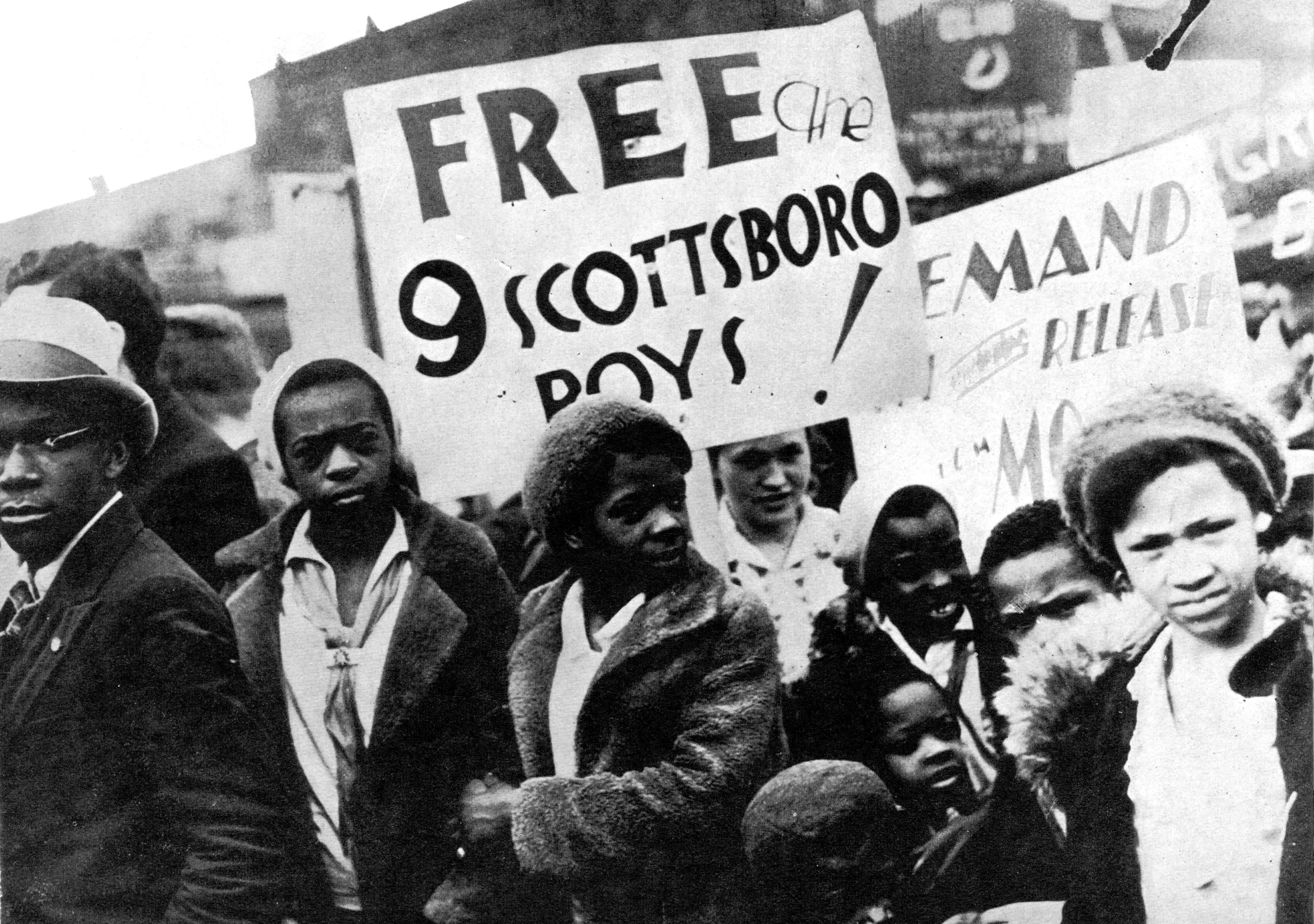
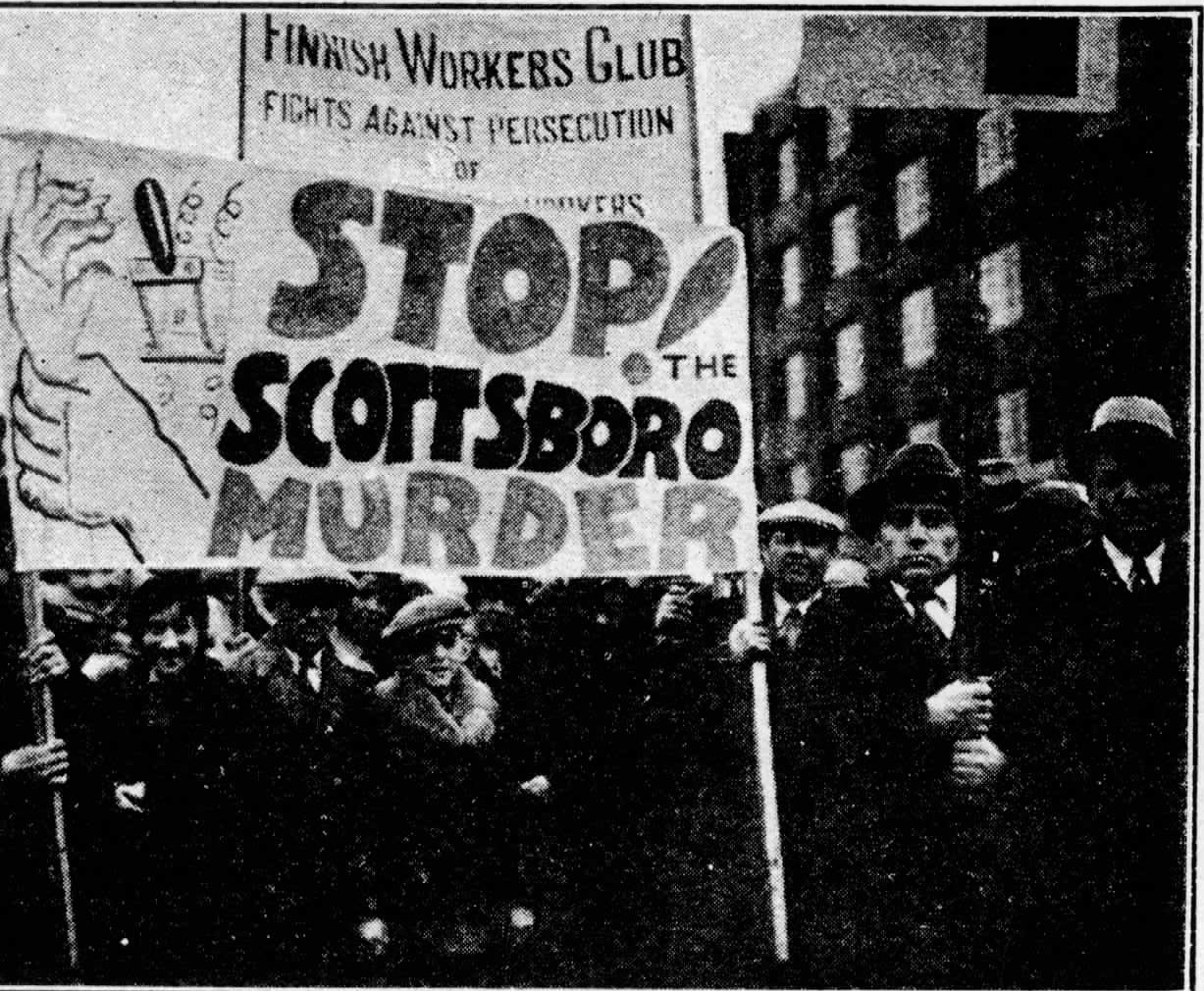
In the midst of the intense, world-wide fight for the freedom of the Scottsboro victims, it is well to get a perspective view of the larger issue involved in the case. The Scottsboro frame-up is not an isolated instance of persecution; it is part and parcel of a huge, cold-blooded system of oppression and terrorization of millions of Negro toilers-a system that has been well-nigh reduced to a science by the boss class that imposes it.
This boss terror against an oppressed National minority finds its most open and violent expression in lynching, an institution which is rooted deeply in the damnable economic system which gives it birth and nourishes it. The present economic crisis, the growing capitalist offensive against the mounting struggle of the workers of all races reveals more clearly than ever before this economic class basis of Negro lynching. It can no longer be denied that lynching and lynch frame-ups are invariably the direct result of developing class struggles.
Lynch Law is the threat facing the Negro workers who attempt or dare to struggle against wage cuts and evictions or for unemployment insurance; the Negro share cropper or farm laborer who protests against the virtual peonage imposed upon him by landlords and loan-sharks. These lynchings of recent occurrences, chosen at random, amply illustrate the class background of the infamous practice:
The murder of Ralph Gray at Camp Hill, Alabama, by a posse of sheriffs and landlords, for his activity in the organization of the Croppers Union.
The lynch frame-up of Willie Peterson, disabled and unemployed Negro war veteran, avowedly as part of the reign of terror intended to suppress the forward movement toward organization among the Negro and white workers and share croppers of Alabama.
The murder of three Negro workers in Chicago and of two in Cleveland shot down by policemen in connection with the struggle against evictions.
Added to these instances are the wanton murders of individual Negro unemployed workers by sheriffs and police in every part of the country for non-payment of rent. Recently a large number of destitute workers suffering from cold and starvation were shot down by company detectives in various towns for picking up coal or fuel along rail· road tracks.
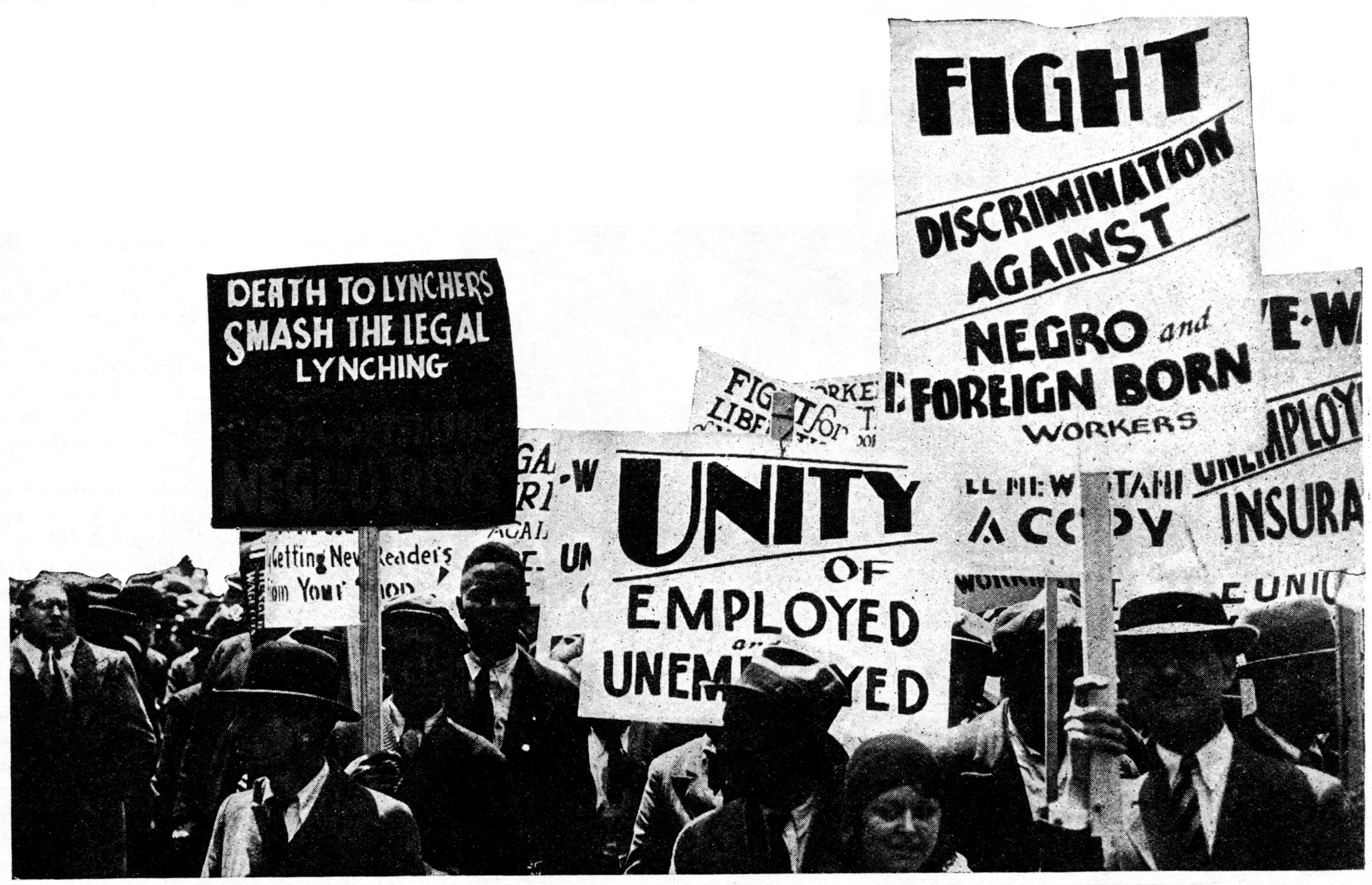
Two tendencies are evident in this systematic persecution of Negro workers. First, we find that more and more the boss class is supplementing open lynching-i.e., with rope, faggot and gun, etc.-with its newly perfected device of “legal lynching”-i.e., lynching by “due process of (capitalist) law” legal lynching is just as effective as stringing the victim up a tree, the capitalists think. It is safer, less “scandalous,” being covered by the respectable cloak of capitalist “justice” and is invariably accompanied by the praises and thanks of such bootlicking, reformist organizations as the National Association for the Advancement of Colored People.
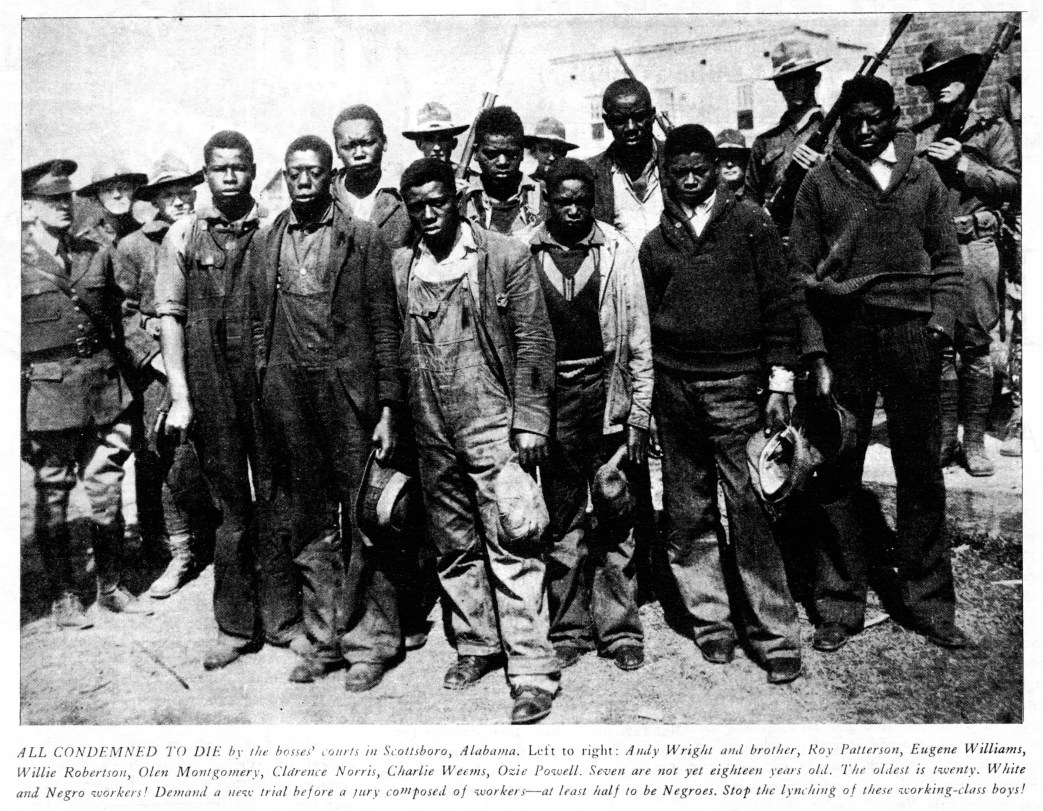
The Scottsboro case, the most outstanding example of legal lynching contains all the typical elements of the damnable frame· up system—the trumped-up charges and lying testimony of State witnesses, the speedy mockery of a trial in a carefully whipped-up atmosphere of lynch mania, the hand-picked jury and prejudiced judge, denial of the most elemental rights to the Negro victims who are doomed to death in advance, etc.
Other notable examples of the legal lynching system are the cases of Euel Lee (Orphan Jones) in Maryland, Willie Brown in Philadelphia, Willie Peterson in Birmingham, Jess Hollins in Oklahoma and Bonny Lee Ross in Texas. In refusing to grant a stay of execution to young Ross, who was railroaded to the electric chair, Governor Ross Sterling of Texas brazenly admitted the role of lynching as a weapon in the boss campaign of suppression of the Negro masses in stating that, “it may be that this man is innocent, but it is sometimes necessary to burn a house in order to save a village.”
Another dangerous trend in the present growth of boss-inspired lynch mania is the passing from the stage of individual lynchings to armed terroristic attacks against whole communities by organized bands of fascist lynchers—–Ku Kluxers, Black Shirts, Legionnaires, etc. This tendency was apparent in the mass slaughter and disarming of Negroes in the Birmingham district at the time of the Willie Peterson frame-up and in the ruthless terrorization of Negro comrades along the Eastern Shore of Maryland during the recent lynch-fever, particularly in connection with the lynching of Matthew Williams in Salisbury, which was accompanied by a series of the most provocative acts against the Negro masses in that vicinity. In this instance, the body of the dying Williams was dragged through the streets of the Negro neighborhood, his fingers and toes were cut off and thrown on the porches of Negro houses and the lynchers shouted threats to the whole Negro population.
The contemptible Ku Klux practice of “night-riding” has been resumed in some parts of the south, as illustrated in the very recent incident at Greenfield, Tenn., where a band of cowardly fascists rode down on a Negro community during the night, hurling threats at the workers and burning several shacks.

The ruling class has a two-fold purpose in fostering this vicious campaign of terror against the Negro toilers-(1) by whipping up lynch hysteria, it aims to divide the workers, and thus to weaken them; (2) it aims by this means to keep in terrorized subjection the Negro masses who constitute a great portion of the American working-class.
Against this growing lynch terror, the American workers, Negro and white, must carry on a wide relentless struggle. It is absolutely essential for all workers to realize that the sharpening of the lynch terror is an integral factor in the general campaign of capitalist reaction against the toilers as a whole, aimed particularly to strike at the growing unity of Negro and white workers.
Labor Defender was published monthly from 1926 until 1937 by the International Labor Defense (ILD), a Workers Party of America, and later Communist Party-led, non-partisan defense organization founded by James Cannon and William Haywood while in Moscow, 1925 to support prisoners of the class war, victims of racism and imperialism, and the struggle against fascism. It included, poetry, letters from prisoners, and was heavily illustrated with photos, images, and cartoons. Labor Defender was the central organ of the Scottsboro and Sacco and Vanzetti defense campaigns. Editors included T. J. O’ Flaherty, Max Shactman, Karl Reeve, J. Louis Engdahl, William L. Patterson, Sasha Small, and Sender Garlin.
PDF of full issue: https://www.marxists.org/history/usa/pubs/labordefender/1932/v08n06-jun-1932-LD.pdf
 Revolution's Newsstand