
‘Soviet Life at Murmansk’ from Soviet Russia (New York). Vol. 2 No. 22. May 29, 1920.
(Moscow Wireless of April 28, 1920.)
A set of the Izvestia of the Executive Committee at Murmansk has just arrived at Moscow. This paper has been appearing regularly at Murmansk since February 23, two days after the Soviet Revolution in that city. The first news met within its pages are orders intended to guarantee safety to all counter-revolutionists who have laid down their arms and to spread throughout the region the good news, hitherto no doubt concealed by the Whites, that the death penalty in Soviet Russia has been abolished. Beginning with the fourth number, it is apparent that the new power is not losing a moment’s time in carrying out its functions. The Executive Committee at Murmansk have organized a workers’ club, in which at all times political and literary conferences, as well as lectures on hygiene and on general subjects of instruction, are being held. Some of the earlier numbers likewise contain ardent appeals addressed to the intellectuals, calling upon them to cooperate with the people in the encouragement of the new regime. A railroad worker sends to the newspaper a letter dealing with the political section of the railroad, containing a fiery appeal to that effect.
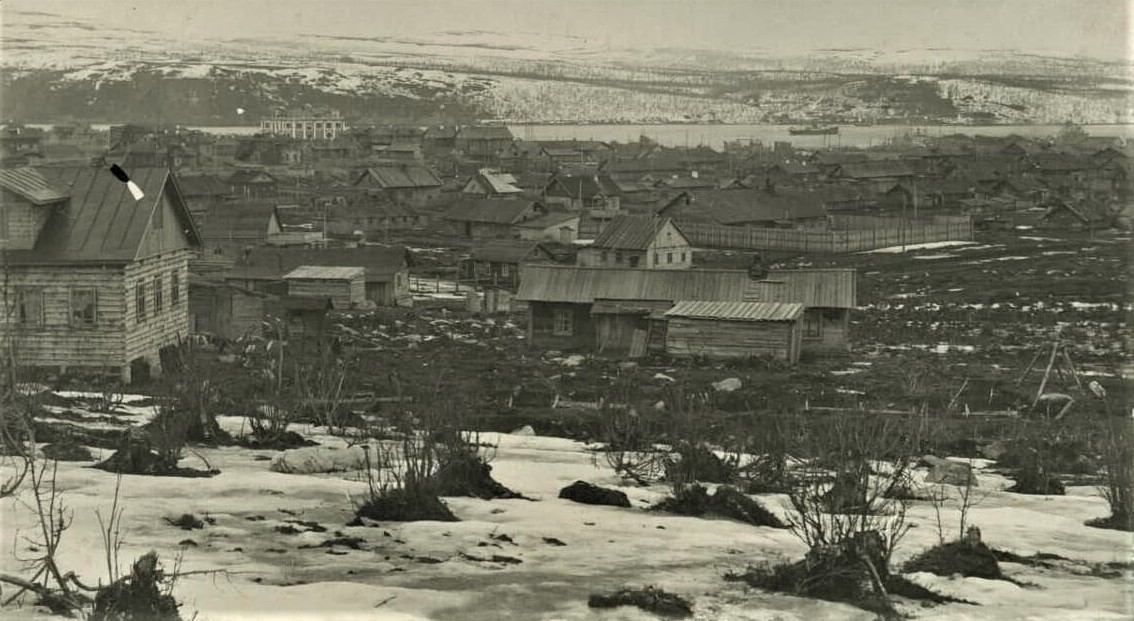
Simultaneously, one beholds the development in this country, previously neglected, and then crushed under the boot of the Czarist generals, of all the living forces, which are encouraged by the Soviet Government. With an astounding rapidity these lands, almost in the polar regions and so long detached from Soviet Russia, are uniting with the latter. For example, there is the political and educational organization for young people. Its meetings are increasing in number.
Meanwhile, the general administration is being adjusted according to the principles of the whole republic. The Council of Commissars, created spontaneously in the first days of the Revolution, has been replaced by a Revolutionary Committee, which in turn, is to last only until such time as the convocation of the Soviet Congress. This Congress is to take place March 20. It includes sixty members elected by the workers’ organizations, one delegate for each…and for the rest of the population, one delegate for each thousand. This Congress is to examine all questions of administration, territorial production, local economic life, and, most important, transportation by railroad and by water. This province, so recently liberated, has already had the time to join in the great campaign undertaken by Soviet Russia for the improvement of transportation. The transactions of the Congress reveal the desperate situation in which the carelessness and the financial incapacity of the Whites have left the Murmansk railroad. Thus, the wood reserves at the head of the line, at the time when Miller left the field of action, amounted to only 80 steres. Thanks to their extraordinary efforts, the workers were able to keep up the supplies of wood from day to day.
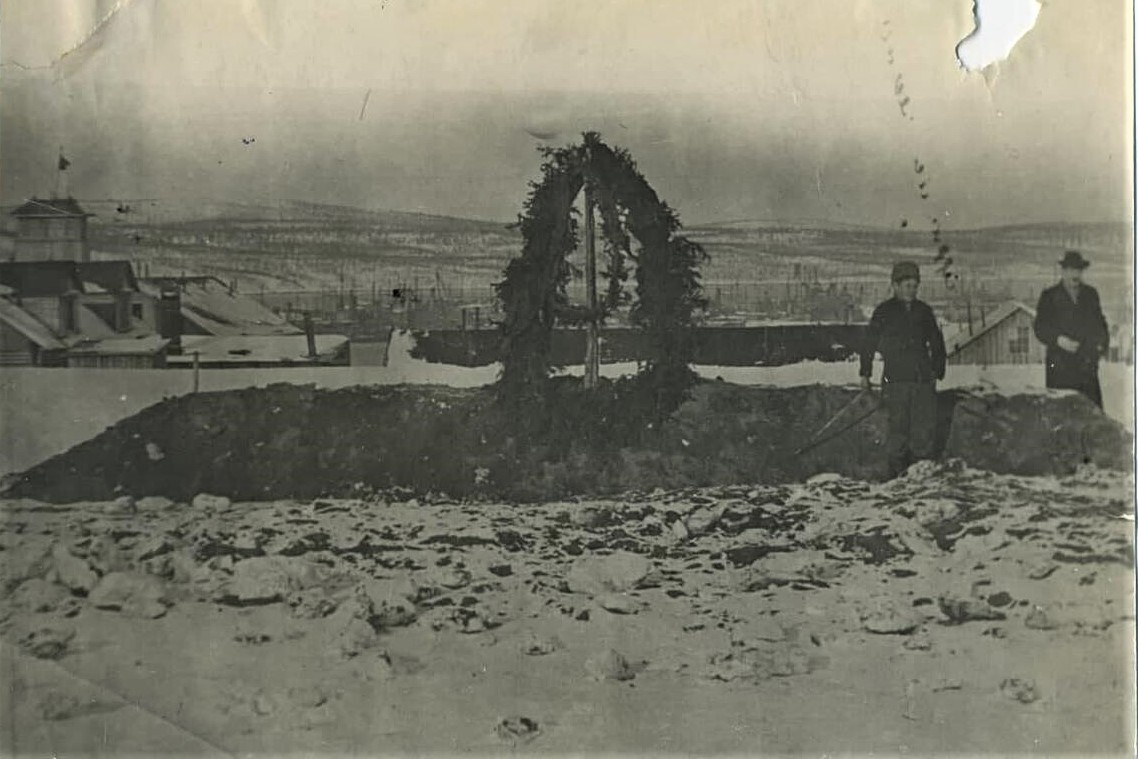
The occupation of this country by the Allies has had the most disastrous consequences for the rolling stock. When the English began their work, there were at hand 195 locomotives in perfect condition. When Miller left, there were only 45. All the others were out of commission. The passenger and freight cars are now lacking to a point of almost complete absence. And yet, thanks to the measures taken by the new regime, already traffic is usual on two passenger trains weekly as far as Petrozavodsk.
All this new activity is inspired and maintained by the Communists, who are supported, in their turn, by the whole population, as may be seen in the resolution passed at numerous meetings.
There is no doubt that the people already understand the improvements made in the region; these are all the more striking, when we recall that the population is still enraged against the Whites, who ruined the country and deceived the people on the subject of Bolshevism.
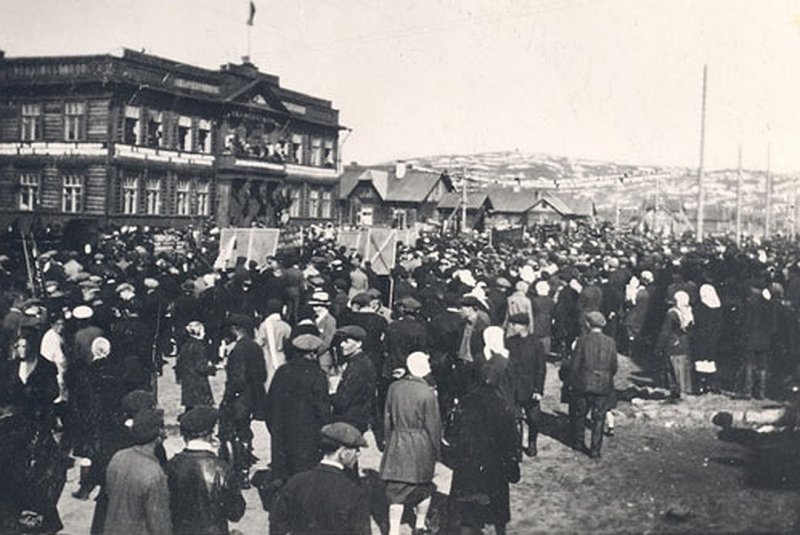
Communist Saturdays are flourishing. Communist instructors are traveling throughout the country districts to acquaint the peasants with everything that has been going on for the last two years. Everywhere, the population receives them with enthusiasm and showers them with questions. In spite of the difficulties involved in the climatic conditions, everything is being done to increase the production of the country; so that the peninsula of Kola may become a self-supporting center, such as it never was before.
Courses are being opened for the illiterate. An extraordinary commission hag been created for sanitary control in all inhabited places, and a general housecleaning week has been declared at Murmansk.
Soviet Russia began in the summer of 1919, published by the Bureau of Information of Soviet Russia and replaced The Weekly Bulletin of the Bureau of Information of Soviet Russia. In lieu of an Embassy the Russian Soviet Government Bureau was the official voice of the Soviets in the US. Soviet Russia was published as the official organ of the RSGB until February 1922 when Soviet Russia became to the official organ of The Friends of Soviet Russia, becoming Soviet Russia Pictorial in 1923. There is no better US-published source for information on the Soviet state at this time, and includes official statements, articles by prominent Bolsheviks, data on the Soviet economy, weekly reports on the wars for survival the Soviets were engaged in, as well as efforts to in the US to lift the blockade and begin trade with the emerging Soviet Union.
PDF of full issue: (large file): https://www.marxists.org/history/usa/pubs/srp/v4-5-soviet-russia%20Jan-Dec%201921.pdf
 Revolution's Newsstand