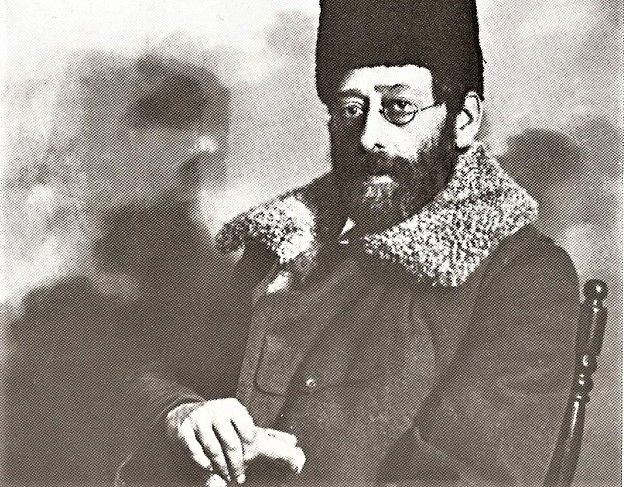
‘The Death of Martov’ by Karl Radek from International Press Correspondence. Vol. 3 No. 37. May 17, 1923.
The news of Martov’s death will cause the deepest grief in the ranks of his party comrades, in the ranks of the Menshevist party of which he was the most gifted leader. In the ranks of the fighting Russian proletariat the news will awaken recollections of those decades when the Russian revolutionary proletariat fought side by side with the petty bourgeoisie, which at that time still played a revolutionary role.
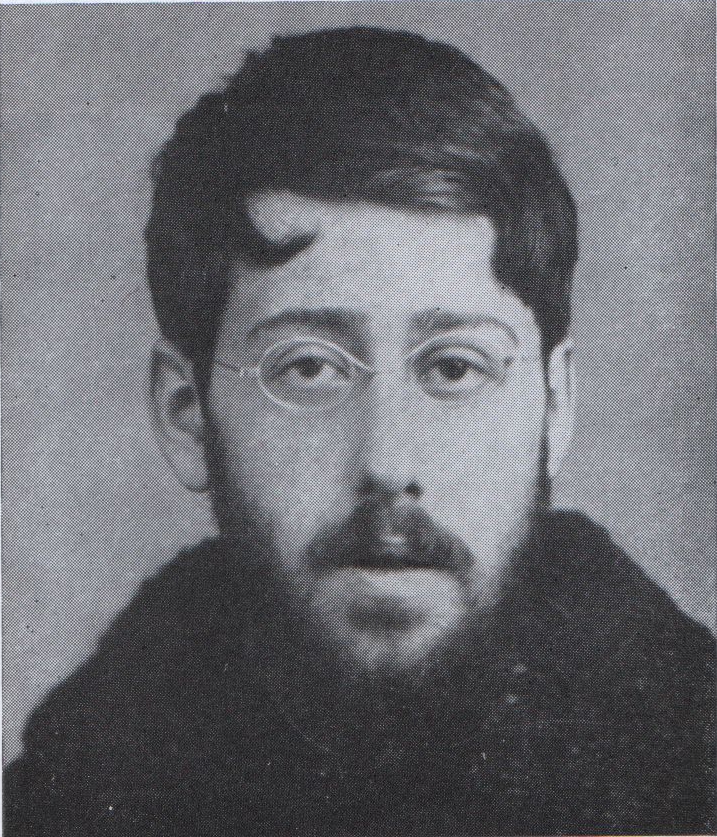
L. Martov (J.O. Zederbaum) took active part, since the nineties, in the revolutionary and labor movement in Russia, and was one of the most gifted writers of the Russian emancipation movement. He participated energetically in that ideological struggle, whose result was the schism of the revolutionary movement into proletarian-Bolshevist and petty-bourgeois-Menshevist camps.
In the first volume of his memoirs, which he published last year, Martov treated of this period of his development, the development of the revolutionary movement up to the moment where the roads parted, where the two sections of Russian social democracy began to speak different languages. Martov’s autobiography – here it differs from that of Chernov – is the representation of a personality of exemplary modesty and clarity, entirely free from any, even inner, affectation. And these personal characteristics of Martov permit the representatives even of those parties of whom he was the deadly enemy to acknowledge, on the day of his death, that he was a convinced, unselfish, and honorable opponent.
Martov’s tragedy is the tragedy of a revolutionist born in petty bourgeois surroundings, and attached to the petty bourgeoisie by the innermost core of his being. Subjectively, Martov thought with the conceptions of the proletarian movement. The revolutionary struggle of the proletariat was his leading thought. It is likely that his last thoughts were for the emancipation of the working class. But objectively, Martov was bound up with precisely that section of one-time revolutionary intelligentzia, with that section of the proletariat, whose petty-bourgeois character rendered it incapable of breaking with the bourgeoisie.
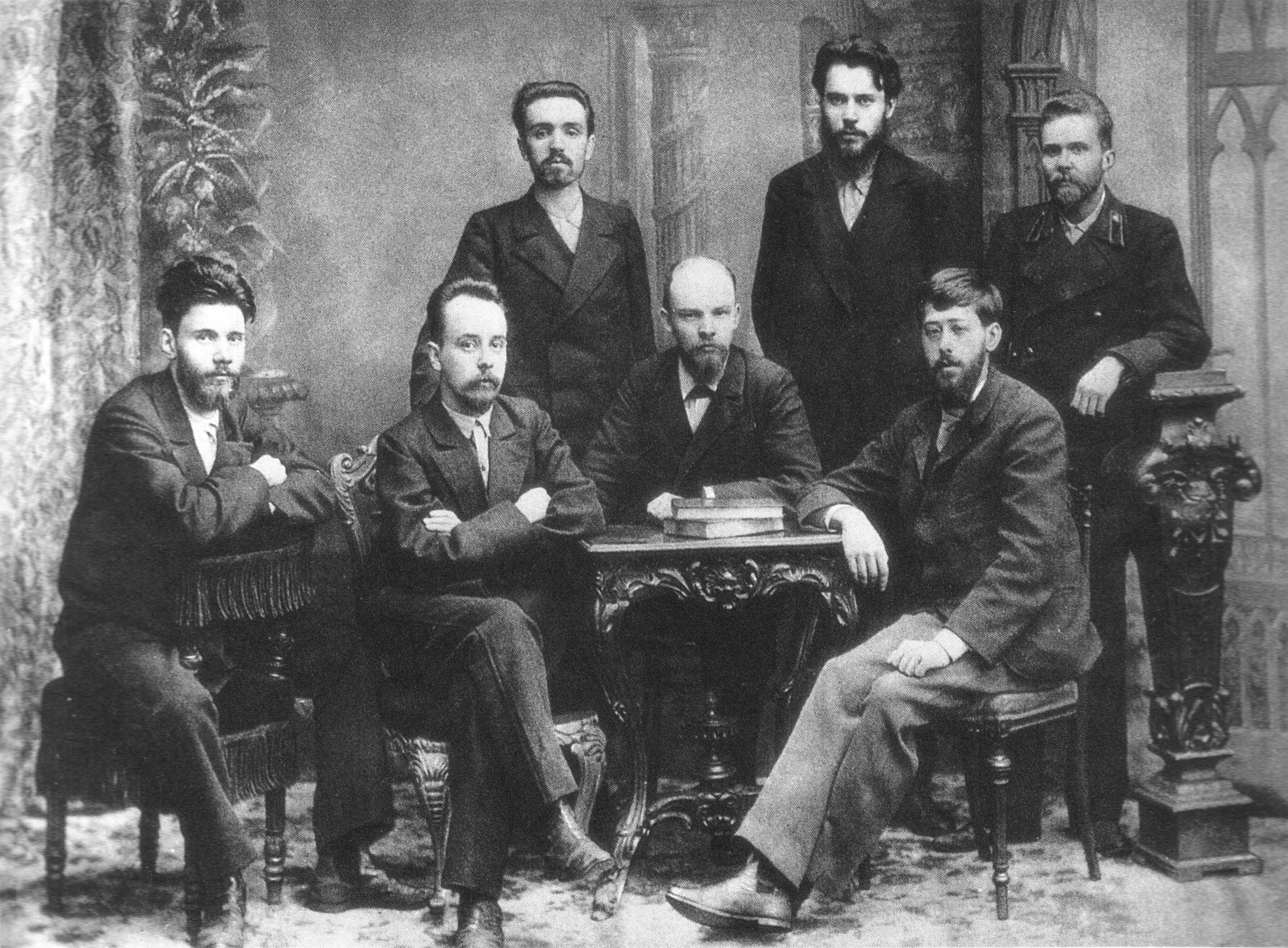
If we attempt to concentrate into one formula the substance of the history of Menshevism, it may be said that the movement has either been one proceeding from the western border districts of Russia, where the proletarian masses live less divided from the petty bourgeoisie of the city, or the movement of those classes of workers which have lived in closest contact with the peasantry. These elements of the working class have shown themselves magnificently able to grasp, mentally, the general formulas of Marxism, but they have proved incapable of extracting from the science of Marxism, a science showing them how to assemble all the revolutionary forces of Russia for the struggle against Tsarism, for the struggle against the bourgeoisie. These preachers of Marxism have lived far away from the broad stream of revolutionary struggle, and without faith in the mighty creative forces inherent in the working masses. The Menshevist intelligentzia has filled the working masses with disbelief in their own powers, but with a slavish admiration for the cultural power of the bourgeoisie. Menshevism staked every thing on the alliance with the cultural city bourgeoisie, and, without realizing its counter-revolutionary character, feared the “wild” town proletariat. Menshevism failed to grasp that no proletarian culture can be created without the destruction of capitalism.
This tragedy of Menshevism began on the day when Martov and his friends issued the slogan, of alliance with the liberal bourgeoisie, instead of alliance with the peasantry. This sealed the fate of Menshevism; from this moment onwards it played a counter-revolutionary role. And it was just because Martov was the most gifted representative of Menshevism that the counter-revolutionary part played by the party which be headed was reflected most clearly in him.
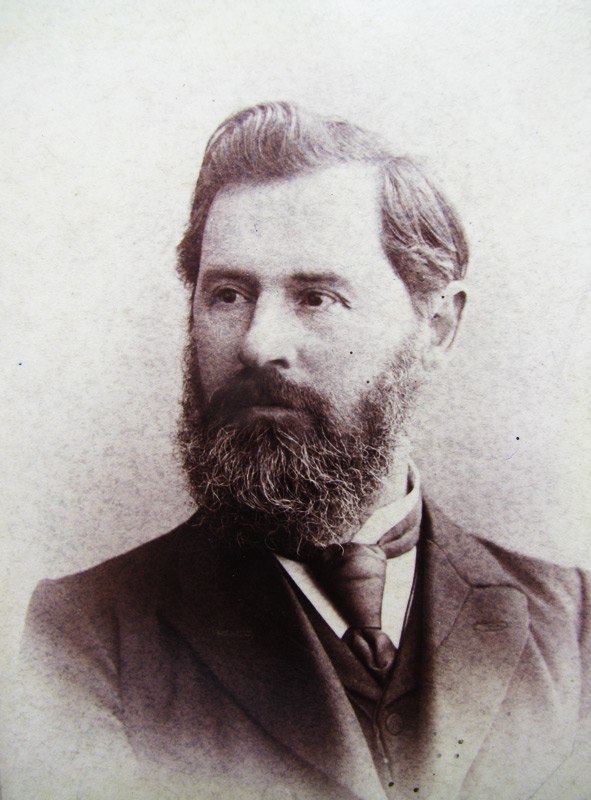
Martov was aptly characterized by comrade Trotzky by the remark that no other writer has made such extensive use of Marxism for the purpose of falsifying revolutionary truth as Martov. Martov’s role was most clearly expressed during the war, and during the February revolution. From the first day of the war onwards, Martov was an internationalist. He contributed much to the clarification of the tasks of internationalism as opposed to the opportunism of the Second International. But at the same time, he defended the part played by his friends in the Duma. At the beginning of the February revolution, after the first steps taken by the so-called provisional government, which was supported by his friends Tzeretelli, Tcheidze, and Dan, Martov was obliged to acknowledge the bankruptcy of Menshevism, and to found the party of the so-called internationalist Mensheviki. In the course of conversation with many Bolsheviki, he spoke of a ruthless struggle against the Mensheviki, and of the possibility of having to join farces with the Bolsheviki. On the station at Stockholm, when Martov was leaving for Petrograd, and took leave ol the present writer, he said: “I hope that we shall fight for one cause”. But up to the end of the February revolution Martov could not decide to sever himself from the national defenders, despite his many antagonisms to them. His inclination towards the anti-revolutionary ideology of Menshevism was stronger than his internationalism. And hence it came that Martov, on the day following the October revolution, when his friends the Menshevist patriots were deprived of the helm of state, of the helm of revolution, by the rising working class and peasantry, Martov went over into the camp of the counter-revolutionists The role played by hint in the history of Russia is a reflection of all the vacillations passed through oy the petty bourgeois stratum to which be belonged. At the moment when there was a danger that the landowners’ counter-revolution might be victorious, Martov stood for the defence of Soviet power. But even at the most critical moment of battle he could never desist from the disintegrating lamentations which he called criticism. Scarcely had the landowners’ counter-revolution been defeated, when Martov appeared as champion of the bourgeois counter-revolution. It was not by accident, but as a result of consistent action, that Martov joined Tchernov and Milyukov in 1921, at the time of the Cronstadt rising, under the slogan of free Soviets without communists, of Soviets through whose doors the bourgeois counter-revolution would have found an entry. In the year 1919–20, the year of the first international revolutionary wave, Martov spoke in favor of socialization. In the year 1922, when the bourgeoisie had recovered somewhat, Martov was carried along on the wave of international counter-revolution, he believed in its power, renounced the socialist character of the Russian revolution, and loudly proclaimed the slogan of removal of all hindrances to bourgeois development. During the whole struggle of Menshevism against Bolshevism Martov denied all relationship between Russian Menshevism and European reformism, although joining hands at the same time with the most obvious reformism.
Martov was the sincerest and most unselfish representative of that one-time revolutionary petty-bourgeoisie which accompanied the Russian proletariat many steps on its road, and at his graveside we can say. “Farewell for ever! Never again will the Russian proletariat join hands with that party of which you were the sincerest and most gifted leader.”
International Press Correspondence, widely known as”Inprecorr” was published by the Executive Committee of the Communist International (ECCI) regularly in German and English, occasionally in many other languages, beginning in 1921 and lasting in English until 1938. Inprecorr’s role was to supply translated articles to the English-speaking press of the International from the Comintern’s different sections, as well as news and statements from the ECCI. Many ‘Daily Worker’ and ‘Communist’ articles originated in Inprecorr, and it also published articles by American comrades for use in other countries. It was published at least weekly, and often thrice weekly. The ECCI also published the magazine ‘Communist International’ edited by Zinoviev and Karl Radek from 1919 until 1926 monthly in German, French, Russian, and English. Unlike, Inprecorr, CI contained long-form articles by the leading figures of the International as well as proceedings, statements, and notices of the Comintern. No complete run of Communist International is available in English. Both were largely published outside of Soviet territory, with Communist International printed in London, to facilitate distribution and both were major contributors to the Communist press in the U.S. Communist International and Inprecorr are an invaluable English-language source on the history of the Communist International and its sections.
PDF of full issue: https://www.marxists.org/history/international/comintern/inprecor/1923/v03n37%5B19%5D-may-17-Inprecor-loc.pdf
 Revolution's Newsstand