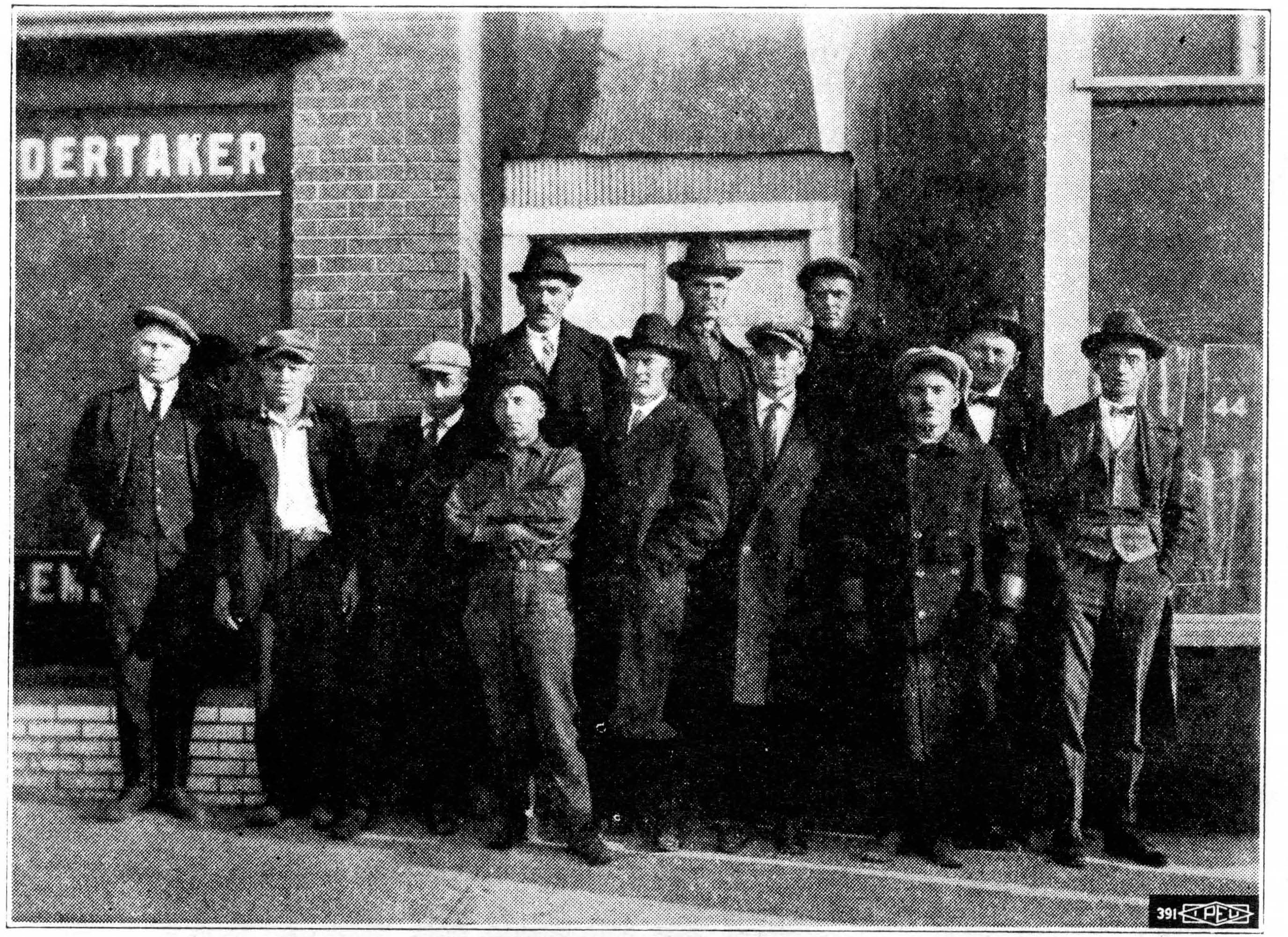
Southern Illinois, perhaps more than any other location, had the best and worst of the U.S. labor movement competing for leadership of the class. The conflict between radical miners and the Klan for control of the Southern Illinois coal fields was complicated by the splits within the left union forces, the John L. Lewis leadership, race, language, nativity, and guns. The birthplace of the Progressive Miners of America was also the hunting ground of the Klan, and long, roiling civil war within mining communities lasted two generations. Thurber Lewis tell of the outrageous frame-up of heroic left-wing miners for the murder of their own comrade by a Klansman cop.
‘The Frame-up on the Zeigler Miners’ by Thurber Lewis from Labor Defender. Vol. 1 No. 1. January, 1926.
Not since the Mooney trial, has so brazen a frame-up been perpetrated against members of the working class as the recent conspiracy against the progressive miners in Zeigler, Illinois. Twenty members of the United Mine Workers’ Union were indicted by a hand-picked grand jury on the testimony of a dozen witnesses who did not see, but who were drilled to say in unison that they saw the eighteen coal miners assault one man with “malicious intent to murder.” One of the twenty is charged in addition with the murder of one of his own fellows who died under the fire of a gun operated by a member of the Ku Klux Klan. This latter, after being charged with the murder by the coroners jury on the testimony of men who saw the shooting, was freed by the same handpicked jury that indicted the twenty.
The man who is now charged with the shooting was not in the vicinity of the affray that ended in death. But he and the seventeen other coal diggers were the leaders of a strike and also leaders of the progressive movement in the U.M.W. of A. They are no more guilty of the charges against them than Tom Mooney or Warren J. Billings. They are being framed-up for the same reason that Mooney and countless other fighters for the workers have been framed up.

What’s the background? Many years ago the Leiter interests started a mine at Zeigler. The mine was in operation only a short time before the company clashed with the coal diggers. Leiter armed the mine with gattling guns, mounted huge searchlights on the tipple and brought in a small army of gun-men. The struggle raged on for years. Zeigler was and is looked upon as one of the staunchest champions of the coal miners interests in Southern Illinois. The Zeigler miners gained a reputation as fighters. Of late years the Ku Klux Klan came. Zeigler fought them too. Glenn Young, of Herrin fame, threatened time and again to raid Zeigler and clean it out. But he never tried. Nevertheless the Ku Klu Klan became strong in Southern Illinois. It is still strong. Even coal miners have been hood-winked into membership. Irresponsible members of the union joined the klan surreptitiously. But it never got a strong foothold in Zeigler.
Local 992 of the U.M.W. of A., Zeigler, is known as a progressive local. It controls Bell and Zoller mine No. 1. It elected Henry Corbishley, a staunch progressive, its president. The sub-district officials at West Frankfort are reactionary. The sub-district president is a man named Fox, the vice-president, D.B. Cobb, cogs in the Farrington district machine. Henry Corbishley ran for subdistrict president last year. He was defeated. He was defeated by fraud. Fake ballots, doors taken off election rooms, counting out of votes— the usual labor fakery— figured in the elections and made feeling against the sub-district machine run high— especially in Zeigler. But this isn’t all. There are many more reasons why the sub-district machine earned the distrust of the miners. In Local 992 the sub-district consistently supported a small group of known klansmen who, for a time, held office. They were thrown out finally. One of the sub-district spies who was Alec Hargis, treasurer, found guilty of fraud. We shall hear of him later.

For two years local 992 had been having trouble with Bell and Zoller mine No 1 over the weighing of coal. The output is so large that it is virtually impossible for one man to weigh the coal correctly. The union has a checkweighman at the scales. Seven times the checkweighman was changed. None of them could record the weights: the coal was run over the scales too fast.
Last August the checkweighman on the job threw up his hands. The job was hopeless. The company would neither slow down the cars nor grant an assistant. The checkweighman went to Corbishley, the president of the local and said there was no use. He was sworn under the law to weigh the coal correctly. He couldn’t comply. He put on his hat and coat and told Corbishley to inform the men that he was going home. This Corbishley did. Their coal was not being weighed and the men walked out of the mine.

Then the sub-district took a hand. Vice-President Cobb came over to “adjust” the matter. He went into conference with the operator and wrote evidence for four days on testimony of a hundred miners, only four of whom said anything at all favorable to the company. Then Cobb went into secret session with Berger, the mine manager. Berger demanded the removal of the local officials and that the men return to work. Cobb walked out of the room, announced that the local officials were deposed and ordered the men back to work. They didn’t go.
Cobb then called a special meeting of the union. He brought in Subdistrict President Fox and a district board member, Hindman. He gathered his few klan forces for the meeting. They must elect new officers and return to work. The men refused and the meeting adjourned.
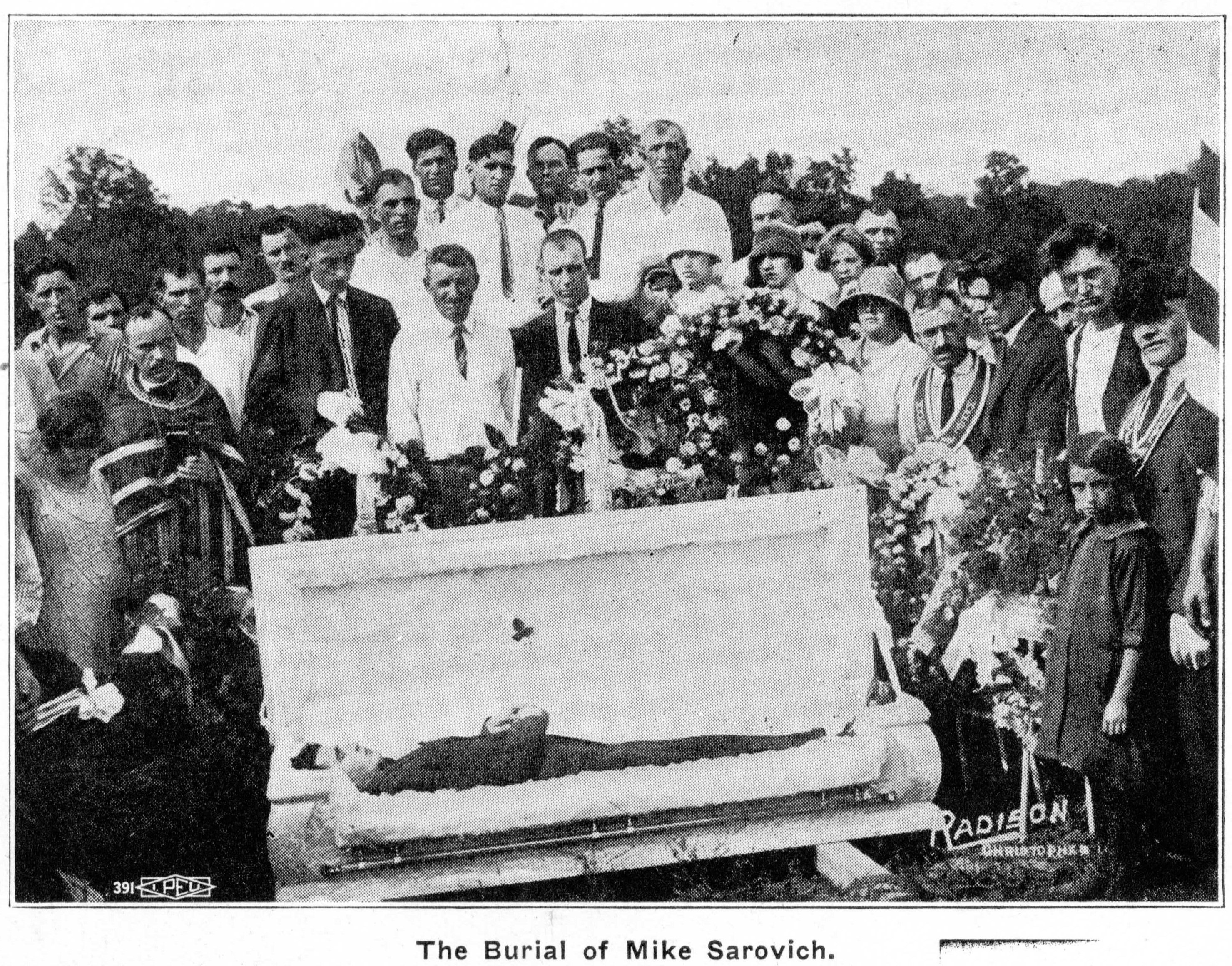
But before the men left the hall, a klansman, Asa Wilson by name, struck an old miner, Bert Farthing, of sixty-nine years who had spoken in favor of the union’s action. Farthing’s son, Oscar, was nearby. He defended his father. The fight began to spread. The miners say Cobb pulled out a black-jack and attempted to use it. He didn’t get far with it. He, along with a number of others from both sides were injured. The shot was fired. Mike Sarovitch, an earnest supporter of Local 992 was about to leave the hall when a bullet stopped him. It tore through his vitals and lodged in the side of Board Member Hindman who stood near. The miners say the shot was fired by Alec Hargis of whom we have heard before. There were at least ten miners near the door who swore they saw him fire the shot. His gun was taken from him and is in the hands of the Zeigler Chief of Police. Hargis escaped but was later arrested.
Four days after warrants were served on twenty-six members of local 992. Among them was Henry Corbishley and his two brothers. The warrants were sworn by D.B. Cobb and supported by Lon Fox. They charged the twenty-six miners with conspiring to murder Cobb. No one took the charge seriously at first.
It seemed ridiculous. There was nothing to support it. But the twenty-six were arrested and held in $2000 bail.
After a lawyer was hired and the endangered miners thought the situation over they began to realize the gravity of the charges. They began at first to sense and then to see that a conspiracy was at work. A CONSPIRACY IN WHICH THEIR OWN OFFICIALS WHERE TAKING THE LEAD AND WHICH WAS VIGOROUSLY SUPPORTED BY THE MINE OPERATORS AND THE KU KLUX KLAN. They awakened to the fact that there were men in Zeigler who were willing to swear to anything against them. Their fears were justified.
In the preliminary hearing, eighteen of the twenty-six were bound over to the grand jury. In some instances the accusations had been too raw. Some of the accused were not even at the meeting, many had left the hall before the fight started. So the figure had to be cut.
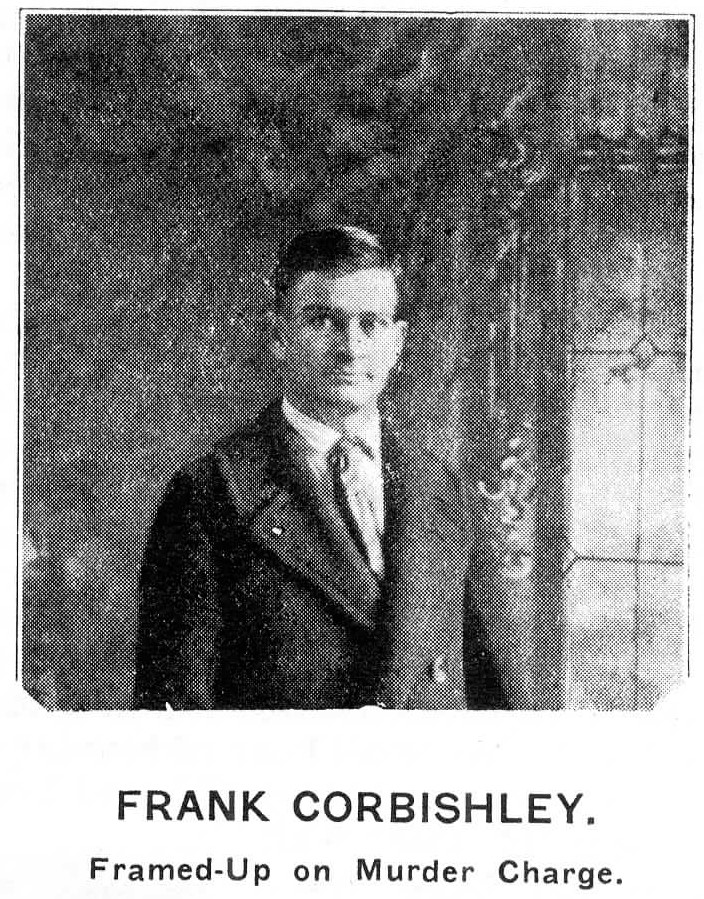
The grand jury met. Wheels had been turning meanwhile. Never was a jury better picked. It was the kind of jury to which evidence means nothing. The highly incriminating evidence against Alec Hargis was placed before them. They set him free. But someone had to be held for Sarovitch’s murder. Frank Corbishley, Henry Corbishley’s brother, was chosen. The jury indicted him for murder. It also indicted the twenty miners, including Frank Corbishley, for conspiracy to assault and kill D.B. Cobb.
That is the way frame-ups work. All you need are witnesses who will say what you want them to and a jury that will take their evidence for gospel truth. Both of these were easily found in Franklin county and as a result twenty men face prison — one of them the gallows.
Labor Defender was published monthly from 1926 until 1937 by the International Labor Defense (ILD), a Workers Party of America, and later Communist Party-led, non-partisan defense organization founded by James Cannon and William Haywood while in Moscow, 1925 to support prisoners of the class war, victims of racism and imperialism, and the struggle against fascism. It included, poetry, letters from prisoners, and was heavily illustrated with photos, images, and cartoons. Labor Defender was the central organ of the Scottsboro and Sacco and Vanzetti defense campaigns. Not only were these among the most successful campaigns by Communists, they were among the most important of the period and the urgency and activity is duly reflected in its pages. Editors included T. J. O’ Flaherty, Max Shactman, Karl Reeve, J. Louis Engdahl, William L. Patterson, Sasha Small, and Sender Garlin.
PDF of full issue: https://www.marxists.org/history/usa/pubs/labordefender/1926/v01n01-jan-1926-LD.pdf
 Revolution's Newsstand