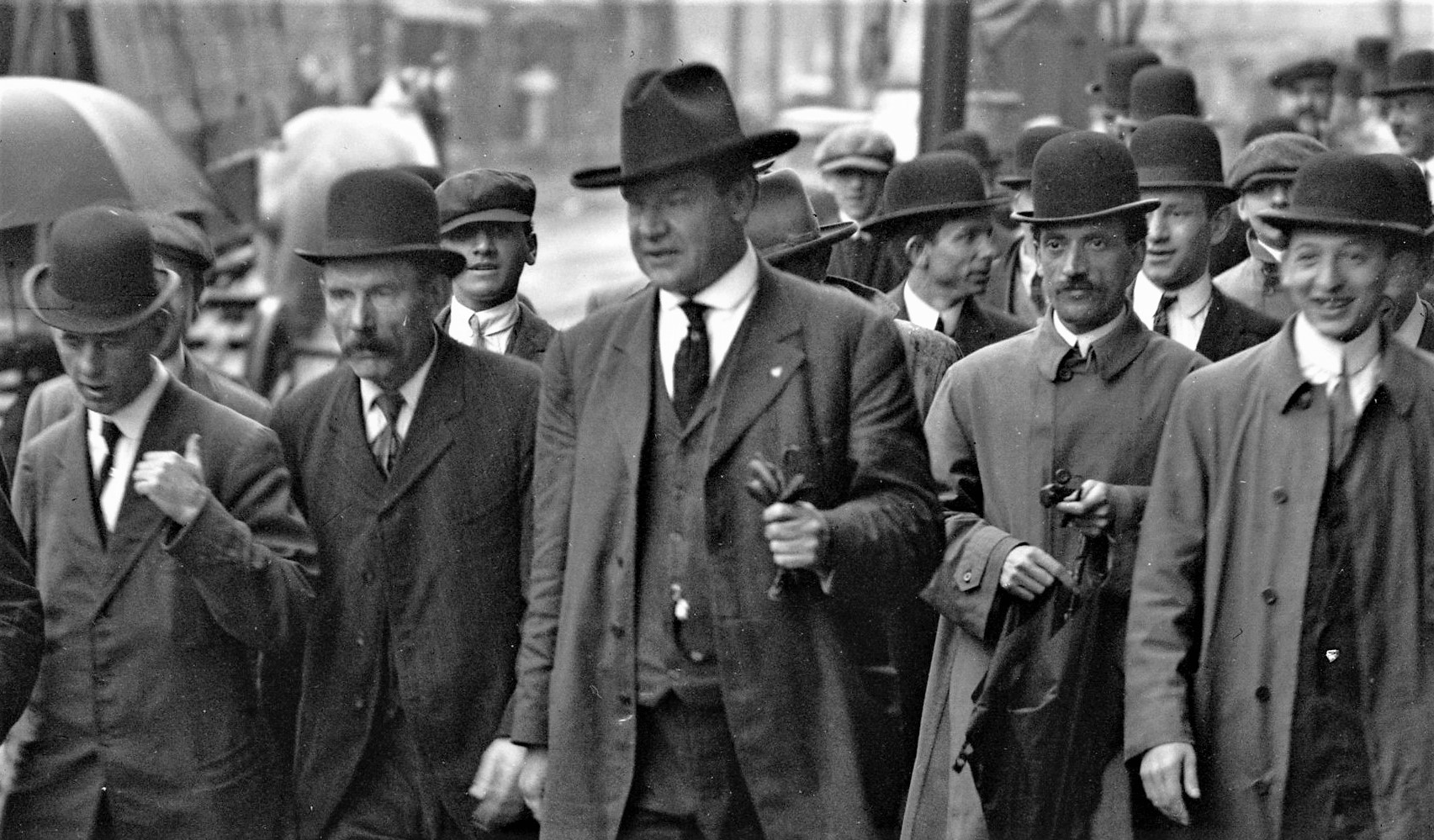
‘William D. Haywood: A Pioneer of Revolutionary Unionism’ by James P. Cannon from Labor Unity. Vol. 2 No. 5. June, 1928.
A NEW generation of labor militants is growing up and taking the center of the stage. Recent strikes such as Passaic, miners, needle trades, New Bedford — all show new young leaders coming to the front, proof of the vitality of the movement.
The left wing movement of the present day is the outstanding growth of the revolutionary labor movement of pre-war times, with a number of tactical questions clarified and with its outlook enriched by the experiences of the war and the Russian Revolution. Fundamentally, it has grown up out of the steadily developing class struggle in America. It has an honorable and a glorious past and a wealth of experience gained in industrial battles. This is part of the capital of the left wing labor movement of today.
One of the greatest necessities of the present day movement is to clearly establish the continuity between it and the movement from which it sprung. The old movement was weakened and hampered by various errors, especially in tactical questions, which we must avoid, but those principles and practices which were sound should be appropriated and made a part of today’s program.
The older movement, moreover, has left us a glorious tradition of struggle; which will be a source of pride and encouragement to the young militants who are beginning their activities in the labor struggle today.
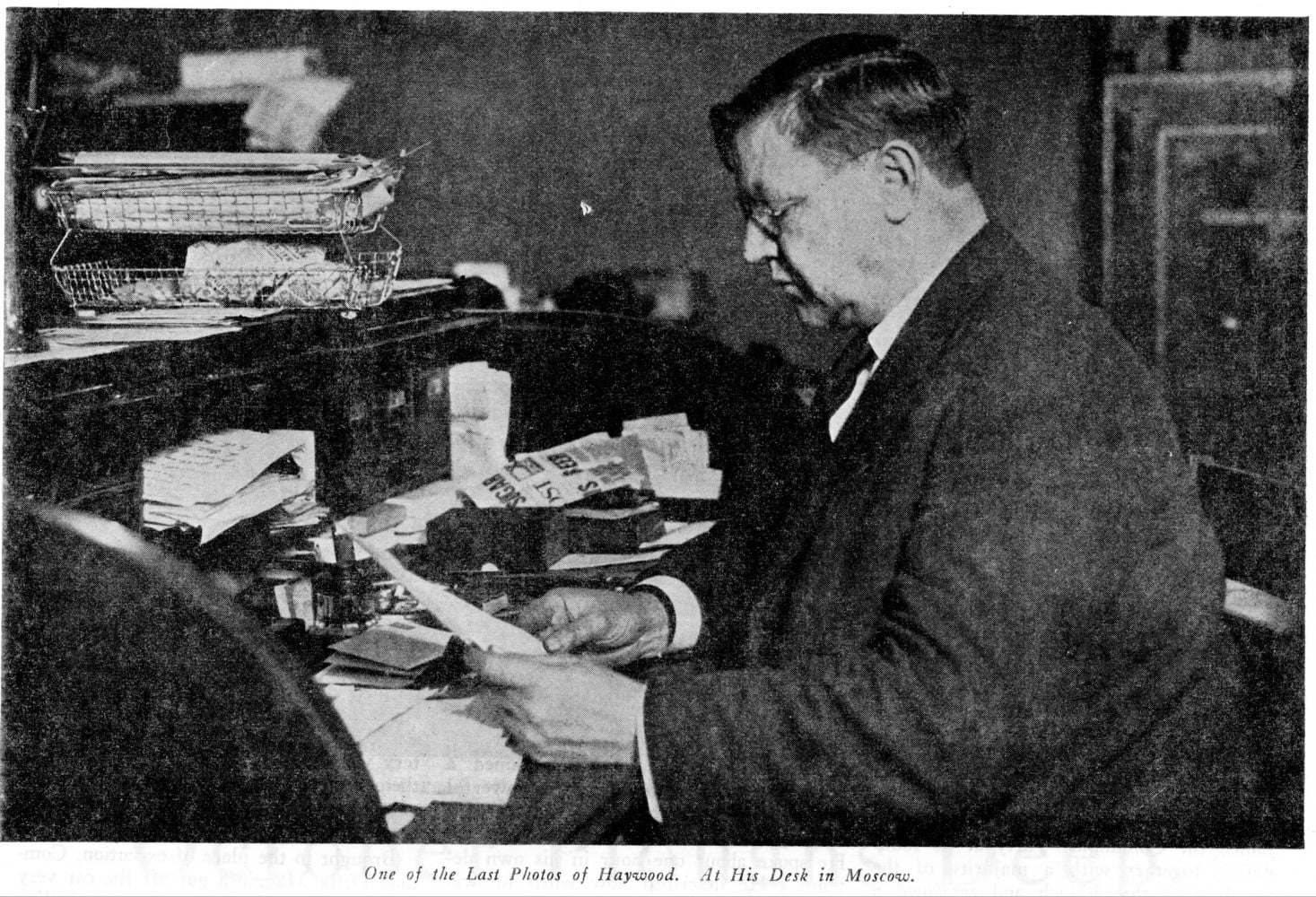
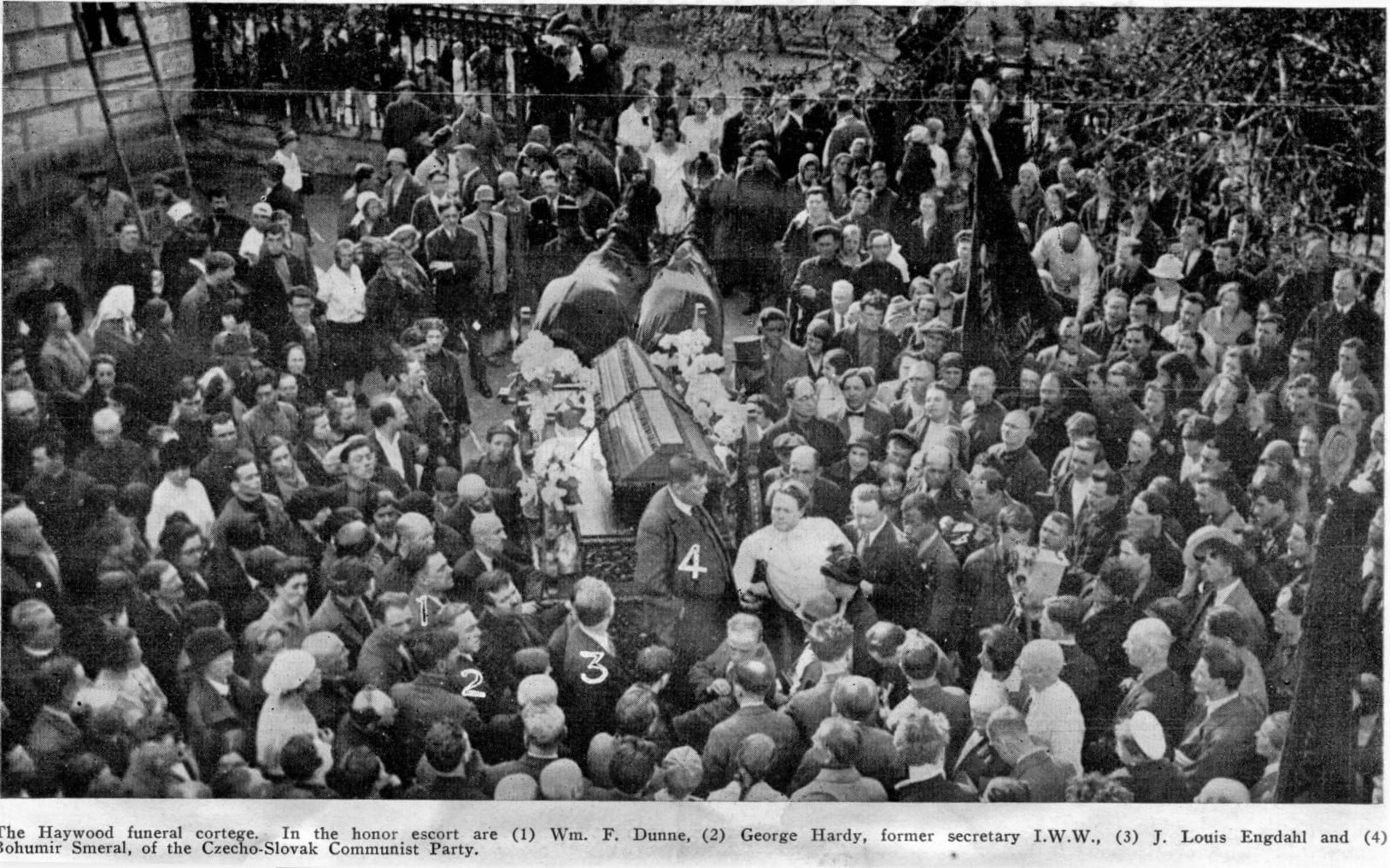
One of the greatest and most outstanding representatives both of the revolutionary principles of the period antecedent to the present and of its tradition of struggle was the lion-hearted fighter who died a few days ago in Moscow — William D. Haywood. He was a colossal figure in the labor and revolutionary movement of his heyday; and for my part I am convinced that his place in American labor history will be a big one.
It was the stormy struggles of the old Western Federation of Miners, culminating in his trial for murder, which first established his fame and projected him into the general movement as a national figure.
The Western Federation of Miners, one of the principal forbears of the I. W. W., was a unique organization; in many ways a model labor union. Students of the labor movement and those who are called to play leading parts in today’s battles will profit much from a study of its history and methods. Haywood, as its secretary-treasurer and principal leader was the embodiment of all of its best features. These were incorporated into his broader work in the ten years that marked his activities on a national scale, and he did much to forge new weapons and principles for the labor fight, developing with his expanding experience.
All of Haywood’s work in the labor movement from the days of the Western Federation onward revolved around the principle of the class struggle. This was the pivot of his activities. Those degenerated labor leaders’ who represent the idea of the employers in the trade union movement strive unceasingly to rob the workers’ movement of this vital principle and to put “class collaboration” in its place.
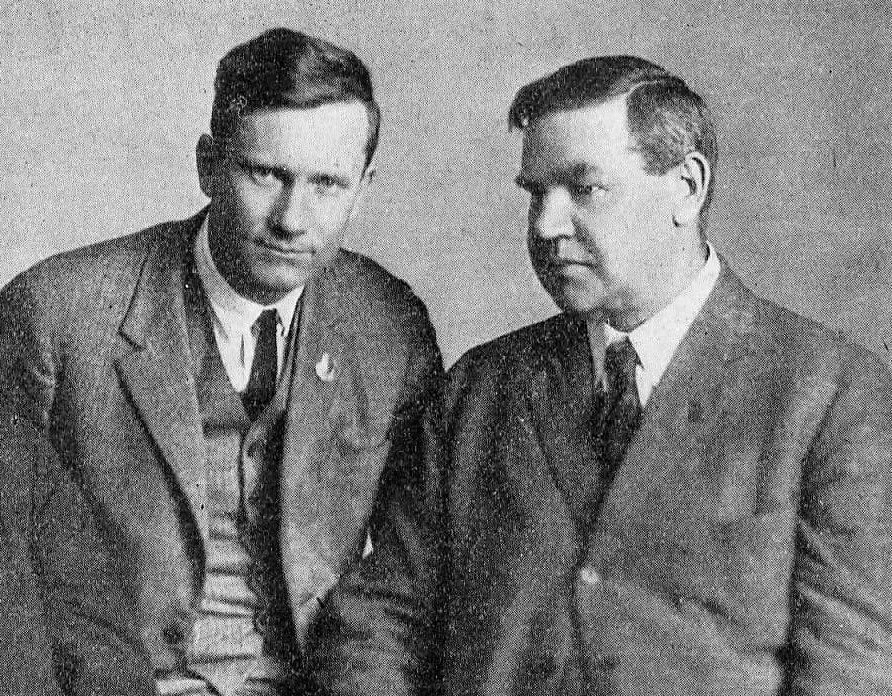
Some of the modern, up-to-the-minute highbrow fakers such as Matthew Woll and the late Warren S. Stone have written lofty treatises to prove that the workers’ salvation lies in labor not in struggle. The answer given to all this sophistry by Haywood, the rough and ready battler, in twenty-five years of word and deed, is absolutely valid today.
The craft form of organization is obviously outlived and hopelessly ineffective for a serious fight against the consolidated and entrenched employers. The most progressive and advanced elements of the labor movement all over the world understand this and have made industrial unionism one of the main planks in their platform. Haywood, in America, was one of the earliest pioneers of this idea. It was put into practice in the Western Federation of Miners and his instinct to spread this form of organization and make it universal was one of the most powerful factors which drew him to the first convention of the I. W. W. He undoubtedly did more than any other person to popularize industrial unionism and to make it a principle of all militants in America.
His dream of the I. W. W. supplanting the existing unions on the basis of the industrial form of organization was not realized, and could not be, but the idea of industrial unionism of which he was the most forceful and effective advocate, gained the victory and is supported now by every labor militant. The reconstitution of the American labor movement on industrial lines is written on the agenda of the future. Its coming is a certainty. The name of Haywood will be remembered affectionately by the workers in that day when the victory of industrial unionism is realized in organized form.

National and racial prejudice and discrimination are disintegrating factors in the labor movement which have a particularly harmful effect in America where such a large percentage of the proletariat in the basic industries consists of foreign born workers and Negroes. The ruling class deliberately spreads these prejudices to break up labor solidarity. The reactionary labor leaders, taking their cue from the employers, strive to restrict the trade unions to a caste of skilled workers. Many unions prohibit the admission of Negroes and have made a shameful record of betrayal and desertion of the foreign born.
Haywood was a pioneer fighter against these practices. He inveighed against them in his inaugural speech at the historic first convention of the I. W. W. in 1905 and remained the ardent champion of the most exploited and persecuted workers — the Negroes and foreigners — till the very end of his days.
He did more than any other man of his day in the American labor movement to give solidarity its real meaning and significance. In his memoirs which are soon to be published he tells about a meeting in Louisiana in 1912 of the Brotherhood of Timber Workers, an organization which had affiliated to the I. W. W. The workers were first assembled in two halls, one right above the other, the blacks in one and the whites in another. This had been the invariable custom in the South where a “mixed” meeting was unheard of. Haywood was asked to speak to them separately, but he would have none of it.
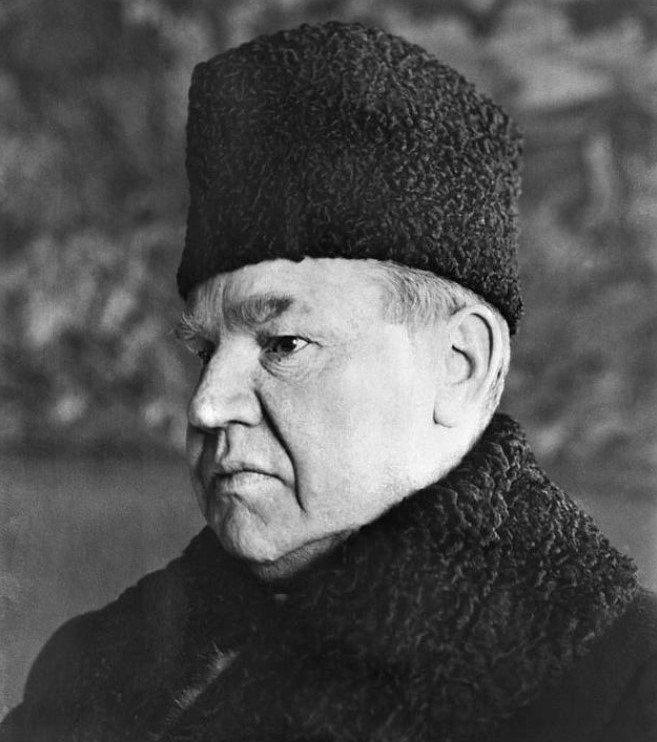
“Put them together!” he demanded, “we are all workers on the same footing. The bosses want to divide us but why should we divide ourselves?” and he would not begin his speech till they were all seated together before him.
The foreign born and Negro workers have special cause to mourn the death of this valiant advocate, of their cause and to remember him with gratitude and love. The left wing will find the record of his life and speeches a mighty source of inspiration for the necessary task of clearing the labor movement of all race and national prejudice and uniting all sections of the working class in one fraternal bond. The Negroes and foreign born workers will play a great historic role in the development and struggles of American labor, and the cementing of an indissoluble union between them and the native workers is one of the keys to victory over the exploiting class.
In the light of the experience of the past quarter of a century in the American and the international labor movement a number of serious errors in the tactics of Haywood and the movement he represented have been revealed. The attempt to build an entirely new labor movement under the banner of the I. W. W. outside of and against the existing unions was a false policy. The building of new unions of unorganized workers, devoting special attention to the unskilled workers, a distinguishing feature of Haywood’s theory and activity, was a work of sound validity and revolutionary implications from which the left wing movement of today has much to learn. At the same time, however, the policy of ignoring the existing unions must be rejected. It is our task to extract what was good from the tactics and methods of the period of Haywood’s leadership and winnow out the chaff. In a word, we must master the art of combining the revolutionary work in the existing unions with the organization of the unorganized into new unions where necessary, putting the emphasis on the latter.
Haywood in his later years also drew the right conclusions from his vast experience and modified his views accordingly.
His advancing years and declining health together with his enforced exile prevented him from exercising the same influence upon the I. W. W. It developed on a narrow line isolating itself from the living movements of the workers. Sectarian and even counter-revolutionary elements of the type of Gahan, editor of the official organ, exercise a growing influence on its policy. Degeneration is the only possible outcome of such a course.
The Federated Press reports the decision of the present officials of the I. W. W. to “ignore” the death of Haywood. The gods may laugh ironically at such a spectacle, but the passing of a man who symbolized a whole period of American labor struggle does not thereby lose any of its significance.
Bill Haywood died as he lived a proletarian revolutionist, a soldier in the world-wide army of fighters for the liberation of labor. As such we will think of him. and keep his memory green. We will hold up the record of his heroic and self sacrificing life. as an example to the new generation of labor militants who form the vanguard of the workers’ struggle today and tomorrow.
In 1924 Labor Herald was folded into Workers Monthly, an explicitly Party organ and in 1927 ‘Labor Unity’ became the organ of a now CP dominated TUEL. In 1929 and the turn towards Red Unions in the Third Period, TUEL was wound up and replaced by the Trade Union Unity League, a section of the Red International of Labor Unions (Profitern) and continued to publish Labor Unity until 1935. Labor Herald remains an important labor-orientated journal by revolutionaries in US left history and would be referenced by activists, along with TUEL, along after its heyday.
Link to a PDF: https://www.marxists.org/history/usa/pubs/labor-unity/v2n05-w24-jun-1928-TUUL-labor-unity.pdf
 Revolution's Newsstand