
Tom Tippet reports on the founding of the Progressive Miners of America in Gillespie, Illinois in September, 1932.
‘A New Miner’s Union’ by Tom Tippet from Labor Age. Vol. 21 No. 10. October, 1932.
THIS is being written in Gillespie, Illinois, while the convention of the Progressive Miners of America is in session. The publication date of this paper does not permit the whole story. But there is news being ‘made here now and significant news for the labor world at that. It is the second convention of the union; a new union, dual too, and independent of the old United Mine Workers of America and therefore, outside the pale of the American Federation of Labor. It is the end of a three years struggle of coal diggers in this state to “bore from within” their forty year old union, to rid it of a policy with which they disagree and of an official family whom they mistrust and despise.

There are 206 bona fide delegates representing 100 local unions whose total unpadded membership is 32,000 mine workers. One month ago the first convention of this group was held. That meeting established the Progressive Miners of America, elected an official family, created a union machinery, scheduled the current convention, ordered a strike throughout the state and declared war to the death on the United Mine Workers of America. Then they adjourned to translate their resolutions into action, and here they are assembled again to examine the state of their new organization.
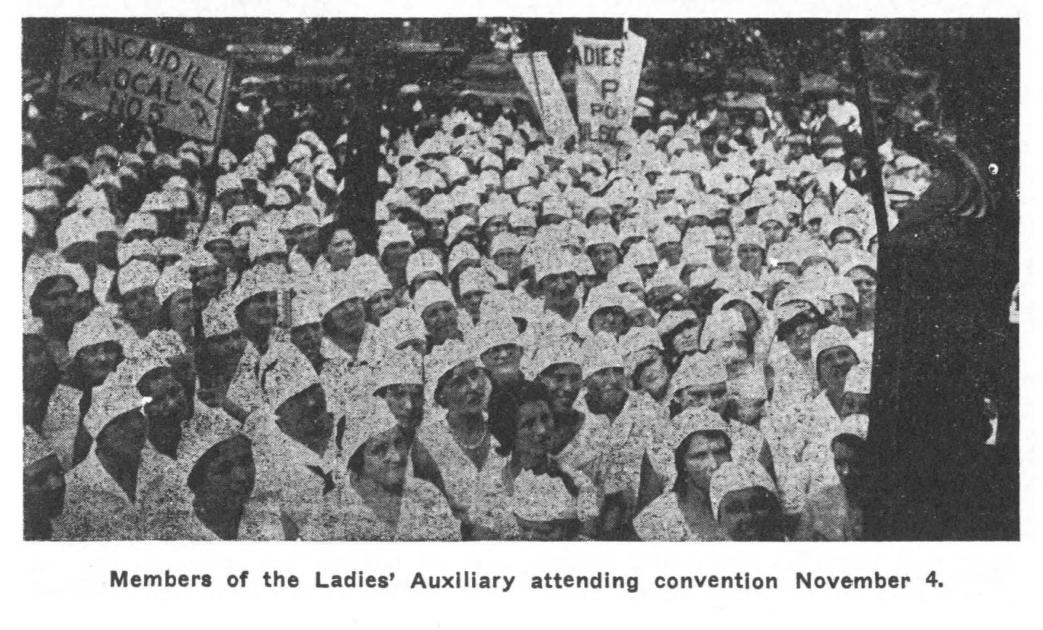
One short month has passed. But what a month! The state has been in constant turmoil every second. One mine after another has been won to the new union until it covers two thirds of the coal belt. The Progressive Miner, a four page, standard-size newspaper is being published weekly and broadcast throughout the state and national coal fields. Miners formed automobile parades, one of them 45 miles in length, to shut down operating companies. Women’s auxiliary organizations sprang up in every striking community; the women made uniforms, put them on and pitched into the battle beside their men. Soup kitchens opened, relief units went forth for bread, men trudged into the woods to chop fuel. The coal zone in Illinois became a mass meeting of the Progressive Miners of America. Electric amplifiers got rigged up and the fight of the coal digger agitated the very air one breathed and set the whole population on its ear.
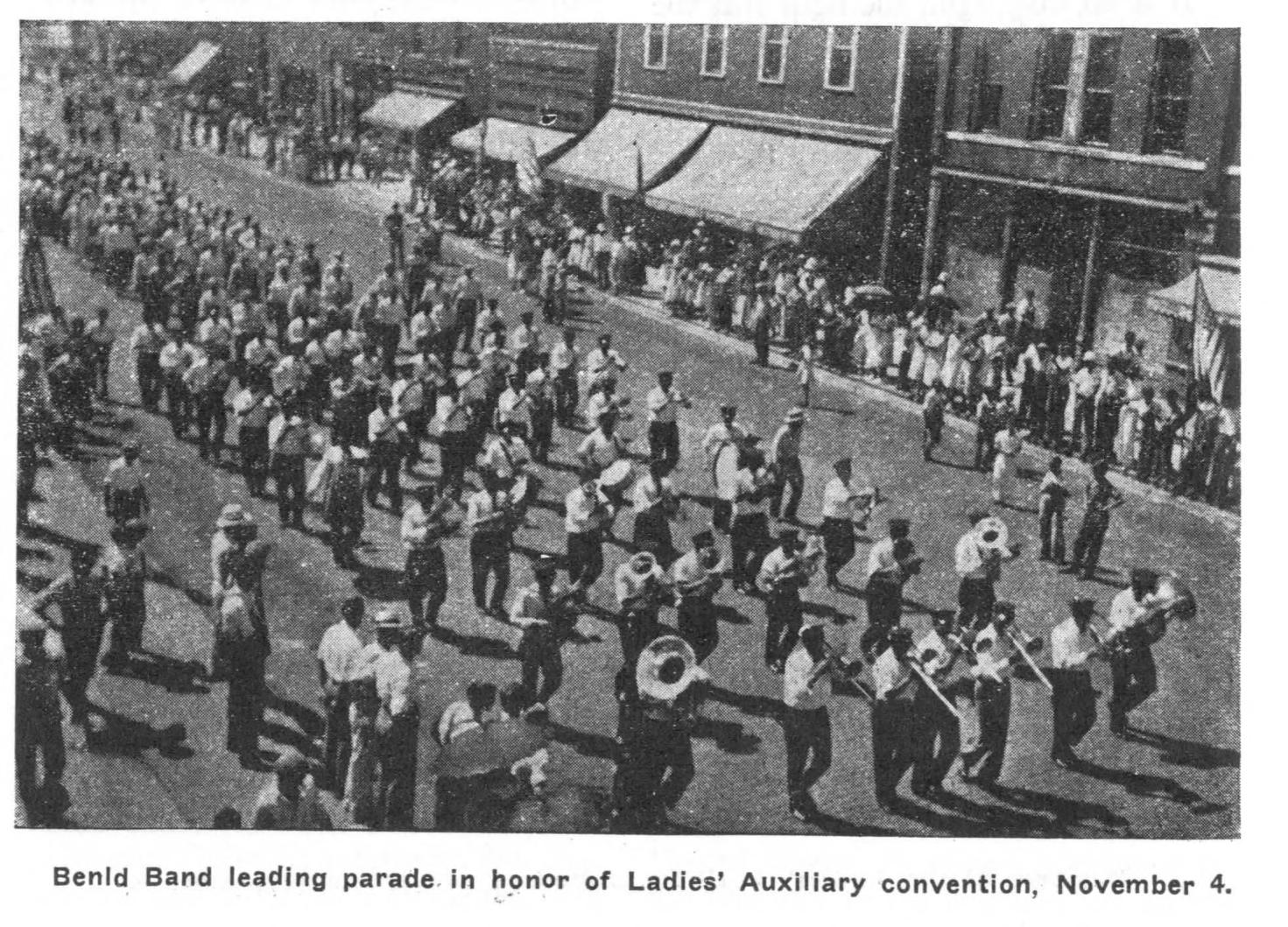
When the convention met yesterday in this typical mining town of 4500 inhabitants all business closed while the cheering masses of the union paraded on foot, led and followed by two crack coal miner bands. The parade choked the streets and wound up in the city park two blocks from the convention hall. The crowd remained in the park from 10 a.m. until dark. A loud speaker was hooked up and while the convention was getting under way one speaker after another went from the convention hall to the park to “entertain” the Progressive Miners of America. From 11 a.m. until night fall there was a crowd of not less than 10,000 people from mining families, assembled in the park to warm the blood of the delegates and to give the weight of their enthusiasm to the convention.
Unity of that sort has been unknown in the miners’ union since the early days when the rank and file had faith in the men who headed the young United Mine Workers of America. For the last decade or so the membership of that union has been suspicious of its officers and that suspicion has grown until today the name of John H. Walker, President of the Illinois district of the U.M.W. of A. and John L. Lewis, who heads the national union, have become synonymous with the most despicable words in the English language.
Theft of the Tally Sheets
The straw which broke the camel’s back was the theft of the tally-sheets of a referendum vote of the membership against a wage cut contract which was then signed by the union officials and the coal operators and jammed down the throats of the miners. As a result the current revolution in the union has occurred and a new organization has been born. But there is more to the situation than a giddy mob of coal diggers cheering and parading throughout the state.
While the convention is writing a new constitution a scale committee is in session with the coal operators for the second time negotiating a wage scale. Later this convention will act upon a proposition that may establish the union in the field as a recognized union, with a wage contract that will transfer the wishes of the shouting mass meetings into a concrete foundation upon which a new national miners’ [missing].
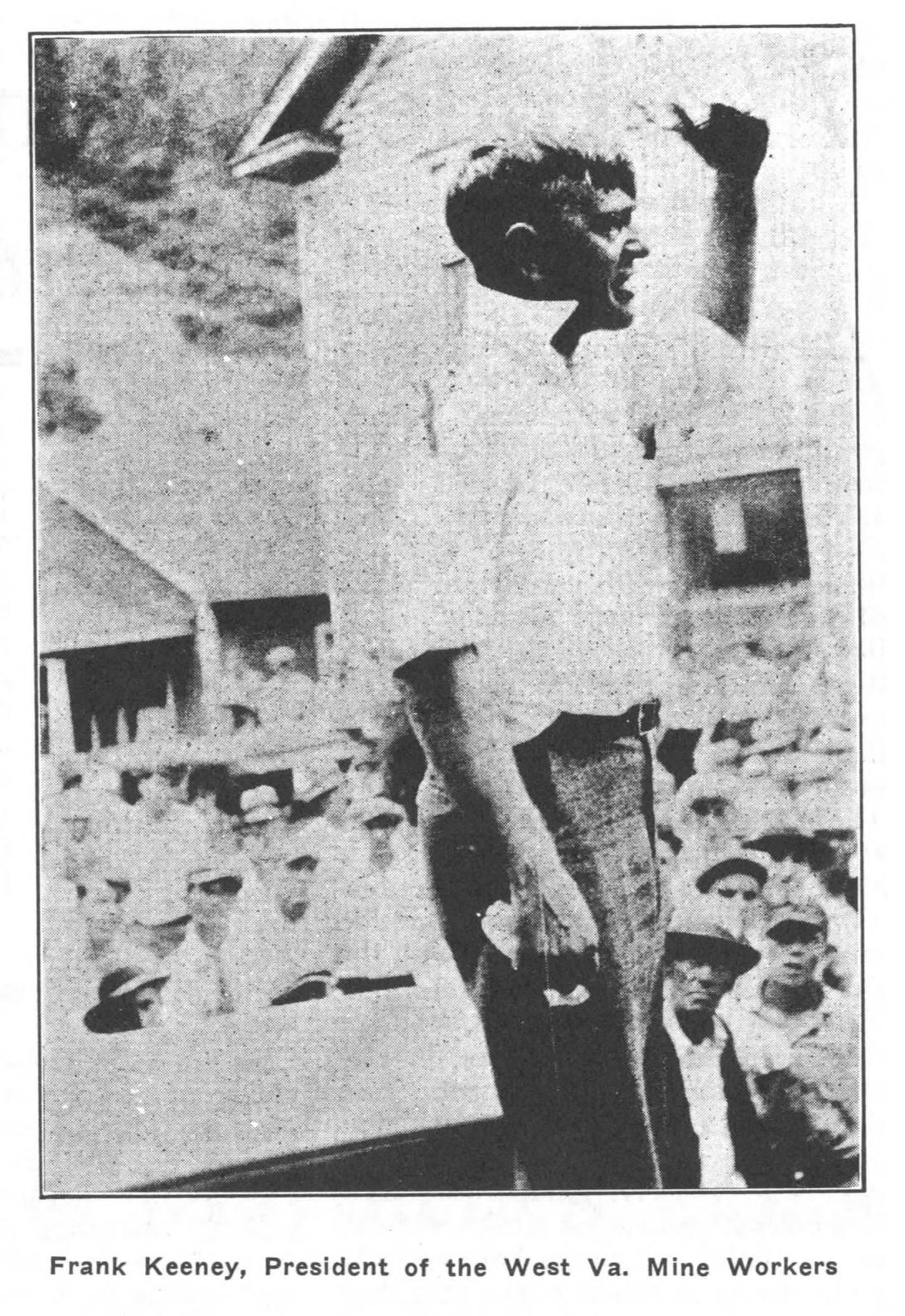
The West Virginia Mine Workers, created for similar reasons two years ago, is represented at this convention. Secretary George Scherer of that union is here and has spoken at mass meetings and to the convention. In his speeches Scherer burnt the air with condemnation of the old union and started tears down the faces of hundreds of miners as he told the horrible story of West Virginia. Walter Seacrist from West Virginia’s hills is here also and he too is speaking to the crowds meeting in all the mining towns. President Frank Keeney arrived today and now his voice is added to that of the West Virginia delegation and all speak the same language. The Amalgamated Miners of Nova Scotia, Canada, sent a message here urging the Progressive Miners ‘to broaden their fight to all coal regions’ because “we are willing to go along with a militant, responsible group such as the Progressive Miners of Illinois.” More than 100 coal operators have already recognized the new union and are now operating their mines, paying the scale of wages in effect before the U.M.W. of A. accepted a reduction.
About thirty miles away from the convention hall at Taylorville, U.S. soldiers stand on guard at the Peabody mines, but all the Taylorville mines are down and the local unions from there are represented in the convention. Yesterday additional militia men marched into the Peoria field at Canton to break the strike but the mines remain closed and the Canton locals also have delegates here.

In Franklin County, south, the mines are operating, paying the wage rejected by the miners in a referendum vote. It was into this county that the 45 mile caravan of strikers was headed several weeks ago and ran into a reign of terror set into motion by the old union, the coal operators and the county authorities. Stories of that terror told here paralyze ones’ blood and spur the delegation farther and farther away from any connection with the Walker-Lewis union.
The new union lost one man in Franklin county when he was called from his home and shot dead by enemies of the union. Another young miner in the caravan headed for Franklin county when he was called out—others carry bullet holes and thousands of them were clubbed and beaten. The convention contains many delegates scarred in the Franklin terror. In the Springfield hospital still another young miner lies dying with a hole shot through his body in a riot on the streets there a week ago. This convention represents a union that is still in the stages of early revolution and while it conducts its sessions the terror rages on every front. Blood is drawn hourly and much more is expected to flow.
The Union’s Enemies
Arrayed against the new union are the United Mine Workers of America, the Peabody Coal Company and some other coal operators, the state militia and a number of county authorities. Assisting these agencies is hunger and want, the inevitable hand-maidens of every boss. In this convention, all these obstacles to the success of the new union are obvious. But in spite of that one feels the sure conviction of the delegates that they are right, that the current struggle is the price they must pay for their too-long patience with a corrupt union.
The speed with which the wage conference with the operators was obtained indicates that the Peabody crowd are losing control of the Illinois coal field. The scale committee will bring back a contract to this convention and that fact marks the difference between this revolt and all the others which have preceded it. The delegates are not here debating economic theory—they are here to build a union after the fashion of the old organization in the days before it had become a labor racket. No one is blowing off steam. Except for the story of West Virginia there have been no convention speeches. The Mayor of Gillespie opened the sessions in a speech of two sentences which lasted one minute. But then he is a miner and a delegate to the convention.
The Communist Party sent a delegation from the National Miners’ Union which was politely but very firmly excluded from the sessions. This action set the work of the convention back exactly five minutes and in that action can be measured the strength of the communist movement among the rebel miners of Illinois with whom the Communists have been attempting to work for years. The West Virginia group were given a voice in the convention and seated as fraternal delegates. Every one else was barred. The press was excluded and given prepared publicity by the secretary of the convention.
The Gillespie Women’s auxiliary cooked food for the convention and served it in a hall. All the delegates were put up at night in the homes of other coal diggers in the community. There were no elaborate convention badges, no daily printed convention proceedings and none of the other expensive tinsel which always accompanied the U.M.W. of A. conventions. These coal miners are broke, and desperately poor but they burn with indignation. By their action in the past month they have again stirred the soul of the coal miners and given once more that inspiration to Labor elsewhere that in the past was the special contribution of the miners to the American Labor Movement.
In the U.M.W. of A. office in Springfield the old officials are stationed, attempting to stem the tide of the revolt. Somewhere in the maze of economic theory there may be a formula by which those officers can explain why they recommended a wage cut but nowhere in the scope of sanity can they find justification for flaunting, in the manner they did, the sober decision of the men who were to live by those wages.

Mr. Lewis has succeeded during the past 10 years in forcing his will—no matter what it was—onto his union in every other state. As a result of his success the union is in ruins wherever he has had his way. The coal operators insisted that Lewis come into Illinois to help Walker and his policy committee persuade the Illinois miners to accept the $1.00 a day wage reduction. Lewis was invited in—there followed rapidly the second referendum, the theft of the tally sheet, a state of “emergency” declared, a contract signed and the miners ordered back to the pits. And that was the spark which started the flames.
The Progressive Miners of America have not achieved complete victory as yet—but one thing is pretty sure: in Illinois the United Mine Workers of America is dead.
Labor Age was a left-labor monthly magazine with origins in Socialist Review, journal of the Intercollegiate Socialist Society. Published by the Labor Publication Society from 1921-1933 aligned with the League for Industrial Democracy of left-wing trade unionists across industries. During 1929-33 the magazine was affiliated with the Conference for Progressive Labor Action (CPLA) led by A. J. Muste. James Maurer, Harry W. Laidler, and Louis Budenz were also writers. The orientation of the magazine was industrial unionism, planning, nationalization, and was illustrated with photos and cartoons. With its stress on worker education, social unionism and rank and file activism, it is one of the essential journals of the radical US labor socialist movement of its time.
PDF of full issue: https://www.marxists.org/history/usa/pubs/laborage/v21n10-oct-1932-labor-age.pdf
 Revolution's Newsstand