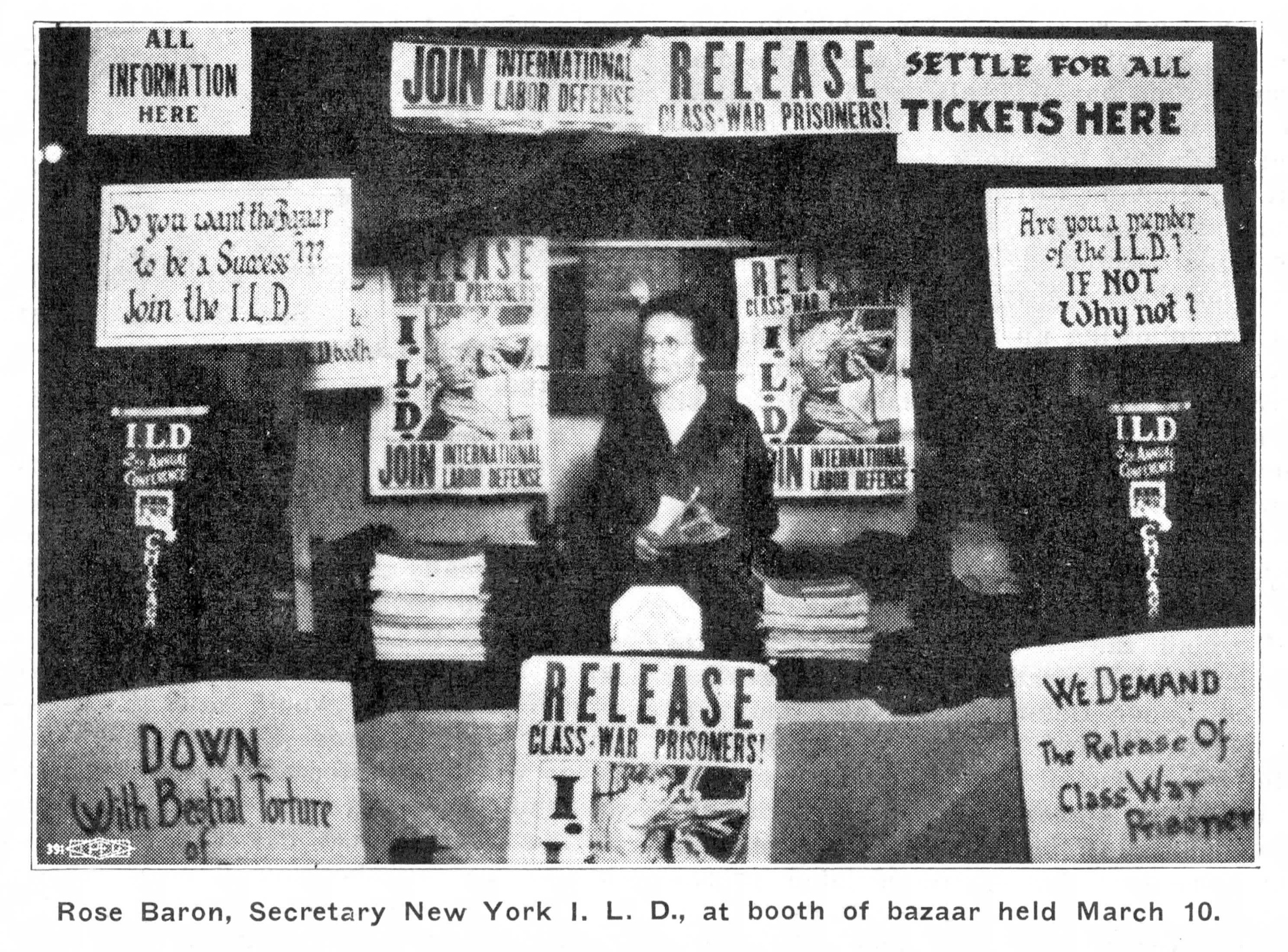
Rose Karsner with her column on the building of the I.L.D., a type of organization badly in need of a rebirth, with advice on meetings and sample agendas.
‘Building the International Labor Defense’ by Rose Karsner from Labor Defender. Vol. 1 No. 12. December, 1926.
The Branch Problem
THE branch is the basic unit of the I.L.D. organization. Without functioning branches there can be no functioning I.L.D. Without active members there can be no branch.
The problem is how to get members to attend meetings — how to get them to participate in branch activities.

The first requisite is, of course, interesting branch meetings. The next is national campaigns to participate in.
The duty of the national executive is to initiate campaigns and give direction to them, but without a functioning membership the best plans and resolutions remain on paper, pigeonholed in a secretary’s desk or thrown into a wastebasket.
How can a branch be made to function? That is the question confronting every responsible branch secretary. That is the question we must answer. In this answer lies the keynote to the successful growth of a non-partisan army of labor defenders united into an organized force for the protection of workers against capitalist persecution.
The answer is not simple. Many factors have to be considered. Local economic conditions. Character and composition of local workers, the language problem, geographical location, and all other difficulties and advantages.
No one law can be formulated. Only a general set of rules can be prescribed to be applied as local conditions permit. With suggestions from the field workers, special sets of rules can gradually be developed which can be applied to groups of cities having similar characteristics. This is why we have been stressing in all our letters to secretaries our requests for suggestions, constructive criticisms and descriptions of local capacity for the conduct of I.L.D. work. Only with this information in hand can the national office be in position to make helpful suggestions for broadening the local defense activities.
General Rules for Branches
- No branch can function well without a functioning branch executive.
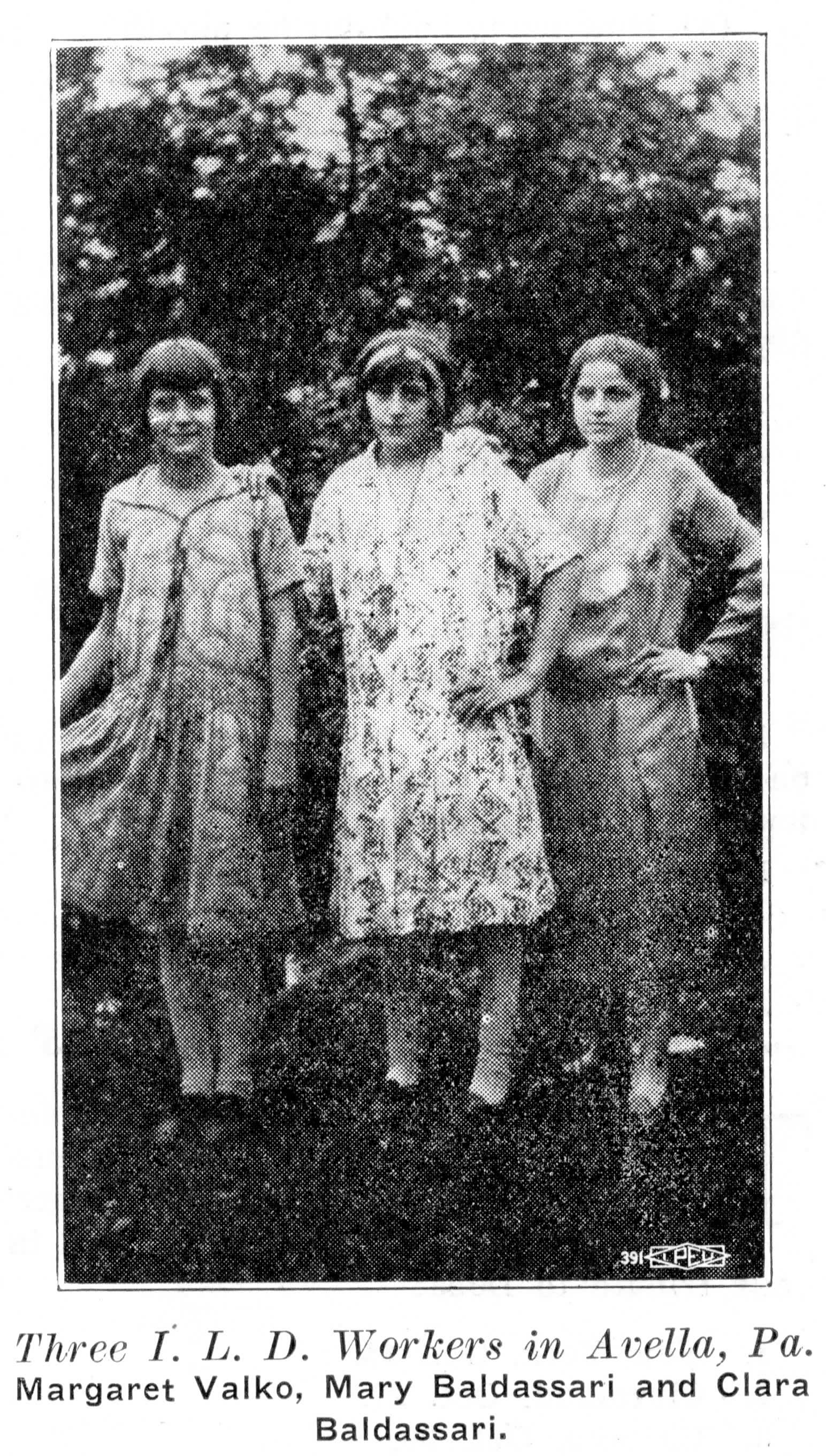
The branch executive should consist of the secretary-organizer (in small branches both in one. Two separate functions in large branches). Treasurer, Labor Defender agent, social director, women’s and children’s director (wherever possible) and the City Central Committee Delegate (in the larger cities). The functions of each of these officers has been prepared in mimeograph form and can be had upon request.
- Branches should meet at least once a month.
- The meeting night should be set as a definite day of the month for example the first Monday of each month.
- Every member should be reminded about the meeting each month a few days ahead until he forms the habit of coming regularly. The secretary should aim to make the letter interesting and give the agenda. New members should always get a special letter.
- The branch executive should always get together a few days before the branch meeting and decide on the agenda which the secretary is to send out in calling the branch meeting.
- The executive committee should read through carefully all communications from the local or national office and extract those parts which require action. These should be itemized by the secretary. Each communication on a separate sheet of paper.
- Each communication should be digested by the Executive, so that the secretary reads only the essential parts at the meeting. Exceptions should of course be made with very important communications which the branch should listen to in their entirety. After each communication is read, the secretary should enumerate, from the sheet prepared by the executive, the points requiring action. Important communications should be elaborated upon by one. of the members of the executive so as to give the matter dealt with more emphasis.
- The executive should come to each branch meeting with definite suggestions for activities. These activities should consist of:
(a) A social every other meeting preceded by a short order of business.
(b) Definite assignments of subjects to members for a branch meeting ahead to lead the discussion. Subjects and facts can be secured from the Labor Defender pages, or from National Office.
(c) Distribution of Labor Defender at union and other meetings.
(d) Participation in current campaigns.
(e) Assignments to members to visit unions to secure local affiliations and general support.
(f) Reading of prisoners’ letters. One letter can be chosen for reading at each meeting (See “Voices from Prison,” Labor Defender). The executive should assign different members for each meeting and the choosing of the letter should be left to the reader. - Special attention should be paid at each meeting to methods of getting absent members to attend — by writing special letters and by visiting.
- Branch meetings should start promptly and the business should be conducted in the first 30 to 45 minutes. The rest of the meeting should be devoted to discussion and reports.
- Strong emphasis should be laid on the importance of the “small tasks” of running a branch. At each meeting this should be pointed out, and those who do this work should be given due recognition. “Great oaks from little acorns grow.”
- A branch bulletin should be issued if at all possible, mentioning the members who are doing the work of the branch and the successes they are achieving. Point out how by an accumulation of these “small tasks” the big work of the I.L.D. gets done. How without these members who are doing this work it would be impossible to have a successful branch. Show that the “small tasks,” uninteresting as they seem, are in reality the most interesting because they give the members an opportunity to find out how the workers in general react to our slogans and accomplishments. For example. The selling of Labor Defenders at union meetings. How the union men react to the magazine and what they have to say.
Sample Agenda for Branch Executive Meeting
- Election of Chairman.
- Reading of communications with secretary making separate sheets for points of action on each communication.
- Reports of (a) City Central Delegate. (b) Labor Defender (and other literature). (c) Social director. (d) Women’s and children’s director. (e) Treasurer. (f) Committee for visiting absent members.
After each report the Executive committee should decide how the report should be made at the branch meeting so as to give full information in the shortest possible time.
- Assignment for reading of letter from a class-war prisoner to one of the branch members for following meeting.
- Plans for participating in current campaigns.
- Branch Bulletin (if possible).
Sample Agenda for Branch Meetings
- Election of Chairman.
- Reading of minutes.
- Transaction of business.
(a) Collection of dues.
(b) Settling for tickets.
(c) New members and issuance of cards to them by financial secretary. - Report of Executive committee including agenda for meeting.
- Report of Labor Defender agent (and other I.L.D. literature).
(a) How many sold during month?
(b) How sold— at union meeting, at mass meetings, at news stands.
(c) Subscriptions. - Report of Social director.
- Report of Women’s and children’s director.
- Report on absent members.
- Report of financial secretary.
- Communications and bills.
- Reading of “Voices from Prison” (one or two letters).
- Good and Welfare.
- Discussion led by one of members on some specific case as assigned previously by branch executive.
- Adjournment.

Labor Defender was published monthly from 1926 until 1937 by the International Labor Defense (ILD), a Workers Party of America, and later Communist Party-led, non-partisan defense organization founded by James Cannon and William Haywood while in Moscow, 1925 to support prisoners of the class war, victims of racism and imperialism, and the struggle against fascism. It included, poetry, letters from prisoners, and was heavily illustrated with photos, images, and cartoons. Labor Defender was the central organ of the Scottsboro and Sacco and Vanzetti defense campaigns. Not only were these among the most successful campaigns by Communists, they were among the most important of the period and the urgency and activity is duly reflected in its pages. Editors included T. J. O’ Flaherty, Max Shactman, Karl Reeve, J. Louis Engdahl, William L. Patterson, Sasha Small, and Sender Garlin.
PDF of full issue: https://www.marxists.org/history/usa/pubs/labordefender/1926/v01n12-dec-1926-ORIG-LD.pdf
 Revolution's Newsstand