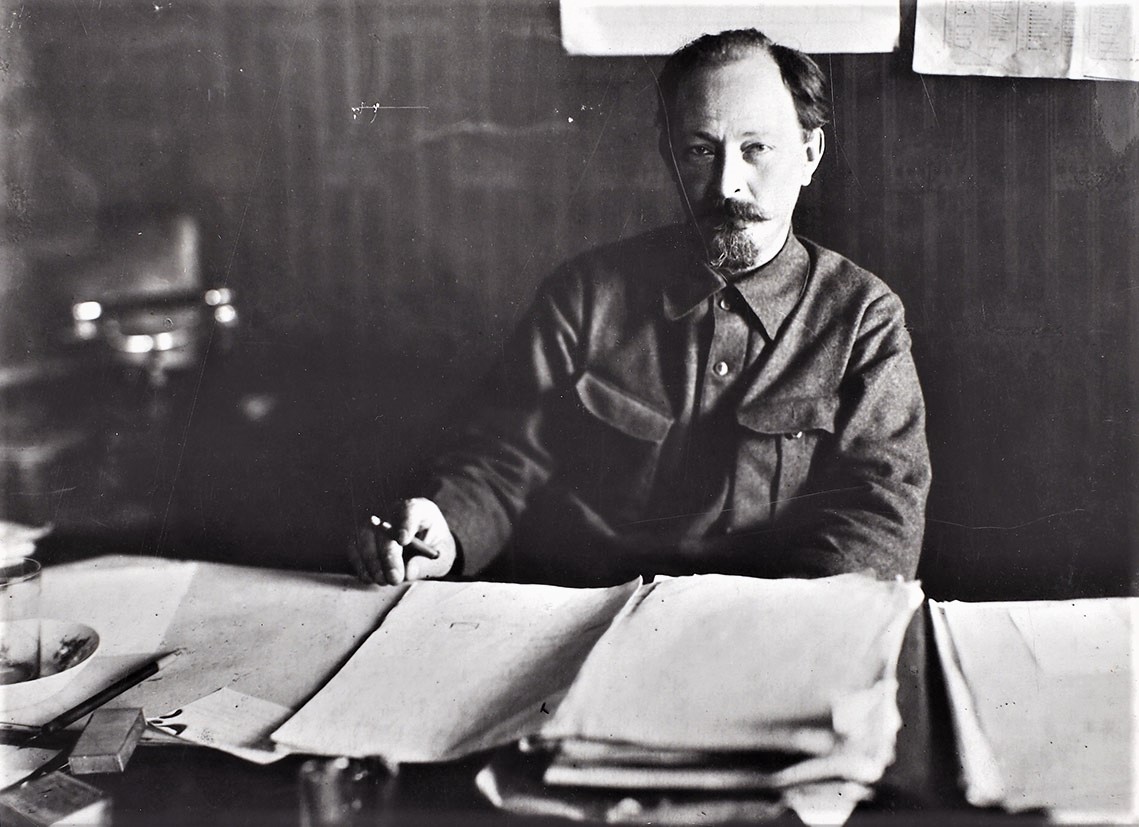
‘Autobiographical Sketch of the Career of Comrade Dzershinsky’ from Workers Monthly. Vol. 5 No. 12. October, 1926.
I WAS born in the year 1877 and attended the gymnasium at Vilna. In the year 1894, when I was in the seventh class of the gymnasium, I joined the Social democratic self-education circle. In 1895 I became a member of the Lithuanian Social-democracy and devoted myself to the study of Marxism; I was also a leader of study circles of artisans and factory apprentices. Here, in the year 1895, I received the nickname of “Yazek.” In 1896 I voluntarily left the gymnasium in the conviction that belief must be vitalized by action and that it was necessary to penetrate further into the masses and learn along with them. In 1896 I asked the comrades to send me to do work among the masses and not to limit me to the circles. I became an agitator and succeeded in penetrating strata hitherto completely untouched— in the evening gatherings and in the saloons where the workers would congregate.
In 1897 the party sent me as agitator and organizer to Kovno—an industrial city in which there was at that time no Social-democratic organization and in which the organization of the P.P.S. (Polish Socialist Party) had just expired. Here it became my task to penetrate deeply into the masses of the factory workers and to become a witness of the most unheard-of poverty and exploitation, especially among the working women. At that time I learned from practice how to organize strike movements.
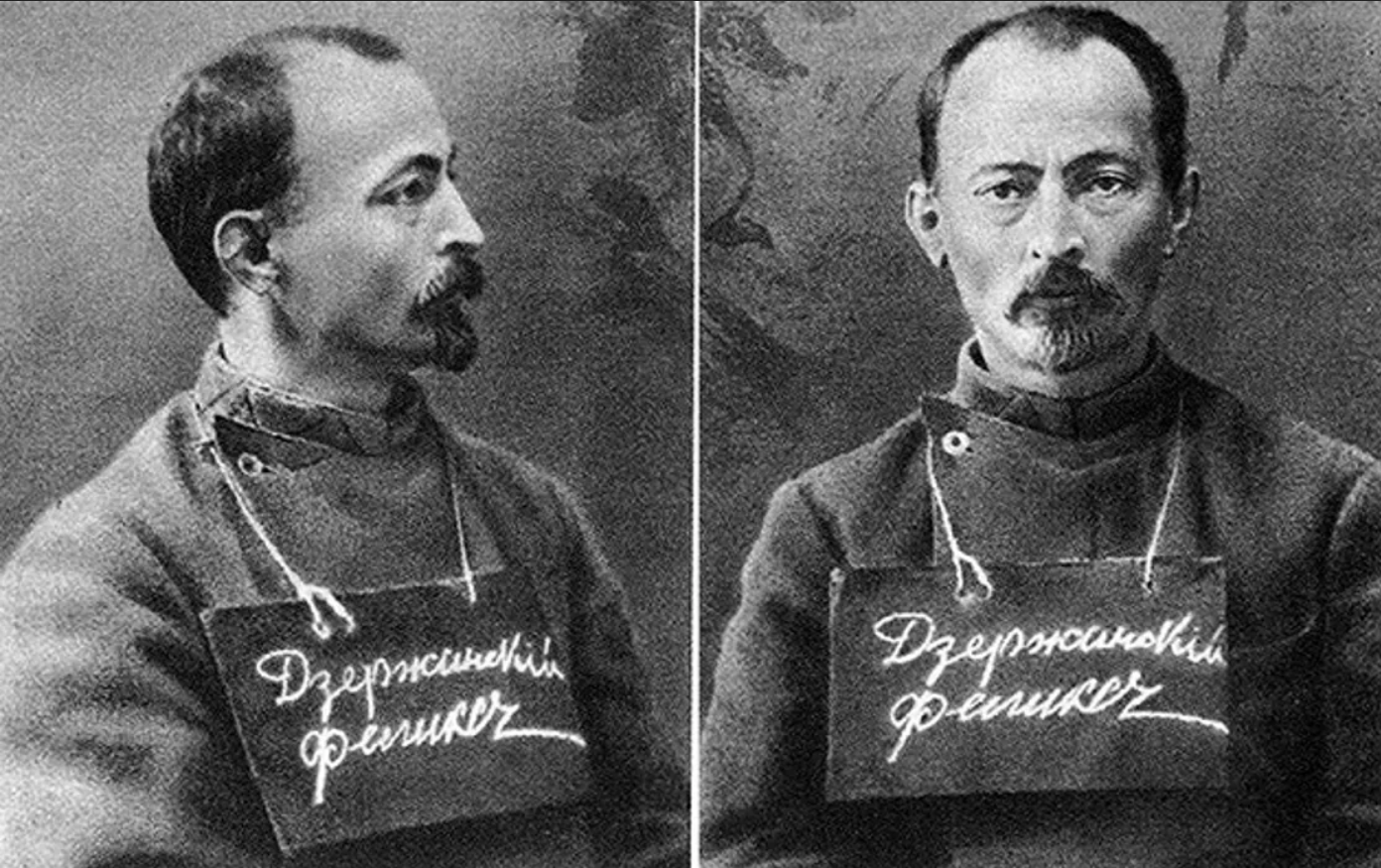
In the second half of the same year I was arrested on the street thru the information of a young worker who was corrupted by a promise of ten rubles on the part of the police. Since I did not want to give the police the opportunity of finding my residence I gave my name as Shebrovsky. In 1898 I was sentenced to three years of exile to the province of Vyatka. First, I was sent to Nolinsk and then, as a result of my disobedient conduct and some trouble with the police as well as because I went to work in a factory as a cigarette filler, I was sent 500 kilometers further north to the village of Kaigorodsk. In 1899 I escaped by means of a boat because I couldn’t stand it any longer. I returned to Vilna at a time when the Lithuanian Social-democratic Party was negotiating with the P.P.S. about a coalition. I was. the strongest enemy of nationalism and considered it the greatest fault of the Lithuanian Social democracy that it had not (in the year 1898 while I was in prison) joined the united Russian Social-democratic Labor Party as I had advised in the letters written from prison to the leader of the Lithuanian Social-democracy, Dr, Domashevitch. When I returned to Moscow the old comrades were already in exile and the leadership was in the hands of the student youth. I was not allowed to go to the workers but was dispatched out of the country. For this purpose I went along with some smugglers who brought me to the border. On this trip I made the acquaintance of a young fellow ‘who supplied me with a passport in the next town. I then rode to the nearest railroad station, took a ticket and went to Warsaw where I knew the address of a Bundist. In Warsaw at that time there was no Social-democratic organization, only the P.P.S. and the Bund. The Social-democratic Party had been liquidated there. I succeeded very quickly in getting contact with the workers and in re-establishing our organization, This I accomplished in splitting off from the P.P.S., first the shoemakers and then whole groups of cabinet makers, metal workers, tanners and bakers. There began a desperate struggle against the P.P.S., always with success for us in spite of the fact that we had neither means nor literature, nor intelligent forces. At that time the workers gave me the nickname of “Astronomer” and “Frank.”
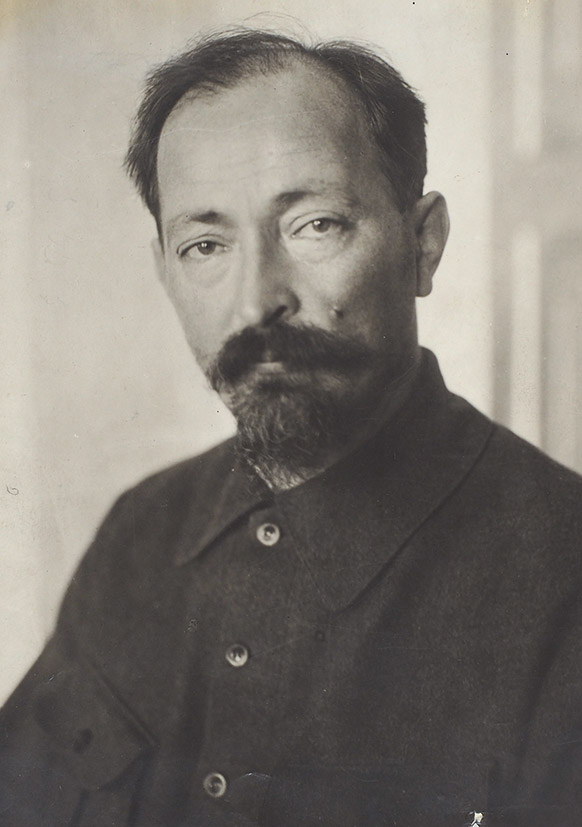
In February, 1900, I was arrested at a meeting and sent, first to Pavillion No. 10 of the Warsaw Citadel and later in the Sedletz prison. In 1902 I was banished to East Siberia for five years. On the way to Vilyuisk I made my escape—in the summer of the same year—on a boat, along with the Social Revolutionary, Sladkopowetz. This time I reached the border and members of the Bund with whom I was acquainted brought me across. Immediately after my arrival in Berlin, our party conference—of the Social-democracy of Poland and Lithuania—was called and it was decided to issue the “Red Flag.” I was sent to Cracow to organize the connections and to support the party from that side of the border. From that time on I was called Josef. Until January, 1905, I devoted myself from time to time to illegal work in Russian Poland. In January I moved and worked as a member of the central committee of the Social-democratic Party of Poland and Lithuania. In July I was arrested at a meeting outside the city but was released thru the October amnesty.
In 1906 I was a delegate to the Unification Party Congress at Stockholm. I became a member of the central committee of the Russian Social-democratic Labor Party as representative of the Social-democratic Party of Poland and Lithuania. From August to October | worked in Petersburg. Towards the end of 1906 I was arrested in Warsaw and was released on bail.
In April, 1908, I was again arrested. I was tried twice —once for the old and again for the new offense and was condemned to exile twice. Towards the end of 1909 I was sent to Tasseyevka. After I had spent seven days there I escaped and left the country thru Warsaw. I again settled down in Cracow and visited Russian Poland from there.
In 1912, I returned to Warsaw, was arrested the first of September, and, because of my escape from exile, was sentenced to three years katorga (hard labor). In 1914, after the outbreak of the war, I was taken to Orel where I finished up my three years. I then came to Moscow where in 1916 my party work of the years 1910 to 1912 brought me six more years of katorga. The February revolution freed me from the Central Moscow prison. Until August I worked in Moscow and was sent as delegate by the Moscow comrades in August to the party congress and there elected to the central committees. I continued my work in Petrograd.

I participated in the October revolution as member of the Revolutionary Military Committee. After its liquidation I was given the task of organizing the organ for the struggle against the counter-revolution—the Extraordinary Commission—Cheka—(December 7, 1917)— and was selected as chairman of this organization.
After my appointment as People’s Commissar for Internal Affairs I was appointed, April 14, 1921, as People’s Commissar of Transportation.
The Workers Monthly began publishing in 1924 as a merger of the ‘Liberator’, the Trade Union Educational League magazine ‘Labor Herald’, and Friends of Soviet Russia’s monthly ‘Soviet Russia Pictorial’ as an explicitly Party publication. In 1927 Workers Monthly ceased and the Communist Party began publishing The Communist as its theoretical magazine. Editors included Earl Browder and Max Bedacht as the magazine continued the Liberator’s use of graphics and art.
PDF of full issue: https://www.marxists.org/history/usa/culture/pubs/wm/1926/v5n12-oct-1926-1B-FT-80-WM.pdf
 Revolution's Newsstand