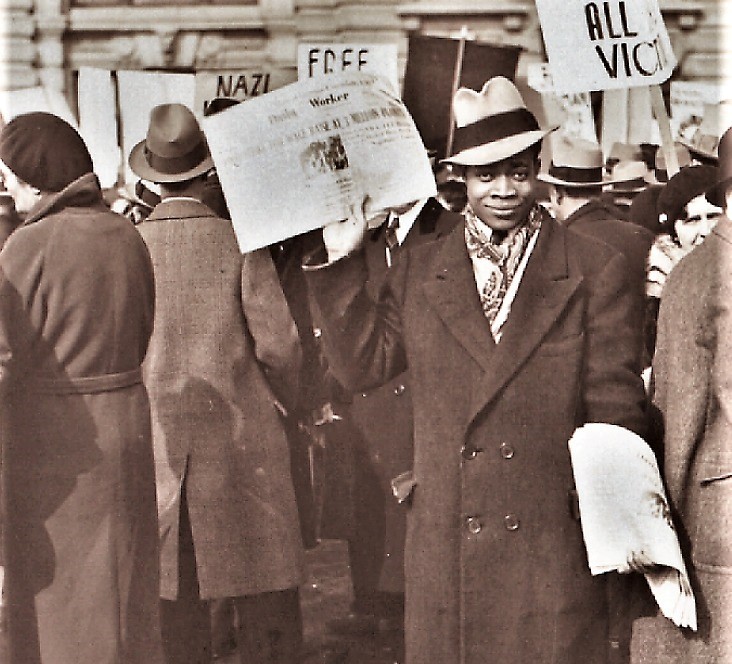
‘How to Sell Socialist Literature’ by William Restelle Shier from The International Socialist Review. Vol. 9 No. 9. March, 1909.
ONE of the good rules is never to give away a piece of literature if you can procure payment for it. Not only will a person be more sure of reading a pamphlet for which he has had to pay than one which had been handed to him gratis, but the unconverted public ought to be made bear the cost of its own enlightenment Though the free distribution of papers and leaflets is frequently necessary to arouse interest in our movement, it is none the less wise to charge for the same whenever it is possible to do so.
As the dissemination of literature is the most effective propaganda work that can be done, I bespeak a careful reading of the following suggestions, which cover almost every known method of selling books and pamphlets.
(1) In the first place each local ought to appoint a literature agent, one who is likely to make a good salesman, a hustler of the first water, a comrade who has read widely and who is known to be a great lover of books, and along with him a committee of like calibre to help him in his work and assist him in selecting the literature to be kept on sale. In order to make as good a selection as possible the committee ought to procure the wholesale price lists of all the Socialist publishing houses in America and Great Britain, also quotations from capitalist publishing concerns on the socialist books they have turned out.
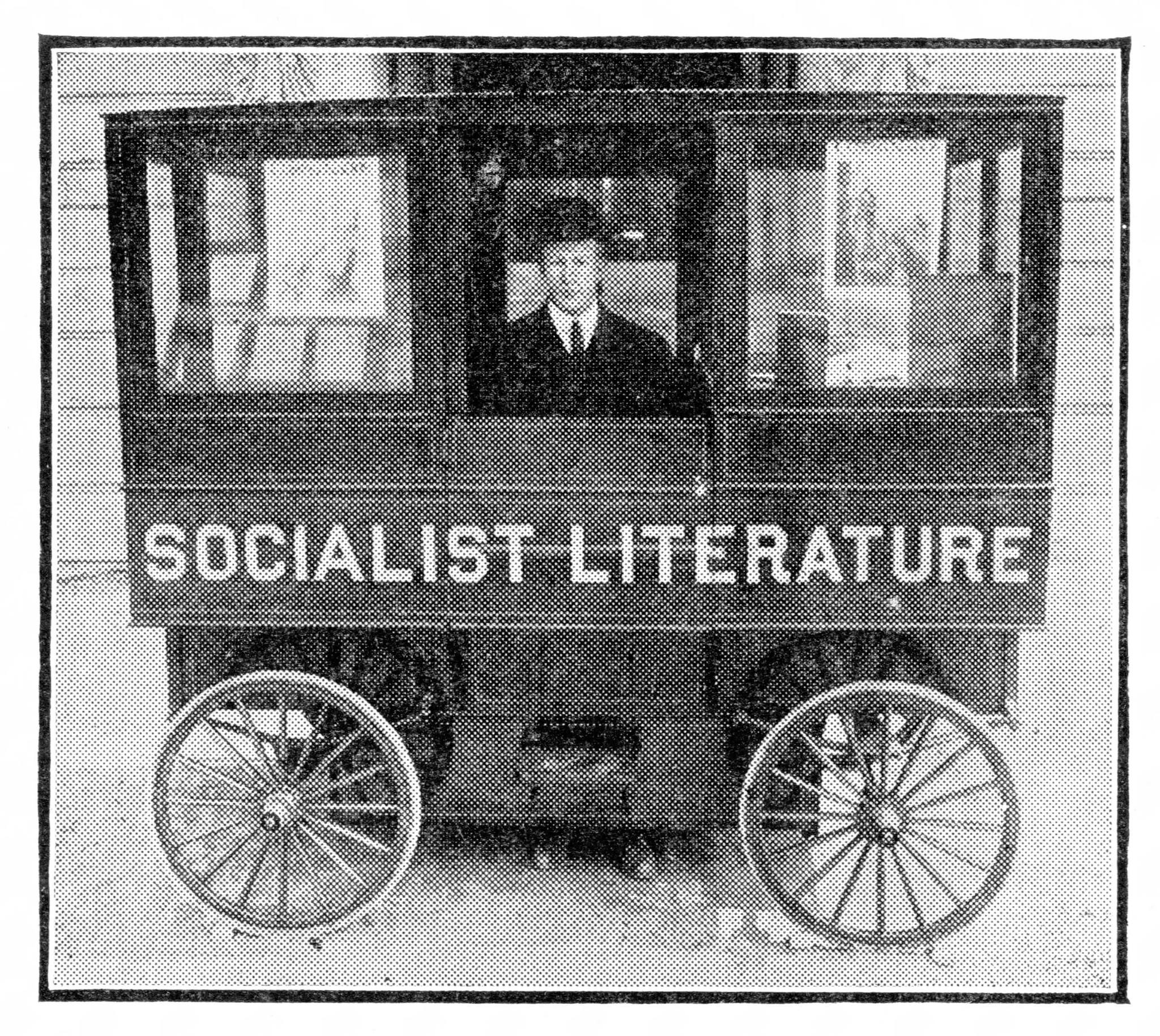
(2) At all propaganda and business meetings the literature agent ought to be present with his books. The best place to display them is near the door, so that people passing in and out cannot help but see them. Then fully a quarter of an hour before the meeting is called to order a number of comrades ought to peddle books among the audience, some selling papers, some pamphlets, some the more expensive books. In this way Local Toronto sells more literature before the lecture than after it. Again, when announcements are in order some one, either the chairman or the speaker of the afternoon or a representative of the committee, should give a good, strong five-minute talk on the literature for sale near the door, drawing attention to some particular book or pamphlet, preferably those which deal with the subject under discussion. Then while the meeting is dispersing comrades might pass again through the audience with literature in their hands, urging everybody to buy and sparing no effort to get people reading along socialist lines. At the business meetings some comrade ought to give a book talk with the view of encouraging party members to study the more advanced works upon the Socialist philosophy. This can best be done under the head of “the good of the movement.”
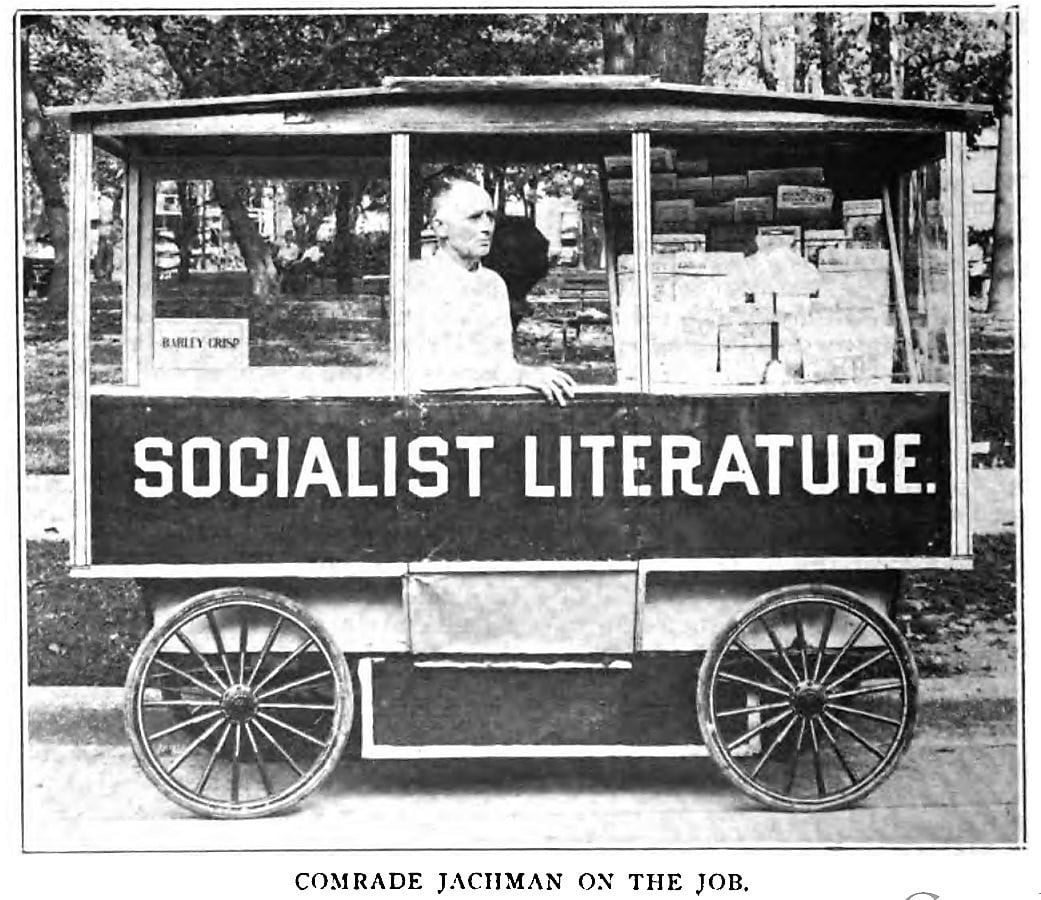
(3) The Literature Committee of Local Toronto has adopted a novel and highly successful scheme for increasing the sale of literature among the unconverted. It is getting together a corps of volunteer agents who sell literature to their acquaintances during the week as well as at the propaganda meetings on Sunday afternoon. These agents procure pamphlets from the committee on credit, always carry some of them in their pocket everywhere they go, and whenever opportunity affords sell them to the fellows in the shop, to the tradesmen with whom they deal, to the boys in the trade union, and even to strangers in barber shops, on street cars and wherever one can start up a conversation about working class politics. In addition to this they call upon persons known to be interested in labor problems, such as trade unionists, single taxers, amateur reformers, temperance workers, socialist sympathizers and subscribers to socialist papers, with the view of getting them to purchase our literature. This is the kind of work which really counts. It is surprising, too, the quantity of literature which can be sold in this way. Anyone known to the committee can procure pamphlets from it on this basis, the money being turned over to it as sales are effected, while to all others the agent will sell literature at retail prices on the condition that it will be taken back and money refunded in case the books are not disposed of.
(4) In order to arouse interest in Socialist literature and thereby increase its sale the literature committee might have printed a little catalogue of its own containing a list of the principal books and pamphlets it always keeps in stock along with the price and a brief description of each, a little article on why one should study Socialism and a statement to the effect that the literature agent will try to supply any socialist book which he has not on hand whenever requested to do so. Or an equally efficacious plan would be to purchase catalogues in quantity from Charles H. Kerr & Company, the pocket library edition being especially adapted for this purpose, and give them away to each purchaser of a book.
(5) On all handbills, cards, leaflets, manifestos and advertising matter issued by the Local mention ought to be made that literature can be purchased at any of the propaganda or business meetings or from the literature agent, giving his name and address.
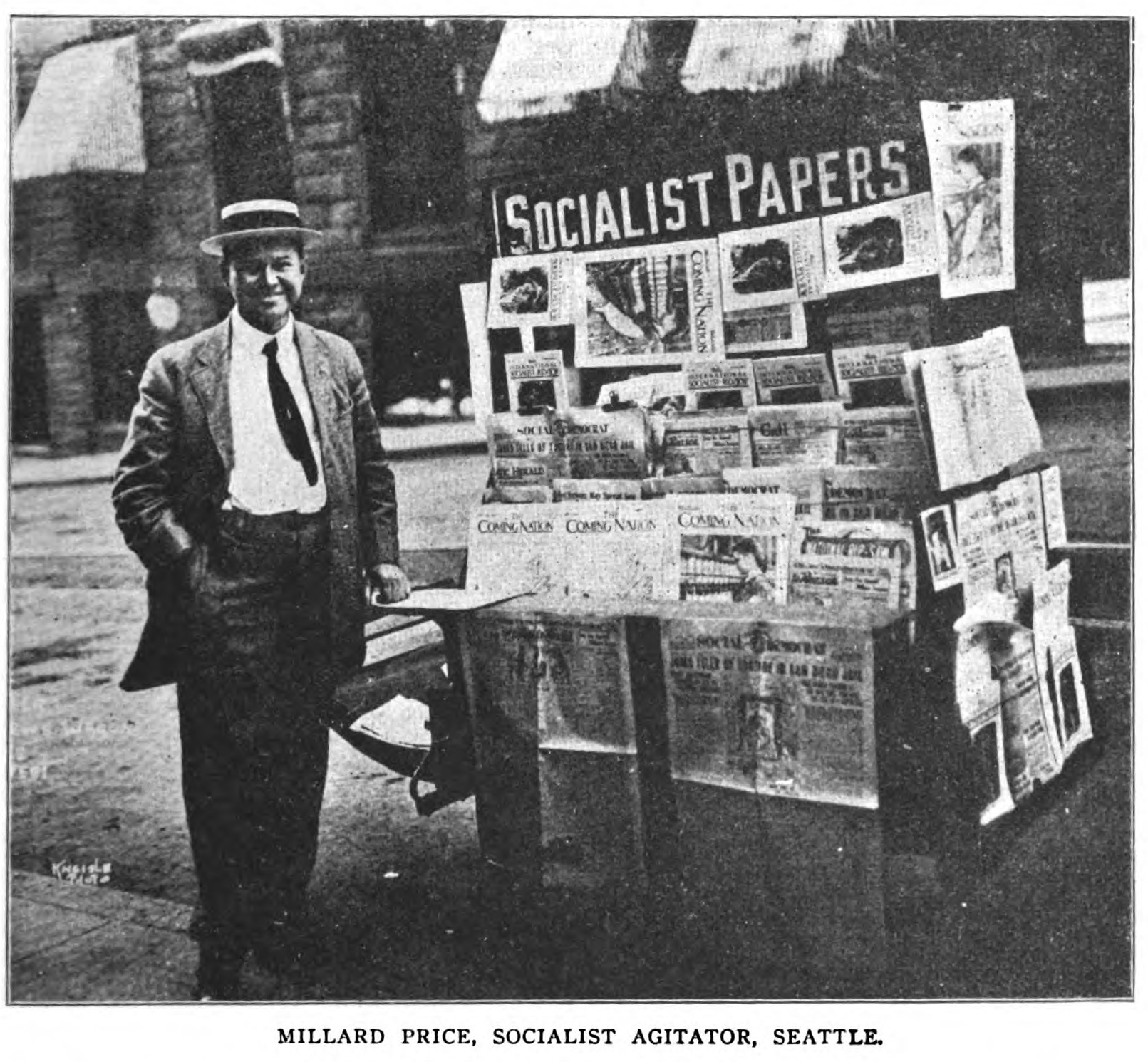
(6) Another scheme is to get the proprietors of book stalls, news stands, stationery shops, barber shops and cigar stores either to buy small quantities of socialist books and pamphlets at wholesale prices on condition that all unsold copies will be taken back or to handle them upon a commission basis. To make this scheme a success the retailers should be supplied with window cards announcing the literature that may be purchased from them. By each comrade tackling those retailers with whom he is acquainted on this proposition considerable literature ought to be disposed of in this way.
(7) As a big mail order business is already being done in books, locals might consider advertising their wares in papers that are likely -to produce results, but only if there is someone in the party who thoroughly understands how to work the proposition; otherwise it is likely to prove a sinkhole in the hands of the inexperienced.
As no attempt has here been made to do more than throw out ideas on how to sell literature, all the suggestions, barring perhaps the last one, which is of doubtful value, will bear elaboration. The thing to do is to study out in detail those recommendations which may possibly be used to advantage in your own locality.
The International Socialist Review (ISR) was published monthly in Chicago from 1900 until 1918 by Charles H. Kerr and critically loyal to the Socialist Party of America. It is one of the essential publications in U.S. left history. During the editorship of A.M. Simons it was largely theoretical and moderate. In 1908, Charles H. Kerr took over as editor with strong influence from Mary E Marcy. The magazine became the foremost proponent of the SP’s left wing growing to tens of thousands of subscribers. It remained revolutionary in outlook and anti-militarist during World War One. It liberally used photographs and images, with news, theory, arts and organizing in its pages. It articles, reports and essays are an invaluable record of the U.S. class struggle and the development of Marxism in the decades before the Soviet experience. It was closed down in government repression in 1918.
PDF of full issue: https://www.marxists.org/history/usa/pubs/isr/v09n09-mar-1909-ISR-riaz-gog.pdf
 Revolution's Newsstand