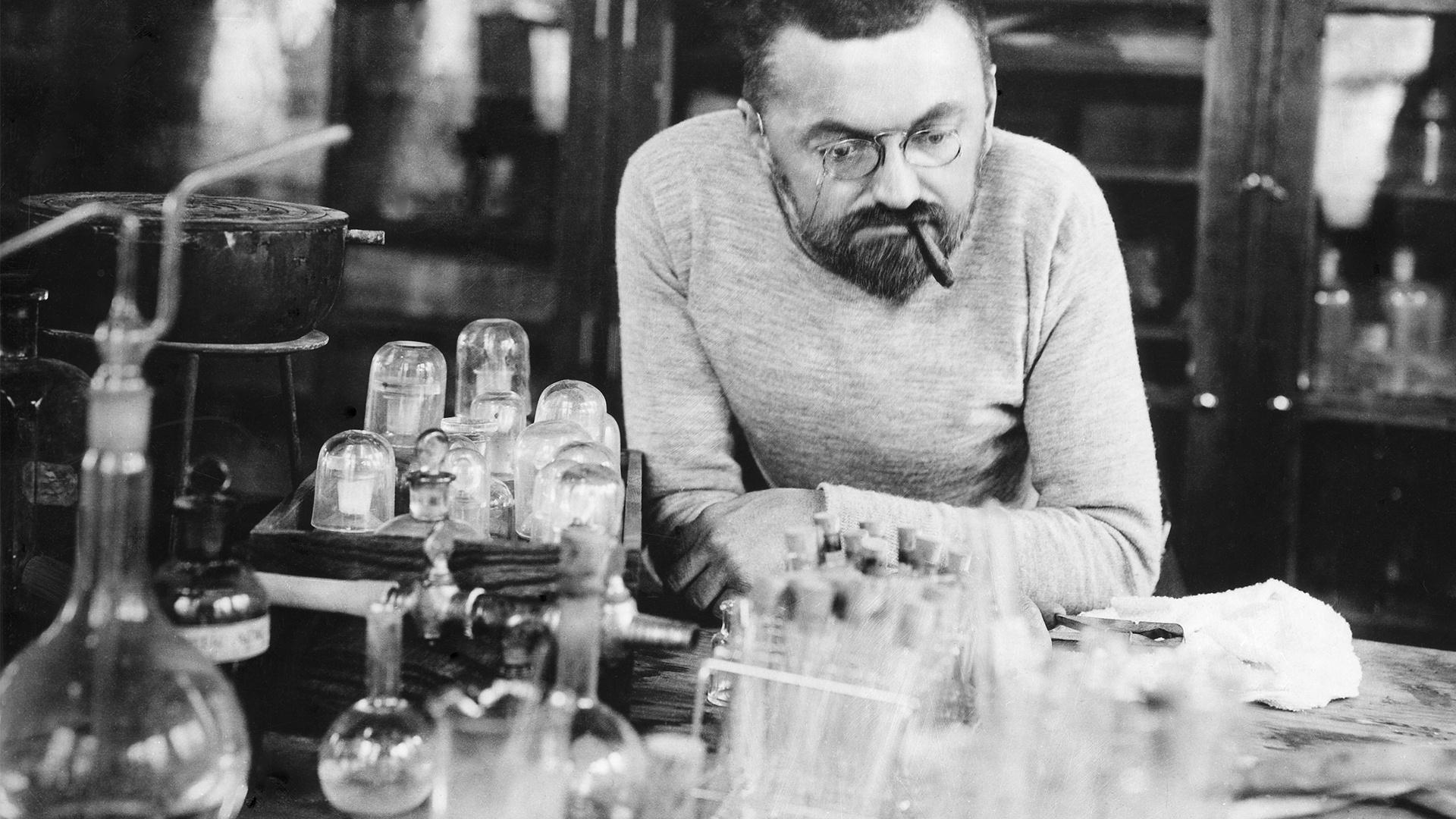
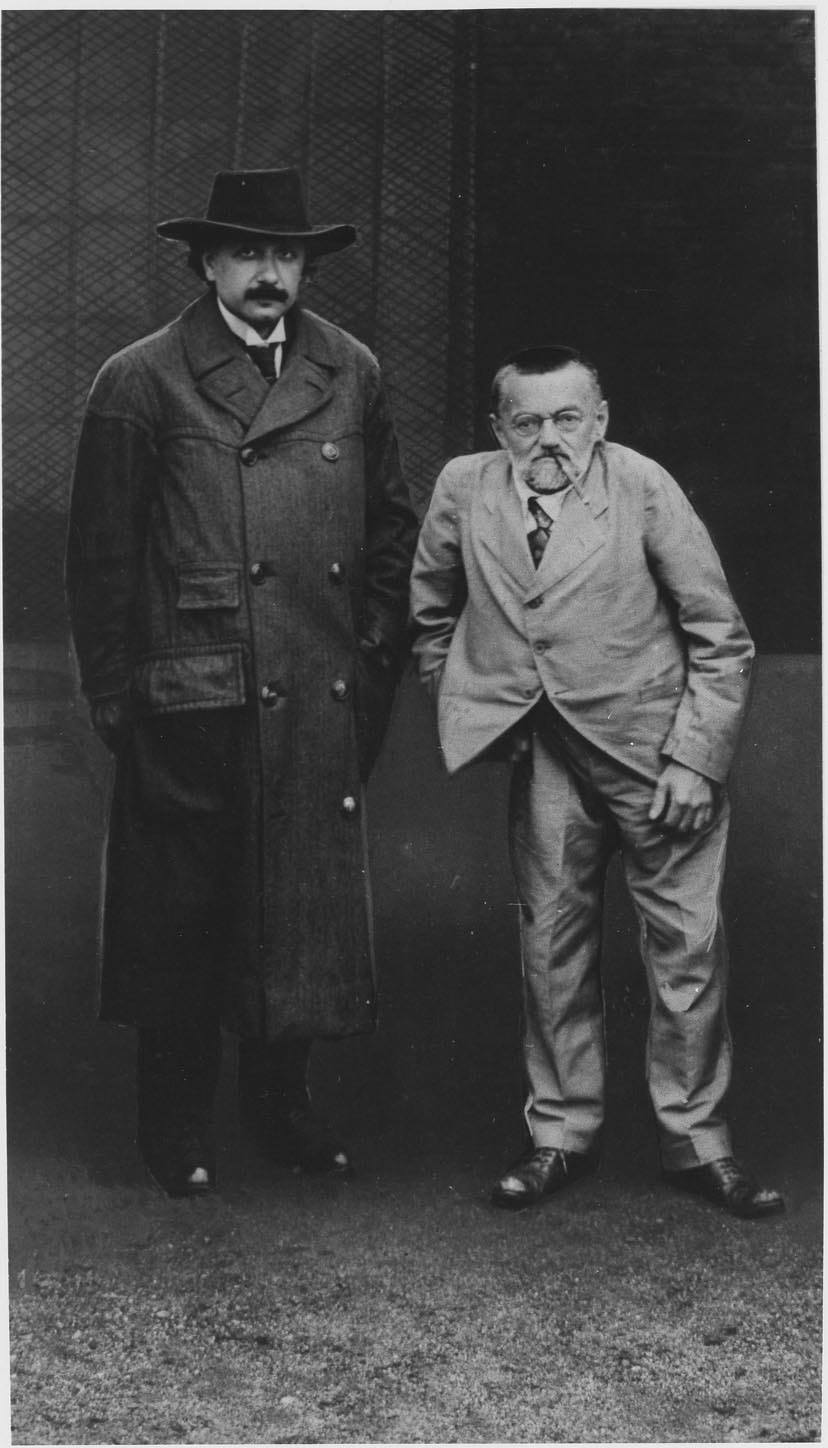
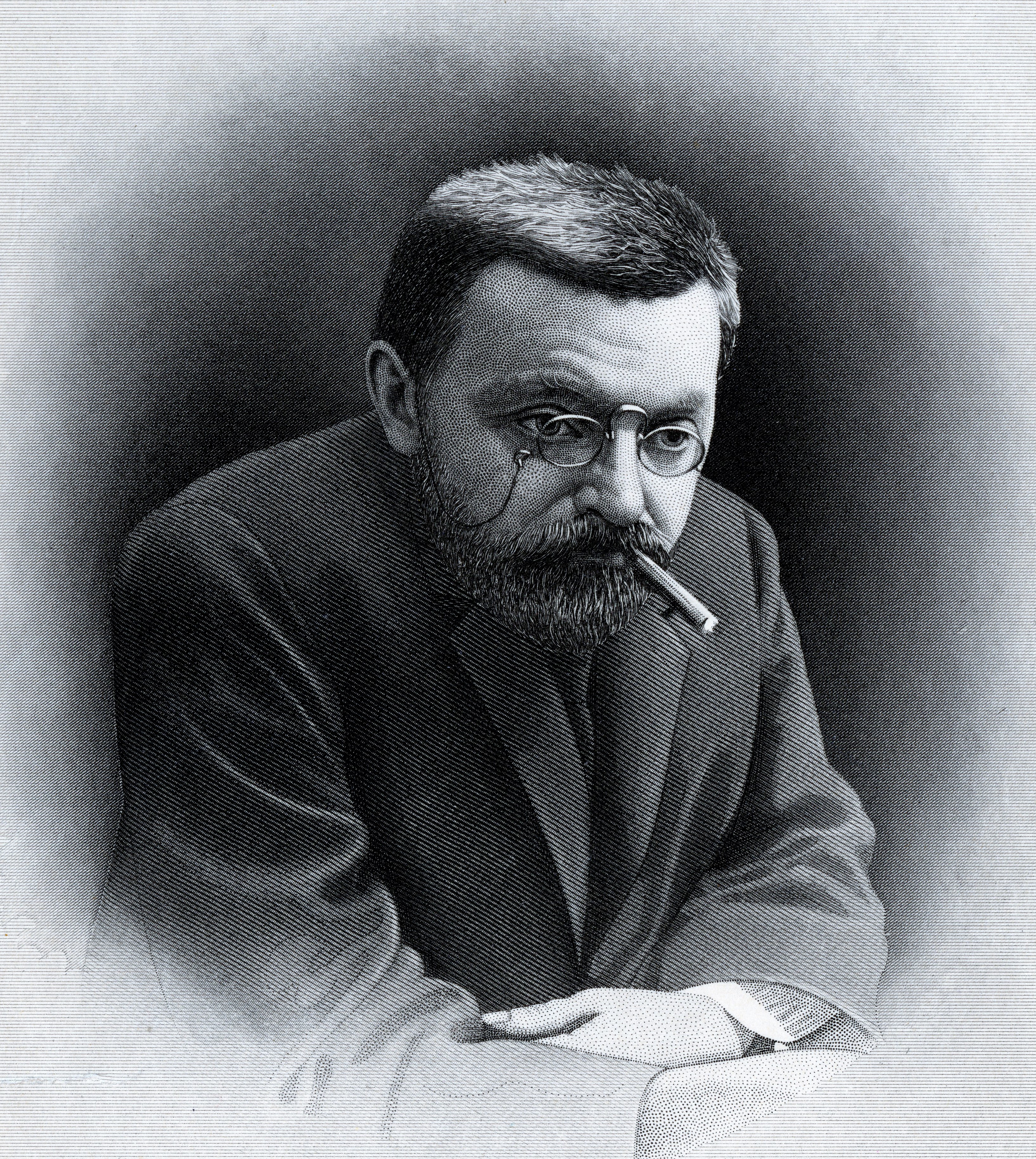
One of the most important inventors of the late 19th and early 20th centuries was the electrical engineer and professor Charles Proteus Steinmetz. The German-born Steinmetz (1865-1923) was a top researcher at General Electric in Schenectady and an avowed and active Socialist who was persecuted in Europe under Bismark’s Anti-Socialist Laws and wrote to Lenin in 1919 offering to help electrify Soviet Russia. Here, he writes for the Intercollegiate Socialist Society’s journal on ‘Socialism and Invention.’
‘Socialism and Invention’ by Charles P. Steinmetz from Socialist Review. Vol. 8 No. 1. December, 1919.
Our modern scientific and industrial civilization essentially depends on invention for its progress. If it were not for the constantly increasing productivity of man due to invention, with the increasing population of the earth, retrogression, famine and disaster would inevitably overtake our human society.
Every intelligent mind, which is not afraid to reason fairly and without bias based on likes and dislikes, knows that our present industrial organization, which I may call individualistic capitalism, inevitably leads, as its final outcome, to the cooperative commonwealth, that is socialism. The grave question then arises: with the inducements and rewards which capitalism holds out or is alleged to hold out for the inventor, removed by the socialization of society, will invention stop, and our civilization lapse, as the civilization of the ancient times gave way to the barbarism of the Middle Ages?
When speaking of inventions, the layman thinks of those great inventions which have made stepping stones in our civilization, as the invention of the steam locomotive by Stevenson, that of the steamship by Fulton, etc.
Did Stevenson become rich by the invention of the steam locomotive? Not as rich as many a successful stockbroker or saloonkeeper. And what did his invention consist of? There were numerous steam carriages built and tried before Stevenson’s, and Stevenson’s “Rocket” was very far from the perfection of the modern steam locomotive. Thus Stevenson’s work was one step in the development of the steam locomotive, though such a great step, that he is justly called the “inventor” of the steam locomotive, and the reward he received is the fame and reputation-which would equally be his in a socialist society- but, financially, a Gould, or Vanderbilt, or Harriman have made many times more out of the steam locomotive than Stevenson, and without inventing anything on it.
Three Groups of Inventions
Roughly, inventions may be divided into three groups: (1) Fundamental or basic inventions which create new fields for human effort, or even a new era in the world’s history, such as the invention of the steam engine, steamship and locomotive; of the cotton gin, which created the cotton industry, of the alternating current transformer, which made modern electrical development possible. (2) Inventions which are merely steps in the design and development of things, such as a new form of gear shift in the automobile, or a new way of winding an electric motor. (3) Incidental or accidental inventions, such as a new puzzle, which strikes the popular fancy.
Consider first the second group, since it represents by far the largest majority of the many thousands of inventions patented annually in the United States, and since, while individually these inventions are not radical and revolutionary and usually not thought of in the layman’s discussion of inventions and inventors, in their bulk they represent the industrial progress of the country.
In the successive steps of his work, the engineer, designer or constructor devises means to accomplish the desired result, drawing upon his knowledge, skill and ability. Where these means are new, they constitute a patentable invention, and invention thus is an integral part of the routine of the engineer’s work. That is, the engineer lacking in originality and limited in his work to the known means, finds himself seriously handicapped, and originality and inventive ability are essential for the successful engineer or designer.
With the progress of the world’s industrial development towards organization into larger and larger corporations, steadily the number of independent engineers is decreasing and more and more find it to their advantage to enter the employ of the corporations.
In corporation employment of the engineer, it is, however, to a large extent the custom that the inventions made by the engineer, and the patents covering them, belong to the company, and not to the inventor, and the inventor thus derives no direct financial benefit from his individual invention. This practice is increasing, as experience proves it to be the most satisfactory. Morally, there is much justification in this arrangement. Usually the problem which the engineer solved by his invention has been brought before him by his work for the company, and the data and information which enabled him to solve the problem, to a considerable extent made available, and the means to develop the invention supplied by the corporation, so that outside the corporation the engineer probably would not have met the problem, and if he had met it, would have been unable to solve it. The engineer’s compensation then is his pay, which covers the products of his knowledge as well as his originality and inventive skill, and the reputation he derives as an inventor. It is interesting to note that experience shows corporation engineers working under this arrangement to be on the average more prolific in useful inventions than independent engineers -probably due to the more numerous and greater problems they meet, the better facilities they have to solve them and the satisfaction from the larger field of application of their inventions. But this arrangement is just as barren of the direct individualistic profit, so frequently considered as the essential incentive of invention, as any we would meet in socialistic society.
Thus, the evidence of experience is that this most numerous and in their aggregate most important class of inventions would not be decreased by the socialization of society; organized society would simply take the place of the present day industrial corporation; and the prolificness of the inventors would still further increase by the increased opportunities and facilities.

Coming now to the third class of inventions, such as a new puzzle, a new drink, which strikes the popular fancy, and thus makes its inventor rich. These we may almost call “gambling inventions,“ since the profits have no relation to the value of the thing, or to the mental and intellectual work of the inventor, inasmuch as equally meritorious inventions may be an entire failure or a great financial success, almost like a stock speculation. It is not probable that in a socialist society, or in any other form of well-organized society, such conditions would exist. However, it is hard to say how this could have much effect on such accidental inventions, or if they should decrease, that the world would lose much by it.
Inventors Rarely Rich
There remains thus the first class of inventions, the great radical or basic inventions which the layman has in mind when discussing inventions or inventors. Would the withdrawal of the possibility of vast financial profits interfere with them?
First, the number of great radical inventions is much less than appears, since the outsider usually only sees the final product, and the man identified with it, but does not see the many steps preceding it, the many inventors, on whose shoulders the last one stood, as I illustrated in the preceding on the invention of the steam locomotive.
Furthermore, does modern capitalistic society hold out great financial rewards for the inventor? I know of no great inventor who has become very rich. Edison is very well to do, but far less due to his inventions than to his sharing in the industrial exploitation of them, and a small part of his genius and intellect, in the pursuit of Wall Street activities, might have made him a multi-millionaire. There is rather more truth in the statement- though wildly exaggerated— that most of the great inventors the in the poorhouse.

Usually, the statement of the “poor inventor” is backed by the statement that he has been defrauded of his dues by the corporation which acquired and manufactured his invention, and that, if he had his rights, he would have become vastly rich. Without doubting that in a few instances this may have been true, it can easily be seen that in general it is not true, but that the relatively meager return of great inventions is the inevitable consequence of our industrial organization.
A fundamental or basic invention, representing a new idea, the first step in a new field, necessarily is crude, and inferior to the improvements which are made later on the idea, after the path has been broken by the basic invention. As a matter of fact, every inventor being entitled to his invention, neither more nor less, the original inventor is not entitled to the improvements made by others, and without them, his invention is of lesser industrial value. The inventors of the improvements cannot use them, as they are not entitled to the original invention. To the inventor, his invention is of no value unless it is applied. He can rarely apply it himself, having neither the means nor the mental ability to develop its industrial production. Thus he depends on the established industry to take up his invention. The industry however has got along without the invention, does not need it as a necessity, but merely as an improvement, or an advantage. Thus in the relation between the inventor and the industry, the advantages are against the inventor.
There is another feature, which the inventor rarely realizes.
Between the invention, as conceived, tried and patented, and the successful industrial product, there is a wide gap, the industrial development of the article often involving a vast amount of work and great expenditure. Thus, for instance, in the development of the steam turbine, now the most powerful and most efficient source of power, millions of dollars, and years of work had to be expended, from the time that the completed and patented invention was turned over to the manufacturers, until the manufacture was financially successful. And that latter period sometimes never arrives. Thus in the industrial development of the invention of the Nernst lamp, a vast amount of engineering ability, energy and many years of work were expended and when it just began to be successful, the tungsten lamp came, with its superior efficiency, and drove it out of existence.
The quality of mind of the inventor rarely is successful in developing and exploiting, and so we have seen numerous inventors making a fair fortune from their earlier inventions, which they turned over for development and exploitation to corporations, and then, in their later inventions, desirous of getting the entire financial benefit of the invention, undertaking the industrial development themselves, and failing, and thereby losing all they had obtained from their former inventions and ending relatively poor.

Thus the great financial rewards awaiting the inventor in present-day society are an idle dream. The reward of the inventor is reputation and fame, and the satisfaction of his accomplishment- rewards which will remain and be greater still under socialism— but financially the reward of the inventor is inferior to that of the successful stockbroker or promoter.
Lack of Recognition
The most serious side is that in present-day society there is a danger, not at all remote, that the inventor may not even receive recognition and reputation for his invention. Commonly, final decision whether an achievement is an invention and who is the inventor, is made by the formal mind of the lawyer and not by the historian or expert. The judge called upon to decide upon the invention, when two powerful financial interests fight in court over the patent, cannot be expert in technical matters, and the “experts” hired by the contending parties, however expert they may be, naturally do not represent the facts as the historian would see them, but as their employer’s interest wishes the court to see them. Furthermore, by that time, perhaps 10 or 15 years after the invention was made, important inventions often have become generally used and familiar and appear as obvious and self-evident to the average mind, which is incapable of putting itself back into the time when the invention did not exist. The result is failure to appreciate the invention, and the judge is liable to take the same attitude, especially if a big corporation controls the invention even judges are human beings and as such inevitably affected by the trend of public sentiment against corporations. Instances hereof are Edison’s “Main and Feeder” patent, W. Stanley’s invention of the alternating current transformer, etc.
Fortunately, when the patents have expired, and no more commercial interests are involved, history usually reverses the court decision and restores the inventor to his recognition but this may not always be so.
Obviously, in socialistic society there would be no special interests opposing the inventor’s fullest recognition; no man belittling and denying his invention for commercial reasons, and the realization that a successful invention would be immediately adopted by the whole national or even international industry, and used for the common good, that it would make the inventor a national hero, but a hero of creation and not of destruction- as have been most heroes of past days- all this will necessarily be an incentive for the inventor, far greater than anything present-day society has to offer.
The Socialist Review was the organ of the Intercollegiate Socialist Society, and replaced The Intercollegiate Socialist magazine in 1919. The society, founded in 1905, was non-aligned but in the orbit of the Socialist Party and had an office for several years at the Rand School. It published the Intercollegiate Socialist monthly and The Socialist Review from 1919. Both journals are largely theoretically, but cover a range of topics wider than most of the party press of the time. At first dedicated to promoting socialism on campus, graduates, and among college alumni, the Society grew into the League for Industrial Democracy as it moved towards workers education. The Socialist Review became Labor Age in 1921.
PDF full issue: https://books.google.com/books/download/The_Socialist_Review.pdf?id=L4dVAAAAYAAJ&output=pdf
 Revolution's Newsstand