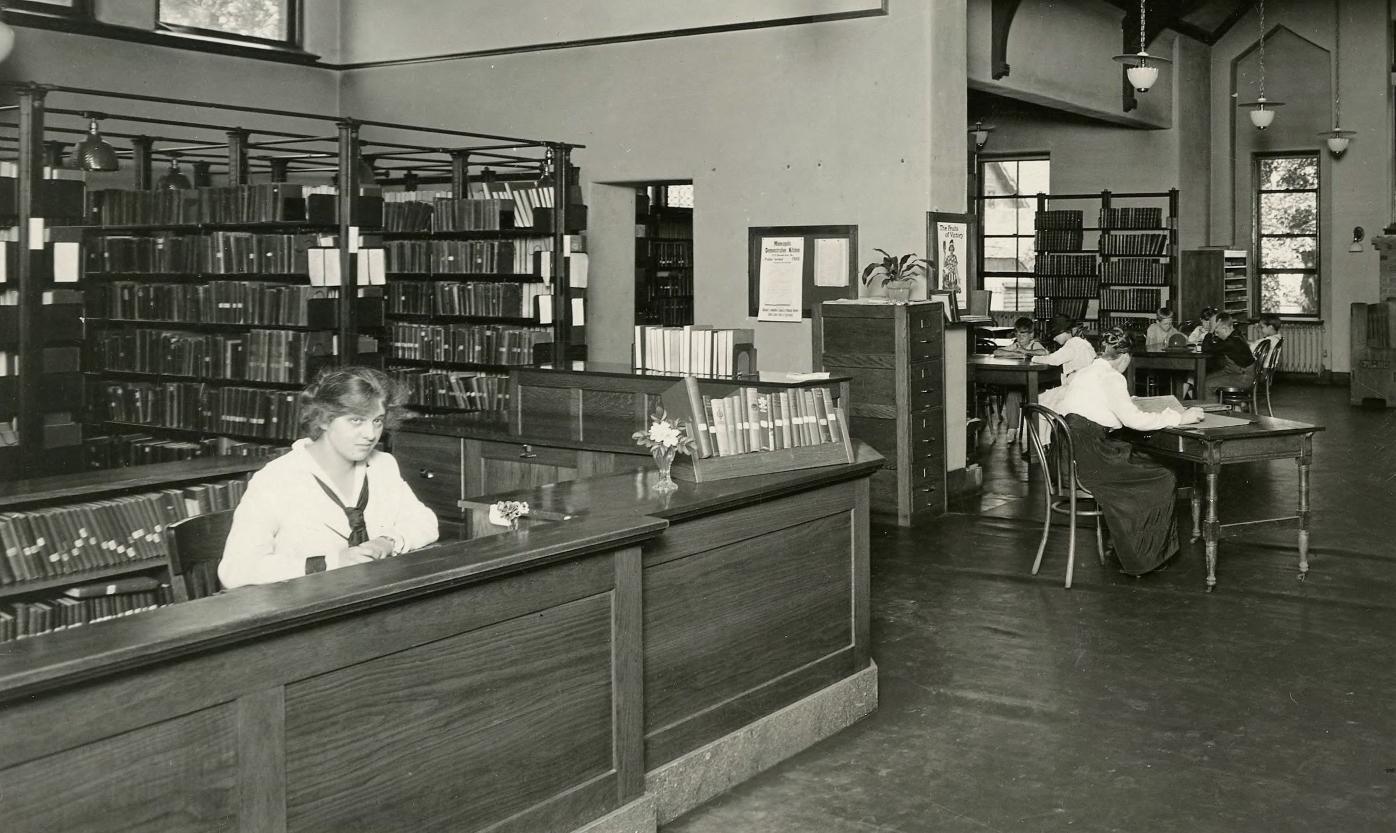
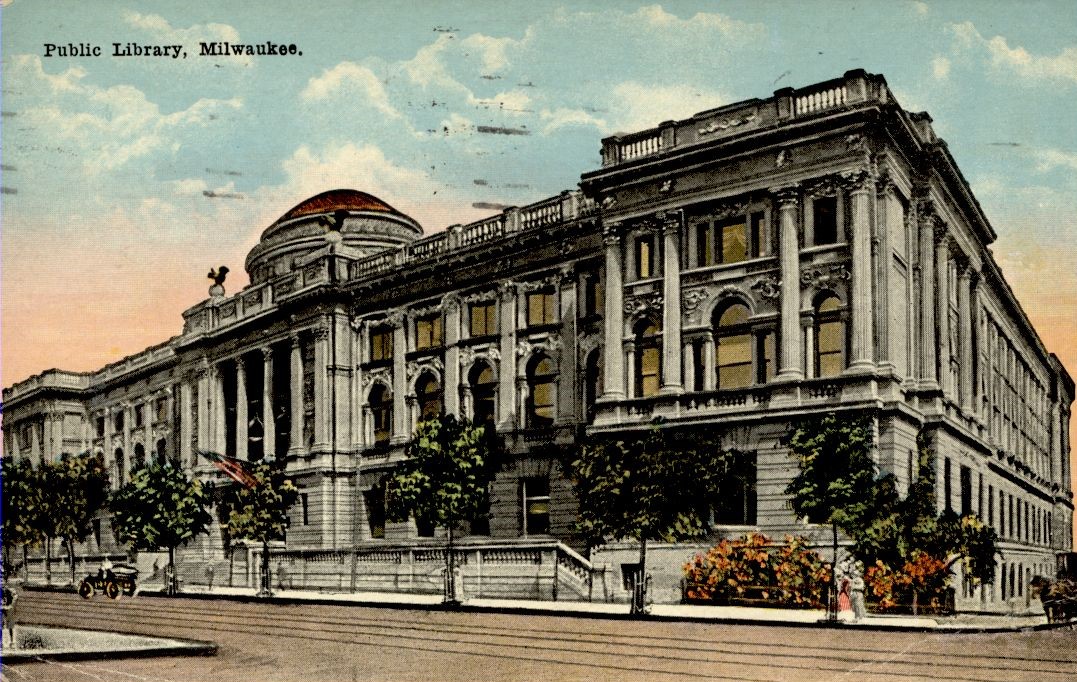
Socialist and suffragette, comrade Kulzick was an Assistant in Milwaukee Public Library for many decades.
‘Suggestions on the Conduct of Libraries and the Work of a Socialist on a Library Board’ by Josephine Kulzick from Party Builder (Official National Bulletin of the Socialist Party). Vol. 67. February 14, 1914.
It seems to me that one of the first things for which a library in a large city should strive is to establish branches among the people as rapidly as possible and stock them with the kind of books that will prove most useful in the locality, keeping in mind the nationality and work of those for whom the books are designed. People of scant education are bewildered by the necessary formalities of a large institution and to not use a central library as much as they might often for no other reason than this. They feel more at home in a smaller place and get much more real good from it.
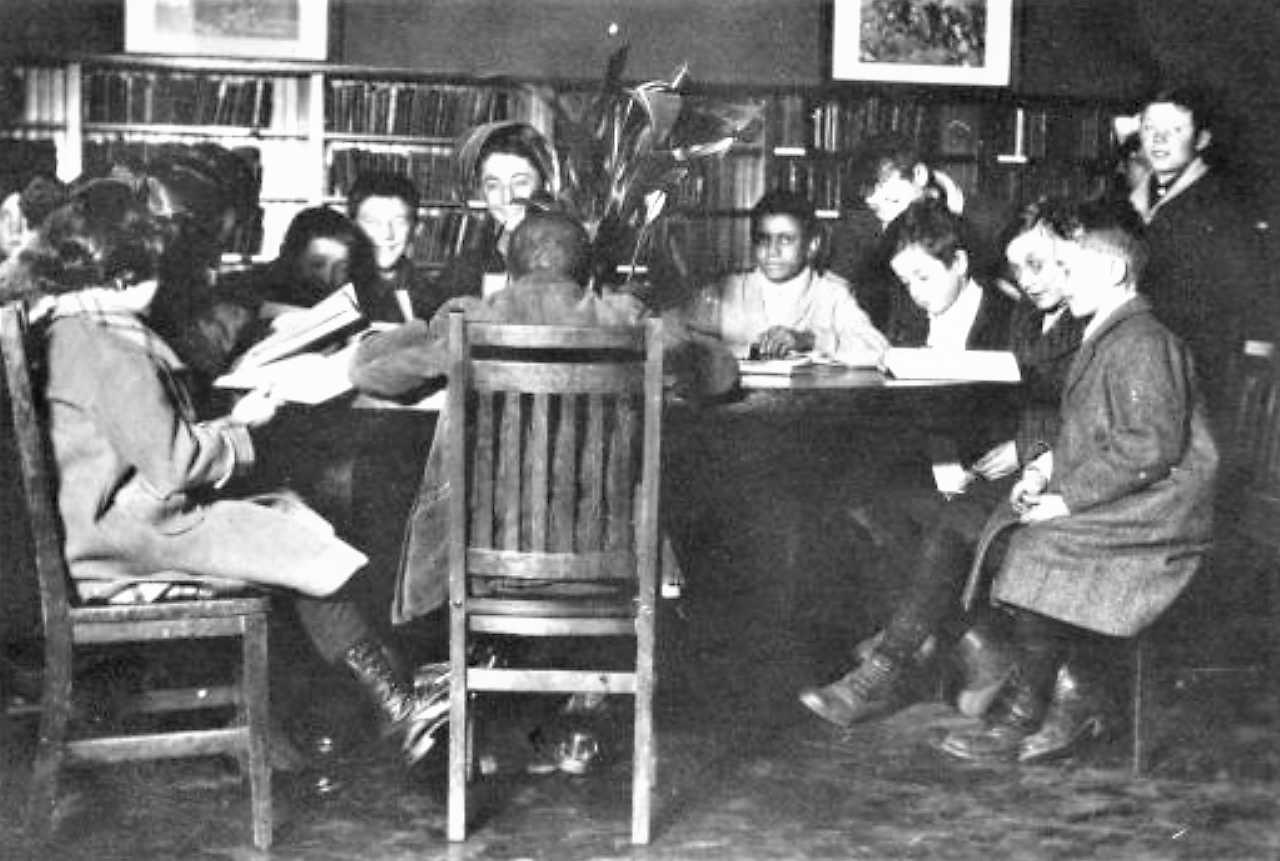
At the central library there should be an information desk with an attendant whose sole business it should be to explain the system of the library and direct patrons to whatever they happen to be seeking in the way of knowledge or information. Some people don’t know what they want, others know but don’t know how to get it or what to call for. The catalogs don’t help them and they wander from pillar to post confused and discouraged. To many the card index is such a puzzle that they prefer to go without a book rather than learn how to find a number. The regular attendants do not have the time even when they have the inclination to pay as much attention to newcomers as they ought to get.
Also, every large library ought to have a library visitor on its staff, that is, an employe whose chief duty it would be to go before groups of people everywhere in stores, factories, schools, clubs, churches and even homes, explaining that the library offers to them in the way of free education and entertainment and stimulating· an interest in its use. This is not done anywhere so far as I know, and until it is done the library will not attain its fullest use. Libraries now draw only those who have a natural impetus towards books and whom the schools and chance drive in. That larger class who most need the ministration of the library know little about it and care less. They have not been aroused to what it might do for them.
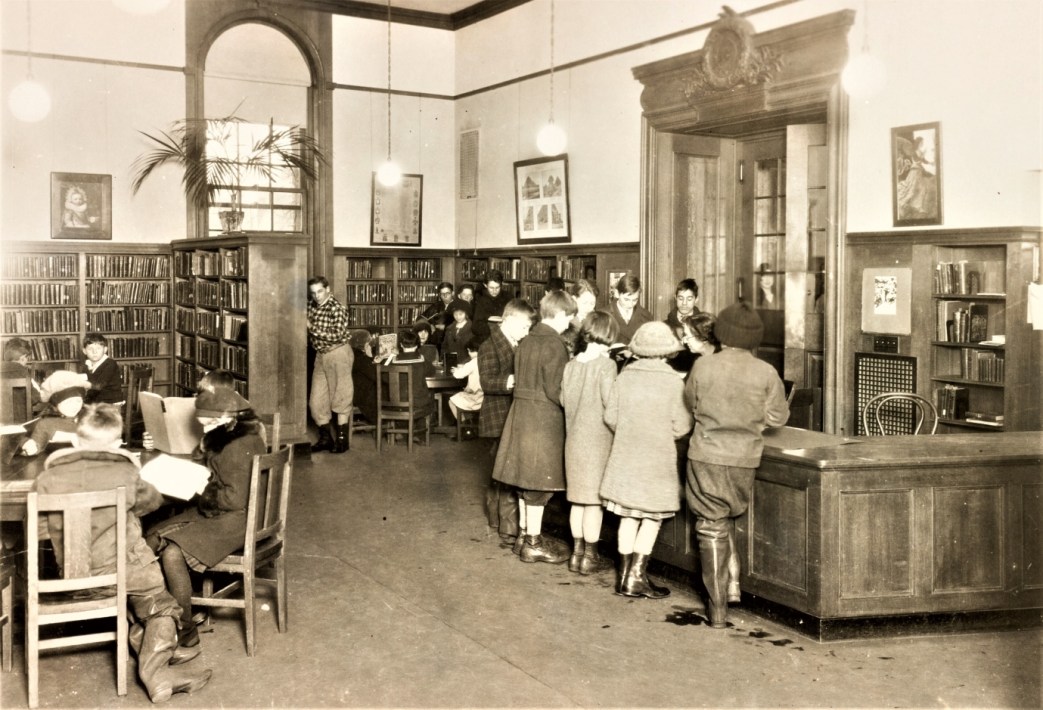
A progressive library, too, will be equipped with an auditorium where free lectures may be given to adults and children. Children’s rooms are now so generally accepted as an important feature of the library system that it is not necessary for me to mention that. A good children’s department serves as a training school in the use of the library.
The Cleveland public library offers the best example of what may be accomplished with branches as agencies for intellectual and social improvement. Providence is doing exceptional work with foreigners.
The extension feature in library service is only beginning to be utilized as it should be. The Socialists could do much towards quickening its growth if they realized how practical the work can be made in its ultimate results. The Library School of the Western Reserve University is now offering a course on “The public library and community welfare.” That shows which way the wind is blowing.
Most libraries are in need of improvements along the line of poor wages paid to the girls in the bindery and repair departments and poor working conditions for such departments, such as dark basements, etc.
A library can also be improved by specializing along the lines of collecting the best technical books, that will be of use in educating ambitious young people who are not able to take school courses; and by having assistants particularly trained along these lines, who will take an interest in superintending these reading courses. In this way a library can be made a sort of college for the common people.
Every state has a different way of selecting library boards. Suffice it to say that a little culture would not be amiss and might help to a better understanding of the community’s need. And this is important as women predominate in library work- their interests would be better sensed and understood if there were some women on the board.
For a variety of reasons, the national Socialist Party of America did not have an official publication until May 1904 when the national convention mandated the monthly Socialist Party Official Bulletin as a way for the Party to communicate to its members. The name was changed to Socialist Party Monthly Bulletin in October 1911. The Party Builder became the name in 1913 and also became a subscription paper and a weekly. In 1914 the Socialist Party replaced The Party Builder with a regular propaganda newspaper, The American Socialist. These Party paper contain National Committee and National Executive Committee minutes, National Secretary reports, membership figures, financial statements, letters from party members, articles by prominent party leaders, and the figures for election of party officers and internal questions.
PDF of issue: https://www.marxists.org/history/usa/pubs/spa-bulletins/140214-partybuilder-w67.pdf
 Revolution's Newsstand