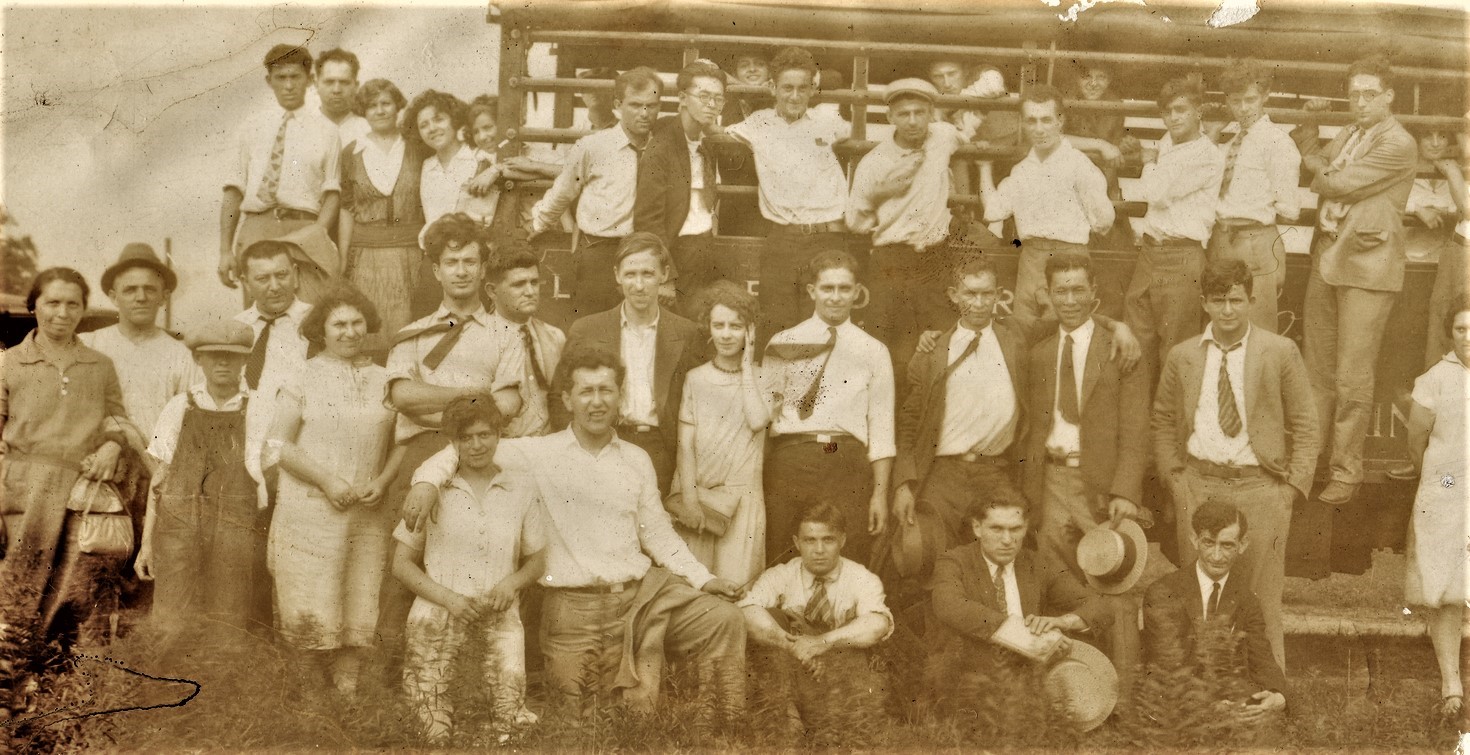
‘Workers’ Summer School Brings Students From All Industries Students to New York City’ by Esther Lowell from The Daily Worker. Vol. 3 No. 166. July 27, 1926.
NEW YORK, July 25. —Every one is listening intently. There are over 70 in the room and it is one of the summer’s hottest days. The lecture is bristling with figures—millions and billions slung around, but not carelessly.
The figures spell a fascinating story. It is the story of America today. There are men and women students—most of them young. Nearly all are taking notes. Entries at the back of the room and the roaring traffic below in the street do not disturb their concentration.
All Industries There.
Miners, machinists, auto workers, railroad workers, upholsterers, office workers, a steel worker, a sales girl, a masseur, an actress, a gardener, a tool maker, shoe workers, a printing pressman, painters, paper hangers, garment workers, a barber, a food worker, a carpenter, a pencil maker, textile workers, a laundry worker, a draughtsman, longshoremen, a post office clerk, housewives and one plain laborer—they are.
They come from Canada, California—north, east, south and western United States: 45 out of the 75 from other places than New York City, tho that is where they are assembled. All are here for the two weeks’ intensive training course at the Workers’ School. Their time is precious and they don’t want to miss a word of Jay Lovestone’s sharp birds-eye views of America Today. His is the only lecture course.
The Faculty.
Other teachers are William F. Dunne, William Weinstone, Alexander Trachtenberg, Antony Bimba, Jack Stachel, D. Benjamin and Bertram Wolfe, school director. Students meet with these instructors in smaller groups to study American Social and Economic History; History of the American Working Class; Marxism and Leninism; Organizational Methods and Problems; Party History and Political Parties; Teaching Methods and Content of Workers’ Education.
Visit the “Trenches.”
Supplementary activities of students includes visits to the Passaic textile strike area, the cloakmakers’ picket line and strike meetings, to a co-operative camp over the week-end, and to New York union meetings of various kinds. Most of the students have had several or many years’ experience in the labor movement. Most are members of unions and not a few hold important posts in their unions. They have come to the Workers’ School in New York for an Intensive course of training that will help them be more intelligent and effective workers in the movement and their unions.
Japanese Good Scholars.
There are several Japanese students. One is a gardener who saved his money to come ever since he heard of the school from another Japanese worker who attended winter classes. He would not accept one of the scholarships offered students from the furthest points, tho he had to come from California. Some of the students have been sent by their unions or local political groups, which paid their $25 fee. Many have been arrested in strikes. The upholsterer has been recalled because his union is calling a strike. One boy served in the Russian Red Army and one in the Hungarian Red Army. Another was in the Hungarian White Army.
The Workers’ School was founded by the Workers’ Party. It is developing a good deal of independence and hopes to greatly increase non-party attendance in its fourth winter season.
Last session a third of the students were non-party workers. Outside teachers, including Scott Nearing, David Saposs, Robert Dunn, etc., are to give courses and an advisory committee of competent non-party educationalists has been formed. The attendance increase at the Workers’ School has been phenomenal: a leap to 700 workers in winter season night classes within three years!
The Daily Worker began in 1924 and was published in New York City by the Communist Party US and its predecessor organizations. Among the most long-lasting and important left publications in US history, it had a circulation of 35,000 at its peak. The Daily Worker came from The Ohio Socialist, published by the Left Wing-dominated Socialist Party of Ohio in Cleveland from 1917 to November 1919, when it became became The Toiler, paper of the Communist Labor Party. In December 1921 the above-ground Workers Party of America merged the Toiler with the paper Workers Council to found The Worker, which became The Daily Worker beginning January 13, 1924. National and City (New York and environs) editions exist
PDF of full issue: https://www.marxists.org/history/usa/pubs/dailyworker/1926/1926-ny/v03-n166-NY-jul-27-1926-DW-LOC.pdf
 Revolution's Newsstand