
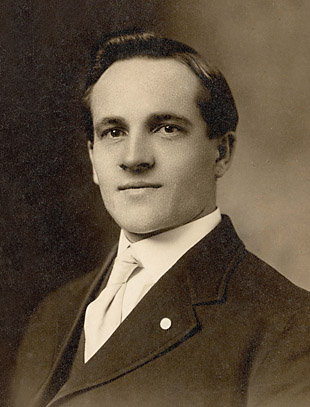
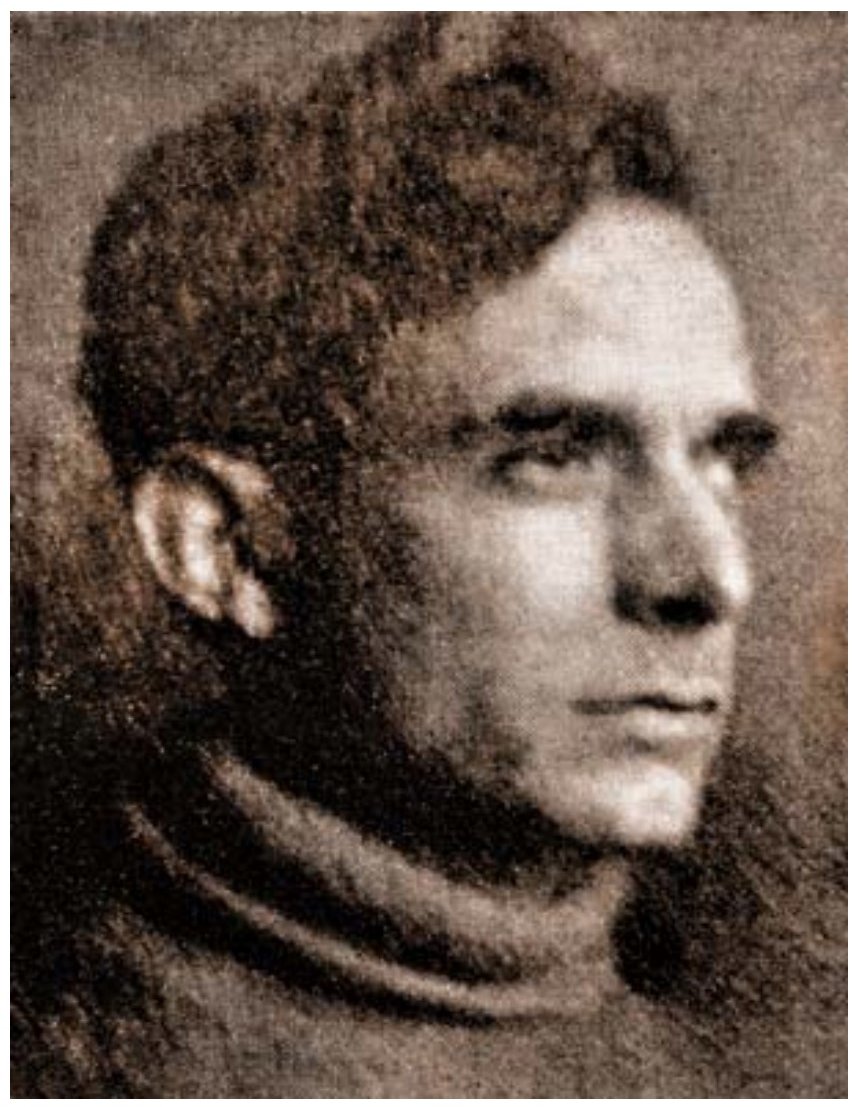
The right-wing leadership begins mass expulsions of the Left Wing majority of the Socialist Party, including whole state organizations and language federations, as the divisions in the Party become irreconcilable during the summer of 1919. Three historic leaders of the Party’s Left Wing, including Ohio State Secretary Alfred Wagenknecht, and National Executive member L.E. Katterfeld.
‘Forty Thousand Expelled by Seven’ by L.E. Katterfeld, Alfred Wagenknecht, and Louis C. Fraina from The New York Communist. Vol. 1. No. 8. June 7, 1919.
Violating every principle of fair play and square dealing and disregarding every constitutional provision to the contrary, the National Executive Committee, at its session in Chicago, May 24 to 30th, expelled the state organization of the Socialist Party in Michigan, constituting nearly 6,000 members, without a trial; suspended the Russian, Lithuanian, Polish, Lettish, Hungarian, Ukrainian, and South Slavic Federations of the Party, constituting more than 30,000 members and — worst of all, and let it be said to their everlasting shame — are autocratically holding up the national referendums for the election of a new National Executive Committee, International Delegates, International Secretary, and upon the question of the Emergency National Convention.
Never before in the history of the Socialist Party have Party officials dared so outrageously to violate Party principles. A willful group of seven members out of a total National Executive Committee of fifteen, ten of whom attended the meeting, usurped power which the constitution does not grant them, and which the Socialist Party membership never intended any servants of the Party to have. This willful group of seven did not, however, act as servants of the Party — but as dictators and tyrants to defeat the expressed will of the membership and to perpetuate themselves in office.
This is the crisis. In these frantic efforts of the official bureaucracy of the Socialist Party to maintain itself in power, we see the final attempt of bourgeois reformism to crush revolutionary Socialism in the United States. This crisis affects the integrity and future of the Socialist Party; if our Party is wholeheartedly will not compromise, which will not fail in times of test, then every Party member must rebuke this unscrupulous action, and must take a stand in support of the nearly 40,000 comrades arbitrarily deprived of Party membership for their fidelity to the principles of true International Socialism.
The objects of the autocratic seven are as plain as daylight. Like a tidal wave, the demand for the tactics and principles of the kind of Socialism which stands true to the working class at all times has swept the Party. The thousands of comrades who were sincerely attempting to convince Party members that a more revolutionary kind of Socialism was necessary were known as the “Left Wing.” This Left Wing is our party understood completely that the Scheidemann brand of Socialism means the betrayal and defeat of the working class, and that only the Socialism of Liebknecht and Lenin had within it the potentialities of success and victory. It was to “rescue” the party from this Left Wing faction, to clean out of it all who stood bravely against pure and simple reformism, that the seven National Executive Committee dictators threw 40,000 members out of the Party.
Through caucuses held outside of regular sessions, the following methods of action were adopted by the autocratic Seven.

1. Not yet knowing how the referendum for the election of a new National Executive Committee would result, they decided to revoke the charter of the Socialist Party of Michigan, sensing that the members in Michigan would vote overwhelmingly against members of the Willful Seven running for reelection in the Michigan district.
2. A few days later, having found out that despite the expulsion of Michigan the radical candidates for election to the National Executive Committee would win out, the Willful Seven decided to hold up the entire national referendum upon the elections.
3. In another caucus the Willful Seven came to the conclusion that after all, the coming National Convention would speak its mind against those autocratic acts, and would endorse Left Wing Socialism. And therefore the suspension of 40,000 members in seven foreign federations was decided upon, these seven federations having supported radical Socialism in the Party.
4. Feeling that despite these suspensions the Left Wing might still find itself in the majority at the National Convention — in fact, confessing that it would — they then proceeded to form a corporation, the majority directors of which are Socialists of the same stamp as the Willful Seven; and in the hands of these directors is to be placed the entire property of the Socialist Party, including the new headquarters building upon which $10,000 has been paid. These directors cannot be recalled by the Party members, cannot be removed by the National Executive Committee, and only cease being directors if their Locals expel them from the membership in the Party.
When we remember that most of the Willful Seven, as candidates for reelection to the National Executive Committee and to the office of International Delegates, knew themselves defeated and realized that the official machinery of the party was about to pass into the hands of the Left Wing, the revolutionary element, these efforts to retain control become doubly despicable; for then they are clearly shown to be brazen attempts to defy the will of the Party membership.
But these desperate tactics must not be construed alone as a frantic effort of defeated officials to retain their jobs. This is part and parcel of the controversy upon principles and tactics in the Socialist Party. It is the struggle between the Right Wing and the Left Wing, between moderate petty bourgeois Socialism and revolutionary proletarian Socialism.
The “moderates” on the National Executive Committee show no realization of the problems of the International Revolution. They do not see the need of reconstructing the Party policy in accord with the experience gained by our comrades in Europe, or, at any rate, do not act toward that end.
The crisis is serious. It affects the future of Socialism and the proletariat in America. We are confident that revolutionary Socialism will conquer the Party. It will prevail despite the sabotage of the Willful Seven. Let no comrade feel disheartened. No one member should quit the Party. In fact, every member should work with might and main to get members and build, build, build. We know the game of the “moderates.” They want the Left Wing to desert the Party, leaving the Party machinery and property in the hands of the autocrats. They will be disappointed in this. Every radical Socialist will stick to the end, working night and day for the reinstatement of the nearly 40,000 members the Willful Seven have severed from the Party.
Insist that the referendum votes upon the election of a new National Executive Committee be counted and made public. Insist that the expulsion of Michigan and the federations shall not prevail. Second the referendum motions to reverse the acts of the Willful Seven, acts unconstitutional and outrageous. Rally to the Left Wing, comrades, for to the Left Wing belongs the future of Socialism.
The slogan of the “moderates” is — “Split the Party for moderate petty bourgeois Socialism.” The slogan of the Left Wing is — “Conquer and unite the Party for revolutionary Socialism, for the Communist International.”
The New York Communist began in April, 1919 as John Reed’s pioneering Communist paper published weekly by the city’s Left Wing Sections of the Socialist Party as different tendencies fought for position in the attempt to create a new, unified Communist Party. The paper began in a split in the Louis Fraina published Revolutionary Age. Edited by John Reed, with Eadmomn MacAlpine, Bertram Wolfe, Maximilian Cohen, until Reed resigned and left for Russia when Ben Gitlow took over. In June, 1921 it merged with Louis Fraina’s The Revolutionary Age after the expulsion of the Left Wing from the Socialist Party to form The Communist (one of many papers of the time with that name).
PDF of full issue: https://www.marxists.org/history/usa/pubs/thecommunist/thecommunist1/v1n08-jun-07-1919-NY-communist.pdf
 Revolution's Newsstand