
A few days of notices as Soviet workers come to the aid of their comrades during the momentous British General Strike of May, 1926 in some old-school illustrations of international solidarity.
‘Soviet Workers in Solidarity Action With British Fighters’ from International Press Correspondence. Vol. 6 No. 41. May 13, 1926.
Moscow, May 6th, 1926.
There is to-day hardly a town in the Soviet Union where no proclamations of solidarity with the British strikers have been made. The hundreds of telegrams received by the Central Council of the Trade Unions of the Soviet Union with the request to communicate to London the readiness of the workers of the Soviet Union to help, the collections for the strikers which have been undertaken spontaneously everywhere, even before they were called for by the trade unions, the tense interest of the whole working population in every fresh report as to the development of the great fight in Great Britain, are fresh evidence of the steadfastness of the spirit of international solidarity among the workers in the Soviet Union.
In to-day’s meeting of the Central Council of the Trade Unions of the Soviet Union, it was resolved after receiving the communications of Comrades Tomsky and Lozovsky, to call upon all members of trade unions in the Soviet Union to pay a quarter of their daily wage to help the strikers, which, according to a preliminary estimate, will amount to 3,500,009— 4,000,000 roubles, i.e. 320,000—350,000 English pounds.
News has been received from some towns that the miners are resolving to contribute as much as two days’ wages. The Central Trade Union Council to-day dispatched telegraphically to London the first instalment of 250,000 roubles as a payment in advance, and appointed a commission consisting of representatives of the various trade unions to decide on further measures of help for the British strikers.
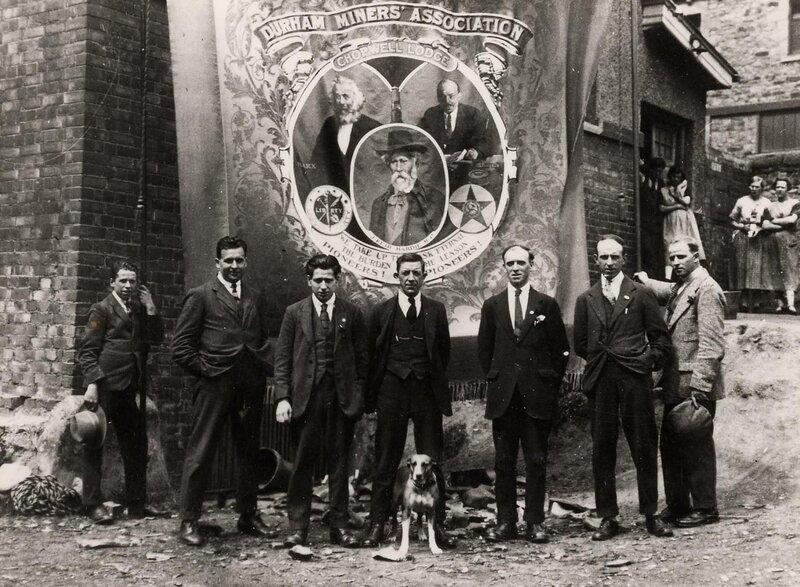
The Central Committee of the Trade Union of the Seamen and Transport Workers of the Soviet Union has to-day dispatched a telegram to all its local groups in the Soviet Union announcing a partial strike of all seamen and dock-workers, who work for export to Great Britain, and further giving instructions that no fuel should be loaded on to steamers where there can be any reason to suspect that their freight might indirectly be transported to Great Britain. All vessels which are loading any kind of cargo for Great Britain must immediately stop work, all Soviet steamers which are on their way to Great Britain must, after receiving the wireless message of the partial strike of the seamen of the Soviet Union, on entering the nearest British port, immediately join the British strike, prevent the unloading of the cargo if attempts are made to unload it with strike-breakers, withdraw to the docks, and only permit special goods to be loaded and unloaded with the consent of the General Council of the British Trade Union Congress.
News has just been received from Charkov of the great demonstration of solidarity of the workers in the factories after the closing hour. More than 150,000 persons took part in the demonstration, the tramway traffic had to be stopped. Flags were carried with the inscription: “Our British brothers expect not only greetings, but actual help” etc. The latest news from Great Britain was continually announced by loud-speakers. Among other speakers, in front of the building of the Ukrainian Trade Union Soviet, Oliver, the representative and chairman of the delegation of the British Railwaymen’s Union, who is at present staying in Charkov, thanked the demonstrators for their solidarity which is the best guarantee of the victory of the British workers.
The first day’s collection in Leningrad yielded 26,500 roubles.
Apart from the trade unions, the co-operative societies and various labour unions made collection on behalf of the British strikers and addressed messages of solidarity. to the British trade unions.
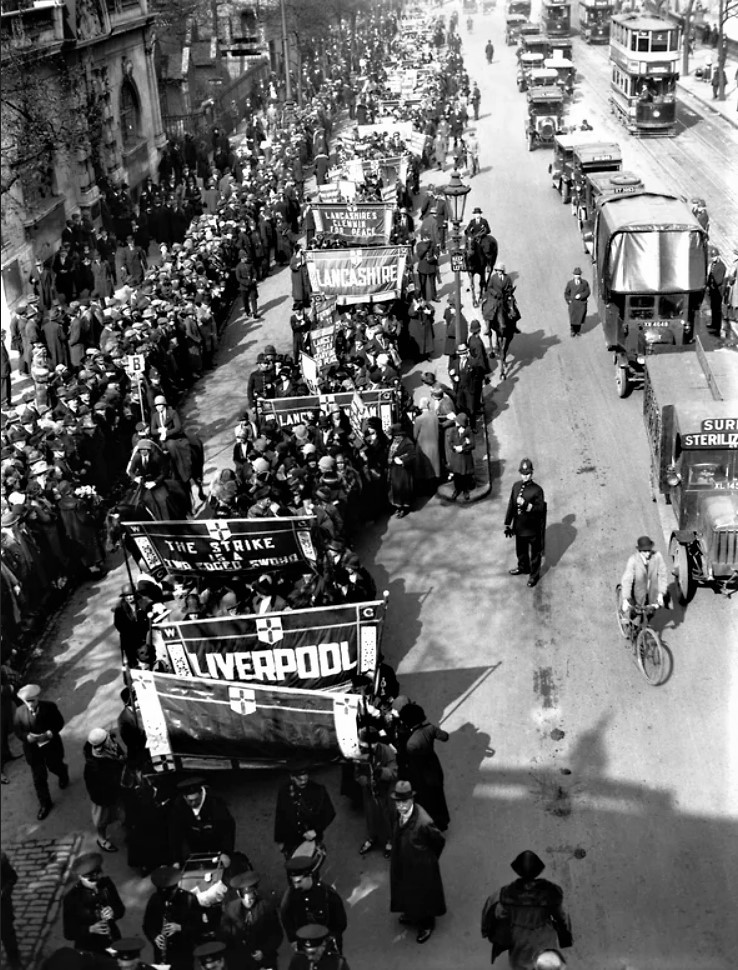
The latest news from Leningrad, Charkov, Rostov and several other towns show that the workers are constantly discovering new ways of helping their British class brothers. The miners of the Leningrad proletarian metal works resolved to do two hours overtime for several days on behalf of the British workers, the largest Shoe factory “Skorochod” undertook to contribute 4% of their wages for the whole duration of the British strike etc.
Moscow, 7th May 1926.
The solidarity strike of the seamen, dock and transport workers organized in the trade unions of the Soviet Union, has spread to all the harbours of the Black Sea and the Sea of Agov and also to the British steamers in Leningrad harbour, which at present comprise almost the whole of the foreign ships in the Soviet harbours. 8000 Russian dock workers have refused to unload the cargoes destined for England.
The solidarity action of the proletariat of the Soviet Union in support of the British general strike is attaining ever larger dimensions. The appeal of the Central Council of the Russian trade unions to contribute a quarter of a day’s wages, is finding an eager response even in the most remote parts of the Soviet Union. The struggle of the British workers is everywhere regarded as the cause of the Russian proletariat. The Chairman of the Leningrad trades Council declared ai the Plenum of the Leningrad trade unions and factory councils: “The British proletariat in 1920 prevented the intervention of the British bourgeoisie against Soviet Russia, we will pay back our debt a hundredfold”. A similar resolution was adopted at the Enlarged Plenum of the Moscow trade unions after a report of Lozovsky. Particular enthusiasm for the genera! strike in Great Britain prevails in the Russian harbour towns and in the mining area». At these places the local trade unions and mass meetings spontaneously decided to yield up a day’s wages.
The delegation of British railway workers in Charkov visited mass meetings of the transport workers and the barracks of the Red Army. At the meetings there took place a fraternisation of the British delegation and the Russian workers and members of the Red Army. It is already clear that the solidarity action of the Russian working class for their British class comrades will achieve an unexampled success.
Moscow, 8th May 1926.
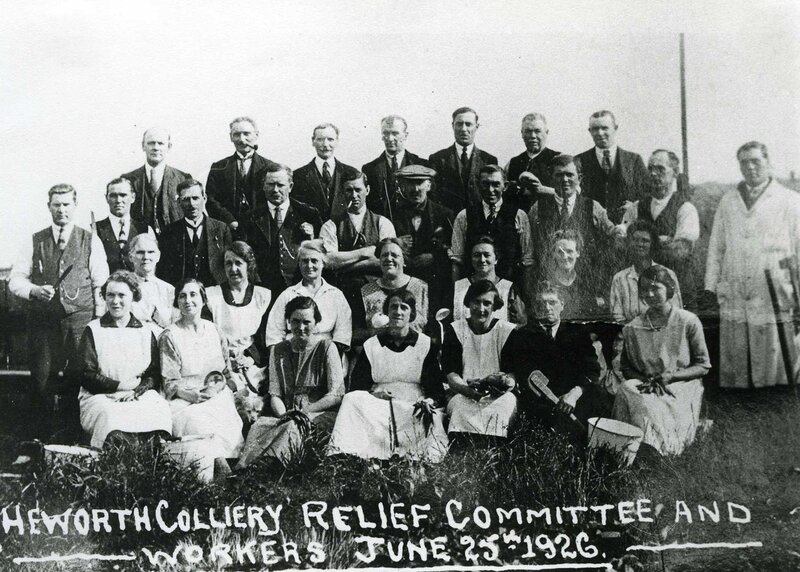
The International Propaganda Committee of the Printers Union has issued an appeal to the printers of the Continent to prevent at all costs the printing of English bourgeois newspapers outside of England. The Moscow journalists dispatched a congratulatory telegram to the General Council in London on the occasion of a portion of the English journalists joining in the Strike. The newspapers and the various public organisations have commenced collections of money which already in the first days yielded hundreds of thousand roubles. The theatres arranged performances on behalf of the strikers. In addition to the levy on wages, the central committees of the trade unions and the local committees are contributing considerable sums, amounting in some cases to 50,600 roubles, from the International Solidarity Funds. The flood of contributions exceeds all expectations. The demonstrations of solidarity are being continued in all localities. They are being participated in not only by workers and employees, but by intellectuals, doctors, engineers, professors etc. The meeting of scientists of university professors held in Leningrad to-day issued an appeal to the intellectuals of Great Britain, in which they express the conviction that in this struggle of world-historical importance the British intellectuals will stand on the side of the British working class.
Moscow, 9th May 1926.
The Presidium of the Executive Committee of the Communist International and the Executive Bureau of the Red International of Labour Unions have sent the following telegram to the joint session of the Executive of the Socialist and Labour International and the International Federation of Trade Unions in Amsterdam:
“The fight of the British proletariat renders it the duty of the workers of all countries, and particularly of their international organisations to do everything in their power in order to help the English working class in their severe struggle. The C.I. and R.I.L.U. are of the opinion that only the unanimous action of the workers of all tendencies can yield effective and real aid for the British working class.
In view of this the Executive of the C.I. and the Executive Bureau of the R.I.L.U. propose to organise a joint campaign in support of the British workers. The Comintern and the R.I.L.U. entrust the following comrades with the negotiations in this question: Thälmann, Semard, Dogadov, Jilek and Monmousseau. We request you to send an answer to our proposal to the Secretary of the French Communist Party, Semard, and to the Secretary of the C.G.T.U., Monmousseau.”
An appeal of the Co-operative Section of the Executive Committee of the Communist International calls attention to the fact that the Russian co-operatives, after the Executive of the Cooperative Alliance refused a co-operative action in support of the British strike, again propose a solidarity action. The Rues ai Co-operatives have sent 30.000 roubles to the General Council of the British Trade Union Congress.
The Communist co-operators must everywhere immediately take up the initiative to set up co-operative solidarity. They must conduct a press campaign and submit proposals in support of the British strikers to the co-operative societies, cooperative guilds and congresses.
International Press Correspondence, widely known as”Inprecorr” was published by the Executive Committee of the Communist International (ECCI) regularly in German and English, occasionally in many other languages, beginning in 1921 and lasting in English until 1938. Inprecorr’s role was to supply translated articles to the English-speaking press of the International from the Comintern’s different sections, as well as news and statements from the ECCI. Many ‘Daily Worker’ and ‘Communist’ articles originated in Inprecorr, and it also published articles by American comrades for use in other countries. It was published at least weekly, and often thrice weekly. The ECCI also published the magazine ‘Communist International’ edited by Zinoviev and Karl Radek from 1919 until 1926 monthly in German, French, Russian, and English. Unlike, Inprecorr, CI contained long-form articles by the leading figures of the International as well as proceedings, statements, and notices of the Comintern. No complete run of Communist International is available in English. Both were largely published outside of Soviet territory, with Communist International printed in London, to facilitate distribution and both were major contributors to the Communist press in the U.S. Communist International and Inprecorr are an invaluable English-language source on the history of the Communist International and its sections.
PDF of full issue: https://www.marxists.org/history/international/comintern/inprecor/1926/v06n41-may-13-1926-inprecor.pdf
 Revolution's Newsstand