
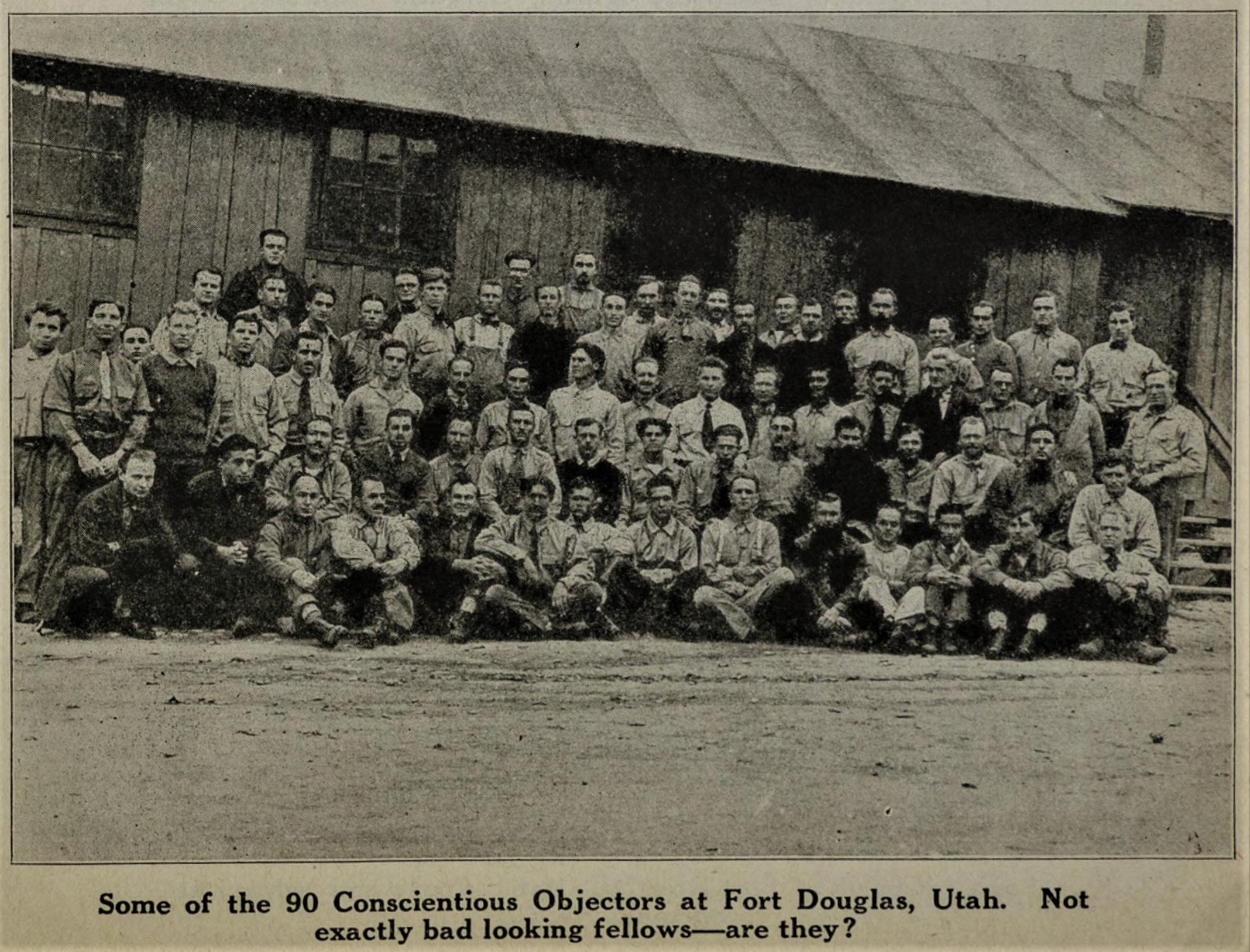
An unnamed wobbly internee in Utah’s Fort Douglas Military Prison, one of thousands of of war objectors and political radicals imprisoned in the World War One era, reports on conditions in the camp and provides invaluable biographical information on prisoners.
‘The I.W.W. in the Prison Camps’ by One of Them from One Big Union Monthly. Vol. 1 No. 10. December, 1919.
Fort Douglas, Utah, September 16, 1919. Mr. Wm. D. Haywood, Secretary, General Defense Committee, Chicago, Ill. Fellow Worker:—
Will take up the interned portion of camp first. These fellow workers were interned as enemy aliens.
No charges of law violations were necessary. Some have been here for over two years. They are limited to two letters and four postal cards per month. They cannot receive money or packages without special permission of the War Department. Discipline has been very strict. They were put on bread and water for long periods of time for singing or complaining of conditions and abuses. The sentry walking post shot several (crippled two for life) for singing wobbly songs. The authorities here justified the shooting by saying the prisoners were rushing the fence. This is an absolute falsehood. The prisoners who were shot were occupying the barracks now occupied by us — the military prisoners — and were shot while standing on that side of the barracks opposite to the outside of the compound. Also, favoritism has been shown by the authorities, the aristocratic internees getting decidedly the best of the deal. In at least three instances, the working-class element has been placed on bread and water for refusing to feed and to do the work incidental to cleaning barracks, etc., for the aristocracy.
The interned aliens, like us, are allowed ration Money, it varies every month, amounting to from forty-five to fifty-five cents per day, per men. Seventy five per cent of this ration is drawn from the Prison Commissary, twenty-five per cent is spent in Salt Lake stores for fruit, green vegetables, etc., The prison commissary handles only staples, such as sugar, canned-goods, rice, coffee, beans, beef, etc. We receive only one forced ration: corned beef; all other food is ordered in any quantity desired, within the ration allowance.
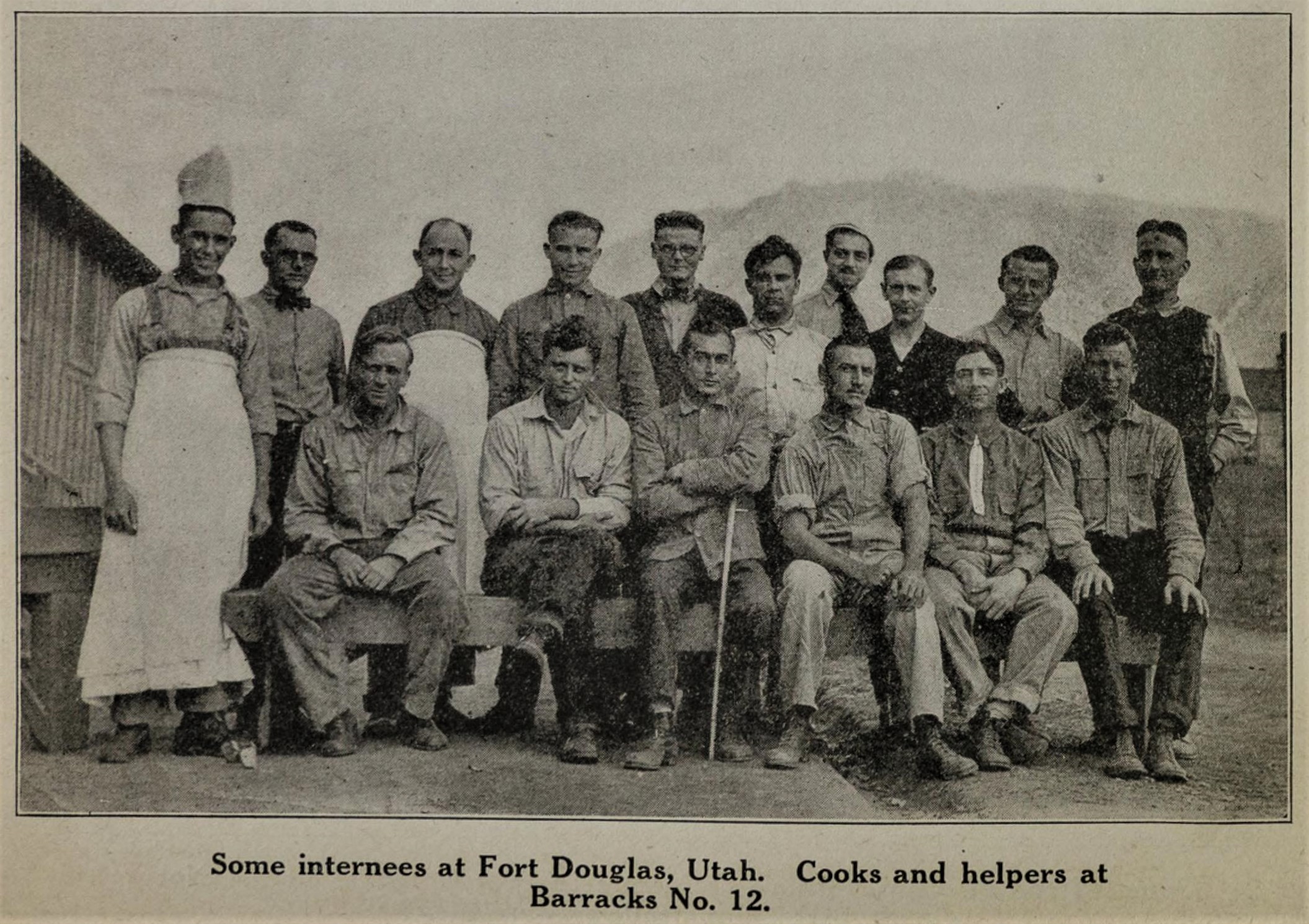
They are allowed a certain issue of clothes: — 2 pairs of shoes per year, 6 suits of overalls, 3 pairs corduroy pants, besides underwear and socks. Clothes are issued fairly regularly.
A small barracks is set aside for a hospital. A medical officer visits one every day. Serious cases are moved to the main hospital of the post. Numerous deaths have occurred, principally from tuberculosis and influenza. Quite a few of the tuberculosis cases were inmates of sanitarium at the time of their arrest. At present there are three in the main hospital: one tuberculosis case, one kidney disease, and one afflicted by some disease the name of which, apparently a secret, I have been unable to ascertain. A dozen or more have been removed to insane asylums, could not withstand the strain during the war, as irresponsible guards were apt to let the idea of shooting an enemy become an actuality. On the whole, medical attention was appallingly inadequate.
The main body of the internees is made up of migratory workers. Construction workers and loggers being in the majority. I think it is safe to say 90 percent were wage-earners. Of this 90 percent, a large number are union men, I.W.W.s, A.F. of L., and a few from the Independent Miner’s Union from Alaska. It is extremely doubtful if there is a German agent in the bunch. I think all fellow workers among the internees are entitled to all possible help. They were interned not because they were enemy aliens but because they were I. W. W.s. At present their treatment is not so vicious, but their long confinement is ruining their health.
Our treatment here is about the same, except that we are military prisoners. We are allowed to write six letters per month. Up to two weeks ago, no radical papers were allowed in the compound. Now we are supposed to receive any papers permitted to be mailed. Several radical papers have come thru, but no wobbly papers.
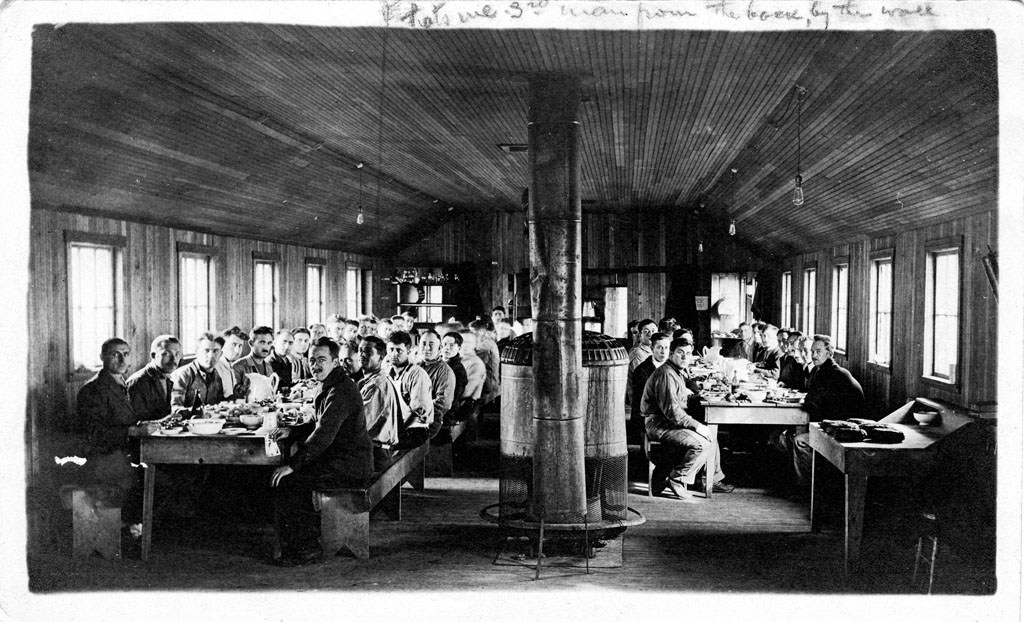
We are composed of religious and political objecters to war. Convicted by court-martial for refusing to become soldiers. Refused to work at the Fort Leavenworth Disciplinary Barracks, put in solitary and isolation for periods ranging from two to six months. We were moved here June 20th, to be isolated from other military prisoners as the War Department didn’t want our ideas and example to spread to the rest of the army. We got along fine here for over two months. Then the Commandant, because we refused to work, put us on bread and water for fourteen days besides confiscating $102.00 of our mess money. Two days previously, one of our men, for wanting shoes, was put in the guard house, a vile place without sanitation or ventilation. They wanted us to help discipline him by feeding him bread and water. We refused to do this and our Steward was placed in the guard house also. After being confined, he was brutally beaten by Sergeant Brundt who hit him so hard that he broke his hand on the steward’s head. The next day we were all put on bread and water and the two men in the guard house were put back with us.
The bread issued us was noxious. At least 40 percent of it was unfit for consumption. It was pink and green with mold. The medical officers took as high as half of it out, but it was not replaced, so we did not get what the regulations call for: 18 oz., per day.
Several men’s time has expired since Sept. 18th., they are still here. The Commandant cancelled all their good time for refusing to work. It now appears that the War Department sent us here with the intention of exempting us from work, except that we take care of our quarters, cook our own food, etc., which we have done since our arrival. So, the Commandant quite recently changed his reason for cancelling the good time: He says now, “it was for conspiracy”, but what kind of a “conspiracy” he will not divulge.
Below is a list of fellow members in the military part of the compound. All card numbers are not available.
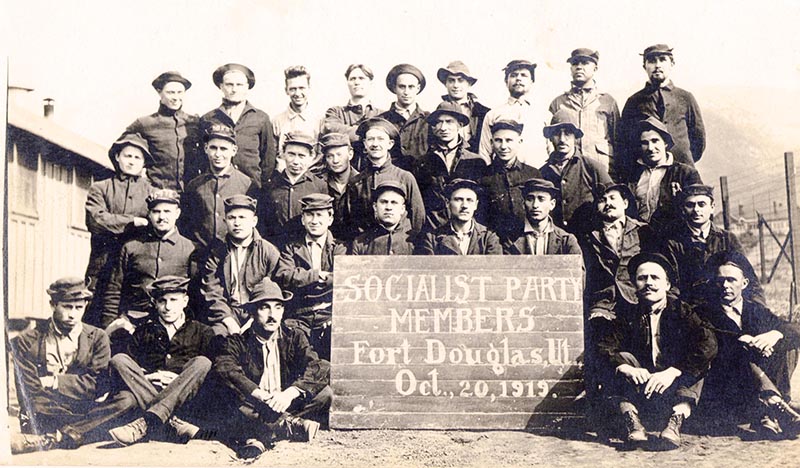
Sander Maki, member of I.U. No. 800, Crosby Minn. Arrested at Crosby, June 7, 1917, for failure to register. Sentenced August 1, 1917 to eight months Mankato County Jail. After expiration of sentence, rearrested and sent to Camp Dodge, Iowa. Court-martialed and sentenced to be shot. Sentence commuted by War Department to twenty years imprisonment. Further reduced in March, 1919, to three years, not a Citizen of the United States. A Finlander.
W. Sandberg, member of I.U. No. 300. Address: 3027 Sheridan Ave., N. Minneapolis, Minn. Arrested July 20th, 1917, Minneapolis, Minn., for failure to register. Sentenced October 10, 1917 to eleven months Crow Wing County Jail. Released on bail pending appeal, October 20, 1917. Re-arrested April 4, 1918 charged with failure to return questionnaire, bound over to October term of court. Released on bail April 24th, 1918. Re-arrested May 20, 1918 and turned over to military authorities on a so-called indictment dated April 29, 1918. Tried by courts-martial for technical desertion — 58th article of War. Sentence of twenty years approved July 15, 1918. Sentence reduced to three years April 1919.
Albert Stangeland, member I.U. No. 400, card No. 198167. Address: 1931 N. Hancock Street, Chicago, Ill. Drafted. Placed in confinement at Camp Jackson, S. C., Aug., 9, 1918. Court-martial sentence of fifty years approved September 17, 1918. Charge; disobedience of orders — 64th article of War. Sentence reduced to five years on April 1919.
Louis J. Gergots, member I.U. No. 1000. Address: 645 Alter Street, Hazelton, Pa. Drafted by Local Board No. 31, Philadelphia, Pa., August 24th, 1918, Sent to Camp Lee, Va. Placed in confinement Aug, 31, 1918, for disobedience of orders — 64th article of War. Court-martialed October 14th, 1918. Sentence of twenty-five years approved. Sentence reduced to three years, April 1919. Only support of widowed mother.

Allen (Clyde) Wilson, member of I.U. No. 573. Card No. 2447038. Arrested June 6, 1917 at Rockford Ill. for failure to register. Sentenced July 5, 1917 to one year, “Chicago House of Correction.” Time expired May 6, 1918. Held by Department of Justice until May 11, 1918. Turned over to military authorities and placed in the guard-house, Fort Sheridan, Ill. Transferred to guard house at Camp Grant, Ill, May 27, 1918. Court-martialed July 1, 1918, for disobedience of orders — 64th article of War. Sentence of twenty-five years approved. Sentence reduced May, 1919, to five years. Illegal induction.
Roy Dempsey, member of I.U. No. 573. Card No. 200940. Same case as Allen Wilson’s in all details, except ‘that, sentence was reduced March, 1919, to four years.
Robert S. Cage, members I.U. No. 573. Arrested June 2, 1918, Milwaukee, Wis. Turned over to military authorities, June 9, 1918. Placed in guard house Fort Sheridan, Ill. Transferred to guard house at Camp Grant, Ill., about July 1, 1918. Court-martialed October 8, 1918, for disobedience of orders and desertion — 64 article and 58th articles of War. Sentence of twenty-five years approved. Sentence reduced to three years June 1919. Had registered and filled out questionnaire, desertion charge is only technicality.
Nickola La Casale, Hungarian Mixed Local No. 53, Philadelphia, Pa. Court-martialed October 18, 1918. Fort Oglethorge, Ga., for disobedience of orders. Sentenced to be shot. Sentence disapproved January 7, 1919, and changed to twenty years imprisonment. Sentence reduced to three years some time this summer.
Alfred Burmeister, G.R.U. Drafted June 27th, 1918. Arrived in Camp June 30th., placed in the guard house July 1st for disobedience of orders. Court-martialed August 22nd, 1918, sentenced to fifty years, approved, Reduced to five years about March or April 1919.
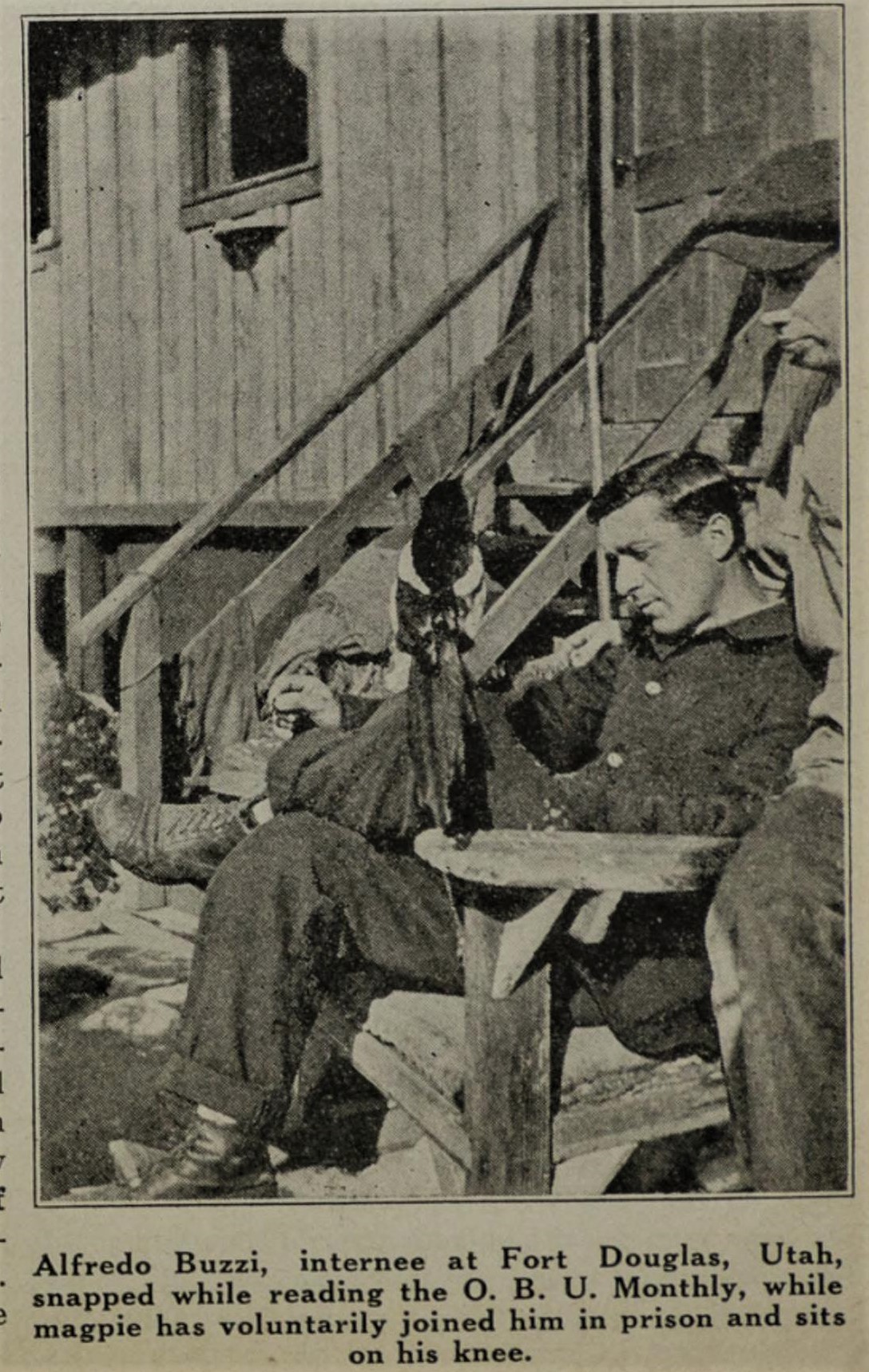
Regarding treatment while at Camp and Fort Leavenworth, would advise you to get in touch with Theo. Lunde, President of the American Industrial Company, Chicago, Ill. His son is here, an objector, and his father, Theo. Lunde, more than any other individual has continuously fought to better conditions and secure our release. He has and will be glad to furnish you all details regarding “C.O’s” as we are called. I know it is unusual to expect help from such quarters, but I think Lunde is similar to Bross Lloyd.
There are also some fellow members in the military prison on Alcatraz Island, San Francisco. Two that I know of were transferred there shortly after we were transferred here. One of them. Eric Ostrum would be glad to furnish complete details. Walter Hirshberg of Pittsburg, Pa., is a fellow worker sentenced by court-martial to the Federal Penitentiary at Atlanta, Ga.
We are allowed to receive packages here, although our visiting privilege has been taken from us. One fellow prisoner has a brother in Salt Lake who is not allowed to see him.
Would like some of our papers as it has been over two years since we have seen any.
Below is a list of interned fellow workers with available card numbers, also notes as to whether they are to be deported, repatriated, or neither:
M. A. Thompson, 246199, I. U. No. 500.
F. Herman, I. U. No. 500.
F. Helt, 145675, G. R. U.
— Kaesemeyer, G. R. U.
— Bickert, 327905, No. 400.
J. Bauer, 201764, No. 400.
J. Hoffman, I. U. No. 700.
C. Woyland, 53100, I. U. No. 500.
F. Zupan I. U. No. 500.
J. Carr, 203053, I. U. No. 500.
— Pierog, 53916, No. 500.
— Hetzel, G. R. U.
G. Miller, I. U. No. 500.
— Fisher, I. U. No. 800, (repatriated).
P. Seidler, I. U. No. 573.
R. Smith, Alaska Member.
F. Jacobs, 327811, I. U. No. 400.
Struber, 394985, I. U. No. 400.
R. Kerner, 295673, I. U. No. 500.
A. Eder, I. U. No. 573.
P. Bussert, 230104, G. R. U. (Repatriated).
P. Monday, 200733, G. R. U.
W. Kircher, I. U. No. 500, (Repatriated).
F. Scheneider, 249222, I. U. No. 400.
— Kadjin, I. U. No. 500.
H. Gehrig, I. U. No. 700.
— Wageman, I. U. No. 500. (Repatriation).
— Kosa, G. R. U.
H. Miller, Alaska member.
— Koloch, 252942, I. U. No. 500.
— Kohler, G. R. U.
R. Kiefer, I. U. No. 400.
The last four above named, received deportation warrants. Two of them signed for repatriation, the other two object to deportation. Attorney Christansen of Salt Lake is supposed to handle the cases. Do not know what has been done.
Remainder of the foregoing list are:
— Allman, I. U. No. 573, (Repatriated).
C. Schoenberger, 347331, I. U. No. 500.
T. Stolke, G. R. U. (Repatriated).
— Rushman, 311745, I. U. No. 573 (Repat.).
— Miller, I. U. No. 400.
— Arcold, I. U. No. 500.
Any information I have overlooked or is needed I will be glad to try to furnish.
I had heard that Cully was deported. Received a letter from him while he was being held in Cook County Jail, after he finished his time in the Bridewell. He was a fearless rebel and made himself feared by the exploiters at Rockford. Give Fred Nelson best wishes from Wilson and myself.
We certainly are glad to hear of the favorable condition of the O.B.U., and as our activities are now confined to “well wishing” we wish the organization continued success and a favorable outcome of the trials soon to come up in the courts. Each of the Fellow Workers send their best wishes to all. Will close for this time.
Yours for THE ONE BIG UNION,
ONE OF THEM.
One Big Union Monthly was a magazine published in Chicago by the General Executive Board of the Industrial Workers of the World from 1919 until 1938, with a break from February, 1921 until September, 1926 when Industrial Pioneer was produced. OBU was a large format, magazine publication with heavy use of images, cartoons and photos. OBU carried news, analysis, poetry, and art as well as I.W.W. local and national reports.
PDF of full issue: https://archive.org/download/sim_one-big-union-monthly_1919-12_1_10/sim_one-big-union-monthly_1919-12_1_10.pdf
 Revolution's Newsstand