
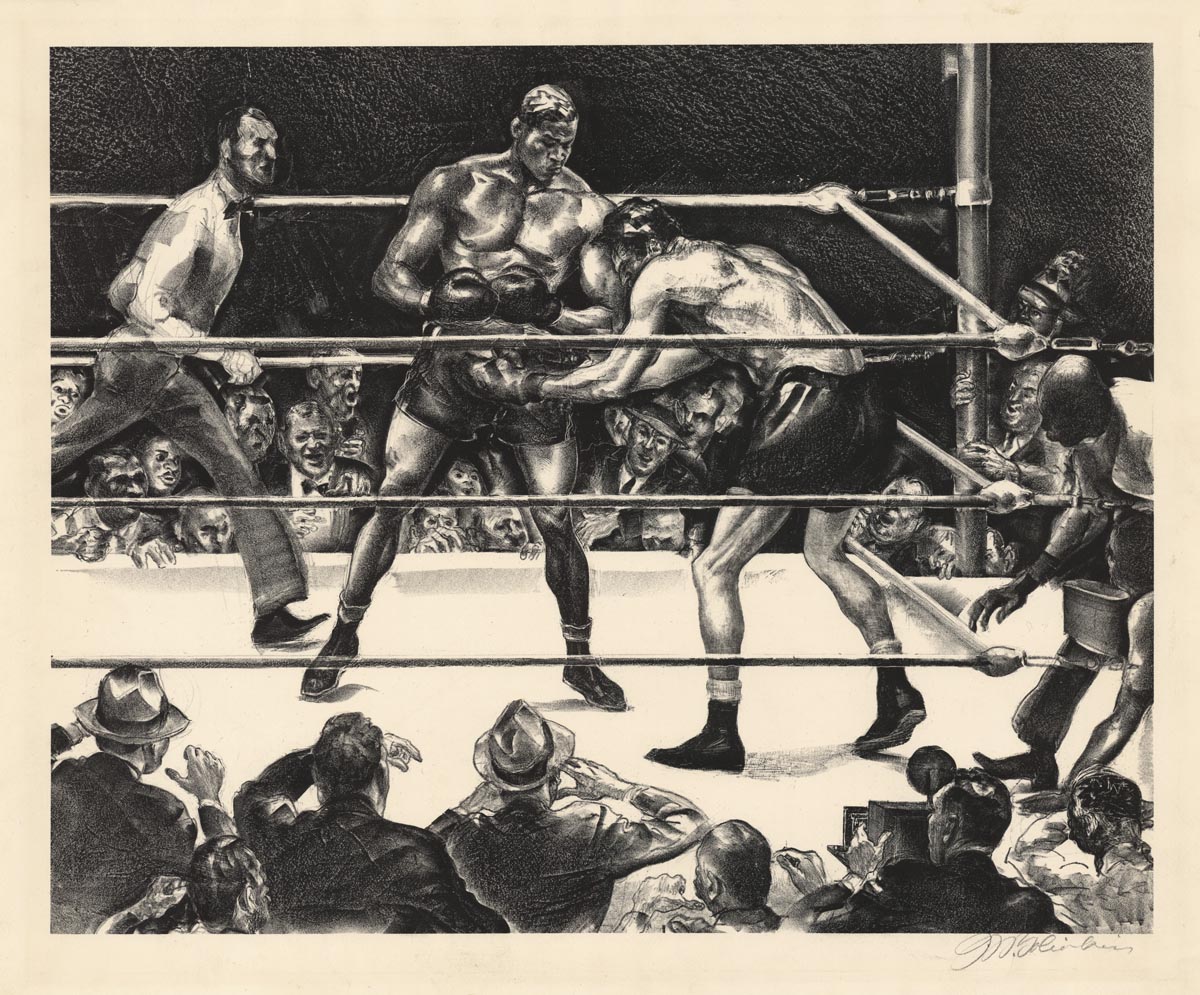
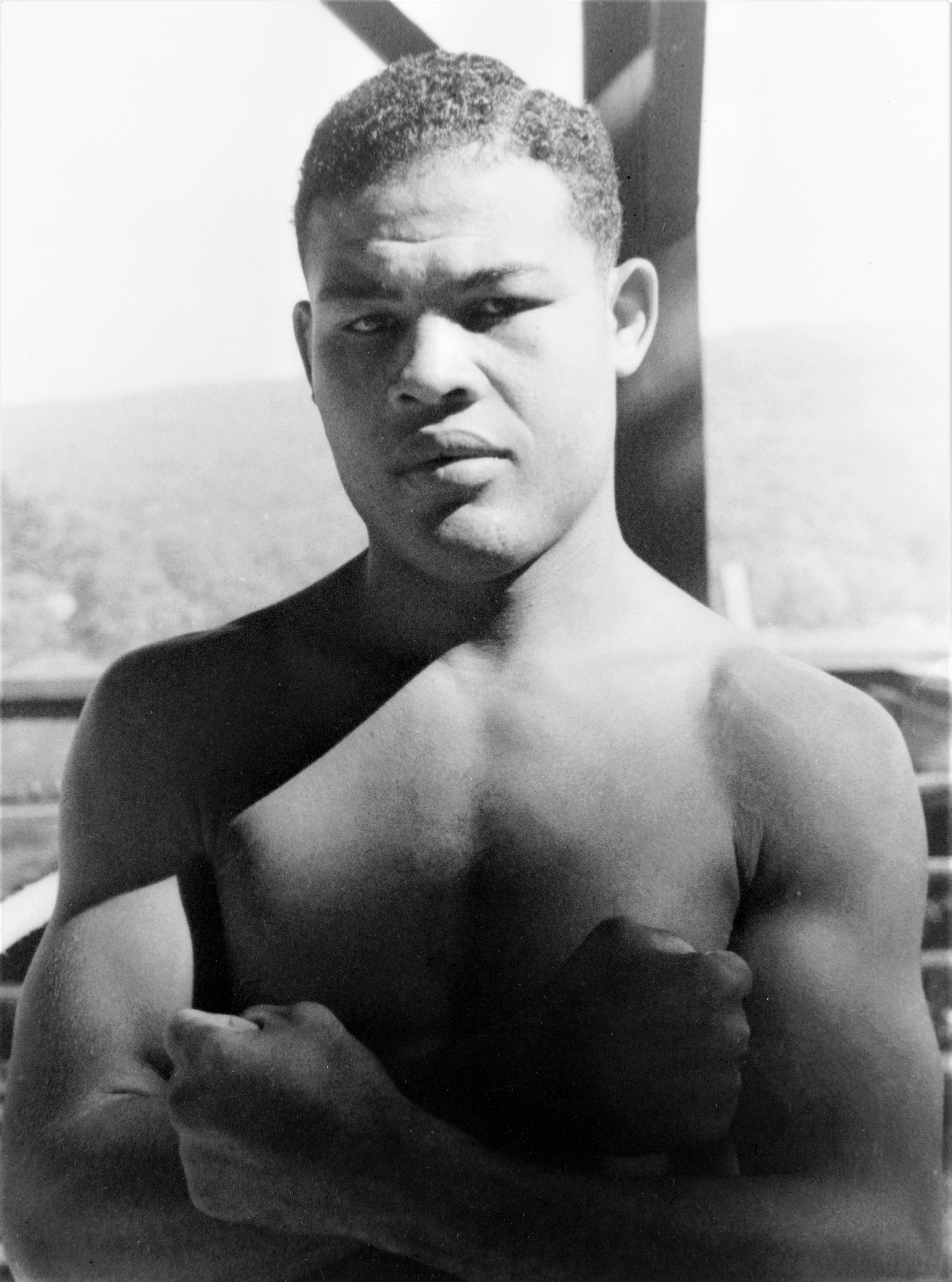
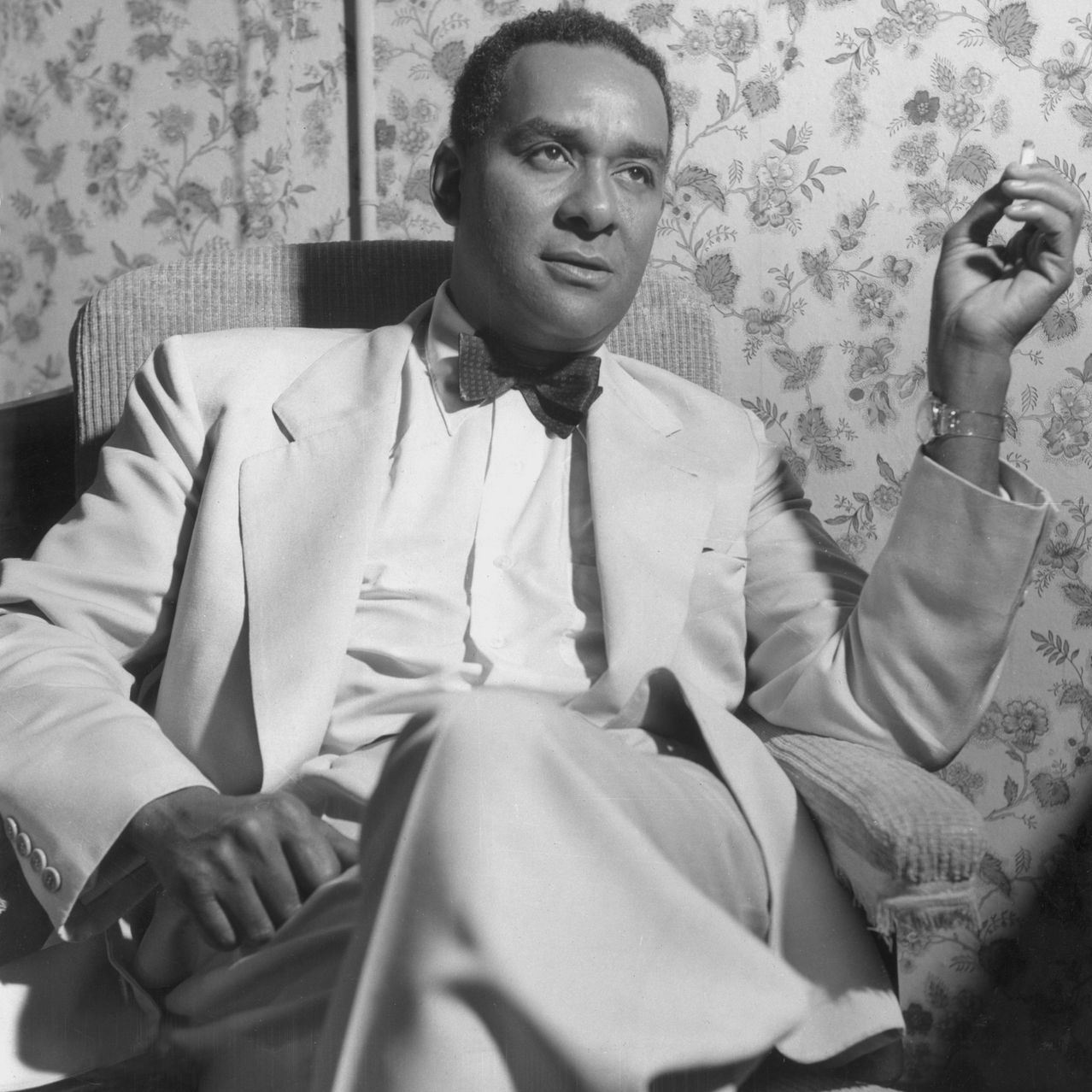
A deservedly returned to essay by Richard Wright. In 1935 a young Black, Communist poet living in Chicago and a leading member of that city’s John Reed Club. Wright was witness to the exuberance on the streets of Chicago’s South Side on September 24, 1935 as Joe Louis knocked out Max Baer at New York’s Yankee stadium in the fourth round. Earlier that summer Louis knocked out Italian boxer Primo Carnera, and scored a psychological victory for Ethiopia then defending itself against fascist Italy. To defeat the white American champion Max Baer, who had never been knocked down, was a moment of intense Black pride, and physical confirmation of the rising Black freedom movement developing in the mid-1930s.
‘Joe Louis Uncovers Dynamite’ by Richard Wright from the New Masses. Vol. 17 No. 2. October 8, 1935.
“WUN-tuh-threee-fooo-fiiive-seex-seven-eight-niine-thuun!”
Then:
“JOE LOUIS – THE WINNAH!”
On Chicago’s South Side five minutes after these words were yelled and Joe Louis’ hand was hoisted as victor in his four-round go with Max Baer, Negroes poured out of beer taverns, pool rooms, barber shops, rooming houses and dingy flats and flooded the streets.
“LOUIS! LOUIS! LOUIS!” they yelled and threw their hats away. They snatched newspapers from the stands of astonished Greeks and tore them up, flinging the bits into the air. They wagged their heads. Lawd, they’d never seen or heard the like of it before. They shook the hands of strangers.
They clapped one another on the back. It was like a revival. Really, there was a religious feeling in the air. Well, it wasn’t exactly a religious feeling, but it was something, and you could feel it. It was a feeling of unity, of oneness.
Two hours after the fight the area between South Parkway and Prairie Avenue on 47th Street was jammed with no less than twenty five thousand Negroes, joy-mad and moving to they didn’t know where. Clasping hands, they formed long writhing snake-lines and wove in and out of traffic. They seeped out of doorways, oozed from alleys, trickled out of tenements, and· flowed down the street; a fluid mass of joy. White storekeepers hastily closed their doors against the tidal wave and stood peeping through plate glass with blanched faces.
Something had happened, all right. And it had happened so confoundingly sudden that the whites in the neighborhood were dumb with fear. They felt- you could see it in their faces-that something had ripped loose, exploded. Something which they had long feared and thought was dead. Or if not dead, at least so safely buried under the pretence of good-will that they no longer had need to fear it. Where in the world did it come from? And what was worst of all, how far would it go? Say, what’s got into these Negroes?
And the whites and the blacks began to feel themselves. The blacks began to remember all the little slights, and discriminations and insults they had suffered; and their hunger too and their misery. And the whites began to search their souls to see if they had been guilty of something, some time, somewhere, against which this wave of feeling was rising.
As the celebration wore on, the younger Negroes began to grow bold. They jumped on the running boards of automobiles going east or west on 47th Street and demanded of the occupants:
“Who yuh fer-Baer or Louis?”
In the stress of the moment it seemed that the answer to the question marked out friend and foe.
A hesitating reply brought waves of scornful laughter. Baer, huh? That was funny. Now, hadn’t Joe Louis just whipped Max Baer? Didn’t think: we had it in us, did you? Thought Joe Louis was scared, didn’t you? Scared because Max talked loud and made boasts. We ain’t scared either. We’ll fight too when the time comes. We’ll win, too.
A taxicab driver had his cab wrecked when he tried to put up a show of bravado.
Then they began stopping street cars. Like a cyclone sweeping through a forest, they went through them, shouting, stamping. Conductors gave up and backed away like children. Everybody had to join in this celebration. Some of the people ran out of the cars and stood, pale and trembling, in the crowd. They felt it, too.
In the crush a pocketbook snapped open and money spilled on the street for eager black fingers.
“They stole it from us, anyhow,” they said as they picked it up.
When an elderly Negro admonished them, a fist was shaken in his face. Uncle Tomming, huh?
“Whut in hell yuh gotta do wid it?” they wanted to know.
Something had popped loose, all right. And it had come from deep down. Out of the darkness it had leaped from its coil. And nobody could have said just what it was, and nobody wanted to say. Blacks and whites were afraid. But it was a sweet fear, at least for the blacks. It was a mingling of fear and fulfillment. Something dreaded and yet wanted. A something had popped out of a dark hole, something with a hydra-like head, and it was darting forth its tongue.
You stand on the border-line, wondering what’s beyond. Then you take one step and you feel a strange, sweet tingling. You take two steps and the feeling becomes keener. You want to feel some more. You break into a run. You know it’s dangerous, but you’re impelled in spite of yourself.
Four centuries of oppression, of frustrated hopes, of black bitterness, felt even in the bones of the bewildered young, were rising to the surface. Yes, unconsciously they had imputed to the brawny image of Joe Louis all the balked dreams of revenge, all the secretly visualized moments of retaliation, AND HE HAD WON! Good Gawd Almighty! Yes, by Jesus, it could be done! Didn’t Joe do it? You see, Joe was the consciously-felt symbol. Joe was the concentrated essence of black triumph over white. And it comes so seldom, so seldom. And what could be sweeter than long nourished hate vicariously gratified? From the symbol of Joe’s strength they took strength, and in that moment all fear, all obstacles were wiped out, drowned. They stepped out of the mire of hesitation and irresolution and were free! Invincible! A merciless victor over a fallen foe! Yes, they had felt all that for a moment…
And then the cops came.
Not the carefully picked white cops who were used to batter the skulls of white workers and intellectuals who came to the South Side to march with the black workers to show their solidarity in the struggle against Mussolini’s impending invasion of Ethiopia; oh, no, black cops, but trusted black cops and plenty tough. Cops who knew their business, how to handle delicate situations. They piled out of patrols, swinging clubs.
“Git back! Gawddaminit, git back!”
But they were very careful, very careful. They didn’t hit anybody. They, too, sensed something. And they didn’t want to trifle with it. And there’s no doubt but that they had been instructed not to. Better go easy here. No telling what might happen. They swung clubs, but pushed the crowd back with their hands.
Finally, the street cars moved again. The taxis and automobiles could go through. The whites breathed easier. The blood came back to their cheeks.
The Negroes stood on the sidewalks, talking, wondering, looking, breathing hard. They had felt something, and it had been sweet- that feeling. They wanted some more of it, but they were afraid now. The spell was broken.
And about midnight down the street that feeling ebbed, seeping home–flowing back to the beer tavern, the pool room, the cafe, the barber shop, the dingy flat. Like a sullen river it ran back to its muddy channel, carrying a confused and sentimental memory on its surface, like water-soaked driftwood.
Say, Comrade, here’s the wild river that’s got to be harnessed and directed. Here’s that something, that pent-up folk consciousness. Here’s a fleeting glimpse of the heart of the Negro, the heart that beats and suffers and hopes for freedom. Here’s that fluid something that’s like iron. Here’s the real dynamite that Joe Louis uncovered!
The New Masses was the continuation of Workers Monthly which began publishing in 1924 as a merger of the ‘Liberator’, the Trade Union Educational League magazine ‘Labor Herald’, and Friends of Soviet Russia’s monthly ‘Soviet Russia Pictorial’ as an explicitly Communist Party publication, but drawing in a wide range of contributors and sympathizers. In 1927 Workers Monthly ceased and The New Masses began. A major left cultural magazine of the late 1920s and early 1940s, the early editors of The New Masses included Hugo Gellert, John F. Sloan, Max Eastman, Mike Gold, and Joseph Freeman. Writers included William Carlos Williams, Theodore Dreiser, John Dos Passos, Upton Sinclair, Richard Wright, Ralph Ellison, Dorothy Parker, Dorothy Day, John Breecher, Langston Hughes, Eugene O’Neill, Rex Stout and Ernest Hemingway. Artists included Hugo Gellert, Stuart Davis, Boardman Robinson, Wanda Gag, William Gropper and Otto Soglow. Over time, the New Masses became narrower politically and the articles more commentary than comment. However, particularly in it first years, New Masses was the epitome of the era’s finest revolutionary cultural and artistic traditions.
PDF of full issue: https://www.marxists.org/history/usa/pubs/new-masses/1935/v17n02-oct-08-1935-NM.pdf
 Revolution's Newsstand