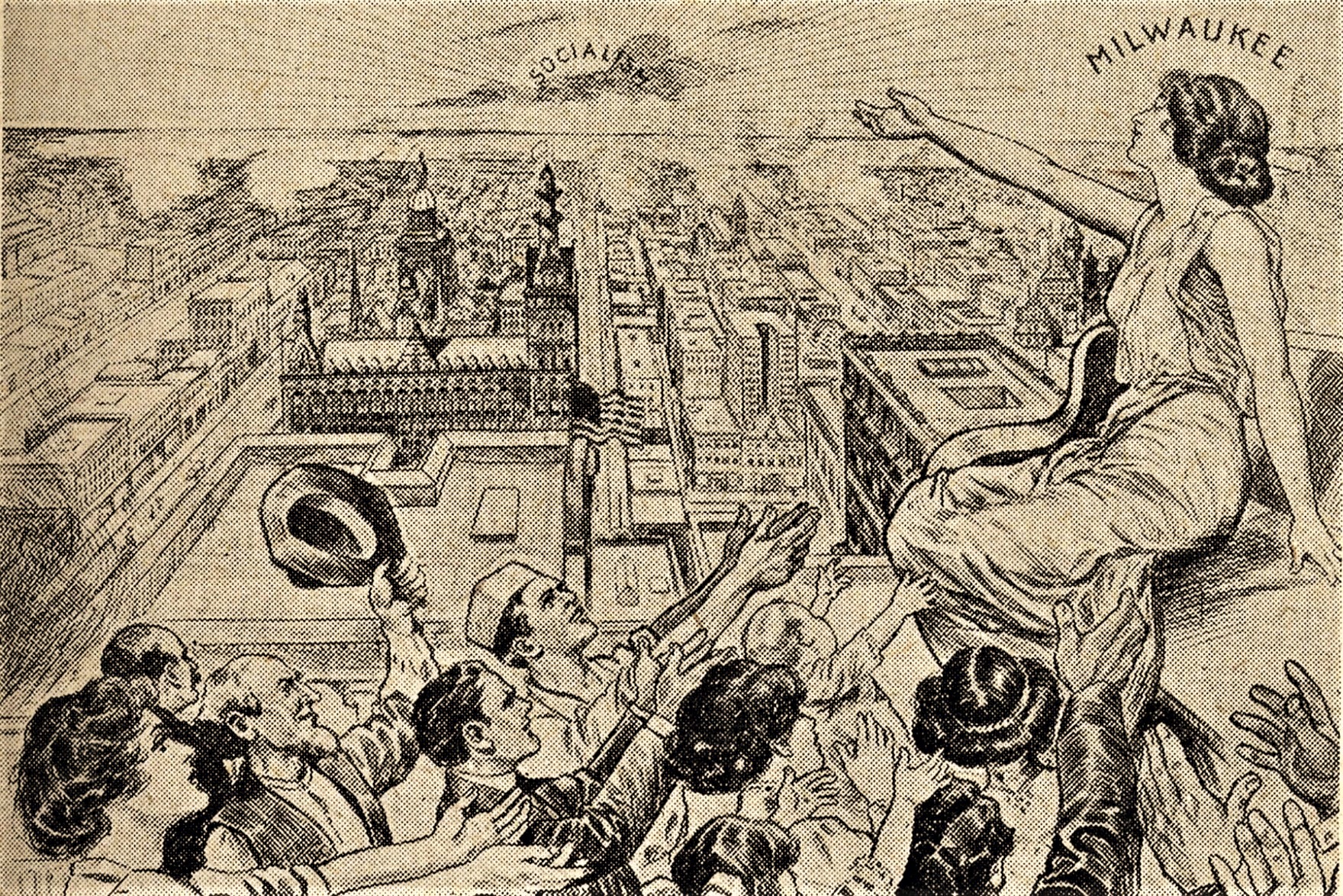
A superlative essay from Frank Bohn commenting on the Socialist Party’s recent electoral victories in Milwaukee and other cities. Looking at past experiences, both in the U.S. and abroad, he counsels the Party honestly proclaim the limits of their power, and reasons why, as the best way for Socialists to take advantage of their new situation.
‘The Socialist Party and the Government of the Cities’ by Frank Bohn from The International Socialist Review. Vol. 12 No. 5. November, 1911.
A NATION governed by its profit seekers is a nation accursed. Such a one cannot produce a civilization.
It has what “art” it buys. It develops whatever science it needs in its business. Its temples are filled with money changers. Its common schools are devoted to turning out wealth producers. Its higher institutions of learning are supposed to furnish such information as each of the profit grabbers thinks his son or daughter requires in order to hold and increase his or her “fortune.”
A shopkeepers’ society, from the very nature of its life and form, must develop large cities. In Europe two influences have worked to make these great modern urban communities civilized at least in their outward aspects. By far the most important of these has been the fact that the medieval towns, the progenitors of the modern cities, were ruled by their guilds. The government of the medieval town was an entity. It had an existence apart from the overshadowing power of the monarchical state. This freedom from interference, with its resultant social responsibility, formed the basis for the political governments of the cities of modern Europe.
The second factor in the life of the European cities which has been absent in America has been, on the one hand, the socializing power of the European working class, and on the other, that of the aristocracy. A nation ruled by its profit takers is a nation accursed, because, while the brutal and vulgar capitalist leeches exploit the producing class more intensely than do the aristocrats, they have absolutely nothing to give to society. in return. Each particular sponge squats beside the others and soaks up what it can until the currents of social progress are choked and slimy.
The corruption of municipal government in America needs no describing here. The exposures of the past ten years have filled the magazines with facts and figures a little worse, to be sure, than was previously surmised. But the American working people have always rightly despised the city governments. The water hose would not put out the fire. Epidemics of preventable diseases have raged. Public buildings have fallen to pieces before they were completed. The tribe of politicians, from those who rule the smallest towns up to the organized gangs in control of Chicago and New York, have probably been, during the past generation, the most contemptible class of social parasites on the face of the earth.
As Socialists, we have not expected much from the American capitalists; but in the government of the cities and states we see them at their worst. Nationally, they have been forced to maintain a federal government whose power the world would respect. In the government of cities, however, the wolfish pack has shown that in any case it will do as little as is possible. Their life business is to gobble up whatever they can lay their claws upon. Hence why bother with the government of cities when a little graft induces some one else to bother? Graft is the portion of the worker’s product stolen in the industries which the capitalist gives to his political lackeys. A political grafter is no worse than his master, the capitalist.
In Europe as the working class becomes conscious of its historical mission it finds the cities well organized politically. It realizes that much of a social and civilizing character has been accomplished. Give one enough to live upon without work for a period of time and Paris, Vienna, Munich and Florence are abiding places fit for civilized human beings. The very worst that can be said about our ignorant and greasy plutocrats is that after they have cut the workers of Chicago and Pittsburg to the bone in the shops and debauched their municipal government, they run off to some European capital, there to make the very name “American” a by-word for all that is apish and indecent.
So, as regards the government of cities, the working class of America comes upon the stage of affairs to find that it has to begin at the very beginning. Socially almost nothing has been accomplished really worth while. Great industry there is and this, the foundation of working class growth, must be the motive force of all our social progress. During the period of the social revolution in America the workers must perform a double task. They must first revolutionize the government of industry and then proceed to develop the means of social life and culture.
A Crucial Period for the Socialist Party
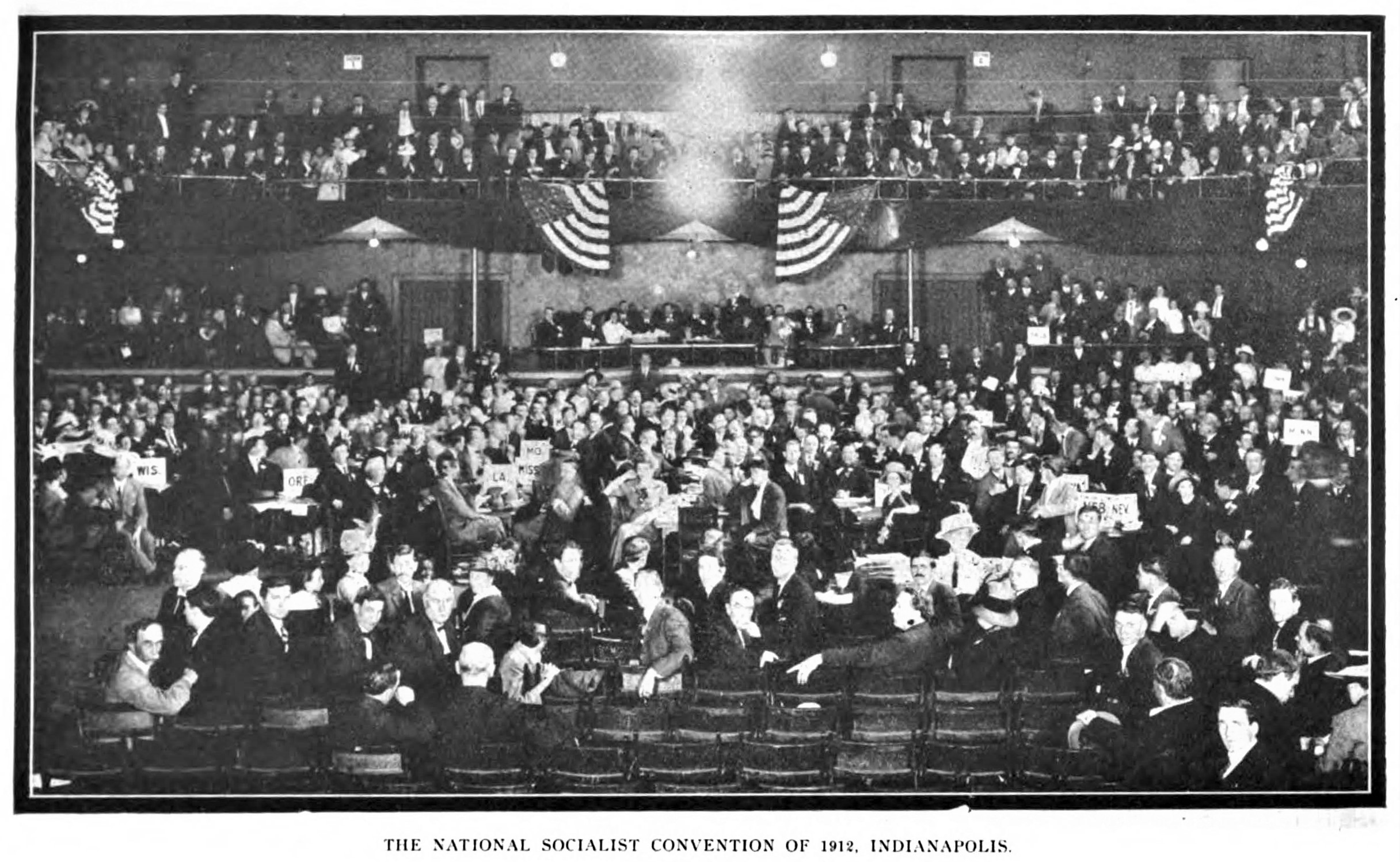
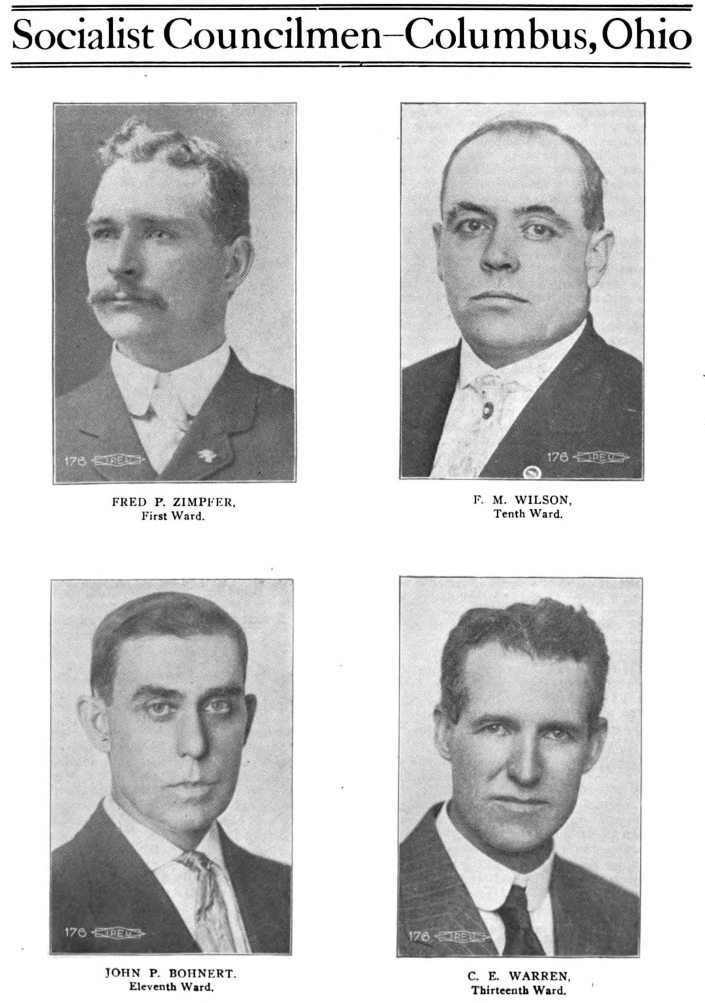
During the past eighteen months the Socialist Party has captured the governments of Milwaukee, Butte, Berkeley, Flint and a number of smaller towns. Needless to say, the officials elected by the party have almost universally given entire satisfaction to their comrades by the earnestness and integrity with which they have laid hold of their Herculean tasks. The coming November election will witness numerous other victories. Half a dozen cities and towns in Ohio alone, probably including Columbus, will be swept along with the tide of Socialist progress. Yet amid all the joys of victories past and to come thoughtful comrades find cause for very serious alarm.
Danger does not spring from a lack of ideals in the Socialist Party. Its great mission in every way is quite clearly understood. The danger arises from a blunder common, indeed, to reform politicians, but which should threaten neither the integrity nor the progressive development of our party. Almost everywhere, our comrades are in the habit of making large pre-election promises, which, their officials having been elected, they are absolutely. incapable of fulfilling. If the working class is not to lose the faith of our movement which they are so rapidly developing we must call a halt and take stock of our political possibilities.
A very common error is to promise that “as soon as the Socialist candidates are in office we shall have public ownership of public utilities.” For instance, in the campaign which won Milwaukee, our comrades emphasized their intention of building a municipal electric light plant. A year and a half has now passed and but six months remains to the first Socialist administration in Milwaukee. However, the workers of that city are still reading the Social Democratic Herald by the light of Standard Oil at twelve cents per.
We shall not here go into the effect of public ownership of public utilities upon the working class. This has been often enough threshed over for the understanding of even the most heedless social reformer in the ranks of the Socialist Party. In Johannesburg, South Africa, the city government owns every social utility in sight, except the gold mines, yet the workers’ standard of living has not been raised an iota. They are simply exploited so much the more fiercely in the mines. If the government of the city of Milwaukee, for instance, should furnish to the workers all the necessities of life except clothing, they would get enough wages to purchase clothes and no more. But to return to the pre-election promises. It is only natural for the party nominee to hopefully describe what he intends to do. Now what can he a and what can he not do in an American city.
A Socialist city government will do exactly as much as the capitalist government of the state will permit it to do. In Milwaukee the Socialists cannot fulfill their promise of an electric light plant, because the government of the State of Wisconsin will not permit it. The tax rate is limited. The debt limit is fixed. Above all, the city charter indicates just what the city can do and what it cannot do. This charter is a law of the state. So long as a state is ruled by the Democratic and Republican parties we can easily foresee the limitations of a Socialist city administration. A reform administration might secure the support of a reform state government. As long as the states are capitalist ruled, home rule for cities is a reform to be won, not by the Socialist movement, to which capitalism is opposed, but by a reform movement to which it is friendly. All this is so obvious as to require neither proof nor emphasis.
In most states the farming population is still proportionately so large as to make the capture of the state governments by the Socialist Party quite impossible during the ten years to come. There are a few far western states, such as Montana, Nevada, California and a few eastern states, among them Rhode Island, Massachusetts, Connecticut and Pennsylvania, which may soon be carried by the Socialist Party; but we shall probably be unable even during the next fifteen years to capture half of the forty-five state governments. So the cities which fall into our hands will find their governments hemmed in, nailed down and prevented from being of any large use to the working class. It is a part of wisdom as well as of honesty to tell this to the working class NOW.
If the Socialist Party in the past had devoted more time to teaching sound Socialist economics and the public law of the United States and less to constructing municipal platforms and programs out of cobwebs, the thoughtful portion of the party membership could face the immediate future of our movement with stronger hearts.
We make sky scraping Socialist speeches on the subject of ‘City Planning,’ and then, when the street cleaning department in a Socialist governed city wants a new wheel for the water wagon it is forced to borrow one from the hose cart. Let us repeat the facts over and over to ourselves and to the working class until all have learned them by heart and then we may fear no evil consequences of our “victories.” Home rule for the cities should have been won by the capitalist reform party a generation ago. As it was not then accomplished it is now too late to expect much from the immediate future. We will do what the capitalists permit us to do and no more. If a Socialist city government becomes stubborn what will happen? Suppose it makes use of the police force to the injury of the property interest in time of a general strike, as, of course, it would do, the capitalist government of the state would bind and gag that city administration within twenty-four hours.
Immediately following the Milwaukee victory I wrote a series of articles for the New York Call, from one of which the following quotation is taken:
“In 1900 ‘Golden Rule Jones’ became mayor of Toledo. Jones was an excellent fellow—a sort of utopian Socialist. He knew little of Marx, Engels and Kautsky, but he swore by the Bible, Walt Whitman and Bellamy’s ‘Looking Backward.’ He did his utmost during his six years in office to fight the fight of the working class. But after his first term his wings were clipped. Every power of the executive was taken from him by the state legislature and lodged elsewhere in the municipal government of Toledo. Finally the poor fellow was permitted to do nothing but act as a sort of justice of the peace and dismiss drunks and street women without fines.
To perform this service the working people elected him term after term. When the good man died the government of the city of Toledo was again made to assume its normal form by the Republican state legislature.
“Some years ago war broke out between Senator Quay’s Republican legislature and the Democratic machine which ruled the city of Pittsburg. The legislature ended the matter by passing a statute abolishing the office of mayor of Pittsburg and practically placing the city government in the hands of appointees of the Republican governor. (A few months ago this same trick was again worked upon the poor defenseless politicians of Hell’s capital city.)
“Just one more example, and this not the case of the destruction of a weak and statute-created municipal government by a state legislature. In 1894 was fought the great American Railway Union Strike. The ‘Sovereign’ state of Illinois had as its governor a genuine Democrat of the radical school, Altgeld. He refused to call out the state militia to shoot the strikers. The Constitution of the United States distinctly provides that the President can send federal troops to quell a riot or preserve the peace within a state only when requested to do so by the governor of that state. But contrary to the expressed wish of the governor of the state of Illinois, President Cleveland sent regular troops into the city of Chicago to “preserve order.” A distinguished Republican newspaper at the time, one which has bitterly fought Cleveland throughout his whole career, congratulated him for ‘driving a crowbar through the rotting coffin of state’s rights.’
“If a Socialist working class government succeeds in being a ‘good,’ ‘peaceable,’ ‘orderly’ affair, doing exactly what reform governments do whenever they periodically assume the reigns of power, it will be let alone by the state; and likewise a Socialist government of a state, for similar reasons, will not be assailed by the federal government.
“But woe be unto such a Socialist administration if it use the police and local militia against the capitalists in case of a strike. In the Colorado labor war of 1894 a sympathizer of the Western Federation of Miners was serving in the capacity of county sheriff. He took the side of the miners. The Citizens’ Union appeared at his door one night, seized him and dragged him off to a dark room. There they tied a rope around his neck. A pen was handed him. A dark lantern flecked a spot of light at the bottom of a sheet of paper. ‘Sign here,’ sounded a guttural voice of the leader of the citizens’ posse. It was the sheriff’s resignation. He signed.”
Municipal political campaigns furnish the greatest possible opportunity for Socialist agitation and education. The organizations built up during these campaigns can later elect members to the state legislature. A proportion of, perhaps one-third, Socialist members in a legislature can do much to prevent the use of the state government against the working class. The election of the Socialist administration in Milwaukee was probably the greatest single piece of Socialist propaganda work ever accomplished in this country. Furthermore, a Socialist city administration can undoubtedly advance the cause of public health. It can develop the public school system. That is, it can do some of the things which reform administration should have done a generation ago. Beyond this, the great mission of our Socialist city office holders is to go in, do the best they can, and then come out on the city hall steps and tell the working class what they can NOT do and why.
Fortunate indeed for those comrades, who, having been elected to municipal offices, are sufficiently discreet to go into the city hall with heads bowed and mouths closed. To bring capitalism to its knees— that will take sterner measures than we have here under discussion.
The International Socialist Review (ISR) was published monthly in Chicago from 1900 until 1918 by Charles H. Kerr and critically loyal to the Socialist Party of America. It is one of the essential publications in U.S. left history. During the editorship of A.M. Simons it was largely theoretical and moderate. In 1908, Charles H. Kerr took over as editor with strong influence from Mary E Marcy. The magazine became the foremost proponent of the SP’s left wing growing to tens of thousands of subscribers. It remained revolutionary in outlook and anti-militarist during World War One. It liberally used photographs and images, with news, theory, arts and organizing in its pages. It articles, reports and essays are an invaluable record of the U.S. class struggle and the development of Marxism in the decades before the Soviet experience. It was closed down in government repression in 1918.
PDF of full issue: https://www.marxists.org/history/usa/pubs/isr/v12n05-nov-1911-ISR-gog-Corn.pdf
 Revolution's Newsstand