The Balkan Communist Federation began as the the Balkan Social Democratic Federation in 1910, was renamed the Balkan Revolutionary Social Democratic Federation in 1915, and finally named the Balkan Communist Federation 1920. This is one of many resolutions presented to the Federation’s Seventh Congress in Moscow during July, 1924 attended by the Communist Parties of Greece, Yugoslavia, Roumania, and Bulgaria.
‘Resolutions of the Conference of the Balkan Communist Federation: The Question of the National Minorities in Greece & The Future of Macedonia and of Thrace’ from International Press Correspondence. Vol. 4 Nos. 24 & 27. April 10 & May 1, 1924.
It was in the unfortunate Balkan Peninsula, divided into six rival states and comprising, in addition, stretches of territory contested for or coveted by great and small powers alike, that the first imperialist world-war of the century broke out. As on the Rhine, so in the Balkans, this war has not been followed by a real peace. Greece and Turkey have continued to fight. Turkey and England only just escaped a fresh war with each other. Bessarabia, Albania, Macedonia, Thrace, Dobrudja, Adrianople, Salonica, the islands of the Aegean, the Dardanelles – all these are today the object of the same rivalries as existed before the first great slaughter of peoples.
To the questions of nationality, so very urgent in the Balkans, there can be no other solution than the revolutionary solution. This alone is capable of extinguishing the fire, which in every country continues to glow under the ashes and is always ready to burst out into flames. The Communist solution of the Balkan problem is clear and precise. One can inform oneself on the matter in the Resolutions of the Conference of the Balkan Communist Federation the publication of which we begin in this number.
The Future of Macedonia and of Thrace.
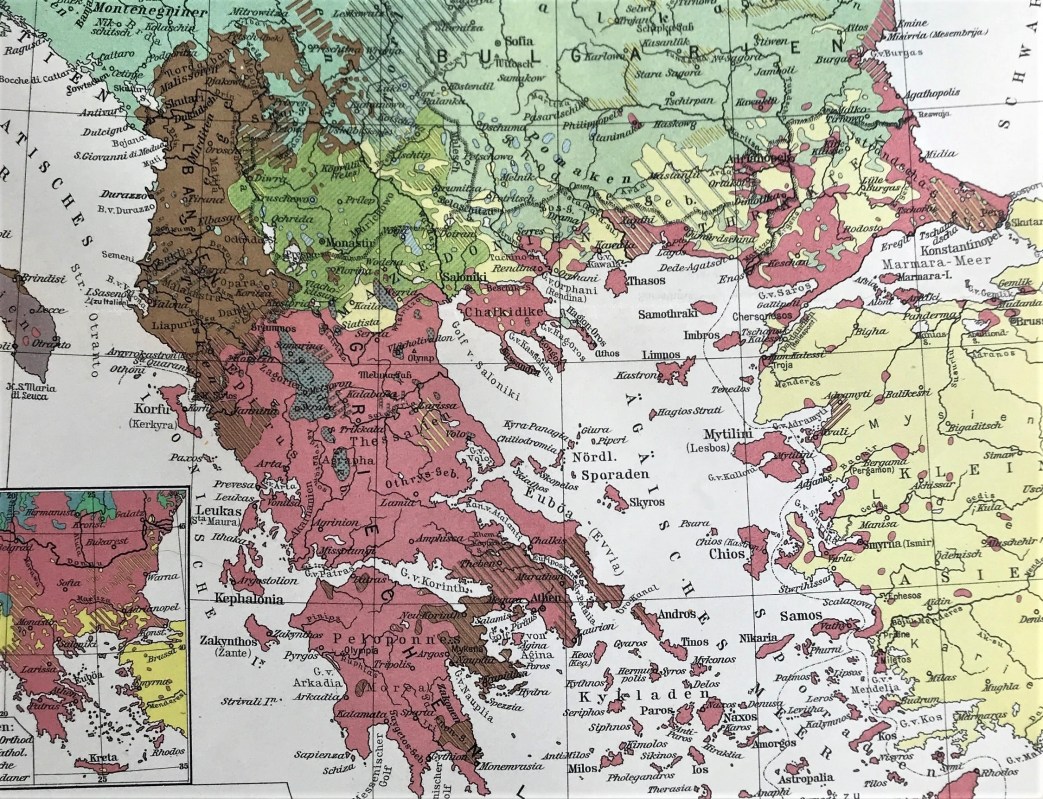
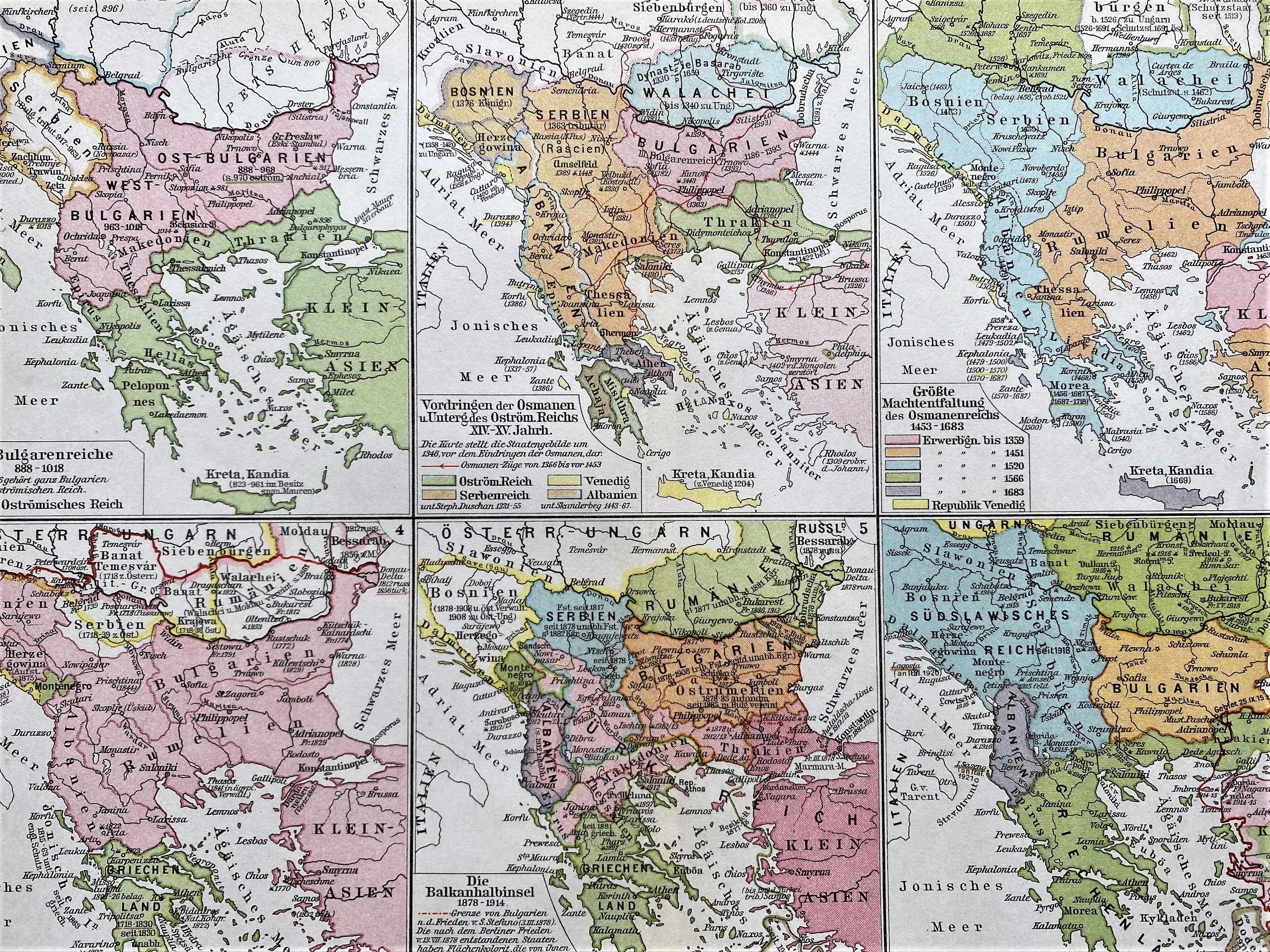
1. The possession of Macedonia, by reason of the geographical position of the country, assures domination over the whole Balkan Peninsula. That is why the country always roused the cupidity of the interested imperialist states, as well as of the neighbouring Balkan states The varied ethnographical composition of its population has always served as a pretext for the interference of the outsiders. All the nationalities which dominate in the neighbouring states, are represented in Macedonia, but in such proportions, that not one of them attains an absolute majority. Consequently the domination of any one of the Balkan states over Macedonia means national oppression of the majority of the Macedonia population and stirs up national struggles which are exploited by the other interested states for their schemes of conquest. The treaties concluded in 1912 between Bulgaria, Serbia and Greece ostensibly aimed at the liberation of the population from the Turkish joke, while, in reality, they prepared the way for the conquest and the partition of Macedonia among the allies. The two Balkan wars were conducted by the Balkan states for the purpose of the getting hold of the greatest possible part of Macedonia. The Serbian and Greek hegemony over this country which was divided between them after the Balkan war, signifies national oppression for the majority of the population. The discontent which this, called forth, served as, a pretext for the entry of Bulgaria in the imperialistic world war on the side of the Central Powers, who promised her the whole of Macedonia.
2. The Macedonian population has for years carried on an heroic and bitter struggle for national freedom. The rivalries stirred up by the bourgeoisie of the neighboring states and the hatred between the various Macedonian nationalities have often led to mutually destructive wars, have weakened the struggle against the common enemy, the Sultan and the Turkish Beks, but have never been able to destroy the conviction among the Macedonian slaves, that only an autonomous and united Macedonia could assure right and liberty to all its nationalities. The Macedonian revolutionary organization, the real organizer and leader of the revolutionary struggle of the Macedonian slaves, regardless of nationality, is working to strengthen this conviction. This conviction was manifested in the revolt of Ilyinden (1903), which was the first attempt towards the attainment of Macedonian autonomy.
The wars of 1912-1913 and 1915-1918 which ended in the partition and economic ruin of Macedonia, and in a new political slavery, have only strengthened the aspirations of the population towards national and political independence. A united and autonomous Macedonia is the slogan now of the Macedonians in all corners of their Fatherland which is now covered with ruins. It is under this slogan that they are organizing and conducting the struggle.
The duped Bulgarian bourgeoisie, which has only received the very least share of the spoils of Macedonia, is trying afresh to take advantage of the Macedonian revolutionary movement, and to take it under its control. But in spite of all the efforts of its agents among the Macedonian revolutionary organizations, it has not succeeded in winning the sympathies of the working masses of the Macedonian regions, and causing them to deviate from an “independent struggle”. The Macedonian people have been so severely tried in the past, that they no longer have any desire to submit to the influence of their “friends” and “patrons” either near or far.
3. Thrace, which during the Balkan war, during the imperialistic war and during the last Greco-Turkish. war, has been the object of struggles between Turkey, Bulgaria and Greece, is also inhabited by a very mixed population. The Thracians have been subjected successively to the domination of Turkey, of Bulgaria and of Greece, and are still partitioned among these different peoples, continue to serve as stakes for the three rivals, who are ready to engage in armed conflict with one another for the possession of the whole of Thrace. The Thracian population, following the example of the Macedonians have long fought for their political and national independence, a struggle which great and small states have tried to take advantage of for their plans of conquest.
The prolonged wars have covered this flourishing country with ruins, and the nationalities who inhabit it, have been plunged into a new political and national slavery; the greater parts of the nationalities have been forced to abandon all their goods and to take refuge in other countries. Hence the population sees no other way out than the creation of an autonomous Thrace.
4. The Macedonian and Thracian people, in their fight for national and political freedom, can only reckon upon the sympathy. and help of the workers and peasants of all countries. The revolution of the Russian workers and peasants which has created the Union of Socialist Soviet Republics has proclaimed the right of every people to independence, which includes the right of separation and of the formation of independent states. Under the standard of the communist parties united in the Communist International, the militant workers of all countries are now leading the fight against all national, political and economic subjection. It is quite natural, that they support the Macedonians and Thracians in their struggle. But the workers and peasants of the Balkan countries are immediately interested in the result of the struggle of the Macedonians and Thracians, because it is only by the creation of an autonomous Macedonia and an autonomous Thrace, and by their confederation with the other Balkan countries in a Federative Balkan Republic, that peace will be permanently established among the Balkan peoples, and that favourable conditions will be created for their economic development, and their existence and their political independence will be firmly assured.
The Communist Parties of the Balkan states, united into the Communist Balkan Federation point out to the Macedonian and Thracian peoples the dangers which threaten them from the bourgeoisie of other lands, and call upon them no longer to shed their blood for the realization of foreign plans. At the same time, they explain to the different nationalities that they will only realize their aims, by relying on the working masses of all the Balkan countries. The danger of becoming an instrument in the hands of outsiders is very great for Macedonian and Thracian emigrants. Thus for example, a section of the Macedonian emigrants has been made use of by the Bulgarian counter-revolutionary movement, to repress the revolt of the Bulgarian workers and peasants. The conduct of the duped Macedonians, who, in the guise of Macedonian revolutionaries, became the mercenaries of the Bulgarian bourgeoisie and the executioners of the Bulgarian working people, is a deliberate attack against the very cause of Macedonian liberation itself. The Macedonian workers must emphatically condemn this attack.
5. The Macedonian and Thracian population, regardless of nationality, is everywhere the victim of an intolerable oppression. The bourgeoisie of the Balkan countries knows of no other method for the solution of the Macedonian and Thracian problems, than pillage, terror, exile and violent denationalisation. This was the method of the Bulgarian nationalists while they were masters in Macedonia and Thrace. The Serbian and Greek bourgeoisie follow precisely the same way. The Serbian bourgeoisie maintains in Macedonia a cruel terrorist regime, destroys or forces into exile the conscious part of the Bulgarian, Turkish and Albanian population, and substitutes for it settlers from other parts of Yugoslavia, it oppresses all the non-Serb nationalities closes their churches and their schools, prohibits their press and suppresses their languages. Every revolt, every protestation of the peoples, reduced to despair, is followed by bloody repression on the part of the Serbian government. We witness the same spectacle m the other part of Macedonia and Thrace, subject to Greek domination. The Turkish government also violently expelled from Eastern Thrace the Greek and Bulgarian peoples, and the Bulgarian nationalists have plundered the Bulgarians holding the Mohameddan faith (Pomacks) forced them to embrace Christianity and compelled them to emigrate. The Greek government expels with particular zeal the Bulgarian and Turkish population of Thrace and Macedonia, in order to install in their place Greek fugitives from Asia Minor.
The Communist Parties of the Balkan consider it their duty to intervene with the greatest energy in favour of national and cultural rights and of the independence of the oppressed peoples of Macedonia and Thrace. They will openly stigmatize all the acts of violence of the authorities against the oppressed peoples and will form a compact front with them and their organizations in the fight against nationalist terror and the denial of rights.
6. The working masses of Macedonia and Thrace, besides their political and national subjection, are still subject to the exploitation of big land-owners and capitalists, of speculators and other parasites. A great part. of the poor peasants are virtually the slaves of the Beks (big proprietors) and of the speculators. The proletarians are without even the usual protection in their work; petty artisans ,and small tradesmen, like the labouring mass in general, are implacably exploited by heavy taxes and all kinds of speculative manoeuvres. It follows that in Macedonia and Thrace the class struggle between the producers and their exploiters is in full swing. In this struggle, the Communist parties are on the side of the exploited and demand the expropriation of the land property of the Beks with all appurtenances and their gratuitous partition among the small holders and poor peasants; the abolition of speculation and other. forms of exploitation of the working population, the limitation of capitalist profits, the guarantee of the right of combination, of assembly and strike for the workers and the protection of their labour; the transference of taxes on to the backs of the property-owners etc. To attain these ends, the working masses are organizing themselves without regard to nationality, in party groups, in trade unions and co-operatives. The communists do not at all repulse the national Macedonian and Thracian organisations which group the working population around them in the name of their national and cultural interests. On the contrary, they maintain the closest relations, with them, exert themselves in their leadership and activity to insure to the working masses a predominant position which is energetically opposed to the big agrarian bourgeois and adventurous elements, which would make use of the organizations to serve their class interests and which are always ready to betray the interests of the great working masses. The tactics of united front with these organizations and even of the participation of the communists in the same will render easier this task of the communist parties.
7. The national, political and economic emancipation of the Balkan peoples can only be obtained by the common action of the workers and peasants of every Balkan country for the establishment of a workers and peasants government and by the means of the alliance of all the working, masses of all, the Balkan countries for the creation of a Balkan Federal Republic. The struggle for the independence of Macedonia and Thrace must be maintained in the first plan by the Macedonian and Thracian workers and peasants: these should take over the direction of the struggle, declare themselves solid with their brothers, the workers and peasants of the other Balkan countries, arid secure the creation of a workers and peasants government in an independent Macedonia and Trace.
In setting up the ideal of a workers and peasants government, the Communist parties and the Communist Federation of the Balkans declare that the Federative Republic of the Balkans will assure peace, independence and liberty of development of all the peoples of the Peninsula, that it will be a voluntary union of independent Balkan republics, including the Republics of Macedonia and Thrace.
The Question of the National Minorities in Greece.
1. Greece, which belonged to the Balkan Coalition formed against the Turks, obtained, after the war of 1912 and 1913, territory peopled by other nationalities (Macedonia, Epirus and the Aegean islands). Her participation in the European war also obtained for her a part of Thrace which is peopled by a great number of non-Greekish elements. The heterogeneous elements of Greece belong to different Balkan nationalities. There are Turks, Bulgarians, Jews, Albanians, Armenians and Roumanians. Turks are the most numerous and at present inhabit all the regions of New Greece (acquired since 1912). Then come the Bulgarians, dwelling in Macedonia and in Thrace. The Roumanians inhabit the south-west of Macedonia, the Albanians Epirus, while the Jews and the Armenians are scattered about in the towns of New Greece.
2. Among the national minorities, the Bulgarians and the Albanians are deprived of all educational autonomy and cultural independence. The Greek bourgeoisie forbids them the use of their mother tongue, as well as the establishment and attendance of their own schools. The forced Hellenisation of the new regions, begun by the partisans of Venizelos, is continued. A great portion of them have been forced by oppression and misery to expatriate themselves and to abandon their possessions. The Greek government is installing fugitives from Asia Minor in the houses and villages from which it has driven the Turks. Exile and expropriation also threaten the Bulgarians who continue to speak their own language or show in any way whatever that they do not wish to renounce their own nationality.
The forced expropriation of the Turk population resident in Greece, carried out on the basis of the last peace treaty between the Greeks and the Kemalists, is reducing the Turkish masses to despair, because they have to abandon the land of their birth and their goods, and proceed to Turkey, in order to be maintained in the houses and fields of the Greeks expelled by Kemal Pascha. The same danger also threatens the Bulgarians resident in Greece, because the Bulgarian Government is negotiating a similar treaty with the Greece government.
3. The cruel manner in which the Balkan bourgeoisie seeks to solve the problem of national minorities, and the oppressive measures adopted against foreign elements, must attract the attention of the Balkan Communist Federation. The Greek Communist Party must fight with all the means at its disposal against the oppressive policy practiced by the Greek bourgeoisie against national minorities.
It must before all raise its voice and fight most bitterly against the attempt to Hellenise the new territories by the expulsion of the Turks and Bulgarians. One of its aims must be the annulment of the treaty for the exchange of the populations which was concluded between the Greek and Turkish governments. It must together with the Bulgarian C.P. do all in its power, to prevent the conclusion between the Greek and Bulgarian governments of a similar treaty as that concluded between Turkey and Greece.
The C.P. must fight for the political and cultural freedom of national minorities. It must proclaim the right of minorities to self-determination. This right to self-determination should even give the right to compact national minorities to separate from Greece. The Party will principally defend the national demands of the working masses of the national minorities and will form a united front with their national mass organizations.
4. The Communist Party will do its best to carry out the resolutions adopted with regard to Macedonia and Thrace.
International Press Correspondence, widely known as”Inprecor” was published by the Executive Committee of the Communist International (ECCI) regularly in German and English, occasionally in many other languages, beginning in 1921 and lasting in English until 1938. Inprecor’s role was to supply translated articles to the English-speaking press of the International from the Comintern’s different sections, as well as news and statements from the ECCI. Many ‘Daily Worker’ and ‘Communist’ articles originated in Inprecor, and it also published articles by American comrades for use in other countries. It was published at least weekly, and often thrice weekly. A major contributor to the Communist press in the U.S., Inprecor is an invaluable English-language source on the history of the Communist International and its sections.
PDF of full issue 1: https://www.marxists.org/history/international/comintern/inprecor/1924/v04n24-apr-10-1924-inprecor.pdf
PDF of full issue 2: https://www.marxists.org/history/international/comintern/inprecor/1924/v04n27-may-01-1924-inprecor.pdf
 Revolution's Newsstand