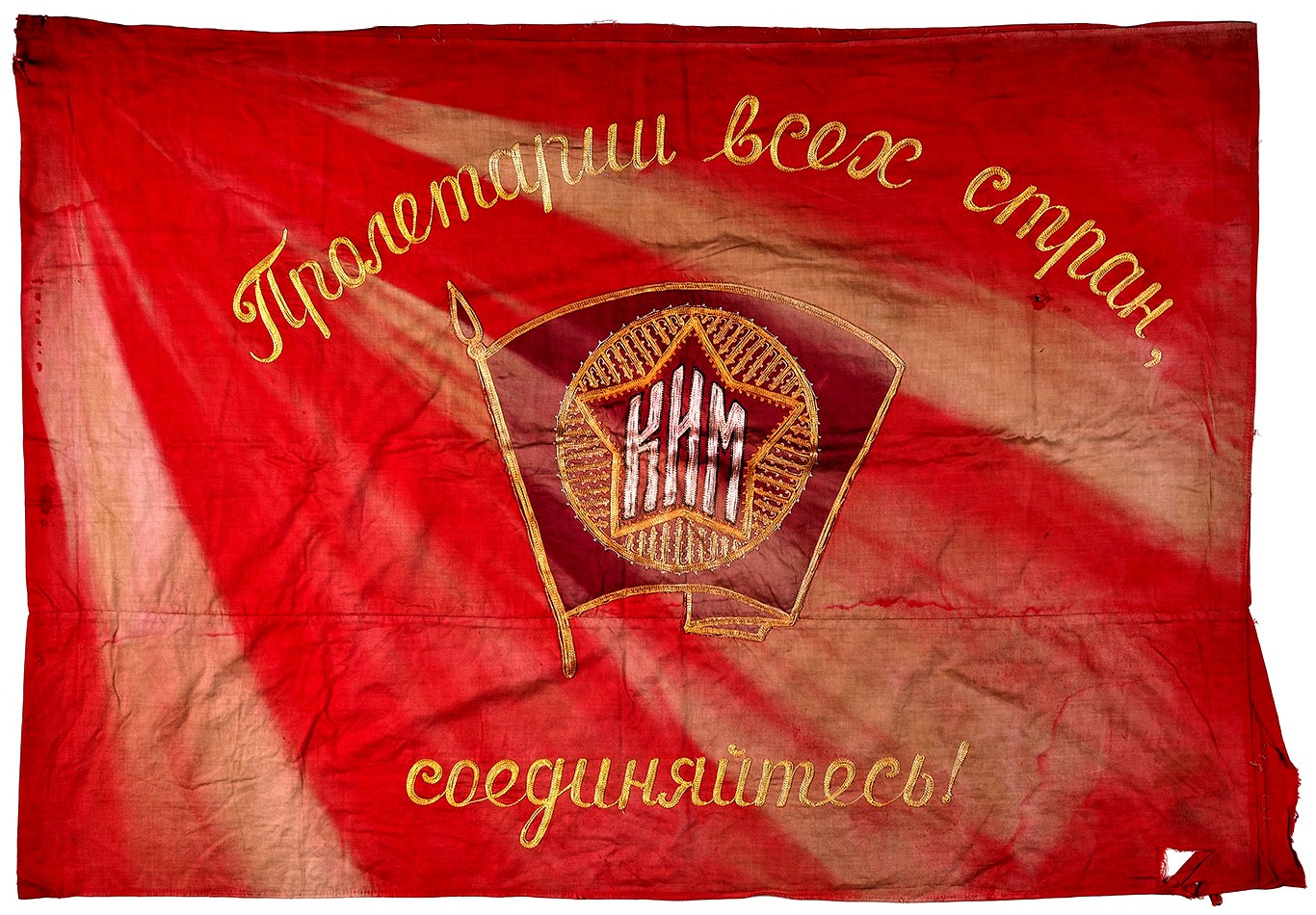
The Children’s Leagues of the Young Communist International pivot in 1929 to meet the new, ‘Third Period,’ of intensified struggle at their Fourth International Conference held in December, 1929.
‘Theses on the Situation and Tasks of the Communist Children’s Movement’ from The Road to Mass Organization of Proletarian Children. Young Communist International, New York. 1930.
Decisions of the IV International Conference of Leaders of Communist Children’s Leagues, Moscow, September, 1929, and the Resolution of the Enlarged Plenum of the Y.C.P., Moscow, December, 1929
THESES ON THE SITUATION AND THE TASKS OF THE COMMUNIST CHILDREN’S MOVEMENT
The Fifth Congress of the Y.C.I. gave a clear analysis of the situation in the proletarian children’s movement based on the decisions of the Sixth Congress of the C.I. The Fifth Congress found the state of affairs in the Communist children’s movement absolutely unsatisfactory. It stated that the reason for it was inadequate mass work, the absence of systematic mass work, neglect of the Communist children’s movement by the Y.C.L., and the absence of support from the C.P. It decided upon the tasks of the Communist children’s movement on the basis of this analysis of the international situation.
The correctness of the estimate given by the Sixth Congress of the C.I. of the third period of post-war capitalism as a period in which the general crisis is maturing, in which the internal and external contradictions of imperialism are sharpening, in which preparations for imperialist war against the Soviet Union are increasing, is becoming clearer every day. All this leads to inevitable imperialist wars, to great class conflicts, to a development of a new revolutionary tide in the outstanding capitalist countries, and to great anti-imperialist revolutions in the colonial countries.
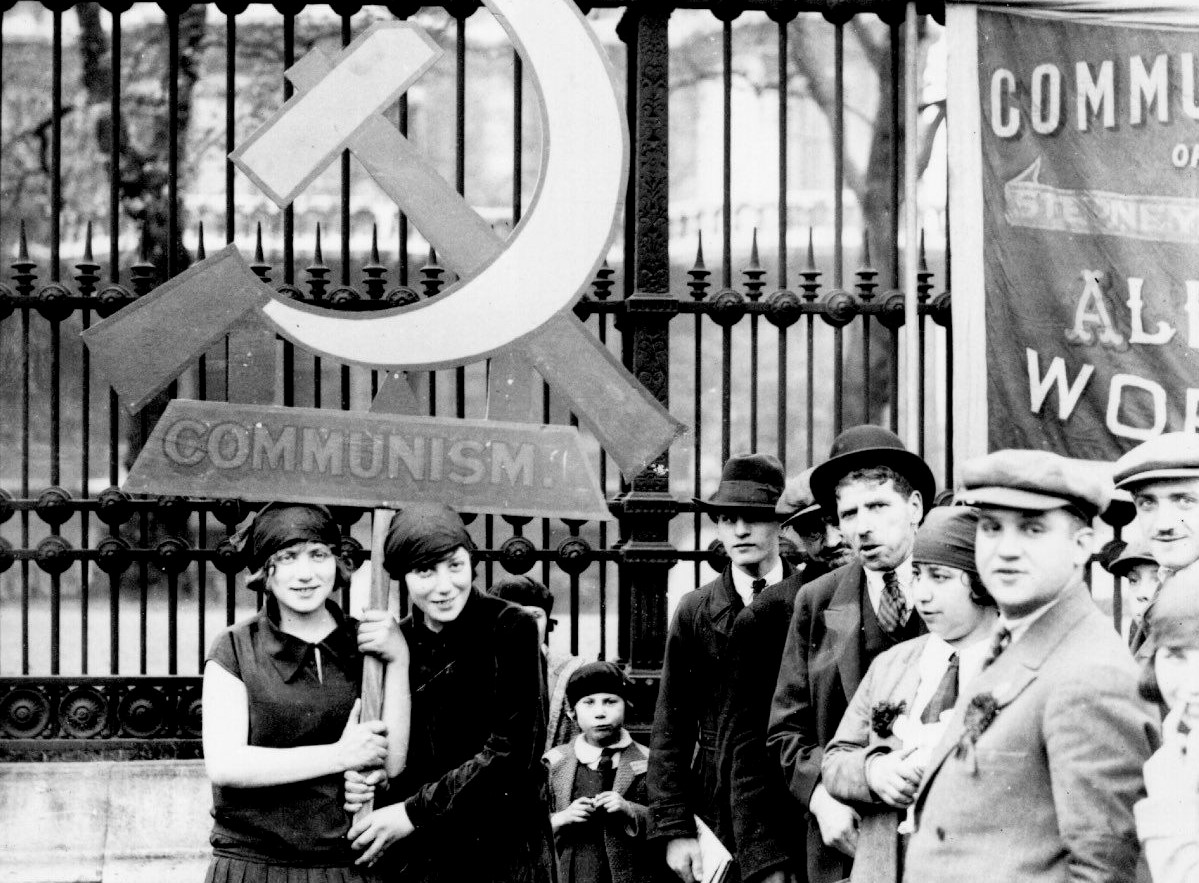
This period of acute class struggles confronts the Y.C.L. with the problem of capturing the majority of young workers, the task of carrying through a complete turn in its general work and activity, and equally brings the Communist children’s leagues, owing to the growing part the proletarian children play in the present period, face to face with the problem of embracing the masses of proletarian children and of connecting them with the struggle of the working class.
I.-The Position and the Role of the Proletarian Children in the Present Period
1. The period of accentuated class struggles sharply raises before the C.P.’s and the Y.C.L.’s the problem of organizing the working class children for the struggle for the emancipation of the proletariat from the chains of capitalism and for the dictatorship of the proletariat as an immediate aim. The bourgeoisie and the Social-Democracy wage a sharp struggle for the growing generation of the proletariat.
2. Capitalist rationalization greatly aggravates the conditions of the workers and constitutes a basis for greater employment of proletarian children in industry. The increased number of accidents and occupational diseases increases the rate of infant mortality as a result of capitalist rationalization.
3. The bourgeois school is being constantly more adapted to the preparations for imperialist war. This finds expression in direct propaganda, military training, open and active support of the bourgeois and fascist children’s organizations, camouflaging of the military preparations by means of pacifist phrases (propaganda in favor of the imperialist League of Nations idea, etc.).
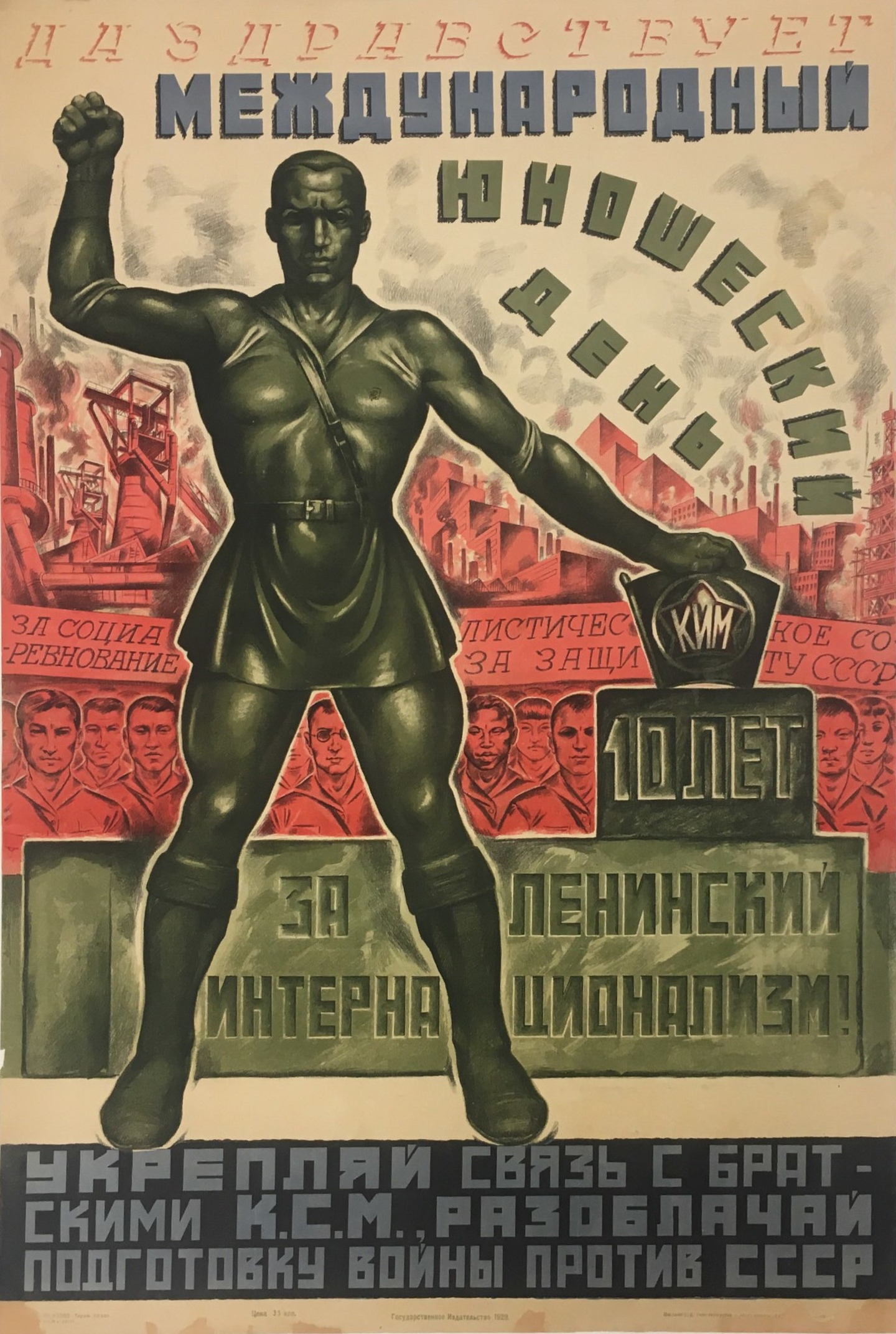
4. The bourgeoisie is engaged in a systematic struggle to influence and embrace the masses of proletarian children outside of the school. It creates social-fascist, nationalist, religious and sport children’s organizations. By means of these and with the aid and support of the capitalist governments the bourgeoisie seeks to influence the masses of working class children inside and outside the school. Radio and the press also serve this purpose of capitalist education as a means of preparation for imperialist war.
5. Ever larger sections of children are being affected by the process of radicalization. They take part in the industrial and political actions and struggles of the working class and there are independent children’s strikes in schools and factories (Germany, Poland, America), expressing the radicalization of the working class children.
The bourgeoisie and the Social-Democracy use every means of moulding the mass of radical children and of keeping them from the influence of the young and adult workers. If the bourgeois school, the children’s organizations, the radio, cinema and press arc of no avail, terror is resorted to. The bourgeoisie and the social-fascists resort to persecution and suppression of the revolutionary children’s movement.
II.-Development of the Communist Children’s Movement
1. The characteristic features of the children’s movement today are:
(a) There is a crisis in our leagues in Germany, France, England and Austria.
(b) The American league made great progress up to 1928, but is not growing now. There is no progress to be observed in Czecho-Slovakia, Norway and Canada.
(c) There is a numerical increase in our organizations in Sweden, Finland, Poland, Mongolia and Switzerland.
(d) The Chinese children’s league was in 192 7 of the nature of a revolutionary mass movement; it has been practically destroyed by the White terror, and is now continuing under most difficult conditions. The children’s league in Mexico has in the past few years become a relatively strong organization.

(e) New organizations have been founded in New Zealand, Australia, Palestine, South Africa and Belgium. There is a rudimentary organization in Tana Tuva.
This situation in our international movement must be considered extremely unsatisfactory. The fact that the situation is so bad when the conditions are favorable for development and when the Social-Democratic children’s organizations are making progress is very serious. Should there be no change in the very near future and should we not be able to carry out our class line also in countries where our organizations are still developing, we shall be faced with an international crisis in the children’s movement. Only by a decisive turn towards mass work linked up with a fundamental alteration of the present wrong system of work, can the international crisis be averted and the road cleared for further development of our organizations.
2. The outstanding subjective causes retarding the development of our children’s movement are: (a) Insufficient militancy, bad methods and a wrong system, with no systematic mass work. (b) Inadequacy, and sometimes complete absence, of real political leadership on the part of the Y.C.L., a low level and constant fluctuation of leaders, no assistance from the C.P., or very little of it.
Concretely this is expressed in the fact that:
(a) The political activity of the children’s leagues is very unsatisfactory. The struggles of the working class are practically made no use of as a means of raising this activity. The Communist children’s organizations do not organize the activity of the children. The May Day events in Berlin, a series of children’s strikes and participation in struggles of adult workers of Germany, Czecho-Slovakia, France, etc., bear this out. The result is that some of our organizations are still simple educational organizations and not the exponents of the militancy of the working class children. With the exception of some attempts to fight in the interests of the exploited children this problem has not been solved by any of the leagues. The organization of the children of the unemployed and children who have particularly bad conditions is given no attention. The activity of the children’s leagues is mostly expressed in assisting the Y.C.L.’s and the C.P.’s.
(b) Our children’s organizations are in most cases of a sectarian character and arc isolated from the masses. The organizational structure does not meet with the requirements of a militant organization; there are but few school nuclei and practically no factory nuclei. The question of creation of proletarian children’s auxiliary organizations has as yet not been considered.
(c) It was a big political mistake that no systematic struggle was waged against the social-fascist children’s organizations. There is no systematic struggle against the Boy Scouts. The religious organizations which influence large sections of children are given practically no attention at all.
(d) The rigidity and imitation of methods used by the organizations of adults are copied by the children’s leagues. This gives them the character of “children’s political parties,” and the result is that the children’s need of play, sport and collective work and study is not satisfied. The inadequate adaptation of work to the requirements and demands of the children of the various ages causes insufficient development of initiative and self-activity in the organizations.
(c) The opportunist tendencies in our own ranks concerning the fighting methods and organizational structure are not combated with sufficient vigor. The underestimation of the significance of the social-fascist children’s organizations and the disbelief in the possibility of reaching and influencing the majority of the proletarian children are also signs of opportunism. The Y.C.L.’s do not devote sufficient attention to the development of new leaders for our children’s movement. The dissolution of important organizations is a result of the lack of leaders in many cases. The Communist Parties, with the exception of the C.P.S.U., give our organizations no support and cling to their traditional Social-Democratic conceptions on the question of “education for children” (but not through struggle), which only hampers our activity.
3. The good sides of our mass and militant work consist in the following:
(a) Participation in a number of strikes and organization of strikers’ children in special clubs in America, actions under Pioneer leadership in schools of Berlin, Hamburg and other German towns against the celebration of Constitution Day, organization of the first conferences of proletarian children in America and Germany, campaigns for the boycott of Empire Day in England.
(b) An increase in the number of children’s papers, the circulation of the papers being in all countries greater than the membership; the number of school papers has considerably increased; there are the beginnings of a system of school delegate in Germany.
(c) Practically all Leagues have begun to organize summer camps. In many countries there are rudimentary living newspapers and a beginning has been made in training the active Pioneers.
(d) The number of Pioneers and leaders visiting the U .S.S.R. with the purpose of establishing closer contact with the Russian organizations, increases yearly. Contact between children’s leagues in capitalist countries has improved (delegations, international camps, etc.).
4. Last year’s development of the Communist children’s movement in the U.S.S.R. is characterized by an increased political role of the Pioneers in the general struggle of the working class in the sphere of socialist construction, development of activity and self-activity of the children in connection with the introduction of a new system and new methods in many organizations, which brought the children closer to the leaders. Fluctuation has greatly diminished and the organizations have grown. The national and local meets have fully confirmed this.
With all this there are difficulties to be recorded in the development of the Pioneer organizations even in the Soviet Union. The leaders are unsatisfactory; insufficient work is being done amongst the masses of children, especially the proletarian children; slow transition on the part of a large number of organizations to the new forms and methods; inadequate aid on the part of the public (before the meet), The increase in membership is slow. The chief difficulties lie in the slow rate of adoption of live forms and methods of work and poor leadership on the part of the Y.C.L., the slowness in catching up with the requirements arising out of the period of reconstruction and socialist construction in the Soviet Union.
III.-The Chief Tasks of the Communist Children’s Leagues
1. Within the framework of the general political tasks of the C.P. and the Y C.L. it is the task of the Communist children’s leagues to win over the majority of the proletarian children and to wage a struggle along the following lines: (a) Against capitalist rationalization. (b) Against imperialist war. (c) Against fascism and social fascism.
The carrying out of these tasks will increase the terror of the bourgeoisie against our children’s movement. The broad masses of proletarian children as well as the adults must be mobilized for a struggle for legality of our organizations, while Pioneer leaders should simultaneously be prepared for underground work in case of being outlawed.
A prerequisite for the carrying out of these tasks is a decisive turn towards mass work in connection with real political leadership on the part of the Y.C.L. and an energetic struggle against all reformist and opportunist views.
2. The decisive turn towards mass work must be particularly expressed in:
(a) A mobilization of the broad masses of proletarian children for concrete aims and slogans of the political and economic struggle understood by the children. Constant representation of the interests especially of the exploited sections of the proletarian children. Participation in the most important political struggles and actions of the Y.C.L.’s and the C.P.’s.
(b) Intensified struggle against the Social-Democratic organizations, especially the “Red Falcon,” against the fascist, nationalist and clerical organizations. Joint struggle with other proletarian children’s organizations under Pioneer leadership.
(c) Systematic activity towards establishment of school and factory nuclei as the real basis of the movement.
(d) Application of the system of “transmission belts” through the formation of special organizations for the child laborers, cultural organizations, sport sections, atheist groups, etc. Special attention must be paid to the formation of auxiliary and camouflage organizations in countries of the White terror.
(e) Change of the methods and elaboration of a system from top to bottom which will help to overcome isolation and to establish contact with the masses of proletarian children. Better adaptation of the general work to the psychological characteristics of children, more interesting work in the children’s leagues.
(f) Creation of real children’s mass papers, good literature for children, organization of a children’s correspondents’ movement.
(g) Use of methods which would make it possible for every Pioneer to take an active part in the work as a necessary condition for the development of initiative and self-activity and raising of the role of the active Pioneers as a driving force stimulating the work of the Pioneers in general. Leadership of the nuclei and groups by active Pioneers, and systematic work amongst the latter.
(h) Renewal and enlargement of the number of leaders in the children’s movement, to be drawn from the good proletarian elements and class workers. Creation of competent leading organs in the national and local institutions of children’s leagues. Systematic schooling of the leaders.
(i) Constant political guidance, control and formulation of tasks on the part of the Y.C.L. Greatest possible support and aid from the Party and the proletarian mass organizations.
IV.-The Immediate Tasks of the Communist Children’s Leagues and the Carrying Out of the Turn
1. (a) Daily struggle for the economic interests of the children in close contact with the support of the Party and the youth in their political struggles, in spite of the interference on the part of the bourgeois State and the reformist trade unions.
(b) Active participation in strikes and lockouts not only in the form of securing material aid for the strikers by means of collections and entertainments, but also in the form of active participation by means of influencing the proletarian children and carrying the struggle into the schools. Participation of the children in the economic struggles of the adults must not be merely in the form of solidarity action, but should be of the nature of a struggle for the economic demands of the children themselves.
(c) Special attention should be paid to the organization of proletarian children. This task can be accomplished only if auxiliary organizations will be created for the various sections of working children. These organizations must assume rigid organizational forms and be able to fight in the interests of the children.
(d) The organization of the exploited sections of children must be carried on in close contact with the trade union revolutionary organization of the adults. Wherever possible, children’s sections should be set up in the Red unions. If for practical reasons this is impossible, other forms should be found for the industrial organization of the exploited children. The organization of children in the reformist unions can be permitted only if this would strengthen the revolutionary opposition.
(e) The W.I.R. is a proletarian mass organization which must be chiefly utilized in order to bring the broad sections of proletarian children under our influence. This is particularly necessary in time of strikes and lockouts in which connection the W.I.R. organizes the striking children in clubs and other organizations.

Further it will be the task of the W.I.R. to organize the children through the establishment and organization of reading rooms, homes, clubs, festivals, camps and excursions. All this work must naturally be done in close contact with and under the political guidance of the Pioneer organizations, in which connection the Pioneers must take active part.
2. The struggle in the school must also be carried on in connection with the economic struggle. The struggle against religious education, against preparations and propaganda in favor of war, linked up with an energetic struggle against the social fascist and bourgeois children’s organizations, is also an urgent task of the children’s leagues. The organization of this struggle is, however, possible only if we set up a network of delegates with the object of linking up the Pioneer organizations with all schools and classes. It is essential to organize frequent meetings and conferences of delegates. Wherever no school nuclei exist it is particularly essential to gain influence in the school through the delegates.
3. Against imperialist education, for Red defense! This struggle against growing militarization and nationalist propaganda which constitutes an essential part of school education is not waged with sufficient vigor. The tasks of our organizations are not to fight against military training as such, but against its imperialist character. In cases of optional military training the Communist children’s organizations must carry on an energetic campaign against participation of the proletarian children, and do their utmost to discredit the enterprise. Wherever military training is compulsory the fight has to be carried on by means of internal disruption and elucidation of the imperialist and antilabor character of these military preparations.
The struggle against imperialist education and war preparation can be also carried on in connection with Red defense training. This must constitute a part of the turn in our work. The creation of children’s revolutionary defense organizations, especially in time of strikes both in town and country, should be encouraged. Wherever the opponent and fascist organizations attack us most, special forms must be adopted of training the mass of proletarian children in the spirit of Red defense. Collaboration with the Red sport organizations and the organization of sport competitions and games are a good means of work along this line.
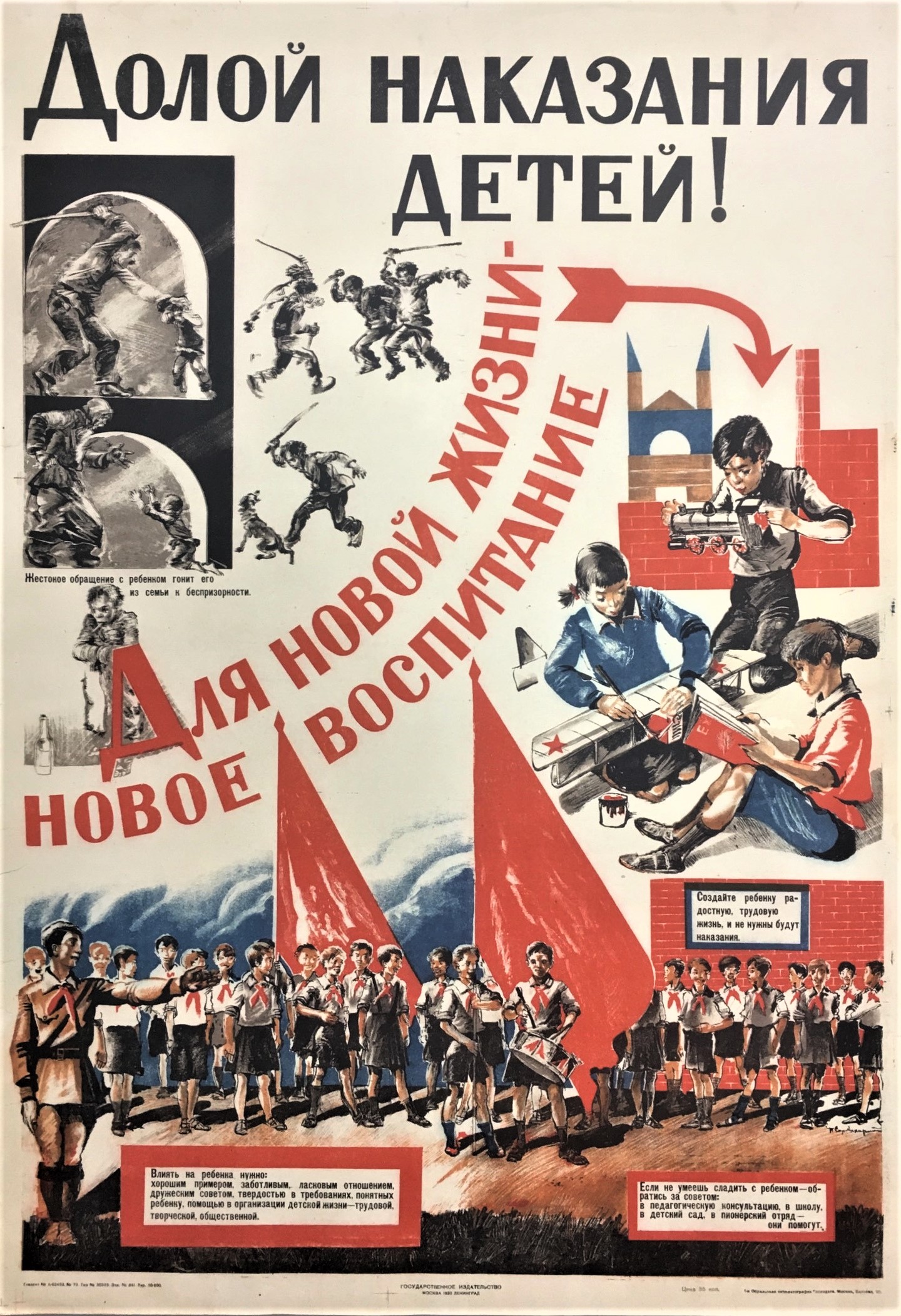
Our children’s leagues must make it their task to explain to the masses of children the importance of def ending the fatherland of the proletarian children all over the world, the U.S.S.R., the role and significance of the Red Army, as an army of the world proletariat. In practice, this should find expression in individual and collective protests in the schools, against the slanders spread by the teachers, under the slogan: “The enemies of the U.S.S.R. are the enemies of the workers and of the proletarian children.”
In connection with the political tasks of strengthening the international ties it is necessary to acquaint the children with the process of socialist construction in the Soviet Union, the Five Year Plan and the life of the proletarian children in the U.S.S.R.
4. United front of all toiling children, struggle against the opponents. In the struggle against war preparations and for the influence on workers’ children, the children’s organization must create a united front of all proletarian children, against the bourgeois and social democratic children’s organizations.
The most important and most dangerous opponents in the European countries are the social-fascist children’s organizations. The social-fascist character of these organizations and their pseudo-radical slogans (especially of the “Red Falcons”) must be exposed before the proletarian children by means of systematic propaganda in the schools and on the playgrounds. The struggle against the Boy Scout movement which embraces large sections of proletarian children must be conducted in conjunction with the struggle against military training and imperialist education. Work must also be done in exposing the anti-labor character of the masked “neutral” organizations.
The best means of fighting against the opponents is the employment of united front tactics from below with regard to the proletarian children belonging to the opponent organizations. These tactics can give considerable success especially in time of strikes. It is necessary to utilize all inner contradictions in the Boy Scout movement and to use in connection with that the tactics of the united front from below and above, with the object of splitting away the proletarian children from the opponent organizations.
V.-Work in the Colonial and Semi-Colonial Countries
In view of the fact that as a result of the class struggles and antagonisms between the imperialists, the colonies are becoming of increasing importance, the entire Communist movement is faced with the burning problem of winning over the masses of workers and peasants in those countries.
The vast number of children employed in industry and agriculture raises before us also the immediate task of starting a broad revolutionary children’s movement in the colonies and semi colonies.
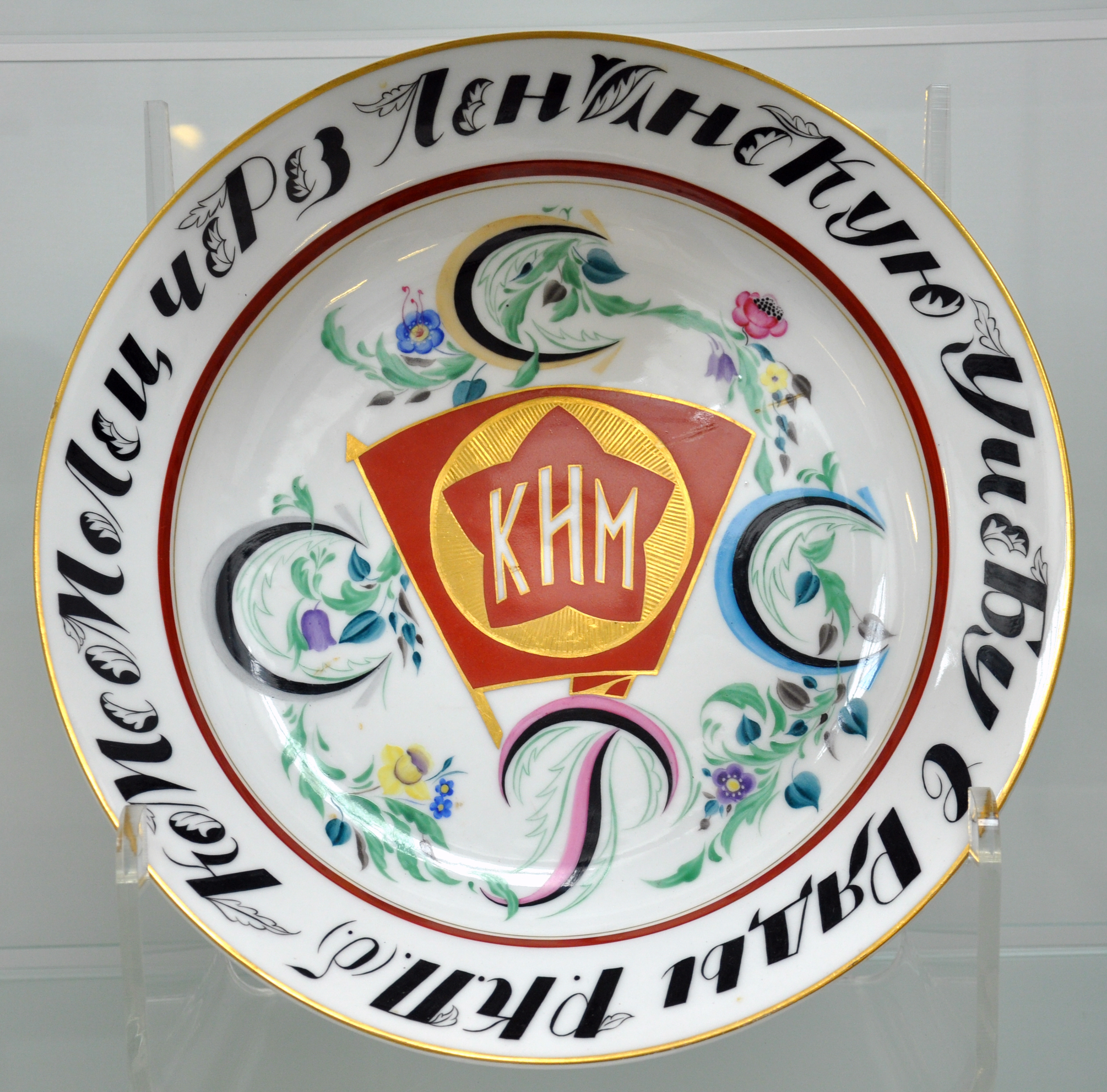
The chief content of Pioneer work must consist in an effort to improve the working and living conditions of the children, as was done especially by the children’s movement in China in 1927-28. Then the children must take part in the revolutionary struggle of the toiling masses, especially against imperialism and its allies in the colonies.
Pioneer organizations should be set up by the trade unions, the Anti-Imperialist League, the revolutionary peasant organizations and the auxiliary youth organizations. It is a particular task to organize legal auxiliary, and camouflage organizations of an educational character in the colonies.
While supporting the Communist children’s movement in China, special attention must be paid to the creation of children’s organizations in the industrial centres of India. The children of the imperialist countries must establish contact with the children in the colonies and support in every way the activities of the latter and carry on an energetic struggle against colonial propaganda in the schools.
VI.-The Struggle for Legality

As a result of the accentuated class antagonisms and the carrying on of militant mass work on the part of our organizations, repressions and persecutions will increase in proportion to our movement. It must be our task to fight in every way for legal existence through the mobilization of the broad masses of children and toilers by means of demonstrations, meetings, etc., under the leadership of special committees of the C.P.’s and Y.C.L.’s and the proletarian mass organizations. Should our organizations be outlawed they must not cease their activities but should reorganize their ranks.
Only by means of utilization of auxiliary children’s organizations, the creation of new “independent” children’s organizations, utilization of clubs and playgrounds, drawing in of the I.L.D., the W.I.R. and other proletarian organizations, and the development of real mass work, is it possible to defy the law. In case of illegality, the illegal school and factory nuclei will have to become the foundation of the Communist children’s organizations and supply the active elements for work in the legal camouflage children’s organizations.
In the organization of theatrical performances and camps and in all other measures of this type, the Pioneers must play a leading part. The leaders of the Communist children’s organization must beforehand get ready to work underground, and particular attention should be paid to the training of the leaders of the children’s movement in the Y.C.L.’s and the Party organizations. (The possibility of drawing non-Party sympathizers into the leadership of auxiliary organizations is not out of the question).
The Road to Mass Organization of Proletarian Children by the Children’s Bureau of the Young Communist International. Distributed in the US by the Young Communist League, New York. 1929.
Contents: Introduction, The Situation in the Communist Children’s Movement and Its Immediate Tasks (Resolution of the Plenum), Theses on the Situation and the Tasks of the Communist Children’s Movement (Decisions of the International Conference), Instructions on the System and Methods of Work in the Pioneer Leagues (Decisions of the IV International Conference). 32 pages.
PDF of original pamphlet: https://nla.gov.au/nla.obj-52876833/view?partId=nla.obj-108259719#tab-download
 Revolution's Newsstand