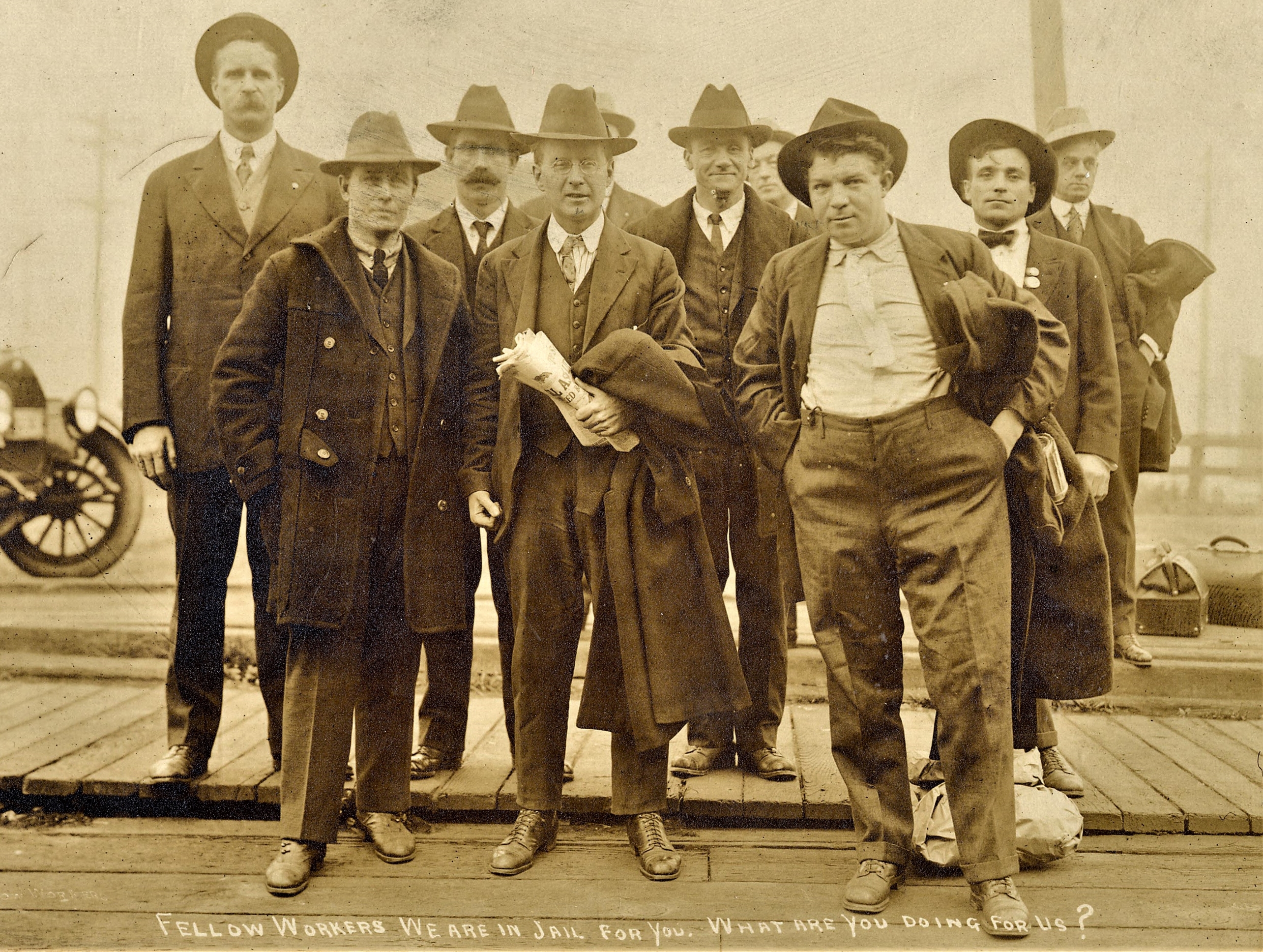
Louis C. Fraina, with his usual acuity, places the wave of indictments, arrests, and deportations of I.W.W. members (the ‘Palmer Raids’) that occurred on September 5, 1917 into context. Fraina himself was arrested and indicted under the Espionage Act for a speech given to the Conscientious Objectors in New York City on September 27, 1917.
‘The I.W.W. Trial’ by Louis C. Fraina from Class Struggle. Vol. 1 No. 4. November-December, 1917.
The great and significant fact in the case of the I.W.W. is that the employers, the national government and the corrupt and reactionary bureaucracy of the A.F. of L. are apparently engaged in a covert conspiracy to destroy a militant organization of labor.
These sinister forces, each for reasons of its own, are banded together in a “gentlemen’s agreement” to crush the I.W.W. The employers, — because the I.W.W. is not only threatening their immediate profits, but creating a powerful organization for action in the days to come; the government, — because the employers by refusing to grant increased wages are precipitating strikes that hamper industrial mobilization, and the government, not daring to strike at the employers who are strong, strikes at the workers, whom it considers weak; and the A.F. of L.,— because the I.W.W. in the west is becoming the dominant organization and threatening to drive out the A.F. of L.
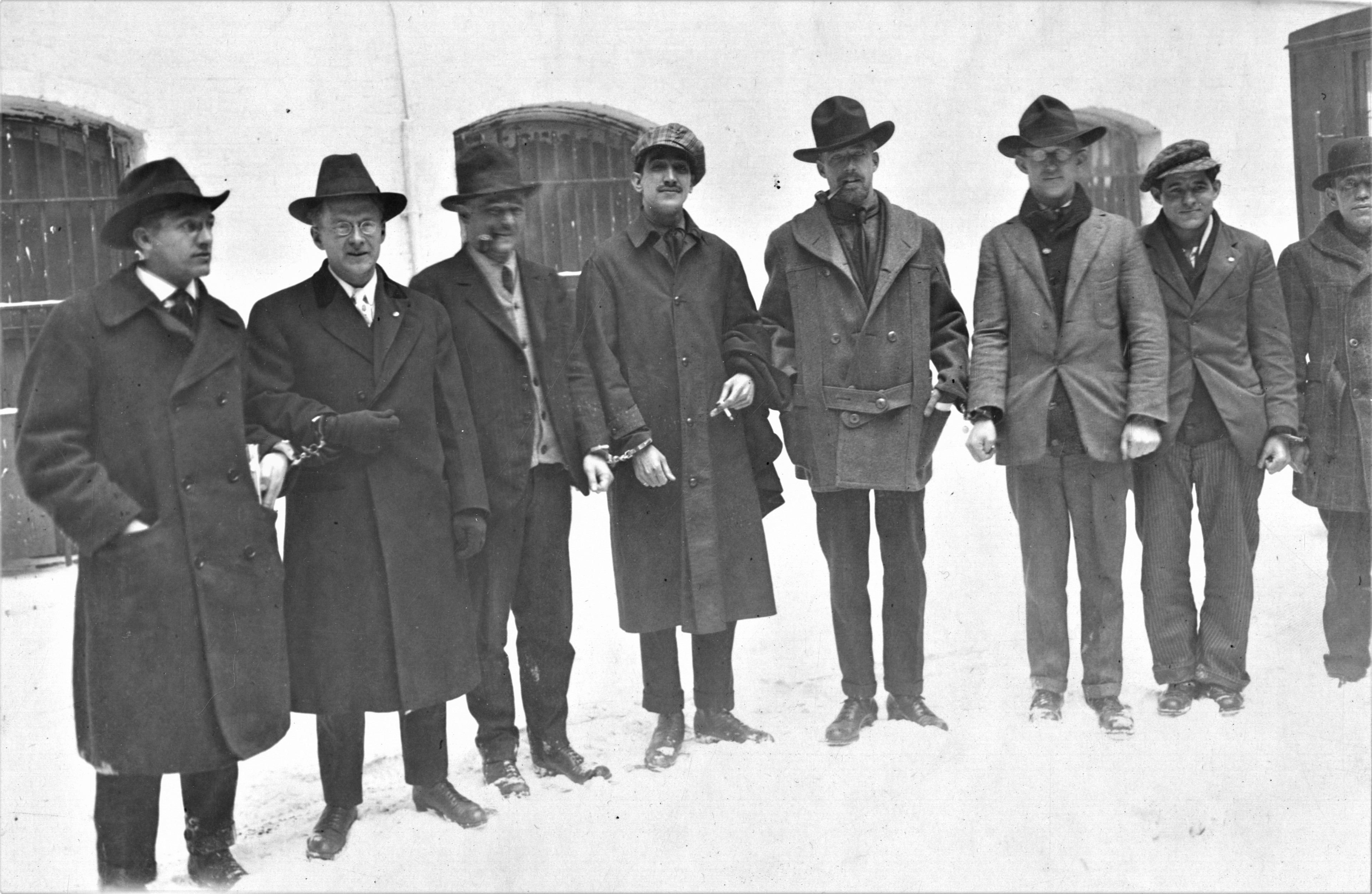
Whether one relishes it or not, the fact is that the I.W.W. has not acted against the war; has not carried on a propaganda against the war, and is chiefly if not exclusively at the moment interested in questions of wages and the regulation of industrial conditions. Yet the government charges that the I.W.W. is engaged in a nation-wide conspiracy to thwart the war plans of the country by inciting and organizing strikes, by the use of violence and various other illegal means. On this question of conspiracy and violence, Robert W. Bruere, who is engaged in an investigation of the subject, said in the New York Evening Post of November 14:
“As I write, I have been in Arizona only four weeks, but I feel confident that I have reached pretty nearly to the bottom of the alleged I.W.W. conspiracy so far as Arizona is concerned. If such a conspiracy existed— and we shall not know the whole truth until the United States Department of Justice has presented its full case against the indicted I.W.W. leaders — I am certain that it was not a determining factor in the strikes that have tied up the copper mines during the past four months. These strikes grew out of a long-standing struggle between the forces of ‘legitimate’ organized labor and the forces of organized business, dominated by the copper companies. So far as there was concerted attack by the I.W.W., it was principally directed against the unions affiliated with the A.F. of L. Crimes have been committed in Arizona, but they are not chargeable to the I.W.W. So far as lawlessness is concerned, the chief role of the I W.W. has been to serve as camouflage.”

Mr. Bruere may well characterize the charges of I.W.W. lawlessness as “camouflage.” The chambers of commerce, the municipal governments and the thugs in the employ of the corporations have been creating all the violence against the I.W.W. The Bisbee deportations, when thousands of workers were brutally taken from their homes and sent out into the desert to die of thirst and starvation; the infamous assassination of Frank Little, and hundreds of crimes of more or less equal magnitude organized and carried through by the respectable gentlemen of the forces of law and order, — these acts of lawlessness are the answers of the I.W.W. to the false charges hurled against it. Strikers have been forced back to work at the point of the gun. The I.W.W. organizers have been thrown out of town, and imprisoned without warrant of law, as well as hundreds of men thrown into jail for no other crime than being I.W.W. members. In the Yakima Valley a regular organized and systematic reign of terror was instituted against the strikers and the I.W.W., the soldiers being used, and the open boast made by the local gentlemen thugs that this was the only way of dealing with the I.W.W. And Theodore Knappen, writing in the New York Tribune some months ago, reported these facts approvingly!
But this policy of blood and bullets failed to crush the strikes. The movement became larger and larger, more and more groups of workers being forced to strike by unbearable conditions and the arrogance of the employers, who prated of patriotism while they stuffed their coffers with the enormous profits of war prices.
This circumstance is extraordinary significant in more ways than one. First of all, it indicates a spontaneous and general industrial revolt. Secondly, it characterizes the strikes in the west as an expression of industrial mass action on a large scale. Thirdly, it makes it apparent that the I.W.W. was not the chief factor in the strikes.
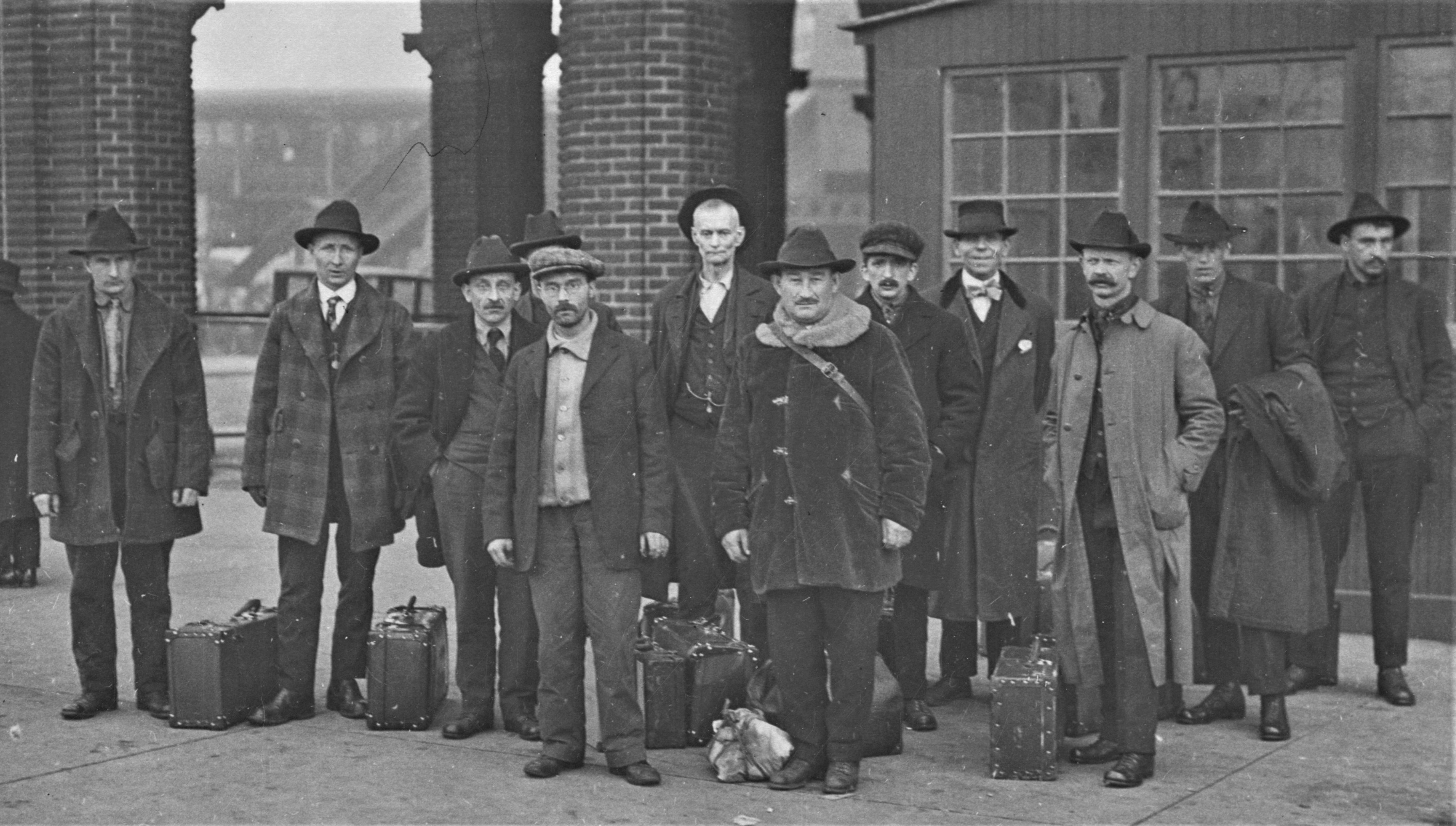
In fact, the I.W.W. is receiving more credit or discredit than is its due. The I.W.W. in the west is not the centre of activity in any sense. There are a great number of contributing factors, among them being revolutionary Socialists who are actively on the job. But the dynamic factor itself are the workers who have taken the bit into their teeth and are determined to strike in their own way and for their own purposes.
All local action, in spite of its brutality and lawlessness, having failed to crush the strikes, the federal government was called upon to act. Then came the nation-wide raids upon the offices of the I.W.W.; and then the indictments of 160 active members and the arrest of upward of 100. The intensity of the industrial unrest is evident in this fact, that it requires the use of the might of the national government to crush it.
The counts in the indictments against the arrested men are often extremely ridiculous — and dangerous. In some cases, men have been arrested for having “conspired and agreed together and with each other unlawfully, willfully and feloniously to make or convey false statements with intent to interfere with the operations for the success of the military and naval forces of the United States,” and the charge is based directly and simply on these men’s membership in the I.W.W.: that they have received cards of membership, voted in meetings, paid dues and distributed literature, etc. These are the “overt acts” on which the government indicts and seeks to convict!
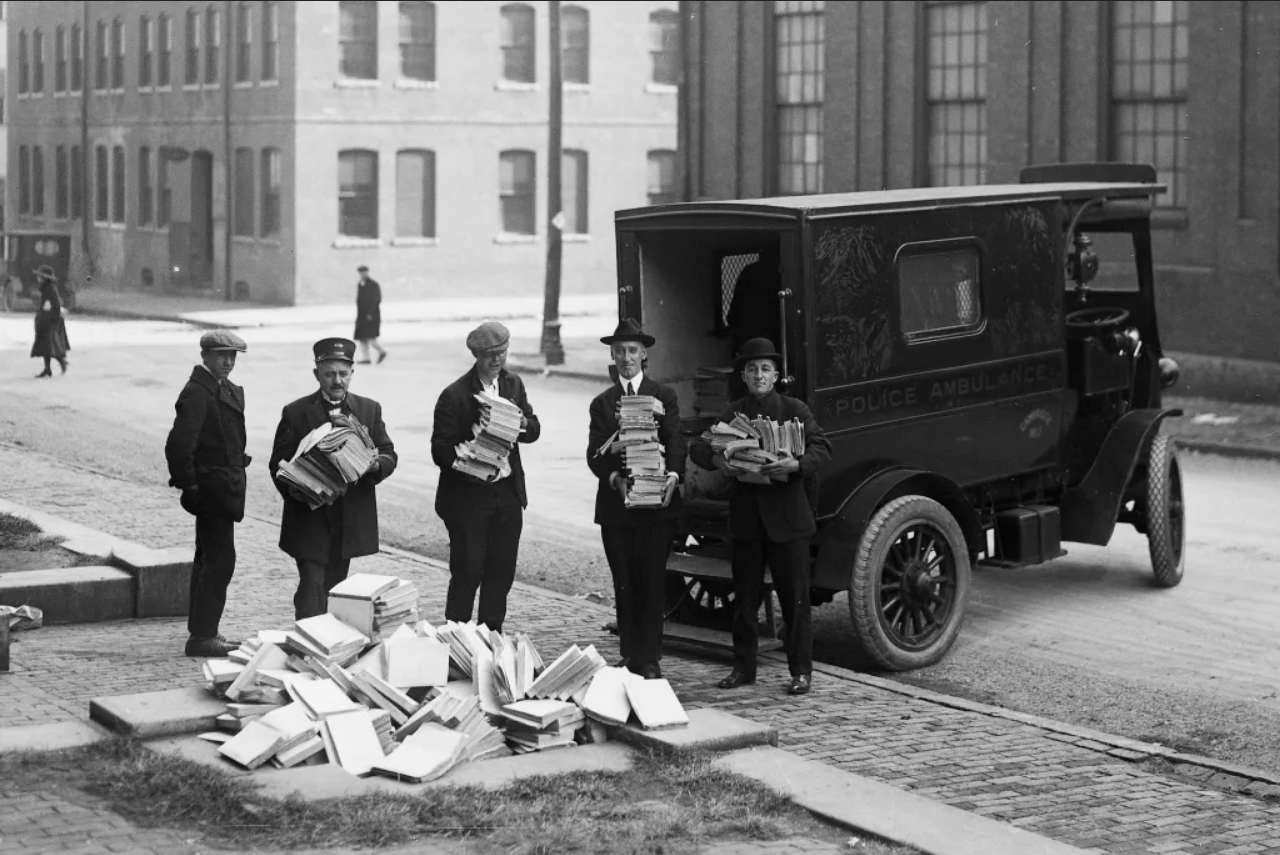
The arrests and the raids, the seizure of records and destruction of property, were a great blow at the I.W.W., but the activity continues relentlessly and intensively. The government’s idea that the arrest of the leaders might destroy the organization and the movement it expresses has proven a miserable fizzle. Men from the rank and file have taken over the direction of affairs; mass action can dispense with leaders and continue its activity of itself, spontaneously and successfully.
The coming trial, which will be held in Chicago some time in January, according to present indications, will be perhaps the most interesting and colossal of its kind in this country. It will become historic, as it will be a factor in the decision of certain great issues in the labor movement.
The first count in the indictment charges that the I.W.W. is a revolutionary organization that seeks to secure for the working class “complete control and ownership of all property, and of the means of producing and distributing property through the abolition of all other classes of society (by the members of said organization designated as ‘capitalist,’ ‘the capitalistic class,’ ‘the master class,’ ‘the ruling class,’ ‘exploiters of the workers,’ ‘bourgeois,’ and ‘parasites’); such abolition to be accomplished not by political action or with any regard for right or wrong but by the continual and persistent use and employment of unlawful, tortuous and forcible means and methods, involving threats, assaults, injuries, intimidations and murders upon the persons, and the injury and destruction (known in said organization as ‘sabotage,’ ‘direct action,’ ‘working on the job’) of the property of such other classes, the forcible resistance to the execution of all laws and finally the forcible revolutionary overthrow of all existing governmental authority, in the United States.”
It is apparent from this that revolutionary unionism is on trial, and that the government seeks to use the war to destroy a revolutionary menace to Capitalism. The purpose is impossible of achievement; but its temporary results still may be very disastrous.
Recent developments indicate that the government is trying to “regulate” labor through herding it in the conservative unions of the A.F. of L., and hamstring its activity through control of the corrupt and conservative bureaucracy. The A.F. of L. national officials are working cheek by jowl with the government; they are crushing all attempts to strike by the affiliated unions; and it is clear that the destruction of the I.W.W. is aimed at as a means to this end. Indeed, in his speech at the A.F. of L. convention, President Wilson vaguely referred to the creation of certain new “instrumentalities” in the government’s dealings with labor; and the Washington correspondent of the New York Tribune interprets this as meaning an attempt to get labor within the A.F. of L. so as to simplify the problem of dealing with it by dealing with the national officials of the A.F. of L.
I feel very strongly on the issues involved in the case of the I.W.W., and the issues, in my opinion, are so vast, that they can be dealt with from time to time as events develop. It appears to me no exaggeration to say that the future of the revolutionary movement in this country is now in process of being determined.
In the meanwhile, the actions of the government are a challenge to every single revolutionist. The I.W.W. should be supported morally and financially. The Socialist Party should do infinitely more than it is doing in the matter, and it is the task of the revolutionary minority within the Party to force action on this most momentous issue.
The Class Struggle is considered among the first pro-Bolshevik journal in the United States and began in the aftermath of Russia’s February Revolution. A bi-monthly published between May 1917 and November 1919 in New York City by the Socialist Publication Society, its original editors were Ludwig Lore, Louis B. Boudin, and Louis C. Fraina. The Class Struggle became the primary English-language theoretical periodical of the Socialist Party’s left wing and emerging Communist movement. Its last issue was published by the Communist Labor Party of America.
PDF of full issue: https://www.marxists.org/history/usa/pubs/class-struggle/v1n4nov-dec1917.pdf
 Revolution's Newsstand