
Maiju Nurmi, editor of Toveritar and Secretary of the Finnish Women’s Sections of Minnesota District of the Workers (Communist) Party provides a report on their first few years of work in this two-part history.
‘Finnish Women in Minnesota’ by Maiju Nurmi from The Daily Worker. Vol. 3 Nos. 291 & 295. December 23 & 29, 1926.
I.
It is really a deplorable defect that we foreign-born workers, especially women, do not write more about our activities in our American daily. Thru our daily we could speak to each other, tell about our efforts, our struggles, our achievements. Thus we could make our experience and knowledge gained in the class struggle a mutual benefit. Well, at least we are now getting over the hitherto prevailing factionalism that has prevented us from attempting to get in closer contact with the non-Finnish comrades.
Working women all over the country are becoming more and more awakened to their class interests. They are setting the question to themselves and others: what should we do to arouse other working women to come into the class struggle and the Communist movement? What can women do in the movement? In many localities women are working full speed in the movement, but many more are just instinctively asking themselves whether they also should be doing something. This letter is a diffident attempt to offer what little experience and knowledge we Finnish women in the Minnesota district have gained in the practical work of education and organization.
For the first two or three years the women’s sections in our district, as well as elsewhere, were only reading and sewing circles. We clung to the prevailing idea that we must be able to offer some financial profits to our local in order to get approval of our section’s existence. Therefore we sewed and arranged sales and bazaars. But we also studied theories and principles and discussed the matters that we learned to confront working women and we did learn a lot. Soon we discovered other practical work that expanded beyond mere self-education. We learned that it is the working women—the mothers—who must take charge of our children’s class education.
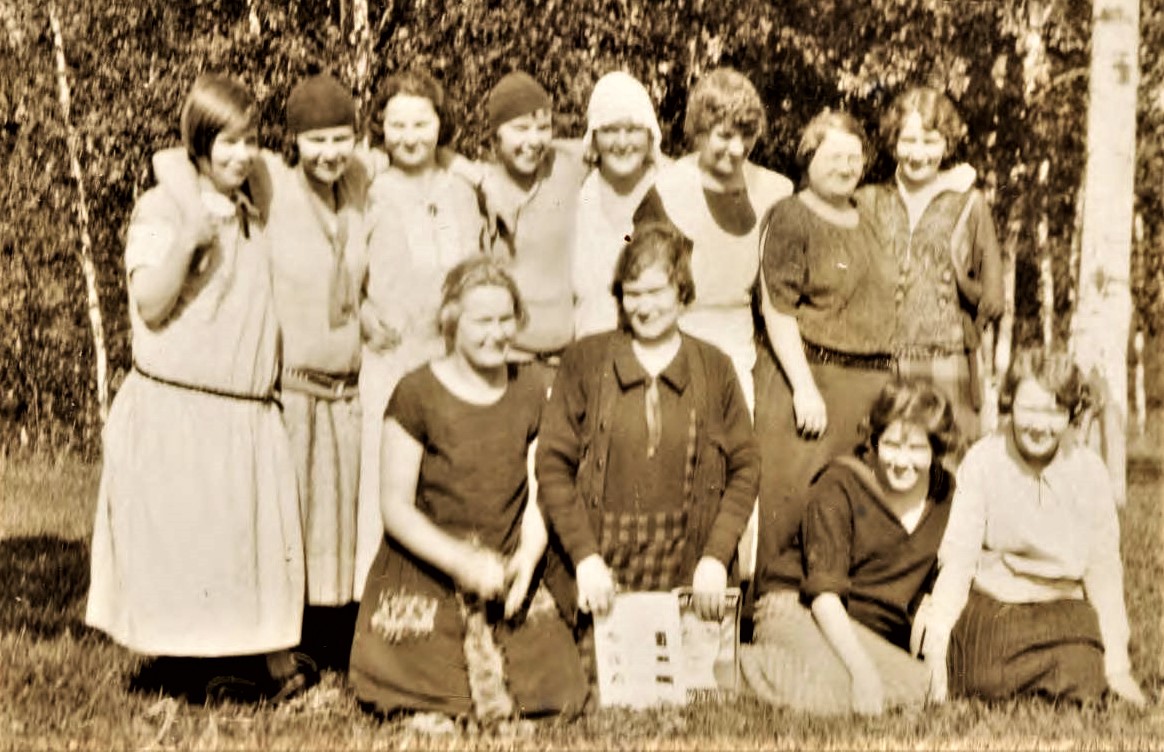
We had held Sunday schools here and there occasionally, but this work was unorganized, depending mostly on the inspiration of interested individuals. The truth was clear to every sincere socialist mother that our American-born children can do much more in the class struggle than we can, and that they are the ones who will be called upon to bring our struggle to its goal.
We realized that we must Join our working forces to achieve something. So in 1924 the Superior Women’s Section called a conference of all the women’s sections and sewing circles in our district. Seven such sections and circles sent delegates; in all there were 14 women who took part in the meeting. Tho the first conference lasted only four hours, many Important matters were discussed, good resolutions passed and work outlined. All the delegates had instructions to get something done for the education of the youth and children, and the conference did try to find some practical way to do it. Plans were made for organizing children’s Sunday and summer schools.
Also, the conference decided that youth courses lasting several weeks should be arranged, and the sections promised to do their utmost to finance them. A plea was issued to the Finnish Federation to organize such courses. This conference also designed some instructions for the work of the sections, also a secretary was elected. This first short conference of women proved to many comrades that organizing of these women’s sections does not bring up any sex line or problems merely of a sex nature into the movement, but, on the contrary, new fields of work and propaganda had been discovered that had hitherto been neglected and overlooked. The women’s sections were getting respect and approval of all serious-thinking comrades.
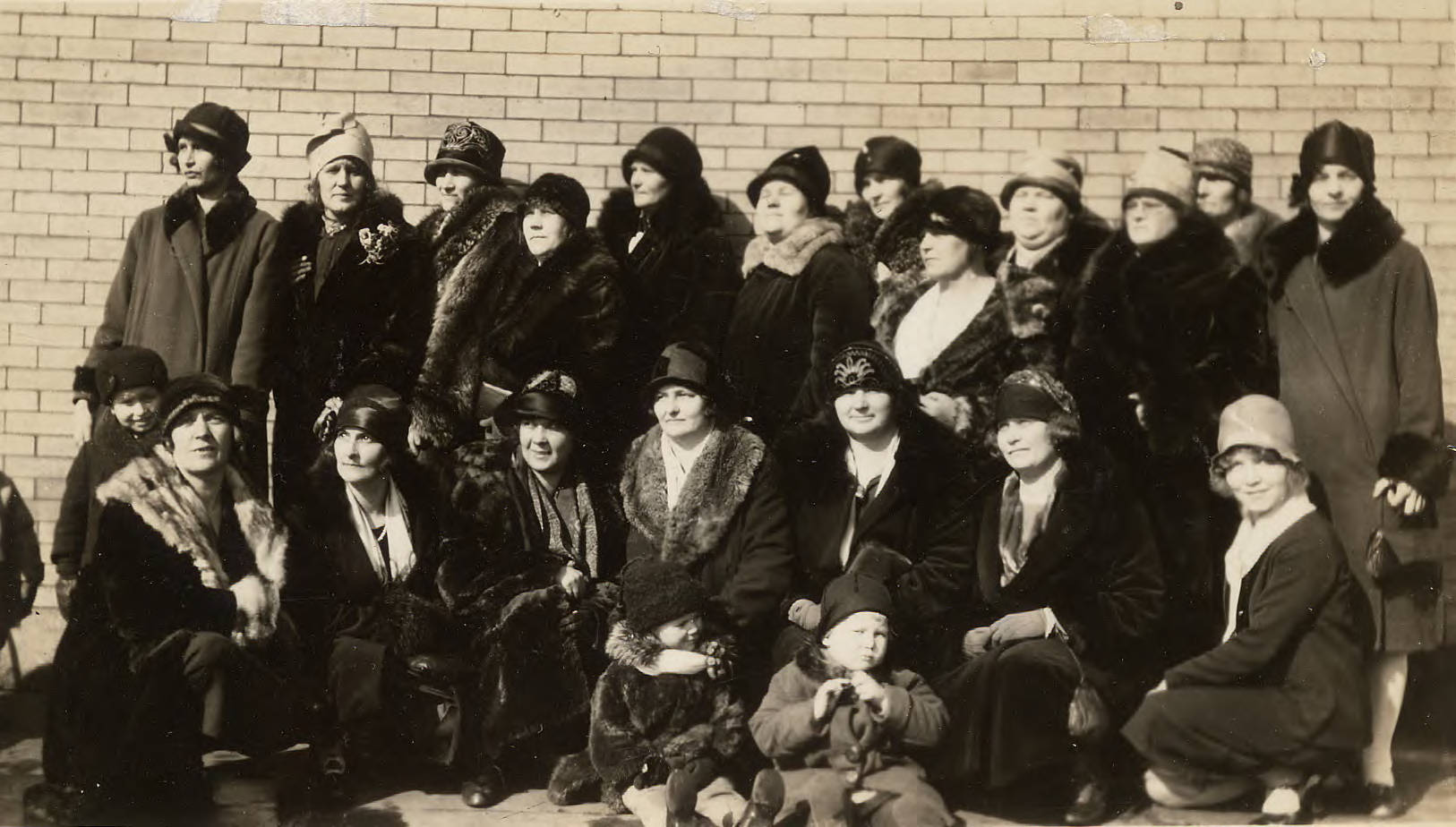
A year later, in March, 1925, the next conference of women’s sections was held with a little larger delegation than the first one. The education and organization of the youth and children was the main issue at this conference; also it was decided that a woman organizer should be employed to assist in organizing and educating the sections. The result of this organization work was to be seen in the next conference in November of the same year. When the sections convened again in November, the day before the Minneapolis district convention, there were delegates from 20 sections, in all about 35 delegates.
Last May the sections convened in a semi-annual conference in Chisholm. Several minor matters were discussed. Also a resolution was passed to support the farmer-labor party activities.
The sections convened in their annual conference recently—October 3 in Superior. There were about 125 delegates from the 26 sections of our district. This was the best conference we have yet held. Many of us have been a little worried as to what spirit the meetings in our district would display after a year of reorganization. This women’s conference at least proved that there has been no reason for any fears. The clear-sightedness and revolutionary spirit displayed during the discussion of the long agenda was wonderful.
II.
AS in all other preceding conferences, the question of our youths’ class education was one of importance, only now the discussion was based more than ever on practical experience. Our efforts in this work taught us many lessons. We have learned to use many different means to wrest the workers’ children from the clutches of bourgeois ideals and capitalist propaganda. The Finnish churches have had a strong hold on the Finnish workers’ children. They have arranged Finnish summer schools all over, and even many socialist parents have sent their children to them, “to learn Finnish,” as they say. When we arranged our summer school we had to conduct them in Finnish to get the sympathy of Finnish parents.
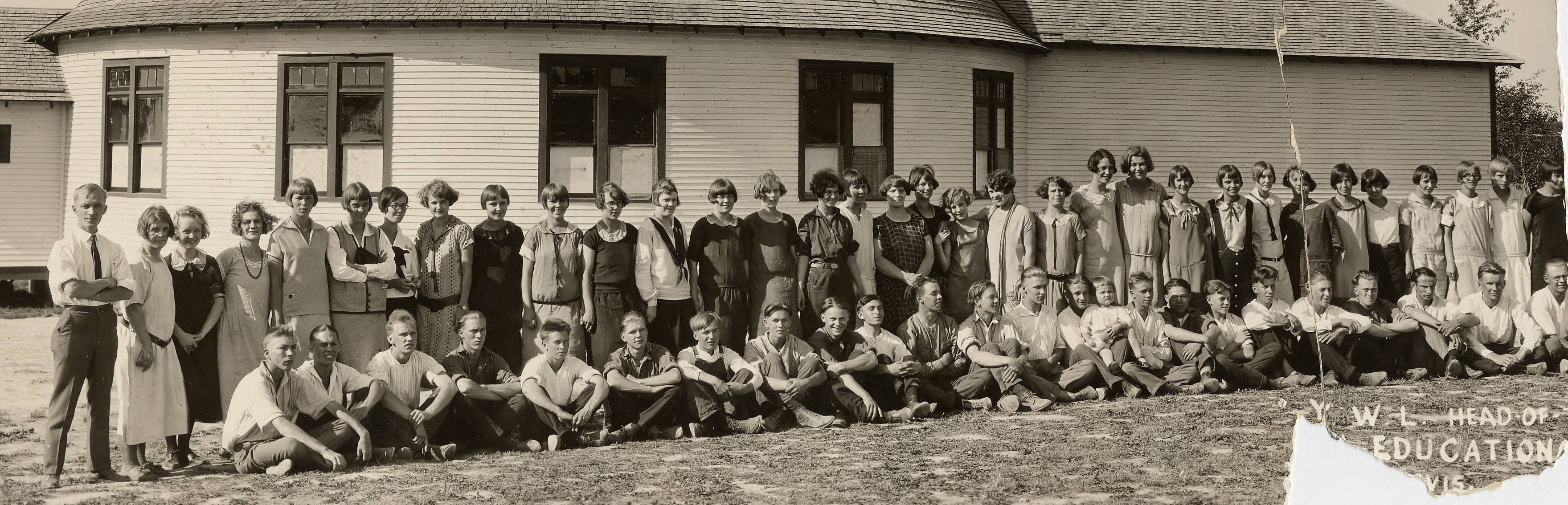
Our schools have been quite successful. Our children have enjoyed them so much better than the church schools that many parents, tho not even sympathizers, have sent their children to us—“to learn Finnish.” We realize that the children would understand the teaching better in English, but two languages are better than one. Besides, there has been only few teachers who could teach in both Finnish and English. The demand all over for these children’s summer schools Is so great that we must have more teachers.
The conference decided that courses will be arranged to educate teachers and organizers for the summer schools and junior groups. Until recently we have had only few junior groups in action. One reason for this has been the lack of organizers. Many parents resent the dues and many do not understand the necessity and importance of children’s organizations and therefore the junior groups have received less support than they should from many elders. The conference decided that special lessons at the teachers’ courses shall be given on junior group work.
Experience has taught us that the young folks can be easily Interested in athletics, games and fun, and that thru such activities they can be drawn in large numbers under the influence of our propaganda. Many boys and girls are so antagonistic and poisoned by capitalist propaganda against the workers’ movement that they cannot be forced even by their parents to join the Young Workers’ League, but the same young folks will join an athletic club.
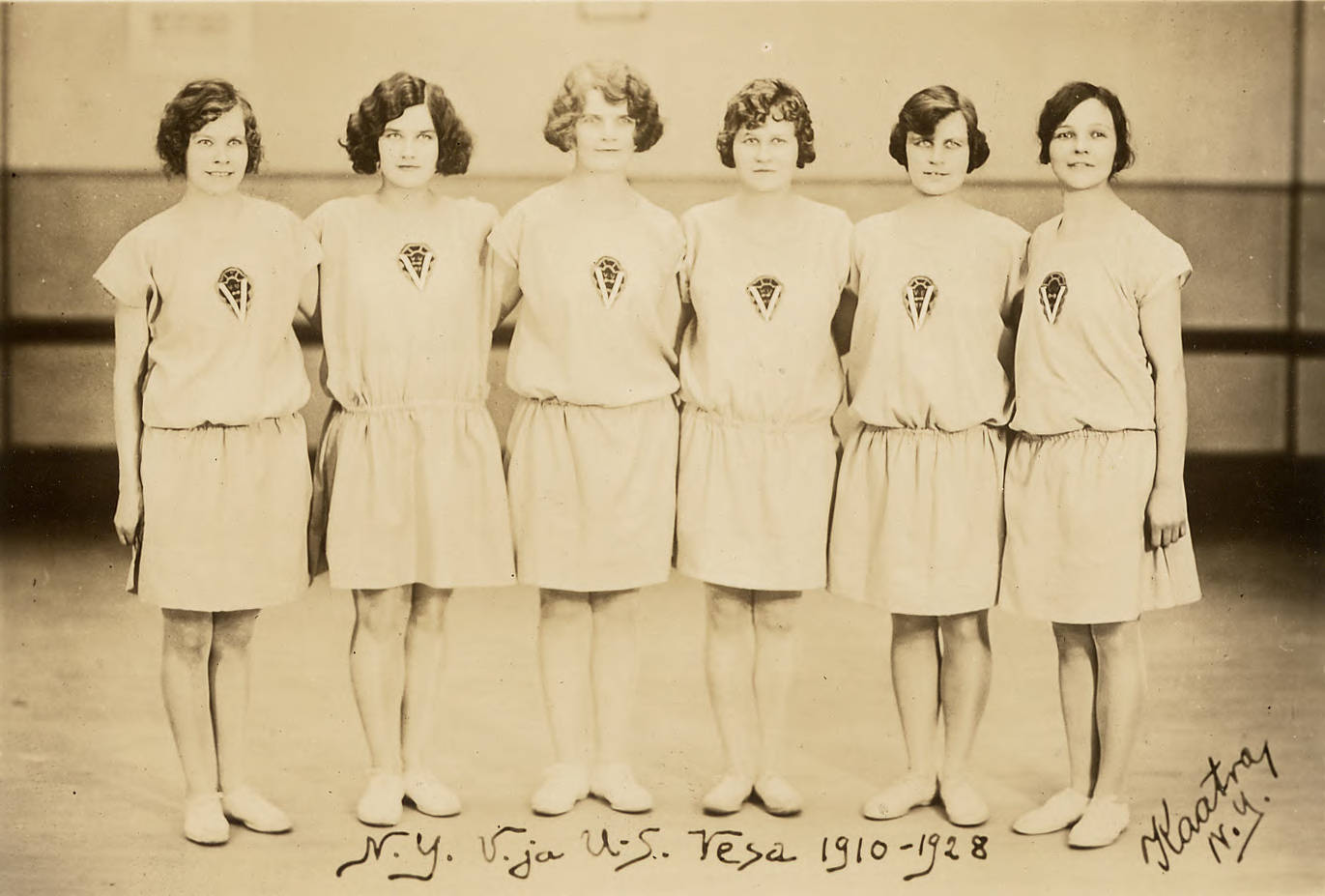
The young workers also are interested in athletics as well as Communist propaganda. But athletic clubs need organizers and directors. The women’s sections of Superior, Vaino, Iron River, Maple and Wentworth arranged and financed a three weeks’ athletic course last August for young boys and girls. The courses were an unexpected success, even financially.
Many delegates stated from experience that by athletics we can estrange the young folks from tough “moonshine” parties and other similar degrading influences that follow in the trail of this vicious bootlegging trade. We must be able to give the light-minded young folks something they will enjoy and by which we can get them into some organization where we will be in position to influence them by our propaganda. The conference decided that several youths’ athletic courses will be arranged during next summer.
In order to finance all these courses and schools and teachers, the sections pledged to arrange several socials to get the needed funds. Usually the women’s sections have always done more than their duty in financing our workers. Instead of having only one secretary, as hitherto, the conference elected a committee to assist the secretary in conducting the work of the sections.

The last and perhaps the most important question of the conference was the financing of The DAILY WORKER and propaganda among other nationalities, including Americans. The youth was thought of first, now also. What are the means by which be can get into contact with them? The youth courses such as we have held in Vaino these last two summers were thought to be the best way we can educate organizers of youth. Also by organizing athletic clubs and other young folks’ societies we can get the youth of other nationalities under the influence of the Communist movement. Other means by which we can reach the adult workers were discussed, such as distributing the co-operative monthly, the Pyramid Builder, and of course The DAILY WORKER. The financing of The DAILY WORKER was established permanently as one of the duties of Finnish women’s sections. A few years ago this issue would have been received rather coldly, but this decision proved that We have already made considerable progress. The DAILY WORKER issue was accepted with a spirit that befits a class conscious worker; it was accepted as one of our very own problems. The conference resolved that each section organize a sewing circle which works and gathers funds only for our DAILY WORKER.
These circles shall arrange as many socials as they can, at least one each year, for this purpose. First of all, each section shall arrange a social on the nearest date possible for the benefit of The DAILY WORKER. Also the conference adopted a resolution that the capitalist dailies and weeklies in the workers’ homes be replaced by The DAILY WORKER. The foreign-born workers who cannot read The DAILY WORKER themselves should get It for their children instead of the bourgeoisie papers.
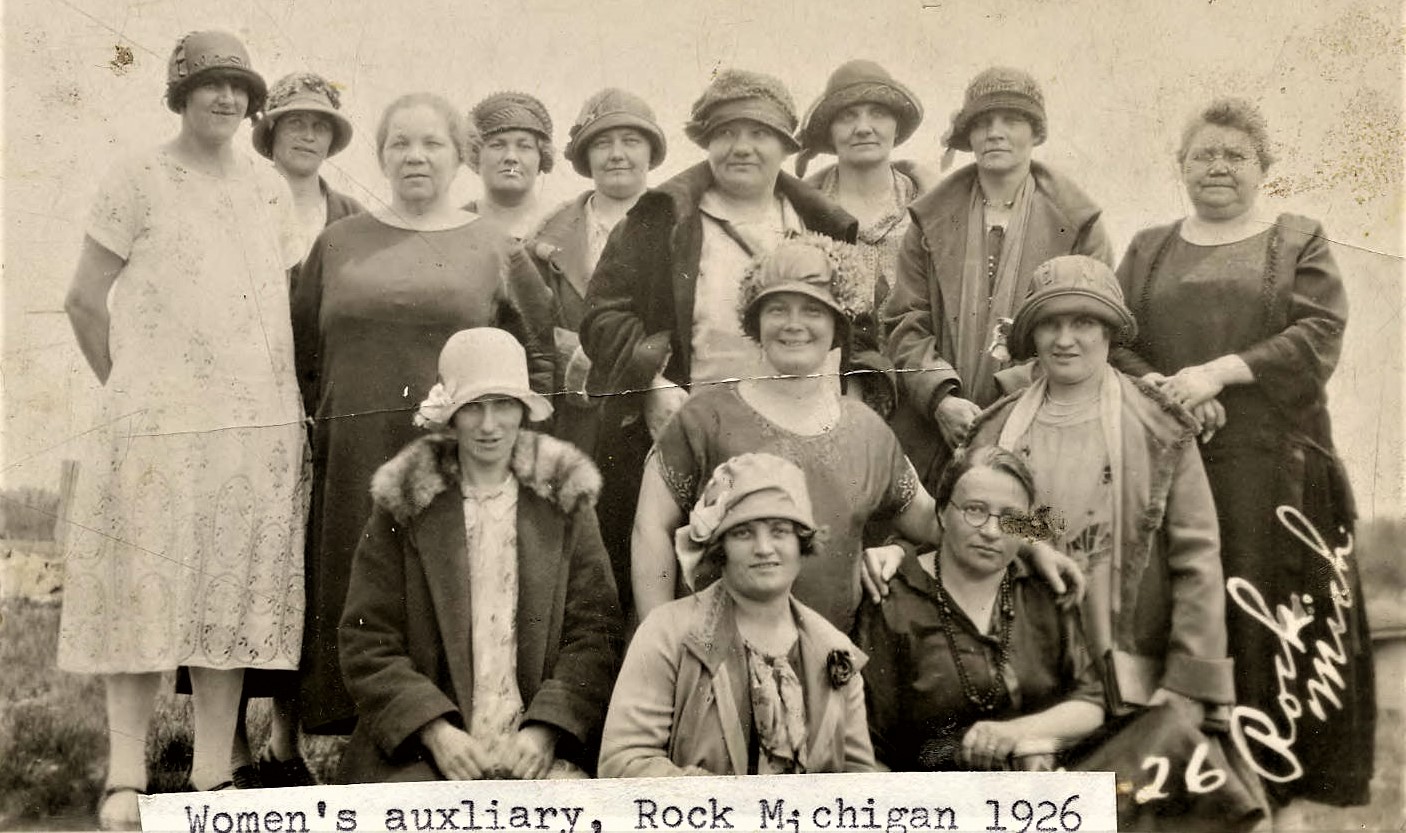
This conference was very educating and inspiring. It proved that the revolutionary spirit is clear and alive among the Finnish working women and that the message of Communism has found a fertile soil in their minds. A few more years of such progress us the last four years it the existence of our sections have been and there will not be even any backwoods Finnish locality where there isn’t a group of revolutionary women in action.
Nurmi, Secretary of the Finnish Women’s Section of Minn. Dlst.
The Daily Worker began in 1924 and was published in New York City by the Communist Party US and its predecessor organizations. Among the most long-lasting and important left publications in US history, it had a circulation of 35,000 at its peak. The Daily Worker came from The Ohio Socialist, published by the Left Wing-dominated Socialist Party of Ohio in Cleveland from 1917 to November 1919, when it became became The Toiler, paper of the Communist Labor Party. In December 1921 the above-ground Workers Party of America merged the Toiler with the paper Workers Council to found The Worker, which became The Daily Worker beginning January 13, 1924. National and City (New York and environs) editions exist
PDF of full issue 1: https://www.marxists.org/history/usa/pubs/dailyworker/1926/1926-ny/v03-n291-NY-dec-23-1926-DW-LOC.pdf
PDF of issue 2: https://www.marxists.org/history/usa/pubs/dailyworker/1926/1926-ny/v03-n295-NY-dec-29-1926-DW-LOC.pdf
 Revolution's Newsstand