The (Unified) Communist Party on one of the U.S. class struggle’s most dramatic episodes, the march of West Virginia miners now called the Battle of Blair Mountain in the summer of 1921. Thorold Rogers is clearly a pseudonym, for whom I do not know.
‘Mingo’ by Thorold Rogers from The Communist (Communist Party of America, Section of the Communist International). Vol. 1 No. 4. October, 1921.
WHEN miners strike there is fight. And when miners fight there is war! A strike of the miners is not a folded-arm, benefit-collecting affair. It is a war- bitter class war!
Armies, thugs, gunmen, detectives, courts, trusts, and labor bureaucrats-all have bowed to the dauntless miners in action. Despite the Wilsons, Mitchells, Whites, and Lewises, the U. M. W. has participated in many an heroic struggle. Cabin Creek, Ludlow and Mingo are milestones in the annals of the class struggle in America.
The Contending Forces
For over twenty years West Virginia has been the scene of a fierce struggle between coal-barons and miners. The U. M. W., one of the largest labor unions in the world, has time and again tried to win a hold among the one hundred thousand miners of the State. In this effort the union was thwarted by the corporations and the State and Federal governments. Today, less than half the mine workers are unionized. Furthermore, the outlook for organization is not bright.
The most vicious labor-crushing combinations run the mines of West Virginia. Gary, the steel king, and Atterbury, a rail road lord, own most of the mining area. Morgan, of course, also has his place here. Our United States Solicitor General, James W. Beck, and the Secretary of the Treasury, A. W. Mellon. are heavy stockholders. The situation affords striking proof of the unity of the capitalist class executive power with the stock exchange.
Field of Battle
West Virginia is the home of the rule of bludgeon and gun. The mayors, magistrates and public officials are open strike-breakers. The governmental machinery, the homes, the stores, schools, hospitals, churches and press are owned outright by the coal magnate s. Even a New York Tribune correspondent had all his work censored by a representative of “Logan County’s Army of Defense.” So intense has been the struggle, that the notorious Baldwin-Felts gunmen have been called in by the operators. These armed thugs are today the guardians of “law and order.” They collect rents, deport workers. beat up miners, and act as general hangmen for the coal-barons.
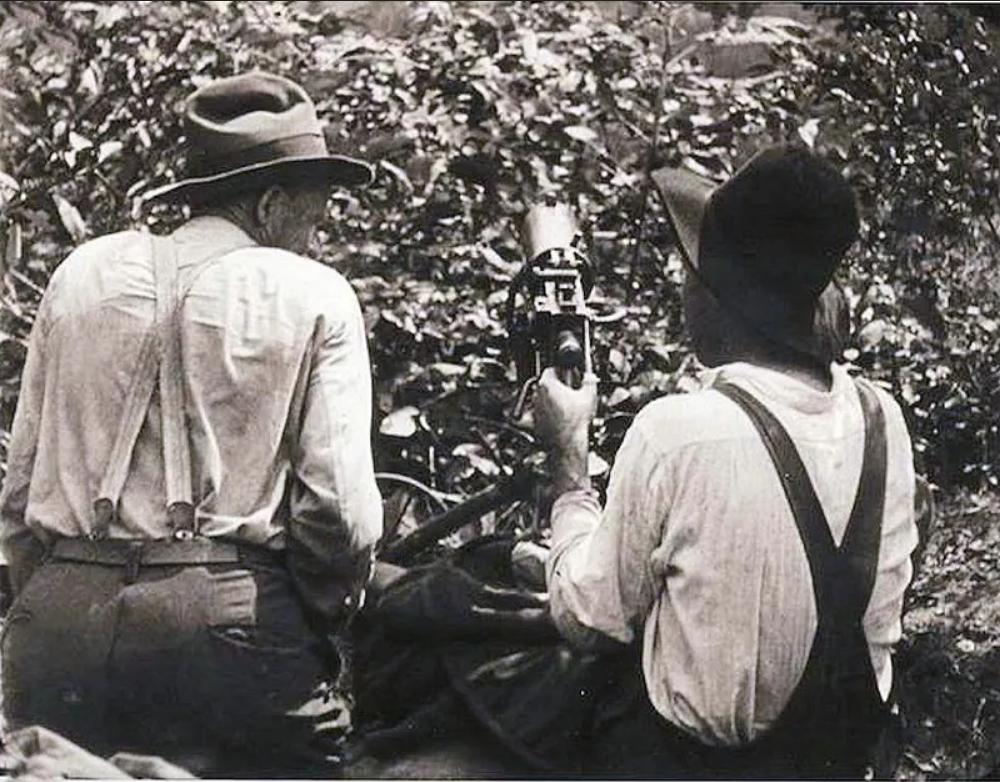
There is nothing at which the capitalists will stop in their attempts to crush the miners. All workers’ organizations are honeycombed with spies. The “Yellow Dog Contract” is employed to stamp out the slightest manifestation of unionism. West Virginia is a veritable Gibraltar of open-scabbery. Arson, pillage, murder, deportation, jails and injunctions are the order of the day. The workers are met at every turn by clubs, bayonets and machine guns.
The Issue

The fundamental issue in this bitter struggle is the right to organize. The fight is a fight against inhuman working conditions, against brutally degrading exploitation. The struggles are not revolutionary despite the fact that they now and then break out into open armed conflict. Many conditions, peculiar to the locality, have played an important part in intensifying the contest. The mines are relatively new and the laborers have in the main been drawn from the mountaineers. For decades the miners have handled arms. And they handle them well. They are nearly all natives of Welsh and Scotch ancestry; the ancestry running back for more than a century. In so far as actual class-consciousness is concerned, the workers are even less developed than the average mass of city laborers. These are the factors that add fury to the combat.
On The Firing Line
Strikes are not accidents but regularly recurring incidents in this region. The local conditions coupled with the character of the capitalist opposition only add fuel to the flames. In July, 1920 the U. M. W. declared a strike in Mingo. What followed is now well known. Sid Hatfield, chief of police, friend of the miners, was foully murdered by the gunmen. The strikers were beaten and clubbed. Arrests, indictments, wholesale evictions, murdering of workers, pillaging by the armed corporation thugs, and starvation for the wives and children of the miners came in the wake of the strike order.
For months the war went on. In spite of their leaders and the tremendous odds against them the workers revolted. The last march was only a repetition of the events of 1919. All the efforts of the miners for compromise had failed. Governor Morgan turned down their request for a conference with the operators. He turned a deaf ear to their pleas for a special session of the legislature. Of course, the reason for his conduct was obvious. The Governor would not dare antagonize the corporations. He appropriated the plans of the coal-barons lock, stock and barrel. Under no circumstances would the State’s chief executive do anything which might be construed as a recognition of the union. President Harding was appealed to, but it was all in vain.
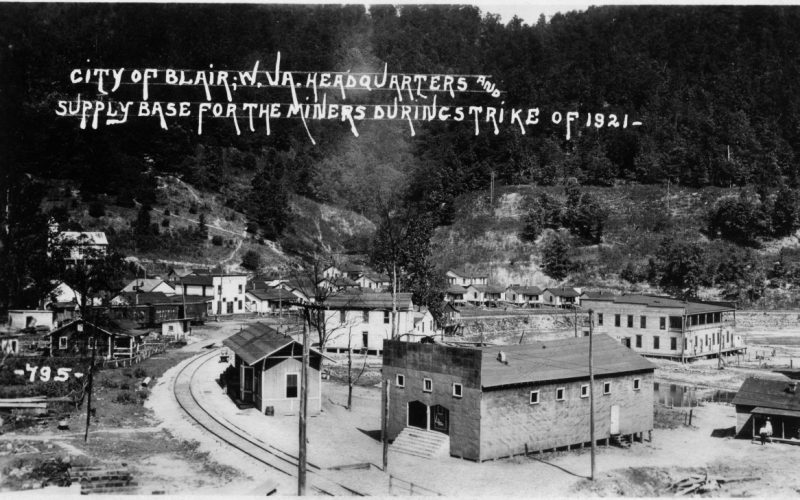
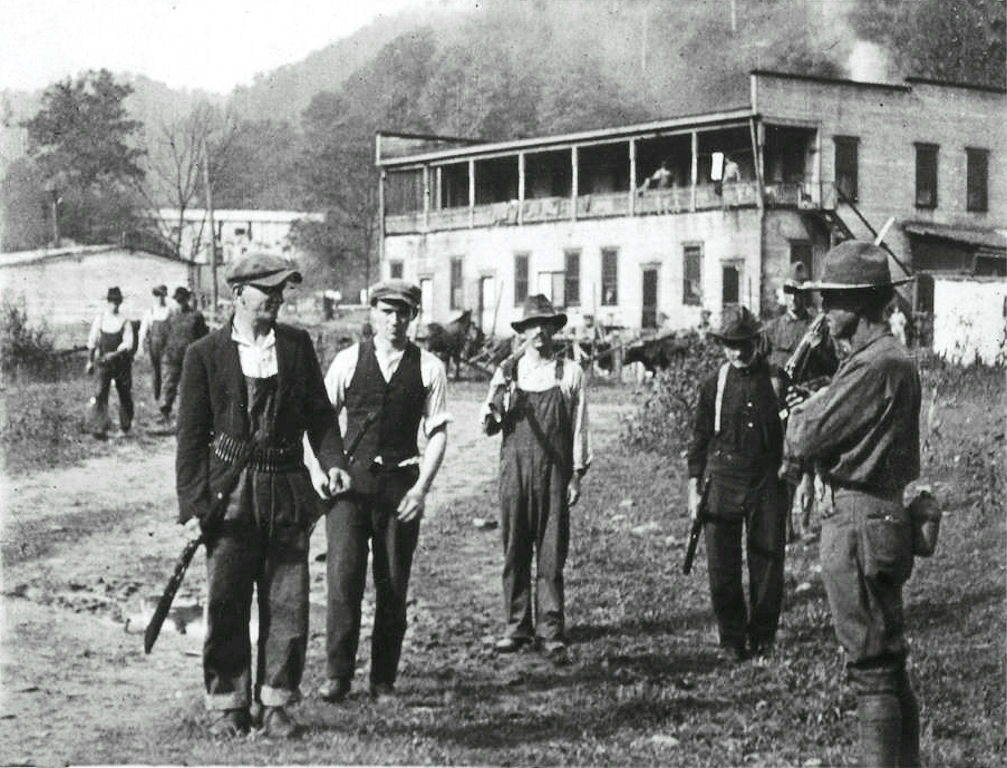
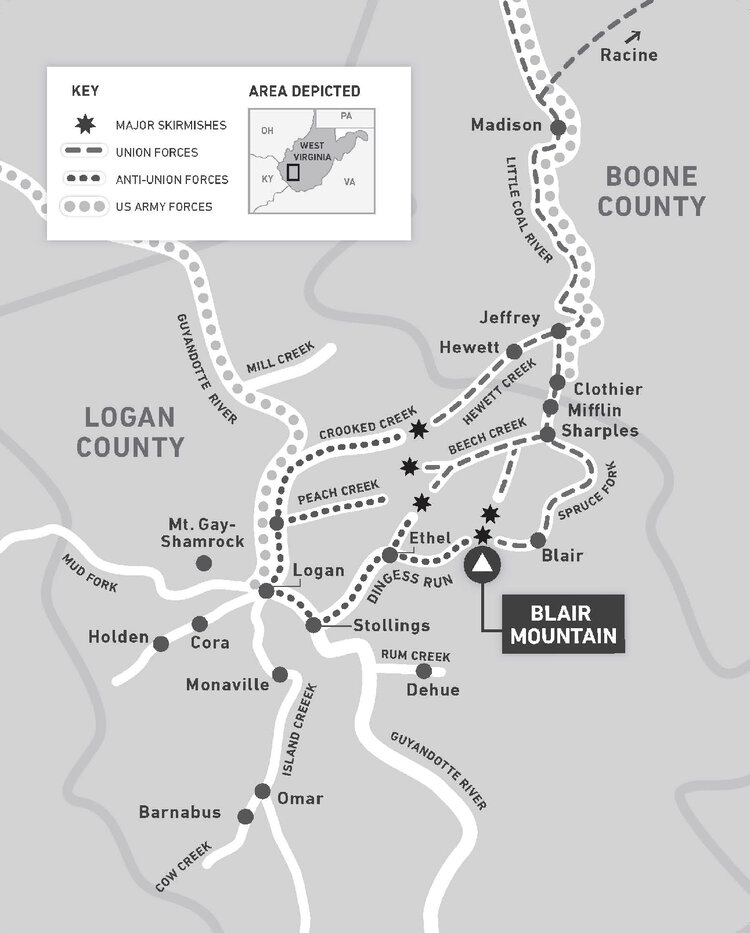
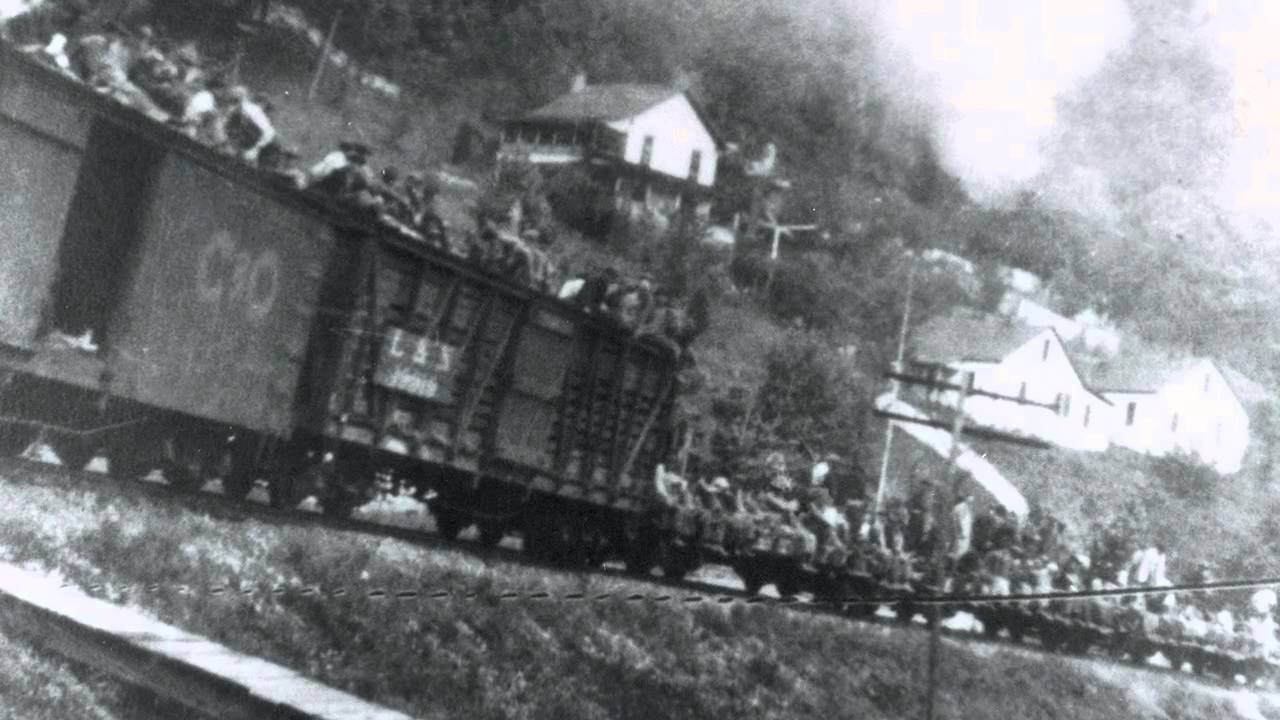
From the hills of West Virginia and across the boundary of Kentucky the miners came streaming to the rescue of their enslaved brothers of Mingo. Six thousand gathered for a struggle along the Spruce Fork Ridge in Logan county. They were met by the capitalists’ hired murderers cloaked in State authority. The deputy sheriffs, chosen by and in the pay of the operators, were armed to the teeth in defense of bourgeois law and order-oppression of the working class. Lives were lost and many were wounded.
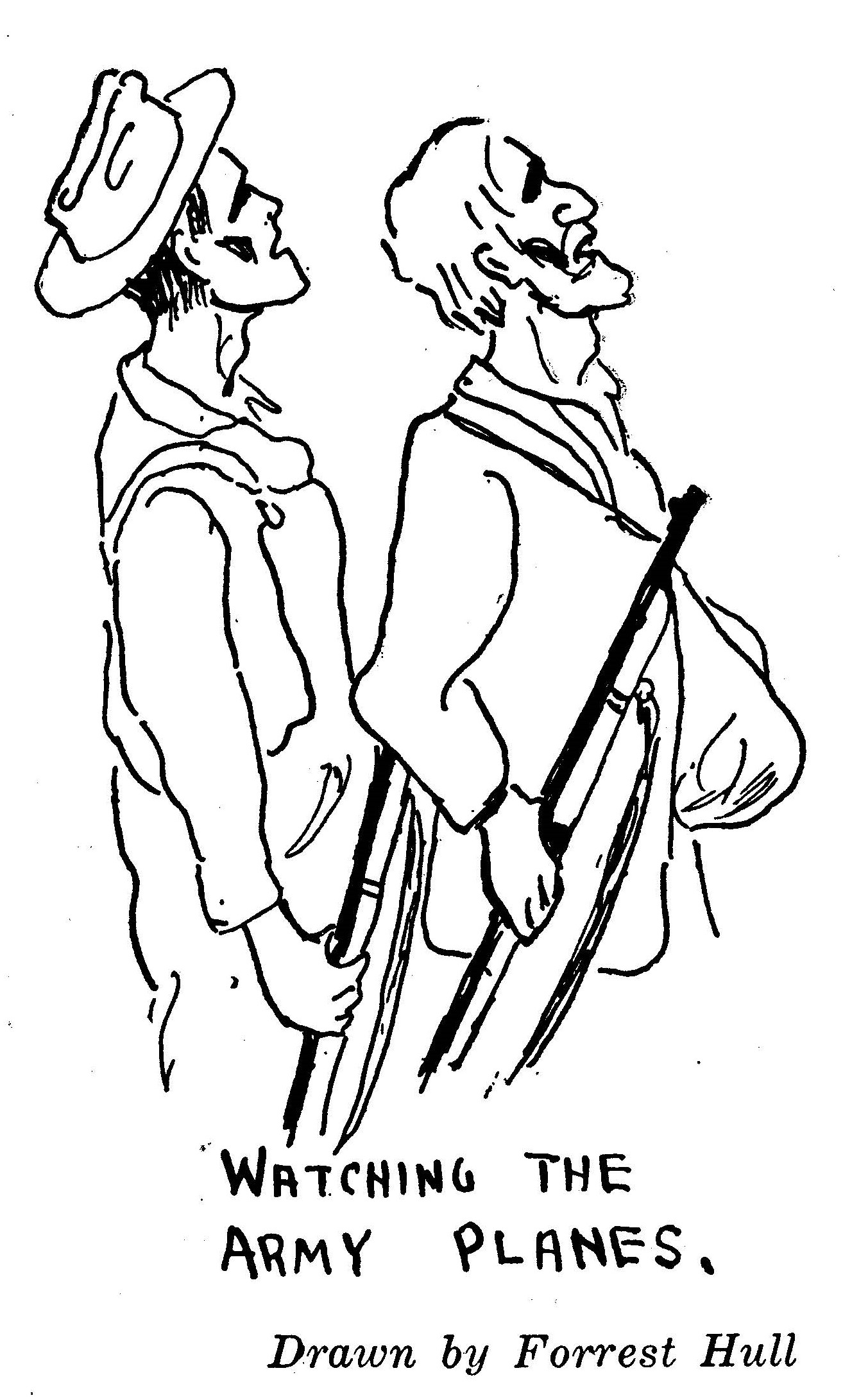
Then came Harding’s answer to the workers’ appeal. Federal troops, airplanes, gas bombs and machine guns were rushed to crush the miners. Profits and the closed scab system were in danger. The workers had to be crushed.
Safe for Capitalist Democracy
It was the Federal troops that saved the hired thugs and White Guard rabble from the wrath of the miners. The workers were disarmed. They were driven home- a magnificent tribute to the prowess of gatling guns, airplanes and artillery.
Now, “Justice” must have her way! Hundreds of miners have already been indicted for murder and “insurrection,” hundreds of workers are to be jailed. Anent the armed thugs- not a word! They must be free to maintain the capitalist dictatorship.

God’s own country, West Virginia, a colony of the coal barons, has been made safe for capitalist democracy-working class slavery. More workers’ blood must be spilled! Again evictions, deportations, pillage, arson and murder! More starvation for the women and children of the working class! Thus will it be until the American workers learn to speak the language their exploiters and oppressors understand best.
Lessons of the Struggle
There is “peace” at Mingo. A capitalist peace. An armed peace. No issue has been settled, though the workers have again met with defeat. New battles are in preparation.
The fight at Mingo was more than an ordinary strike. It was a struggle between the largest labor union in America and one of the most powerful labor oppressors, the steel trust. Besides, the working class is today everywhere on the defensive. Therefore, the slightest recognition of the miners’ union would have been a victory for the whole working class. Hence the dispatch with which the capitalist bloodhounds were unleashed at the miners. Thus the arrogant tone of the bourgeois press; the swift “justice” of their courts, the great military display, and the wave of capitalist solidarity in behalf of “law and order.”
Mingo offers many valuable lessons to the workers of America. (1) The role of the capitalist state in the class struggle seldom appeared more brutally naked. The County, State and Federal governments were in the open service of the exploiters- an open attack on the workers. Our captains of industry and finance and the real State executives are of one and the same junta.
(2) The capitalist class will not hesitate to accept aid from labor leaders. But the moment these leaders have rendered their services, the bourgeoisie will discard them. Should the exploiters have any doubt as to the further possibility of receiving aid from the workers’ spokesmen they will make haste to send them to the gallows. The indictment of C. F. Keeney and Fred Mooney, district officials of the U. M. W., for murder, offers cruel proof of this. These leaders tried their best to hold the workers in check. Yet the capitalists demand their heads.
(3) Our masters are prepared to crush ruthlessly any attempt of the workers to secure the slightest improvement in their conditions- let alone any effort of a political nature. The entire capitalist class is bent upon driving the workers into virtual slavery. Class solidarity is at its height with the bourgeoisie.
(4) A defeat of any one section of the working class is a defeat for the whole working class, since the exploiters are thus encouraged to intensify their oppression. Working class solidarity is now more necessary than ever before.
(5) All the basic industries of the country are in the hands of one group of capitalists. An alliance of miners and railroad workers, with a view of organizing and uniting with the steel workers is an immediate necessity. Otherwise the workers will surely go to the wall.
The Party’s Task
We must bring these lessons home to the workers. We must not allow Mingo to be blotted out of the workers’ memory so readily. Propaganda alone, however, is insufficient. The Party must propose concrete, tangible plans, which will draw as many workers as possible into action.
Our nuclei in the unions should initiate a movement to bring the pressure of all organized labor on the Federal government in order to rid West Virginia of the Baldwin-Felts gunmen. The union bureaucracy must be driven into the struggle.
We should strive to have the rail workers’ unions refuse to move thugs and strike breakers into West Virginia.
Country-wide mass meetings will promote working class solidarity and tend to slacken the pace of capitalist suppression. The Mingo struggle must be correlated with the struggle against the whole open shop-open slavery campaign. Financial assistance must be rendered to the miners by the rest of the workers. Otherwise the Mingo miners are doomed.
Mingo offers the Party an excellent opportunity for propaganda and activity. The situation is not revolutionary. Yet, the chances for drawing the masses into the struggle, for solidifying the workers are numerous.
Our slogans in this campaign must be: Disarm the Baldwin-Felts thugs! Away with the corporations’ hired gunmen! The miners must have their union! Stand by the miners of Mingo!
Emulating the Bolsheviks who changed the name of their party in 1918 to the Communist Party, there were up to a dozen papers in the US named ‘The Communist’ in the splintered landscape of the US Left as it responded to World War One and the Russian Revolution. This ‘The Communist’ began in July 1921 after the “Unity Convention” in Woodstock, New York which created the Communist Party of America, Section of the Communist International uniting the old CPA with the CLP-CPA party. With Ruthenberg mostly as editor the paper acted as the Party’s underground voice, reporting official party business and discussion. The Toiler served as the mass English-language paper. This ‘The Communist’ was laid to rest in December, 1922 with the creation of the above-ground Workers Party. An invaluable resource for students of the formation of the Communist Party in the US.
PDF of full issue: https://www.marxists.org/history/usa/pubs/thecommunist/thecommunist6/v1n04-oct-1921-com-CPA.pdf
 Revolution's Newsstand