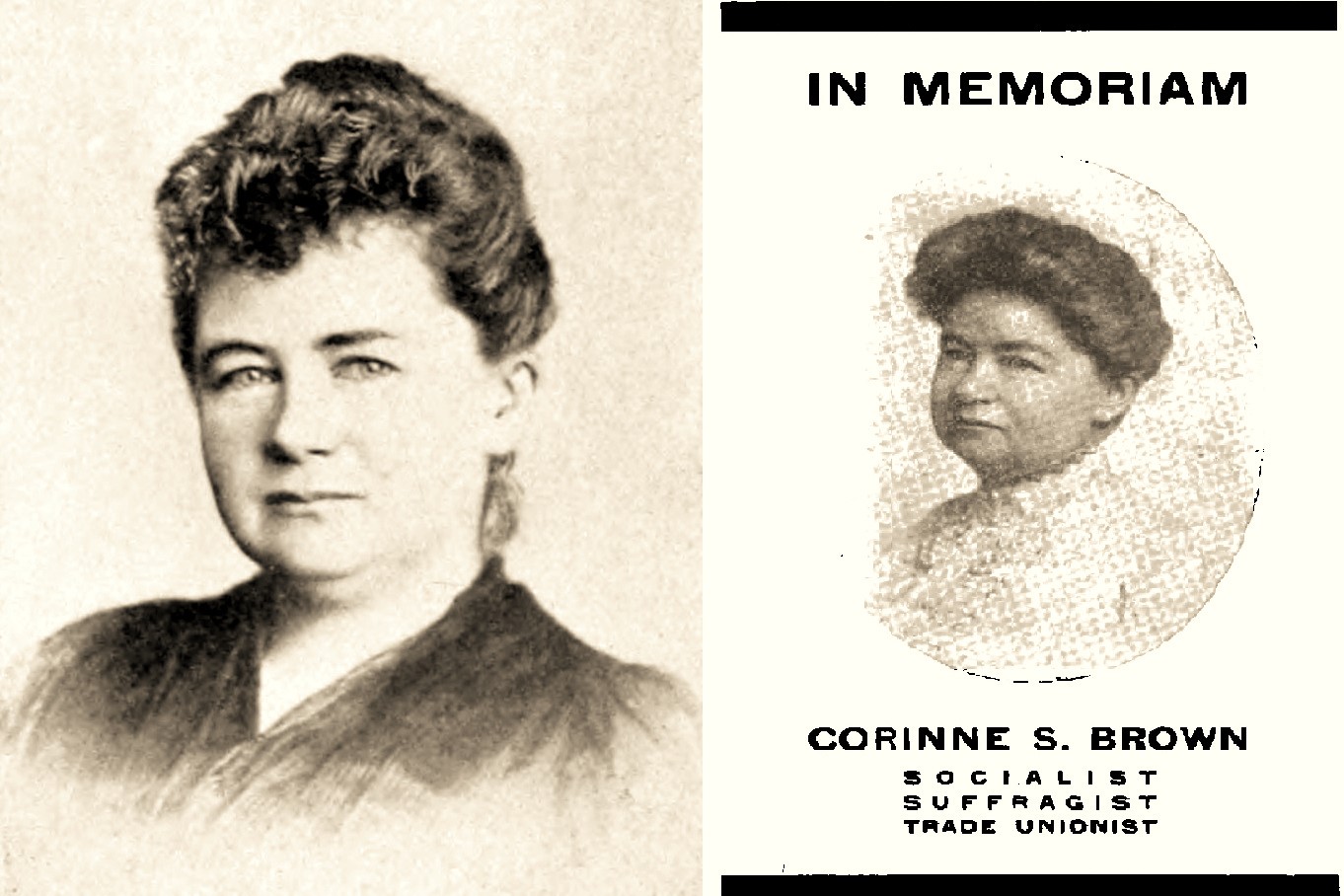
Comrade Brown was a traitor to her class, became a Marxist in 1880s and played an enormous role in the movement of working women. She came to Debs Social Democratic Party, of which she was a founder a leader member in Chicago, through Edward Bellamy’s ‘Nationalist’ movement. Later, she would serve as International Delegate of the Socialist Party, also a charter member of, to the Second International’s 1904 Amsterdam Congress. She also presided over the first Working Woman’s Day in Chicago on May 3, 1908 which inspired New York women to follow suit the following year.
‘Corinne S. Brown (1849-1914): In Memoriam’ by Harriet F. Morse from the Coming Nation. Vol. 1 No. 6. April, 1914.
SHE has left us- Corinne Brown, that dauntless pioneer of our movement. Our movement? What movement? Socialism. What movement? Woman’s suffrage. What movement? The great trade union movement. What movement? The movement in behalf of the economic emancipation of woman. The movement against capital punishment. The world peace movement. All great movements in behalf of the world’s victims found a fearless champion in Corinne Brown. What glorious courage was hers at a time-some twenty-five years ago- when great courage was required! That a member of the victimized class should fight in his own behalf is not surprising; that a banker’s wife should do so persistently, at all times, in the face of slurs, slights and questionings, commands more consideration. Yet her nature was so sweet and wholesome withal, and her fund of wit so exhaustless, that she made and kept friends where others would have lost them.
How sweeping her denunciations, how scathing her analysis of the motives governing the very exploiting class to which she belonged! Yet her vision was so clear, her logic so unanswerable, her wit so telling, that she made all but the mentally blind see and understand.
Henry D. Lloyd once said of her that she was “like a salt breeze blowing over pine woods.” One friend, inclined to be conservative and to disagree with her- at best ameliorative in his exertions and sympathies- said: “No matter what she says, or does, or thinks, I love her.”
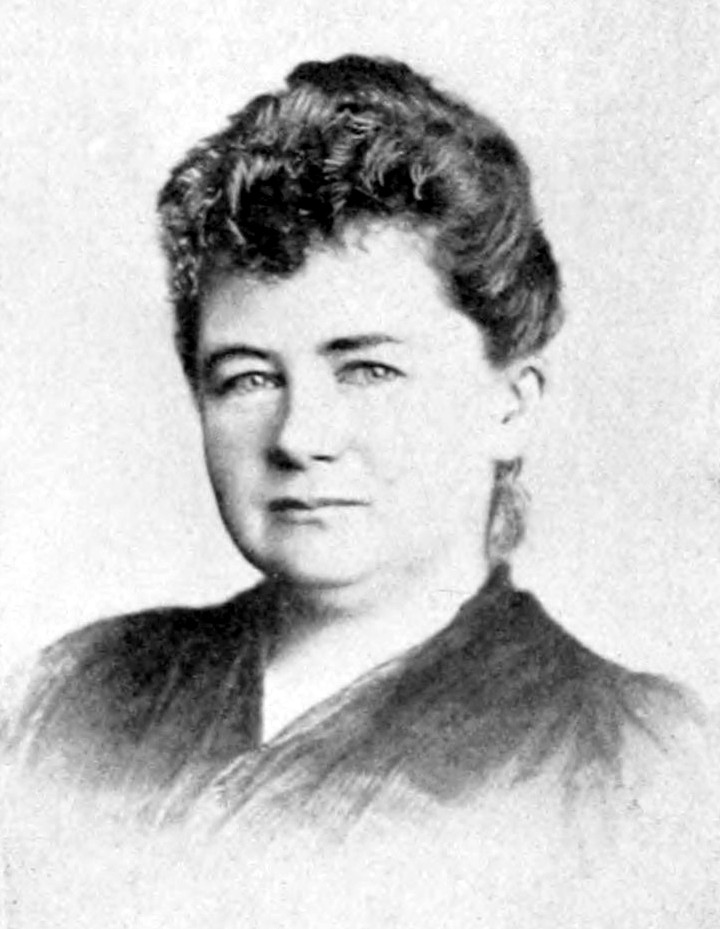
We all loved her for her great human heart, and her clear brain. When listening to ancient platitudes or sentimental slush at a woman’s club meeting, she would sail in, to the great relief of some of us, and clear the atmosphere as might an electric storm; but her storms were always followed by sunshine.
She held very liberal ideas on marriage and divorce, yet her own home life was ideal, thus silencing wagging tongues.
She spurned all personal credit. Once, when told at a public meeting what sacrifices she had made in behalf of the world’s unfortunate, she said: “Pshaw! I have made no sacrifices. I have enjoyed every minute of it.”
At another time. when a friend spoke of how much a noted pioneer in the Socialist movement owed to her for her assistance in helping him to write papers and to get his ideas before the public, she replied: “I owe him far more than he owes me. I taught him grammar and composition; he taught me the meaning of life.”
When a mind like that of Corinne Brown take, its leave, even those of us not sure of immortality wonder if such gifts. such vision, such feeling, can be allowed to go to waste. To have known such a dear comrade, to have worked with her, and to remember her, is one of life’s experiences which make it worth while.
The Coming Nation was a weekly publication by Appeal to Reason’s Julius Wayland and Fred D. Warren produced in Girard, Kansas. Edited by A.M. Simons and Charles Edward Russell, it was heavily illustrated with a decided focus on women and children. The Coming Nation was the descendant of Progressive Woman and The Socialist Woman which folded into the publication. The Socialist Woman was a monthly magazine edited by Josephine Conger-Kaneko from 1907 with this aim: “The Socialist Woman exists for the sole purpose of bringing women into touch with the Socialist idea. We intend to make this paper a forum for the discussion of problems that lie closest to women’s lives, from the Socialist standpoint”. In 1908, Conger-Kaneko and her husband Japanese socialist Kiichi Kaneko moved to Girard, Kansas home of Appeal to Reason, which would print Socialist Woman. In 1909 it was renamed The Progressive Woman, and The Coming Nation in 1913. Its contributors included Socialist Party activist Kate Richards O’Hare, Alice Stone Blackwell, Eugene V. Debs, Ella Wheeler Wilcox, and others. A treat of the journal was the For Kiddies in Socialist Homes column by Elizabeth Vincent.The Progressive Woman lasted until 1916.
PDF of full issue (large cumulative file): https://books.google.com/books/download/The_Coming_Nation.pdf?id=IMksAQAAMAAJ&output=pdf
 Revolution's Newsstand