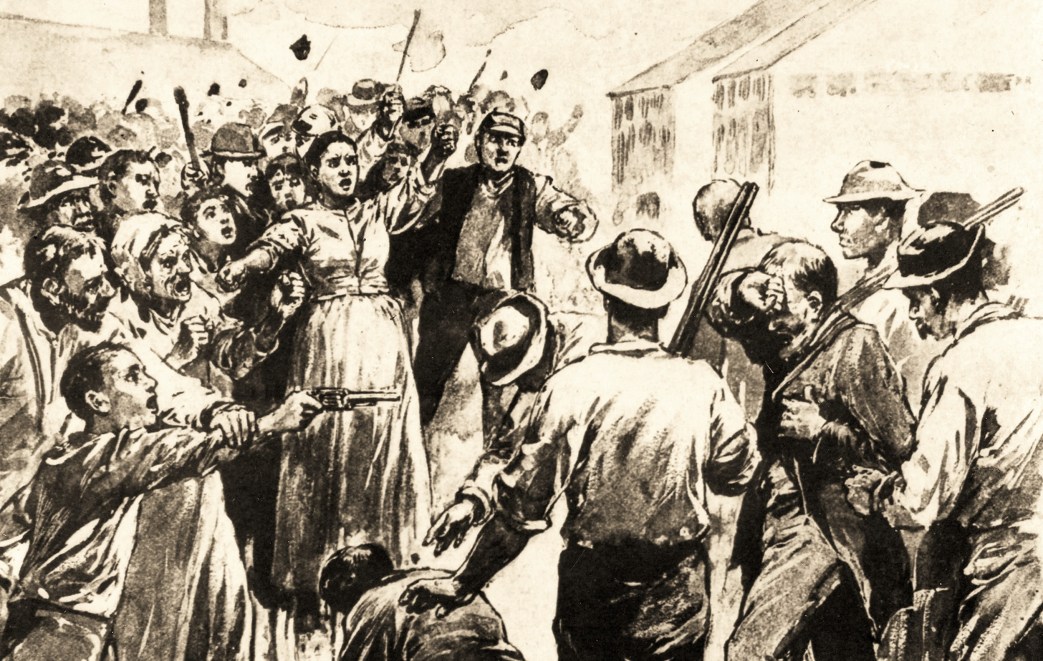
‘The War for Freedom’ by Eugene V. Debs from The Social Democratic Herald. Vol. 2 No. 28. January 11, 1902.
The country we inhabit is generally supposed to have been in a state of peace since the close of the Civil War, excepting the brief period required to push the Spaniards off the western continent. And yet during this reign of so-called peace more than a score of bloody battles have been fought on American soil, in every one of which the working class were beaten to the earth, notwithstanding they outnumber their conquerors and despoilers at least ten to one, and notwithstanding in each case they asked but a modest concession that represented but a tithe of what they were justly entitled to.
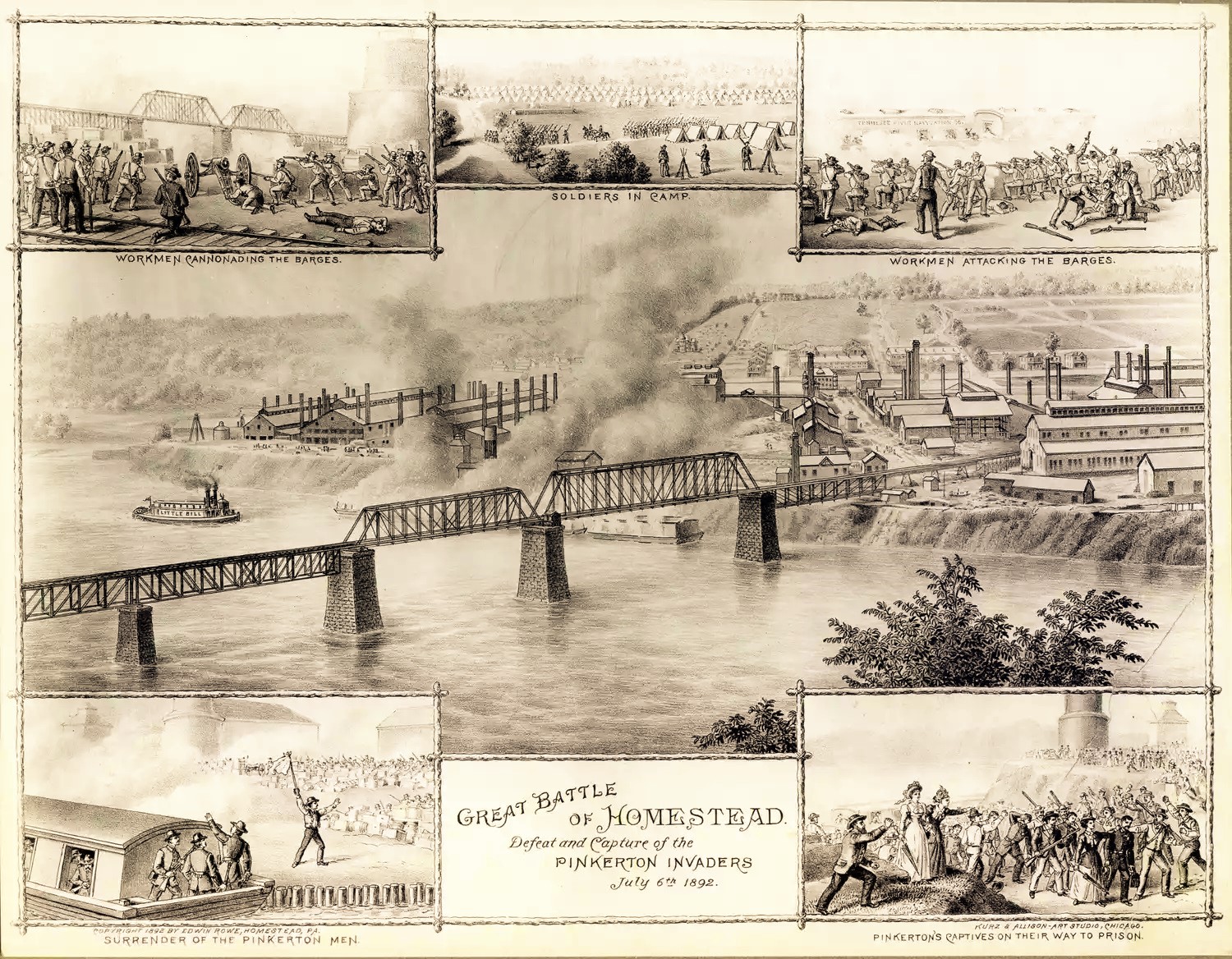
To recall the bloody scenes in the Tennessee mountains, the horrors of Idaho, the tragedies of Virden, Pana, Buffalo, Chicago, Homestead, Lattimer, Leadville, and many others, is quite enough to chill the heart of a man who has such an organ, and yet above the cloud and smoke of battle there shines forever the bow of promise, and however fierce the struggle and gloomy the outlook, it is never obscured to the brave, self-reliant soul who knows that victory at last must crown the cause of labor.
Thousands have fallen before the fire of the enemy and thousands more are doubtless doomed to share the same fate, but
“Freedom’s battle once begun,
Bequeathed from bleeding sire to son,
Though baffled oft, Is ever won.”
The struggle in this and other lands by the children of toil is a struggle between classes which in some form or other has been waged since primitive man first captured and enslaved his weaker fellow-being. Through the long, dark night of history the man who toiled has been in fetters, and though today they are invisible, yet they bind him as securely in wage slavery as if they were forged of steel.
How the millions toil and produce! How they suffer and are despised! Is the earth forever to be a dungeon to them? Are their offspring always to be food for misery? These are questions that confront the workingmen of our day and a few of them at least understand the nature of the struggle, are conscious of their class interests, and are striving with all their energy to close up the ranks and conquer their freedom by the solidarity of labor.
In this war for freedom the organized men in the Western states have borne a conspicuous and honorable part. They have, in fact, maintained better conditions on the whole than generally prevail, and this they have done under fire that would have reduced less courageous and determined men. But, notwithstanding their organized resistance, they must perceive that in common with all others who work for wages they are losing ground before the march of capitalism.
It requires no specially sensitive nature to feel the tightening of the coils, nor prophetic vision to see the doom of labor if the government is suffered to continue in control of the capitalist class. In every crisis the shotted guns of the government are aimed at the working class. They point in but one direction. In no other way could the capitalists maintain their class supremacy. Court injunctions paralyze but one class. In fact, the government of the ruling class today has but one vital function, and that is to keep the exploited class in subjection.
Labor unions, most of them with antiquated methods, are inadequate to cope with the situation in any crisis, and when the smoke of battle clears away their members lie stark and dead on the field, or languish in prison, or are forced to leave wife and child and tramp among strangers in quest of a job. Every battle that has been fought teaches the one lesson, that the workers must unite upon class-conscious ground, that they must vote as one against every capitalist candidate even though he be their best personal friend; that they must nominate their own candidates upon a platform that recognizes clearly and declares unequivocally in favor of their interests and stand by them until they make their own class the governing class and abolish the wage system and the countless crimes that follow in its train.
Let the labor unions staunchly contend with all their power for such concessions as are possible under the present system, but at the same time let the members who compose them open their eyes to the fact that an industrial revolution is in progress and that to secure inestimable blessings they must make their class, the only class essential to modern society, the governing class, which means the abolition of class rule and wage slavery and the inauguration of the reign of freedom.
The Social Democratic Herald began as the Social Democrat. The Social Democrat was the paper of Eugene Debs’ pioneering industrial union, the American Railway Union. Begun in 1894 as the Railway Times, in July of 1897 it was renamed The Social Democrat and served as the paper of the Chicago based Social Democratic Party. First published in Terre Haute and then Chicago, the paper was produced weekly. After a split with Utopians who retained the paper, Debs’ published The Social Democratic Herald. When they joined with the Springfield, Massachusetts based Social Democratic Party in 1901, the Socialist Party was born. Victor Berger took over the paper in 1901 and moved it Milwaukee where it ran until 1913.
PDF of full issue: https://www.marxists.org/history/usa/pubs/social-democratic-herald-us/020111-socdemherald-v04n28w180.pdf
 Revolution's Newsstand