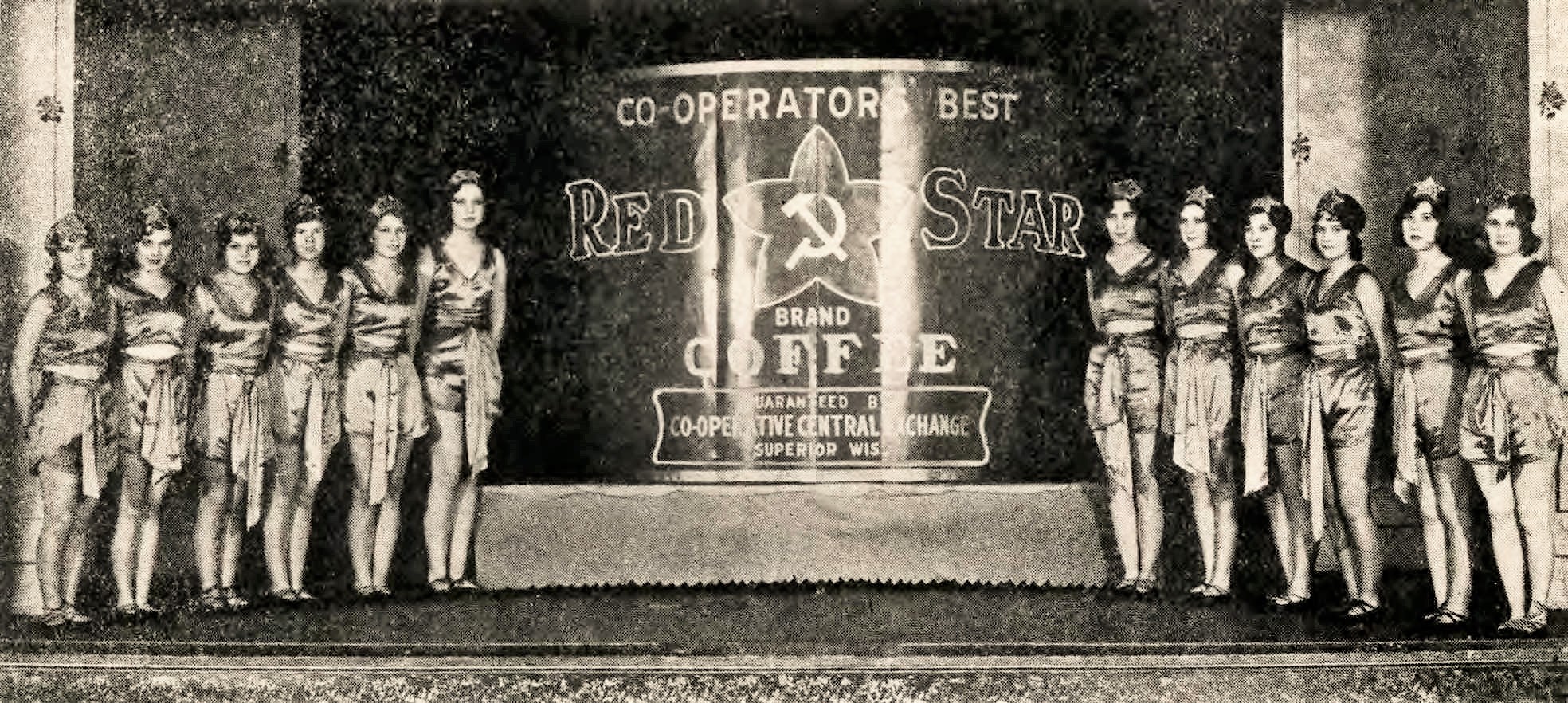
Leading Finnish-American Communist George Halonen on the co-operative movement in which Finns played a central part. Hanolen would be expelled as a ‘rightist’ in 1929, largely over differences of the relationship of the Party to the co-operatives.
‘The Co-operative Movement in America’ by George Halonen from Workers Monthly. Vol 5. No. 3. January, 1926.
THE Workers (Communist) Party represents the interests of the working class as a whole, but as our party has been comparatively small and weak in the face of the big task it has to fulfill, insufficient attention has been paid to many questions. However, the roots of our party are penetrating deeper and deeper into the masses. Our work is expanding in the unions, in the factories, and on the farms. Side by side with these activities, we should also pay more attention to the co-operative movement.
The co-operative movement in America has remained very weak in comparison to the movement in Europe. However, lately the movement has been growing. The bankruptcy of American “independent” farmers brought about a situation which created all kinds of “patent medicine” cures, and cooperation was hailed as the most promising. Promoters of all varieties began to milk the farmers with all kinds of cooperative enterprises, most of them being fake co-operatives. The national and state governments wanted also to “help” the farmers with co-operatives. In addition to the U. S. Department of Agriculture there are 48 Agricultural Colleges, 2,000 county agents and 35 State Market Bureaus, devoting considerable time energy towards promoting co-operative undertakings.
The Extent of the Co-operative Movement in America.
During the last ten years, the economic conditions of farmers have undergone great changes. No wonder, then, that during this short period the Farmers’ Marketing Associations have increased from about 5,000 to 12,000 and the membership from 500,000 to 2,600,000. And, what is more important to us, the consumers’ movement consists at present of about 2,500 co-operatives, with about 500,000 members, and a turnover of $125,000,000.
It would be a grave error to ignore all this and remain aloof from this movement. On the contrary, the communists should be the real pioneers, the ones who put life and energy in this movement, and at the same time exhibit an intelligent understanding of its possibilities and limitations.
I. The Historic Background.
Regardless of what our opinion about the necessity and benefits of the co-operative movement may be, the truth remains that the movement will develop despite us because it is based on economic conditions.
The Early Co-operatives.
Co-operation is nothing new in America. The consumers co-operative movement has an eighty year history. The first consumers co-operative was organized as early as 1845 in Boston, Mass. In 1849, The New England Protective Union, a federation of co-operative societies, comprised over a hundred local societies. During the following three years, the number of local societies increased to 403, of which 67 reported a capital stock of a quarter of a million dollars.

When this federation was split thru internal quarrels, the American Protective Union was formed. This federation, in addition to the first one, comprised in 1857 over 700 local societies thruout New England and extending as far as Illinois and Canada.
Shortly before the civil war, economic conditions changed and this brought about a decline in the co-operative movement. During the civil war and the following year, the movement practically died.
Co-operation in the Seventies.
The early seventies brought about a new wave of cooperation. A farmers’ order, the Grangers or Patrons of Husbandry, began to organize co-operative stores. The city workers followed the lead, by organizing, in 1874, The Sovereigns of Industry. Stores organized by this federation were already more or less clearly based on Rochdale principles. This organization advocated fighting against capitalism, expressing in its constitution its purpose to check the advance of predatory capitalism and to establish an industrial system based on equity. This aim was to be reached by class collaboration. Many of the stores established by this organization were successful, some of them having a turnover of over a hundred thousands dollars. The members ship of the organization reached over 30,000 after two years activities.

The Knights of Labor also took active part in co-operation. Enthusiasm went so far that the Chicago local of the K. of L. advocated a $6,000,000 fund to advance the cooperative cause. During the expansion period of American capitalism, the labor movement in general declined. So with the co-operative movement, For the few extra pennies that ‘ expanding capitalism offered them, the workers forgot their class interests; individualism became the watchword instead of collective action.
For decades the co-operative movement remained dormant. It is only recently that it is beginning to wake up.
II. Co-operative Principles.
The history of the co-operative movement in America as well as in Europe shows clearly that co-operation is a result of certain economic conditions. Co-operation is a fight against capitalist exploitation. That’s why we cannot ignore it, but must pay more close attention to it.
Naturally co-operation, has created certain “principles” which vary according to the interpretation the different “theorists” give of the economic conditions. The dominant principle of co-operation is the old reformist idea. This principle is based on the assumption that co-operation is a phenomena completely independent of social life. Society with its class antagonism is completely ignored. The co’ operative ideology is claimed as something absolute, an eternal truth.
Reformist Conceptions in Co-operation.
This reformist conception of co-operation does not recognize that the changes in economic life and the class struggle in general are reflected in the co-operative movement also.
The reformist “eternal truth” conception is based on the idea that society is divided into producers and consumers and, because their interests are contradictory, the consumers should be organized to defend their interests as consumers against the producers. As we always have had and always will have producers and consumers, the reformists very easily come to their conclusion about the “eternal truth.”
The Class Struggle in the Co-operative Movement.
However, this division of society to consumers and producers completely ignores the main factor in the present society, the division between the owners of the means of production and those who own only their labor power. The appearance of these two classes, the capitalists and workers, is characteristic of the capitalist system of society, and distinguishes it from other systems of society. If we want to change the society, we cannot do it by defending the interests of “consumers”, but by defending the working class, fighting with it to abolish classes. The struggle between the classes, the class struggle, is the moving spirit in society.
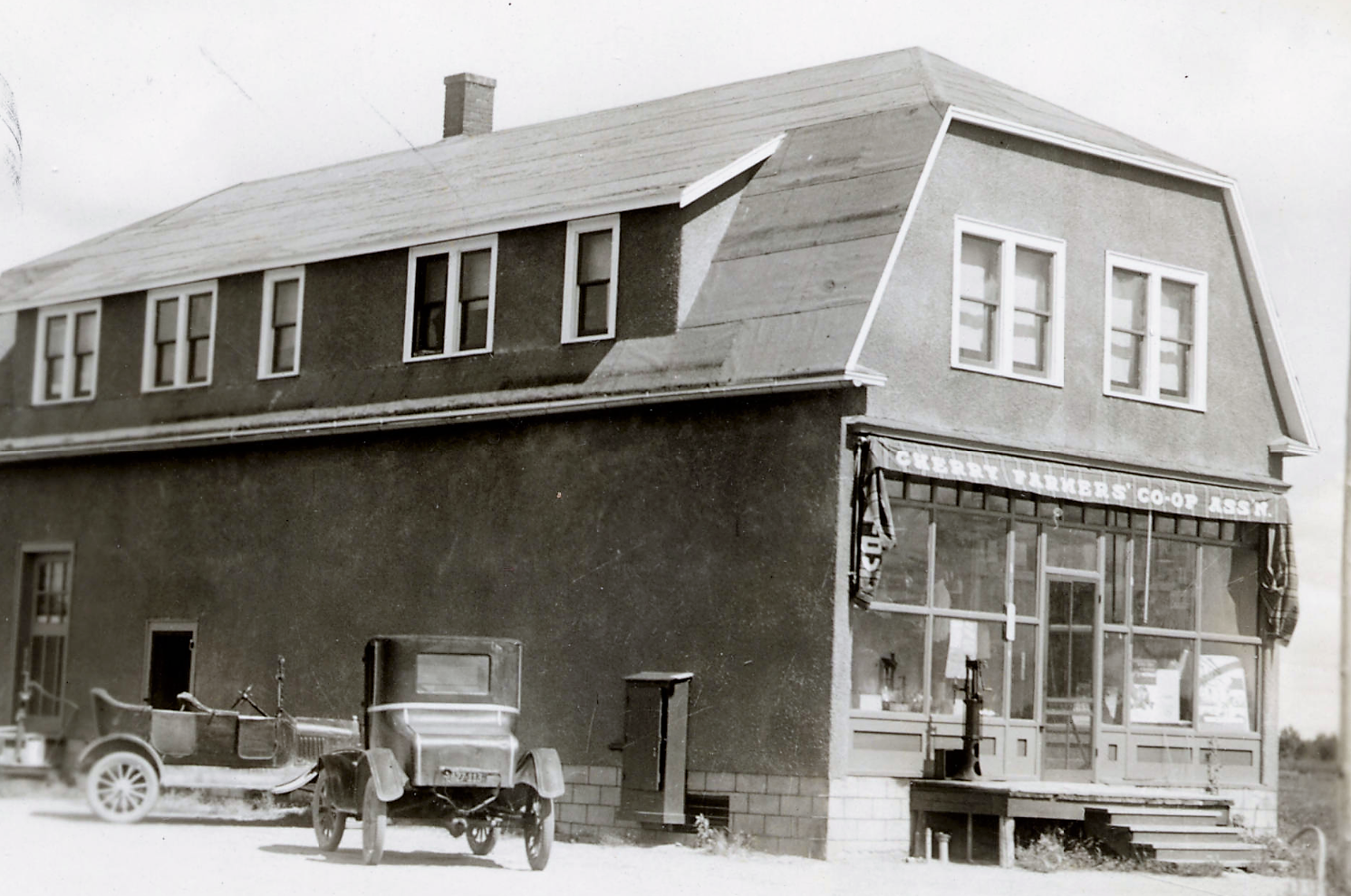
To ignore the class struggle in the co-operative movement, is to ignore its whole purpose. The co-operative movement was created by the workers as a result of capitalist exploitation, therefore this movement must be a working class movement against capitalism.
The commercial side of co-operation is necessary. Many comrades judge co-operation merely by taking commercial questions into consideration. They cannot see anything else in it. And as many co-operatives have become purely business institutions in the hands of the reactionaries many of us make the mistake of opposing co-operation, thus forgetting the real purpose of this movement as already pointed out. Co-operation is in its nature a working class movement and therefore the communists must be active in it.
III. The First Step.
In Europe the communist parties have to some extent taken active part in the co-operatives. Some mistakes have also been made. We have to learn from these mistakes. “Die Genossenschaft im Klassenkampf”, the Bulletin of the Cooperative Section of the Comintern, in an article speaking of the mistakes, stated: “When merely general communist propaganda has been transferred into the co-operatives—and this has happened for the most part—the membership has continued to look upon us as outsiders whose sole purpose is to bring communist propaganda into the co-operatives. No working class member of the co-operatives would thereby be convinced that the communists are those who alone rep resent the real interest of the workers in the co-operatives. The propaganda must be connected with the everyday needs of the members.”
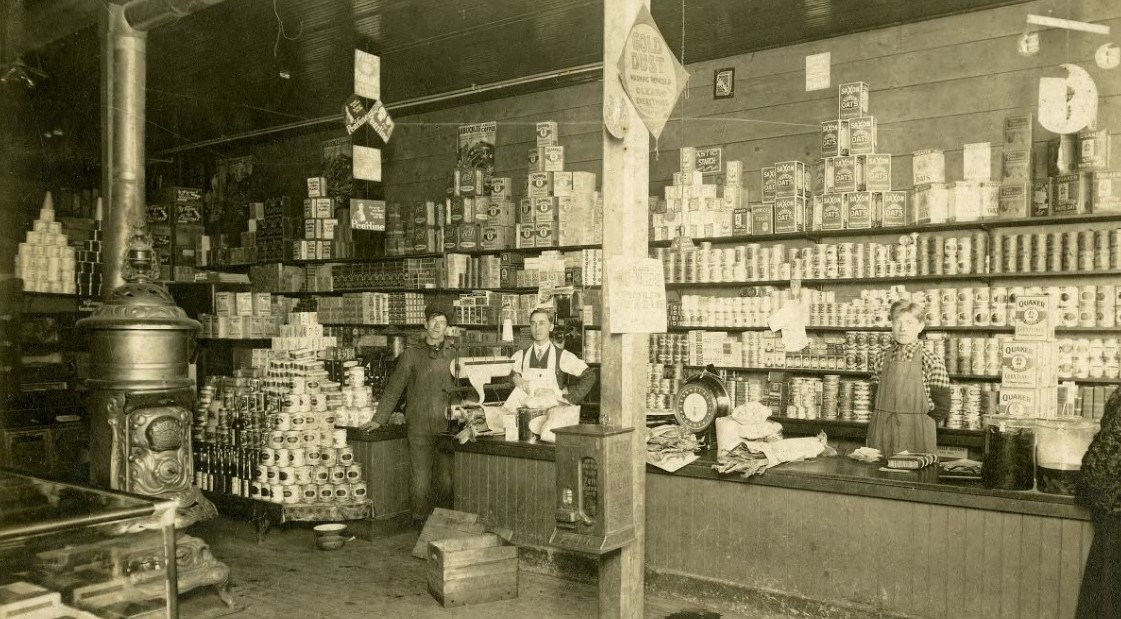
The Weakness of the American Co-operative Movement.
As the co-operative movement in America is comparatively weak, the first step we must take is to help the workers to build for themselves better and stronger co-operatives. The isolated, purely commercial co-operatives should be centralized, by districts and nationally. At the present this centralization is very weak. The American Co-operative League, a national organization, has only about 50,000 members. Even commercially the co-operatives are decentralized.
The workers co-operatives have no easy road to travel, having to face the competition of the centralized chain and department store systems. This capitalist centralization should be used in explaining to the workers why they need something more than “a store on the corner.”
Our Tasks in the Co-operatives.
Membership in the co-operatives must be increased. Practical examples on the relation between quality and prices will bring the workers to their own co-operative stores. In every way the co-operative should be made stronger. New business methods should be used and we ought to be able to propose in the membership meeting of the co-operatives practical steps for the general betterment of our own store.
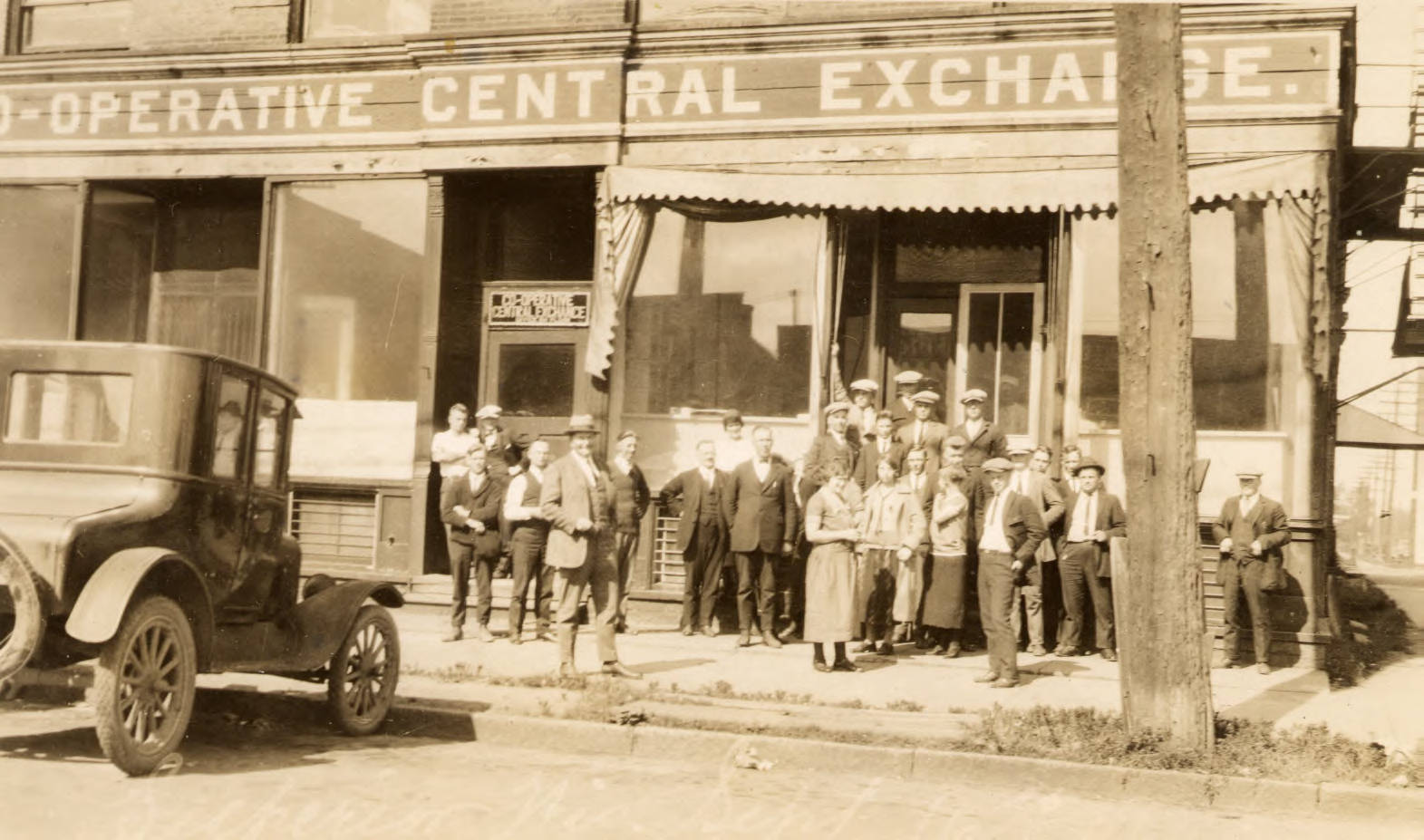
Thru practical, responsible work the confidence of the masses can be gained and thru practical work the workers will themselves be drawn into activities which eventually will lead to a struggle against capitalism. Sooner or later experience will teach them that prices, quality, etc., are questions which can be solved to the benefit of the workers only when the workers control the means of production, and then they will come to understand the communist policies in general.
Co-operative work is a part of communist activity. At the present period of capitalist imperialism there is no room for division of the working class activities in the different “independent” movements but all should be subordinated to the common purpose, to deliver the workers from the bondage of capitalism.
The Workers Monthly began publishing in 1924 as a merger of the ‘Liberator’, the Trade Union Educational League magazine ‘Labor Herald’, and Friends of Soviet Russia’s monthly ‘Soviet Russia Pictorial’ as an explicitly Party publication. In 1927 Workers Monthly ceased and the Communist Party began publishing The Communist as its theoretical magazine. Editors included Earl Browder and Max Bedacht as the magazine continued the Liberator’s use of graphics and art.
PDF of full issue: https://www.marxists.org/history/usa/culture/pubs/wm/1926/v5n03-jan-1926-1B-WM.pdf
 Revolution's Newsstand