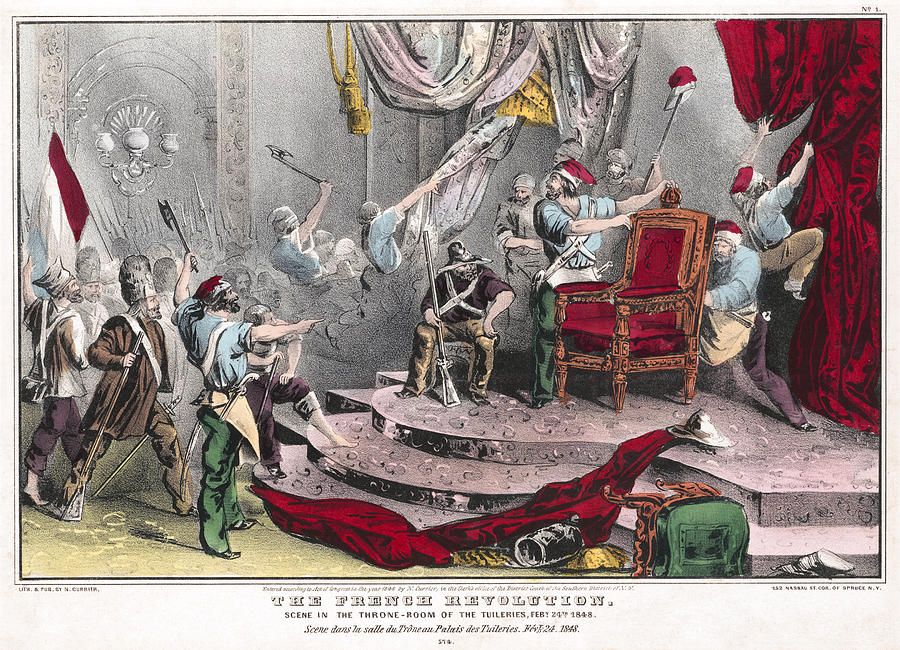
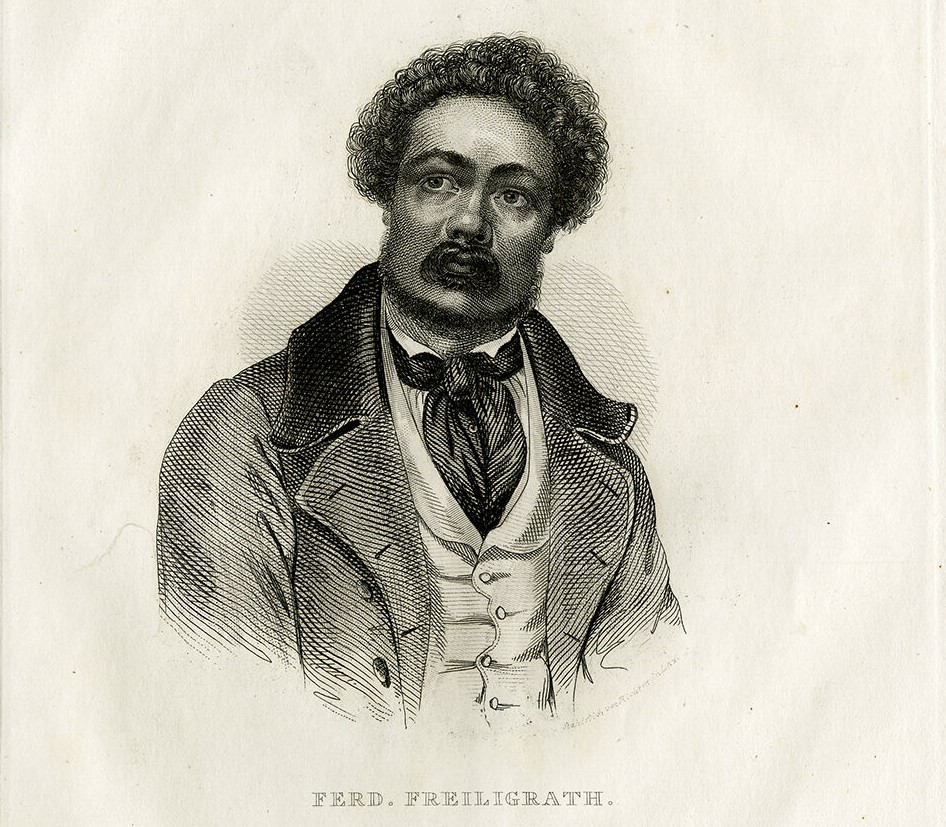
Translated by the Chartist and fellow poet Ernest Jones (a short biography by ‘Comrade’ editor John Spargo is also included), this was the most popular translation of Ferdinand Freiligrath’s 1850 poem ‘Revolution’ written in bitter exile during the aftermath of the failed 1848 Revolts. The poem is quoted by Rosa Luxemburg in her final famous article ‘Order Prevails in Berlin.’
‘Revolution’ (1850) by Ferdinand Freiligrath, translated by Ernest Jones, from The Comrade. Vol. 1 No. 6. March, 1902.
And tho’ ye caught your noble prey within your hangman’s sordid thrall,
And tho’ your captive was led forth beneath your city’s rampart wall;
And tho’ the grass lies o’er her–green, where at the morning’s early red
The peasant girl brings funeral wreaths–I tell you still–She is not dead!
And tho’ from off the lofty brow ye cut the ringlets flowing long,
And tho’ ye mated her amid the thieves and murderers’ hideous throng,
And tho’ ye gave her felon fare–bade felon garb her livery be,
And tho’ ye set the oakum-task–I tell you all, she still is free!
And tho’ compelled to banishment, ye hunt her down thro’ endless lands;
And tho’ she seeks a foreign hearth, and silent ‘mid its ashes stands;
And tho’ she bathes her wounded feet, where foreign streams seek foreign seas,
Yet–yet–she never more will hang her harp on Babel’s willow trees!
Ah no! she strikes its every string, and bids their loud defiance swell,
And as she mocked your scaffold erst, she mocks your banishment as well.
She sings a song that starts you up astounded from your slumbrous seats,
Until your heart–your craven heart–your traitor heart–with terror beats!
No song of plaint, no song of sighs for those who perished unsubdued,
Nor yet a song of irony at wrong’s fantastic interlude–
The beggar’s opera that ye try to drag out thro’ its lingering scenes,
Tho’ moth-eaten the purple be that decks your tinsel kings and queens.
Oh, no! the song those waters hear is not of sorrow, nor dismay.
‘Tis triumph-song–victorious song–the pean of the future’s day
The future–distant now no more–her prophet voice is sounding free,
As well as once your Godhead spake: I was, I am, and I will be!
Will be–and lead the nations on the last of all your hosts to meet,
And on your necks–your heads–your crowns, I’ll plant my strong resistless feet!
Avenger, Liberator, Judge–red battles on my pathway hurled,
I stretch forth my almighty arm, till it revivifies the world.
You see me only in your cells; ye see me only in the grave;
Ye see me only wandering lone, beside the exile’s sullen wave:–
Ye fools! Do I not also live where you have tried to pierce in vain?
Rests not a nook for me to dwell in every heart and every brain?
In every brow that boldly thinks, erect with manhood’s honest pride–
Does not each bosom shelter me that beats with honor’s generous tide?
Not every workshop, brooding woe? not every hut that harbors grief?
Ha! Am I not the Breath of Life, that pants and struggles for relief?
‘Tis therefore I will be–and lead the peoples yet your hosts to meet,
And on your necks–your heads–your crowns, will plant my strong, resistless feet!
It is no boast–it is no threat–thus History’s iron law decrees–
The day grows hot–Oh Babylon! ‘Tis cool beneath thy willow trees!
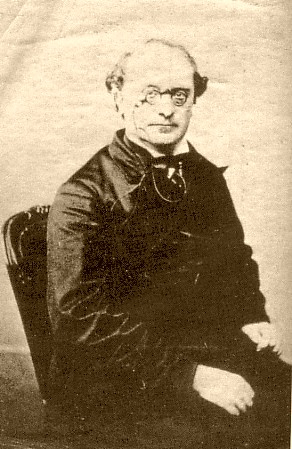
Ernest Jones.
Ernest Jones was one of the ablest and most devoted leaders of the great Chartist movement Although of Welsh descent, he was born in Berlin, Germany, his father, who was a major in the 15th Hussars, being equerry to the then Duke of Cumberland, whose name Ernest bore. Before he was ten years of age a publisher at Hamburg had brought out a volume of verses by the youthful poet. When he was eleven years old he ran away from home, and, when he was found trudging across Lauenburg with a bundle under his arm, he told his captors he was going to “help the Poles” in their insurrection!
After a distinguished academic record, he was presented to the late Queen by his friend the Duke of Beaufort. In 1844 he was called to the Bar, but a year later he joined the Chartist movement and sacrificed what promised to be a successful legal career, as well as wealth and position to serve the cause he had espoused. A fortune of $10,000 a year he voluntarily surrendered rather than give up his connection with the movement. He issued a number of publications including the People’s Paper to which Marx was a contributor. In 1848 he was sent to prison for two years on account of his defiance of the Government, and published, on his release, a terrible account of the cruelties and indignities to which he had been subjected. He also published an epic called “The Revolt of Hindostan” which he had composed whilst in prison. This was actually written with his own blood upon the prison prayer book!
It was soon after this that his translation of “The Revolution”- the best of the many English translations, and the one Freiligrath loved best- appeared. It was published first without the last stanza which he added later at the request of Freiligrath’s daughter, Mrs. Freiligrath Kroeker. He died a poor man on January 26, 1868. Some day, perhaps, we will deal more fully with the life and work of this brave Soldier of Liberty.
The Comrade began in 1901 with the launch of the Socialist Party, and was published monthly until 1905 in New York City and edited by John Spargo, Otto Wegener, and Algernon Lee amongst others. Along with Socialist politics, it featured radical art and literature. The Comrade was known for publishing Utopian Socialist literature and included a serialization of ‘News from Nowhere’ by William Morris along work from with Heinrich Heine, Thomas Nast, Ella Wheeler Wilcox, Edward Markham, Jack London, Maxim Gorky, Clarence Darrow, Upton Sinclair, Eugene Debs, and Mother Jones. It would be absorbed into the International Socialist Review in 1905.
PDF of full issue: https://www.marxists.org/history/usa/pubs/comrade/v01n06-mar-1902-The-Comrade.pdf
 Revolution's Newsstand