
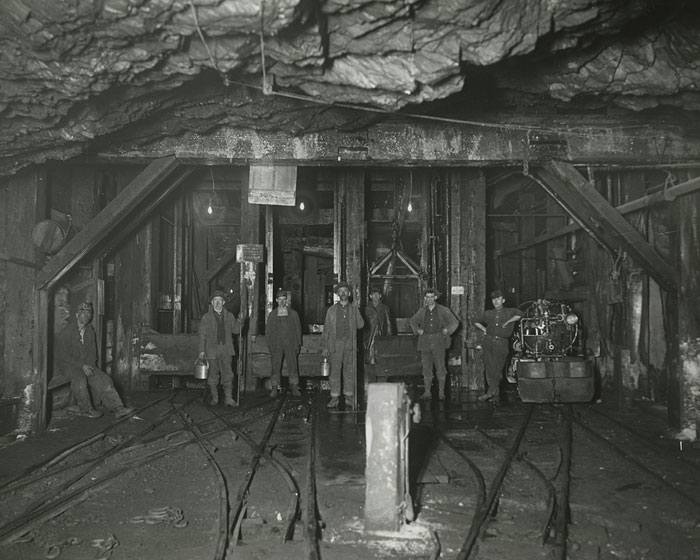
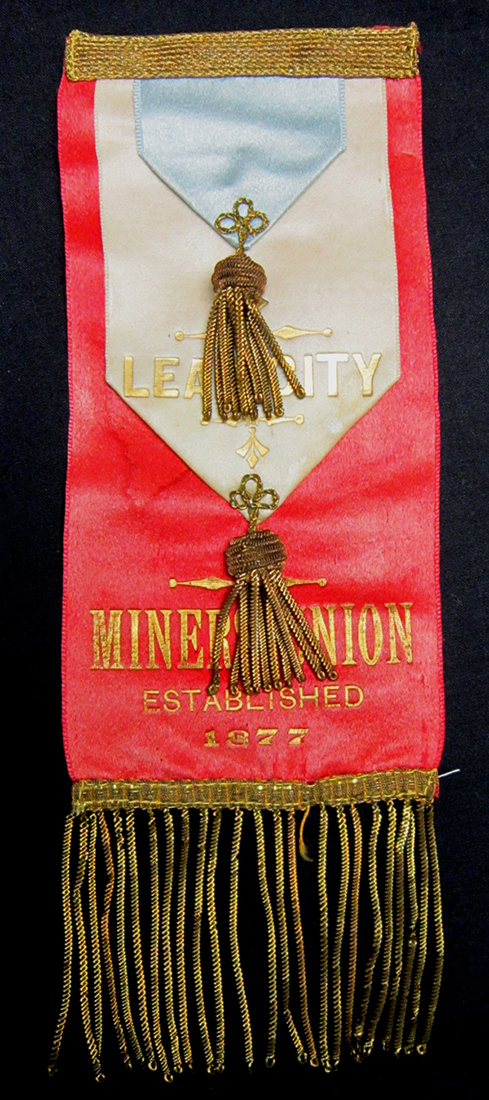
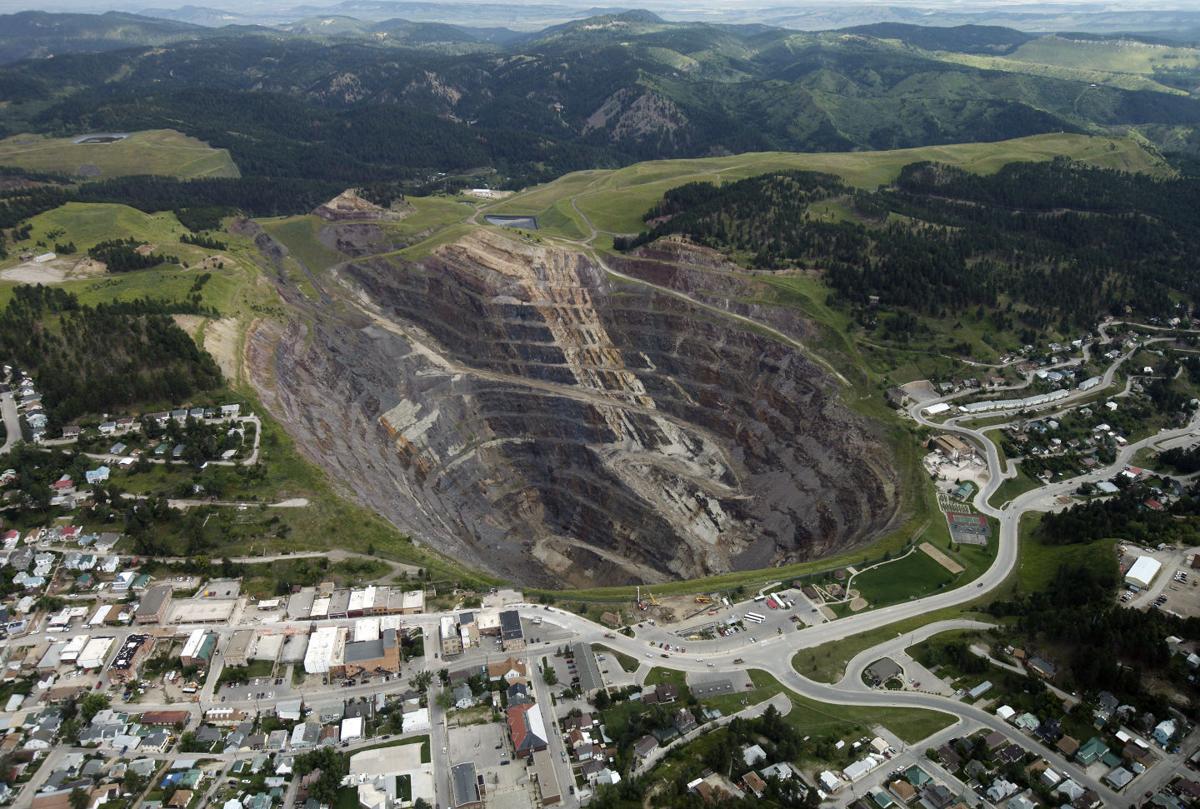
Just down the valley from the more famous Deadwood, South Dakota in the Black Hills, on land treated to the Sioux forever in 1868, gold was discovered by Custer’s 7th Cavalry in 1874. In the war to abrogate that treaty and seize the land that predictably followed, Custer lost his life and the United States conquered the Hills. Adding to the insult, Mount Rushmore was carved onto its sacred face. The Homestake Mine that would be developed by George Hearst in Lead, South Dakota was the largest, deepest gold mine in the Western Hemisphere producing nearly 44 million ounces of gold and providing much of the wealth that lay behind the Hearst family’s predominance in U.S. life for generations. The same year the United States conquered the Black Hills, 1877, the Western Federation of Miners was formed. In 1909 the W.F.M. attempted to unionize the vehemently anti-labor company, and a bitter lockout ensured. The mine was finally unionized in 1966 when the United Steel Workers of America won a close vote. Homestake ended all operations in late 2001.
‘The Story of the Homestake Lockout’ by W.C. Benfer from The International Socialist Review. Vol. 10 No. 9. March, 1910.
SO much that is not true has been written concerning the cause of the idleness of more than two thousand former employes of the great Homestake Mining Company, operating mines and mills at Lead, South Dakota, that a true story of the trouble, written by one who is on the battlefield, may be of interest and benefit to the working class.
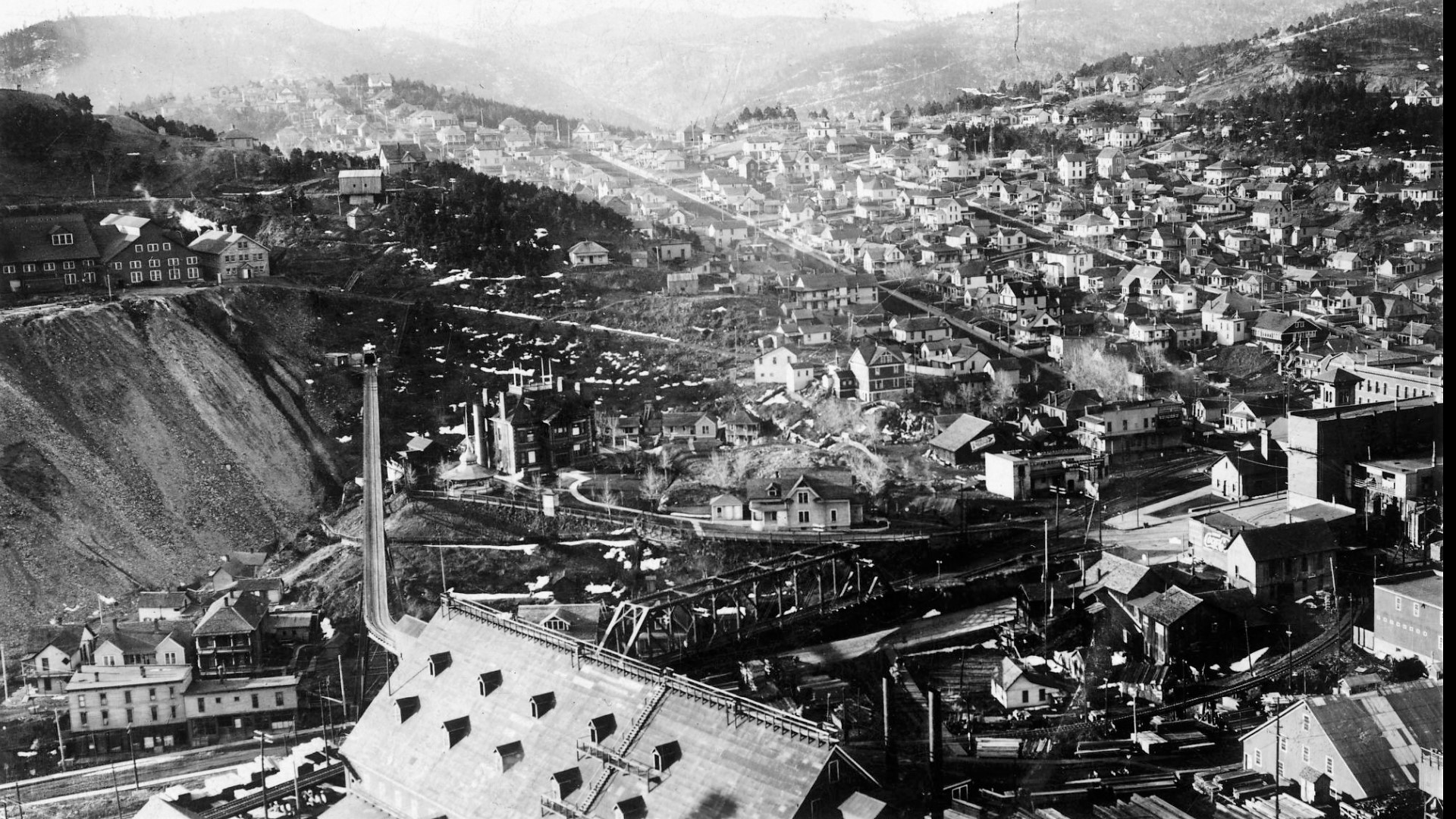
The motive for the lockout is variously interpreted, but the most plausible theory is a desire on the part of the management to cut wages or increase hours of labor. Since January 1, 1907, the Homestake Mining Company and the Hearst Mercantile Company (controlled by Mrs. Phoebe A. Hearst) have been run on an eight-hour day. This concession was granted after the Lead and Central City unions of the Western Federation of Miners decided that the miners of the Black Hills were entitled to the same short workday as prevailed in practically all the metalliferous mining camps of the west and northwest. Previous to this time the miners and other laborers in the company’s employ had worked ten to twelve hours seven days per week, at from $2.50 for common labor, to $3.50 per day for skilled miners.
When the eight-hour day was broached to Superintendent Grier he declared it was impossible for the company to operate on that basis, as the ore was of so low a grade as to preclude the making of a profit on an eight-hour workday. On December 11, 1906, a committee served on the management a notice saying, in effect, that unless the shorter workday was granted the members of the unions would go on strike. The superintendent capitulated, saying he wanted no trouble with the employes. At this time not more than 60 per cent. of the employes were in the unions.
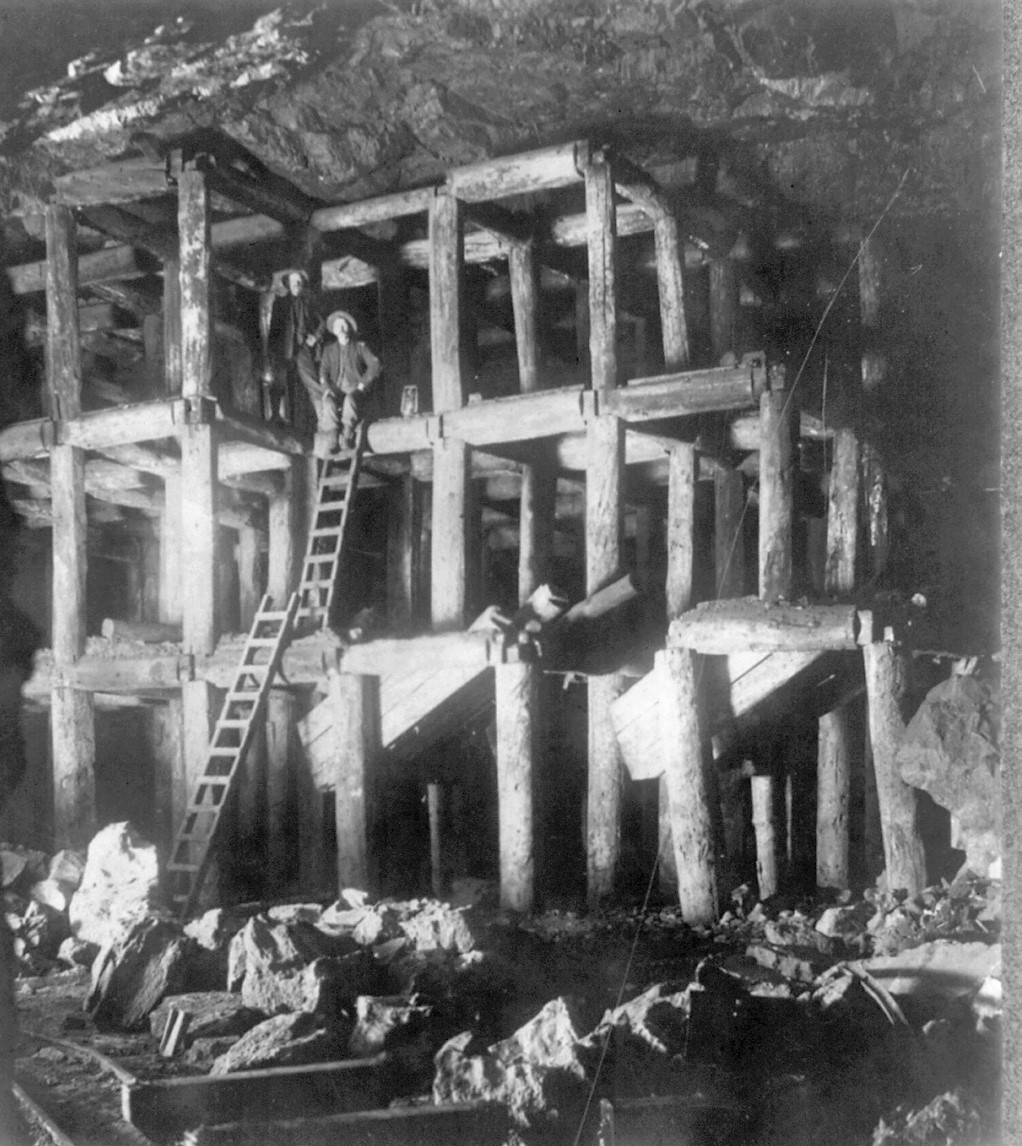
Last September the Lead and Central City Miners’ unions asked the Western Federation to send an organizer into the district to recruit among Homestake employes. William E. Tracy, who had done some work in Michigan for the Federation, was assigned to the task. His efforts met with success from the start and foremen in the mines, mills and other plants took great pains to let it be known to the men that Mr. Grier, the superintendent, had no objection to the employes joining the Federation. After this the men poured into the unions in a way to startle the officials and the organizer. Some of the members went so far as to state that the company was packing the unions to control them, and subsequent developments lend color to the suspicion.
On October 24, 1909, it was ascertained that about 98 per cent. of the eligible Homestake employes had joined the unions and the members of the organizations passed a resolution to the effect that after: November 25 they would not work with non-union men eligible to belong to the union. The superintendent was asked for a list of employes. This he refused to give, but said he had no objection to the employes organizing; they had the same rights to organize as capital; he would not hinder or assist the unions, but was willing that they should “go ahead with the good work.” With this understanding, the resolution against non-union men was published in the local press, more as a means of completing the organization than as a threat against the company. Speakers at the mass meeting passing the resolution had stated that all the good men were in the union, with probably a dozen exceptions, and if these could be brought in by the resolution the work was done.
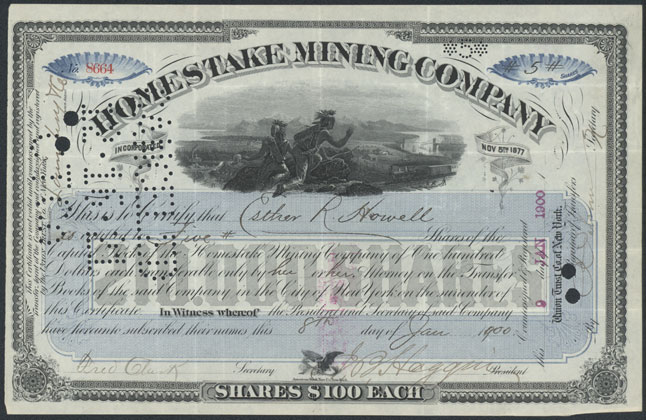
Eight days before the limit for men to join the unions had expired the superintendent experienced a change of heart, for he caused to be posted about the company property the following notice:
“NOTICE. Notice is hereby given that the Homestake Mining Company will employ only non-union men after January 1st, 1910. The present scale of wages and the eight (8) hour shift will be maintained. All employes who desire to remain in the company’s service must register in the general office of the company on or before December 15th, 1909.
T.J. Grier, Superintendent. November 17th, 1909.”
This gave those who thought more of the company than of themselves and their organization one week to get out of the unions and sign the company’s application for non-union employment. So small a percentage responded that on November 24th the following notice was posted about the works and published in the daily press:
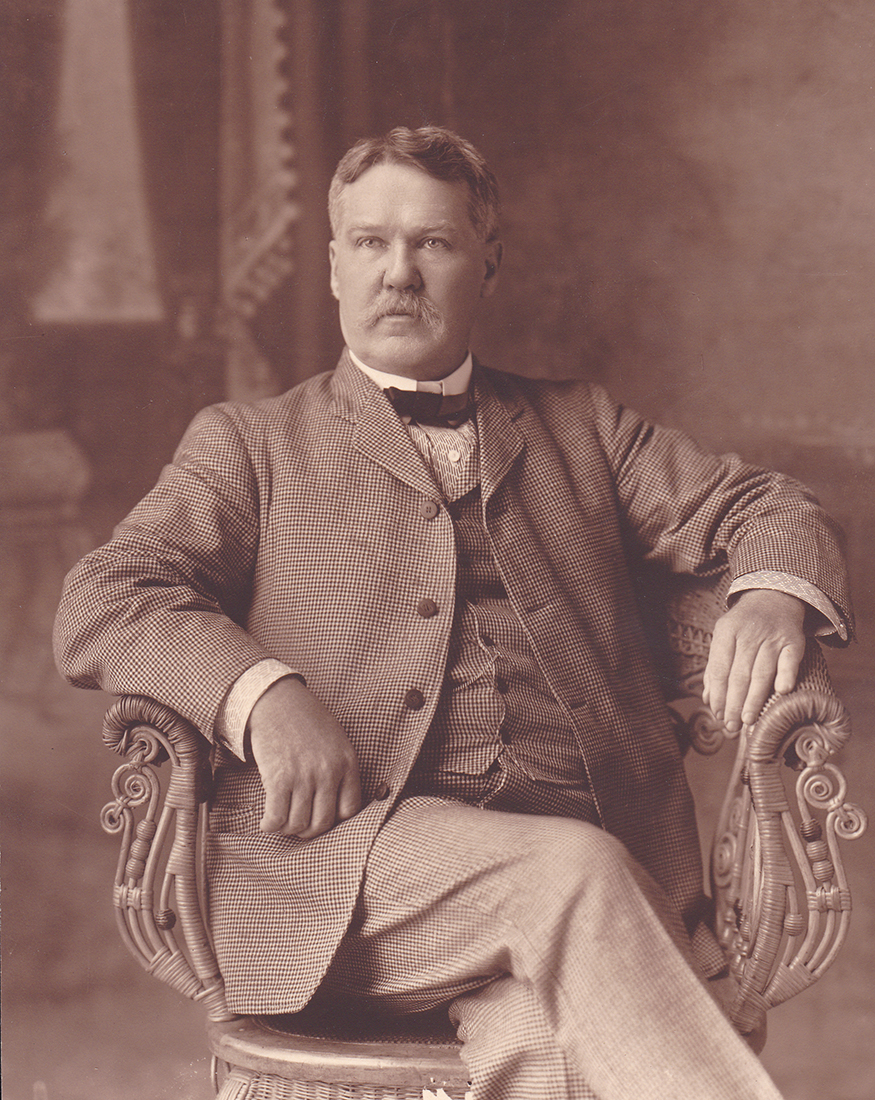
“Lead, S.D., November 24th, 1909. Notice is hereby given that the Homestake Mining Company will cease operating its properties this evening. T.J. GRIER, Superintendent.”
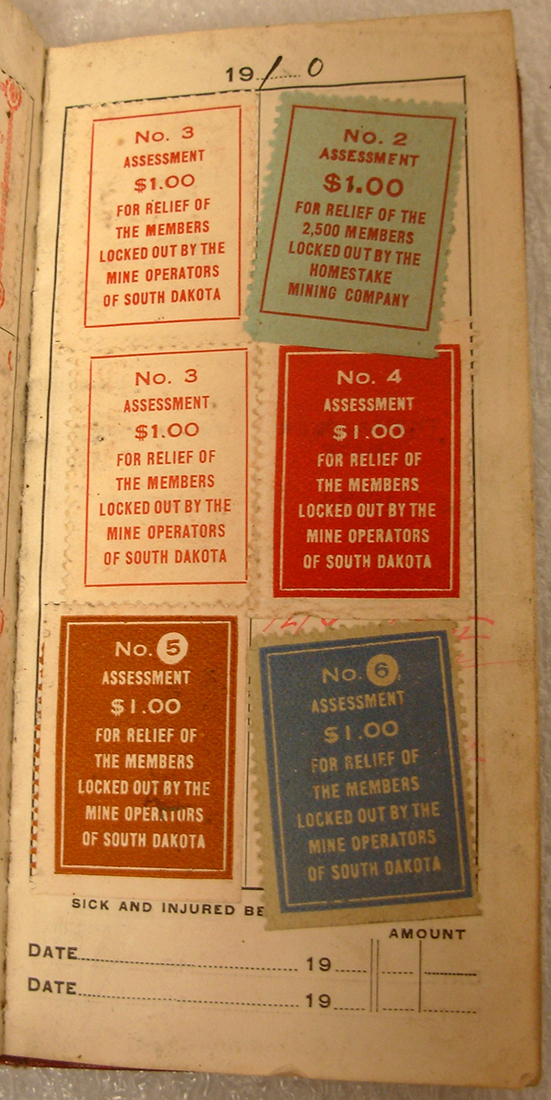
The threat was carried out, and on Thanksgiving Day, 1909, 2,500 men found themselves out of employment and 10,000 men, women and children faced a hard winter with no wages coming in.
The Western Federation at once took up the matter of issuing relief to its members and has been paying out $6,000.00 per week since the first week in December. This is a heavy drain on the Federation, but it is taking care of its members so that none have suffered.
The two unions most involved—the federation locals—started in with almost 2,400 members and so far but 150 have deserted and signed up the company’s pledge, which is as follows:
“HOMESTAKE MINING COMPANY: Lead, S.D.,……. 19…
I am not a member of any labor union and in consideration of my being employed by the Homestake Mining Company agree that I will not become such while in its service.
Department………
Occupation……….”
On December 9 the executive committee elected by the locked-out union men called out all union men still in the company’s employ as watchmen or in any other capacity. The majority of these men came out and their places were filled by Pinkerton, Thiele and Boyd detectives, who had been drifting into the district before the lockout became effective. Among these alleged “detectives” were several gun-men who had done bloody service for the mine-owners of Colorado, Idaho and Montana. During the early part of the lockout the company, through its sister—the Hearst Mercantile Company—shipped in several cases of carbines and sawed-off Winchester repeating shot-guns. These were given to the imported guards and gun-men.
On Sunday evening, December 19, these gun-men pulled off their first riot. While a few Russian ex-employes were having a dancing party at the home of one of their number, a party of detectives and company guards broke into the house and began beating the inmates with their revolvers. Four of the men were dragged off to the city jail, hatless and without coats. One man was badly cut on the head. Next day all but one man were released, but this one, Clem Lunas, was arraigned on a charge of having fired a gun in a public place. There was no evidence that he had fired a gun, but he was bound over to the Circuit Court. He has since signed up with the company and his friends expect the case against him to be dropped. Imported men are mingling with citizens, with guns sticking out of their pockets, but citizens have been fined $50 and given thirty days in jail for engaging in fist-fights with non-union men.
On January 6th, forty-nine men, expelled by the Lead Miners’ union for working after being called out, met and organized what they term a “Loyal Legion,” the chief requirement for membership being that they sympathize with the Homestake Company and fight the unions. Two days later, after the Legion had recruited among business men, schoolboys and bums, it held a meeting, asking that the company resume operations with the Legioners as the men behind the drills, shovels and other tools. Mr. Grier promised to take the matter under advisement, and on January 10th the announcement was made that the mines and mills would resume as soon as the machinery could be put in shape. Here the higher-paid alleged union men began to show themselves by trotting to the company office for jobs. This embraced machinists, engineers, blacksmiths and other mechanics. While the desertions in these A.F. of L. craft unions of mechanics did not amount to much, they had a discouraging effect on the members of those unions who favored fighting to the last ditch for the right to organize. The machinists have given up their charter, some of the members having sought work elsewhere and some of them having joined the Loyal Legion. The painters’ organization has also been put out of business, mainly because of the lockout. The teamsters, affiliated with the International Brotherhood of Teamsters, suffered some desertions and to save themselves and to strengthen the Miners’ organizations have given up their charter and joined the Western Federation locals in this district. The local union of the United Brotherhood of Carpenters and Joiners of America is standing firm with the miners and has suffered comparatively few desertions.
When the reports of a resumption of work came out, some of the machinists went to the Superintendent and asked if their organization (affiliated with the A.F. of L.) would not be exempted from the ban against unionism. To the delight of those union men having the fight in hand the skilled mechanics were told that there would be no discrimination—that all would have to travel the same route. This action started the exodus of machinists from Lead.
The Superintendent of the company on January 10th denied any intention to import men to take the places of the old employes, but it appears that the plans had been laid for the importation of men at that time, for five days later the first installment of strike-breakers arrived. Since then scarcely a day has passed when from four to twenty men were not shipped in, with carfare paid. Misrepresentation is being used to induce these men to come to the Hills. On January 24th Carl Kraus, who had been induced to come to Lead from Victor, Colorado, with the understanding that the trouble had been settled with the unions, refused to go to work when he arrived and was arrested and thrown into jail for having obtained transportation and then declining a job. James Kirwan, a Black Hills member of the W.F. of M. executive board, who now has charge of the situation for his organization, got in communication with a lawyer, with a view of beginning suit against the company on a peonage charge. The man (Kraus) was released and told he could go. To date, the company has imported probably 150 strike-breakers, of whom less than fifty are miners. Some of the importations have deserted their guards after reaching Lead and wandered to the Lead Union headquarters, where they have been set right and, in some instances, helped out of the country.
The company is now making a bluff at running two mills. People who have been inside during the past week report that practically nothing is being accomplished in the way of milling ore.
The efforts to break into the rank and file of the Western Federation, outside the engineers and mechanics, have been a rank failure, as less than 200 have so far deserted that organization. Some 500 or 600 have left for other camps, but that merely relieves the Federation of their support and deprives the company of that many of its former employes. There are not less than 1,600 loyal union men —mostly miners and shovelers—standing out for the right to organize, and these are the men the company needs to make dividends. These men worked hard for low wages and they consider that they have nothing much to lose if they never get back. They will do more in winning recognition of the union than an equal number of mechanics or “aristocrats of labor.”
Out of probably 700 union Slavonians, there has not been a single desertion from the union, and the Italians, Finns and Scandinavians are also standing firm, although these latter have suffered a few desertions.
Yanto Terzich, from far-off Fairbanks, Alaska, a member of the Western Federation Executive Board, is on the ground and is doing yeoman’s service in talking to his Slavonian brothers in their native tongue. They need little persuading, but he is keeping them posted on the situation. It must be admitted that the back-bone of the locked-out men is the bull-dog determination of the Slavonians and foreigners, the American-speaking people forming the majority of the deserters. They believe, evidently, that they will all get bosses’ jobs.
A BENEVOLENT FEUDALISM.
Much has been said and written concerning the benevolence of the Homestake Company, and that “benevolence” has been one of its best paying assets. With it the company has lulled to sleep the employes until many of their most important rights have been wheedled and stolen from them. Men in the company employ were allowed to build homes on company ground and that has caused some otherwise good men to sign the scab list—the fear of losing several hundred dollars invested in a little home. If they fail to remain loyal to the company they must move their homes off company ground. A number of the business houses are in the same unhappy condition and this accounts, in part, for the stand some of the business men are taking.
By playing the part of Little Father (or Mother) to its employes, the company has always been in a position to get the votes of its serfs without much trouble. This has enabled it to control practically all the city officials and many of the county and state officials and some congressmen and judges.
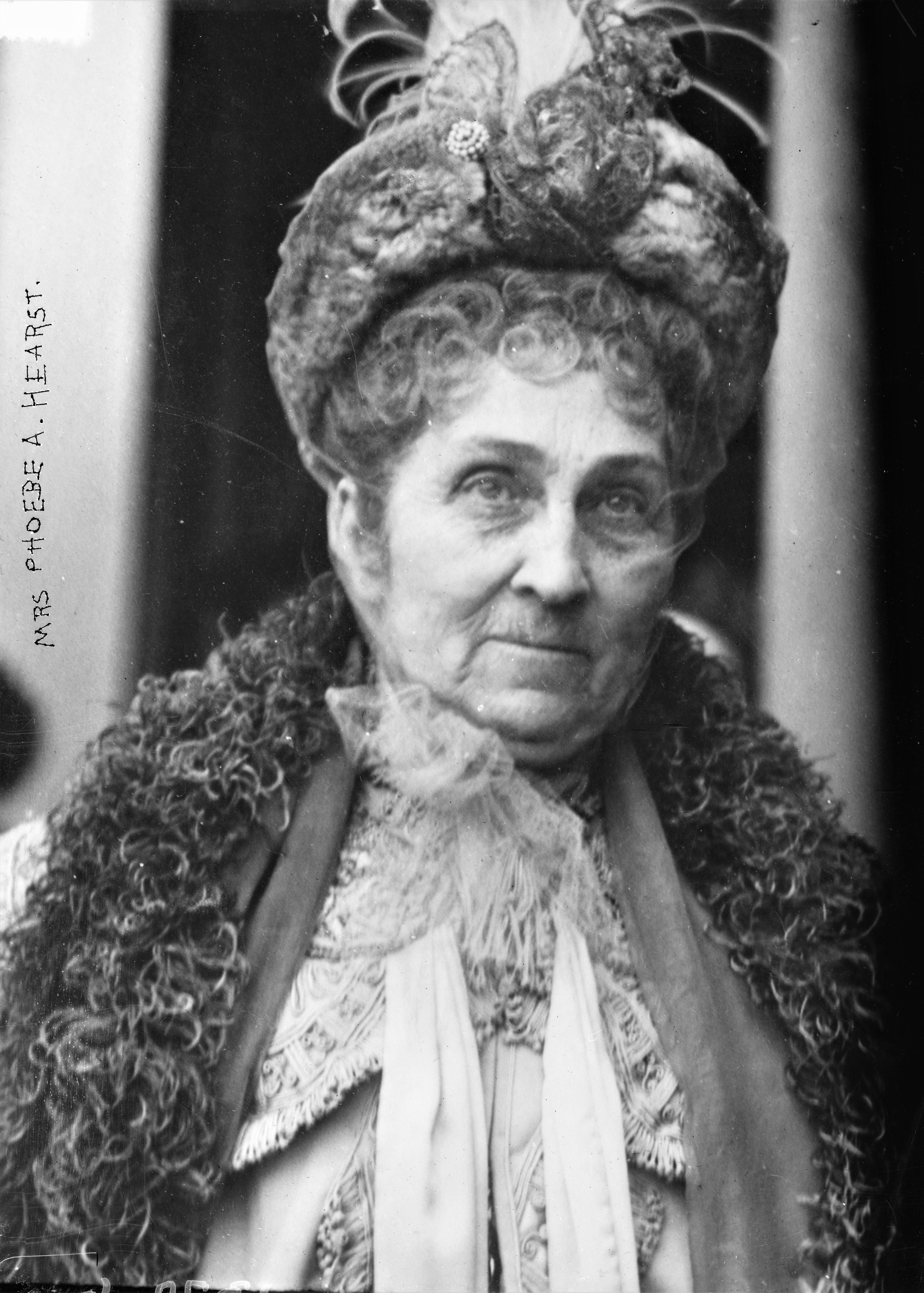
Mrs. Hearst, mother of William Randolph Hearst, of newspaper fame, “kindly” maintains a free library and free kindergarten in Lead. She also contributes $200 annually to each of its churches, which may account for the fact that many of the preachers are to-day preaching Homestakeism instead of Christianity. The people of the Black Hills had learned to pray to Homestake stockholders and thank them for blessings received and expected.
MR. HEARST’S CONNECTION.
Much has been said and written against William Randolph Hearst, the “great” newspaper publisher, because he has not used his mighty influence to bring about peace in Lead and justice to the Homestake employes. Mr. Hearst has denied that he owns a single share of stock in the Homestake company. Possibly this is true, but the writer can relate an instance to prove that Mr. Hearst has had much influence with the management at one time, and it is possible that he has not lost the key to the lock that has been turned and bolted against the men who earned the money that started him in the publishing and brain-buying business. During the campaign of 1906, when Mr. Hearst was a candidate for Governor of New York, the enterprising New York World sent a bright chap named Fay to write up the “benevolence” of the Homestake Company. Mr. Fay secured a lot of information, and the World was making pretty good use of its stories about Lead and the Homestake Company, when “Willie” bethought him of the mighty influence he had, through the Homestake Company, in the little town of Lead, South Dakota. Straightway he set the ticker in motion, with the result that the President and Secretary of the Lead Miners’ union were summoned to the office of the Homestake Company. What transpired there we know not, but we do know that a special meeting of the Lead union was held late one evening and all the writings of Mr. Fay were characterized as fabrications. Mr. Hearst had a great deal of influence with the Homestake Company then and it is to be regretted that, after the union men of the Black Hills have had unionism preached into them by the Hearst papers for all these years Mr. Hearst should suddenly have lost the power to speak a word to get them out of the fix his teachings have gotten them into. The average Black Hills miner had begun to believe that it was a part of his duty to his employer to believe what he read in the Hearst papers concerning the rights of man. He had begun to think that all the talk in the Hearst papers about “pluck-me” company stores meant what was said, but the Hearst store continued to make big profits off his patronage and, by threats of what it would do to the merchants who started cutting prices, kept their own stores in line for big profits. The Hearst-Homestake defenders tell you that the Homestake Company did not compel its employes to trade at the company store. True, but it practically fixed the prices charged by other stores. And those prices are very high, compared to the wages paid here.
A “PLUCK-ME” HOSPITAL.
Another of the benevolent institutions of the Homestake Company is a hospital where the maimed employes are treated—at their own expense. Every month $1.10 is held out of the men’s wages for this hospital, regardless of how many days the employe works. Men who have quit in one department during the month and again accepted employment in another department during the same month have been confronted with two or more charges of $1.10 for hospital fees. It matters not that some of the employes are so prejudiced against the company’s doctors (some of whom have just come from college), that they do not use them, the $1.10 per month must be paid just the same. It is held out of their wages. Have you seen any endorsement of such institutions in any of the Hearst papers?
Will the Homestake Company win its fight? The writer doesn’t know. He does know, however, that the men cannot lose, for, as Karl Marx has so truly said, they “have nothing to lose but their chains.” In the meantime, it is the duty of every lover of fair play and justice to do what lies in his power to keep workingmen from coming to Lead to help the company or become burdens on the Western Federation.
The International Socialist Review (ISR) was published monthly in Chicago from 1900 until 1918 by Charles H. Kerr and critically loyal to the Socialist Party of America. It is one of the essential publications in U.S. left history. During the editorship of A.M. Simons it was largely theoretical and moderate. In 1908, Charles H. Kerr took over as editor with strong influence from Mary E Marcy. The magazine became the foremost proponent of the SP’s left wing growing to tens of thousands of subscribers. It remained revolutionary in outlook and anti-militarist during World War One. It liberally used photographs and images, with news, theory, arts and organizing in its pages. It articles, reports and essays are an invaluable record of the U.S. class struggle and the development of Marxism in the decades before the Soviet experience. It was closed down in government repression in 1918.
PDF of full issue: https://www.marxists.org/history/usa/pubs/isr/v10n09-mar-1910-ISR-gog.pdf
 Revolution's Newsstand