
‘Comrade Sommerling’ from Communist International. Vol. 2 No. 9. March, 1925.
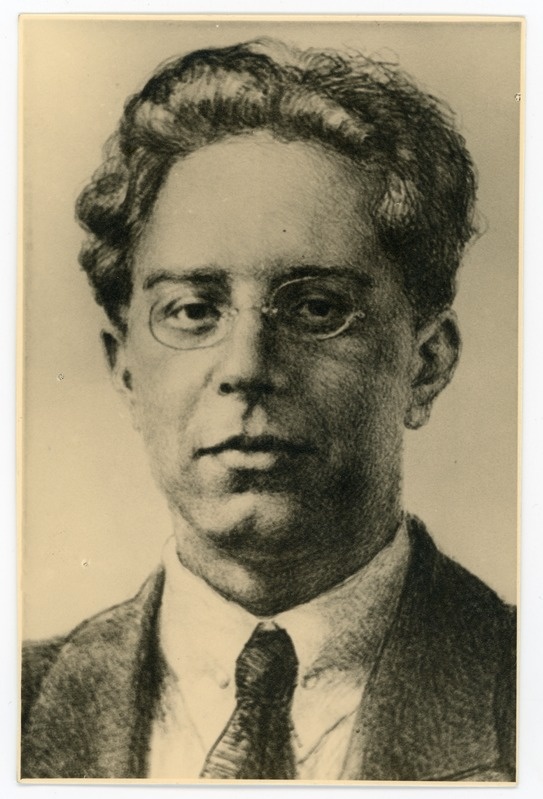
COMRADE Arnold Sommerling fell on December 5th in action against the white guard murderers in Esthonia. Comrade Sommerling was one of the most prominent workers in the Young Communist League of Esthonia, and an active worker in the Communist Party. He was 26 years old. He came of a family of petty artisans. After finishing the elementary school, he attended a commercial academy. In 1916, Comrade Sommerling was called to military service.
In May, 1920, he joined the semi-legal Union of Revolutionary Youth. From June, 1920 to January, 1921, he was the secretary of the Docker’s Union in the port of Reval. Comrade Sommerling was one of the founders of the Esthonian League of Proletarian Youth, which at its first meeting on December 5th, 1920, joined the Y.C.I. At the same meeting he was elected to the Executive of the League, of which he was chairman until its dissolution by the authorities.
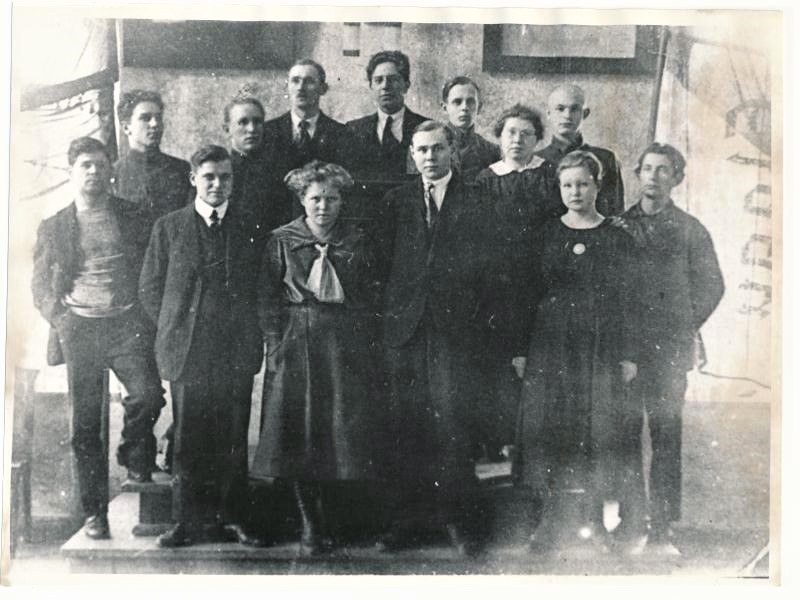
On April 15th, 1921, the League of Proletarian Youth was suppressed by the police, and the majority of the members of the Executive were arrested. Some of them, including Comrade Sommerling, managed to escape and live in concealment.
From his underground concealment he started to work on the creation of an illegal Y.C.L. Comrade Sommerling did not stay long in concealment, and on May 9th, 1921 he was arrested.
Comrade Sommerling figured among the principal defendants in the “115” trial in April, 1922, and was sentenced to 10 years penal servitude.
In the autumn of 1922, he was deported to U.S.S.R. in exchange for a white guard prisoner in Soviet Russia.
During the last revolt at Reval he was in the front ranks of the revolutionary workers fighting behind the barricades.
It had “become known” to the police that some of the rebels were in hiding in the vicinity of Reval. An expedition in search of three revolutionaries was organised, composed of nearly a whole regiment of police armed with machine guns, hand grenades and rifles.
Our brave comrades resisted for nine hours, from 10 p.m. to 7 a.m.
At last the police broke into the premises, where they found the three dead bodies of the revolutionaries, who had fought to their last breath. The bourgeoisie rejoiced. It had succeeded in killing the intrepid revolutionary Sommerling and his mates. The murderers will be rewarded. Their names will be engraved in letters of gold upon the marble tablets in the War Ministry of capitalist-ridden Esthonia.
But the names of the revolutionaries Sommerling and others will remain for ever engraved in the memory of the working class pf Esthonia. These names were inscribed by the warm blood of the fallen heroes and will serve as an example to every revolutionary worker in Esthonia.
Damnation to the murderers!
Glory to the fallen heroes of the proletarian revolution!
The revolt of the Esthonian working class has been crushed, but the cause of the working class still lives!
The ECCI published the magazine ‘Communist International’ edited by Zinoviev and Karl Radek from 1919 until 1926 irregularly in German, French, Russian, and English. Unlike, Inprecorr, CI contained long-form articles by the leading figures of the International as well as proceedings, statements, and notices of the Comintern. No complete run of Communist International is available in English. Both were largely published outside of Soviet territory, with Communist International printed in London, to facilitate distribution and both were major contributors to the Communist press in the U.S. Communist International and Inprecorr are an invaluable English-language source on the history of the Communist International and its sections.
PDF of full issue: https://www.marxists.org/history/international/comintern/ci/new_series/v02-n09-1925-new-series-CI-riaz-orig.pdf
 Revolution's Newsstand