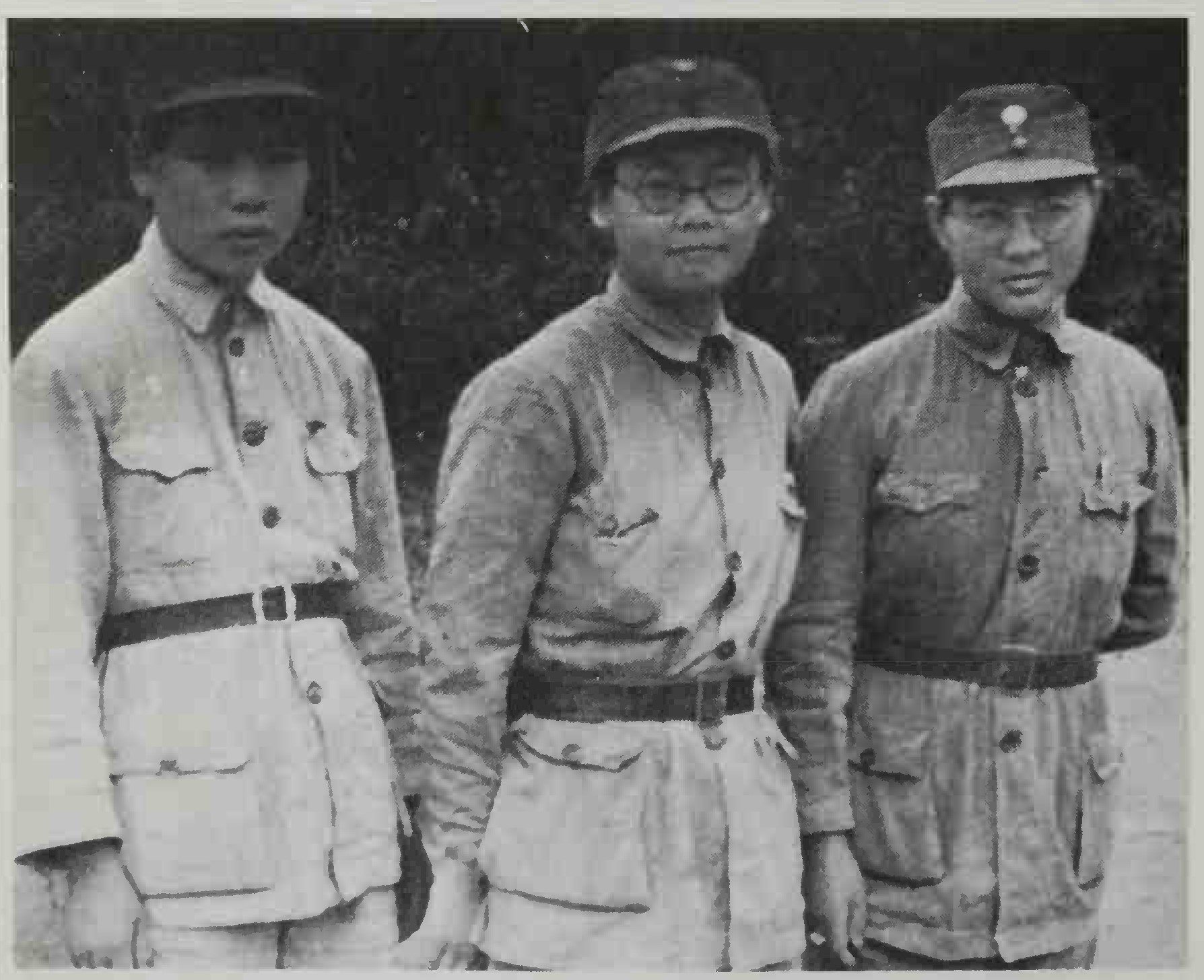
‘Shan-fei, Communist’ by Agnes Smedley from New Masses. Vol. 6 No. 12. May, 1931.
This is the story of Shan-fei, daughter of a rich land-owner of Hunan, China. Once she went to school and wore silk dresses and had a fountain-pen. But then she became a Communist and married a peasant leader. In the years that followed she — but I will begin from the beginning —
Her mother is the beginning. A strange woman. She was old-fashioned, had bound feet, and appeared to bow her head to every wish of her husband who held by all that was old and feudal. Yet she must have been rebellious. She watched her sons grow up, go to school, and return with new ideas. Some of these ideas were about women — women with natural feet, who studied as did men, who married only when and whom they wished. When her sons talked, the mother would sit listening, her eyes on her little daughter, Shan-fei, kicking in her cradle. And long thoughts came to her. What those thoughts were we do not know — but we know that at least she died for the freedom of her daughter.
This battle was waged behind the high stone walls that surround many a rich Chinese landlords home. The enemy was her husband and his brothers. And the mother’s weapons were the ancient weapons of subjected women — tears, entreaties, intrigue, cunning. At first she won but one point — her husband consented to Shan-fei’s education — provided the teacher was an old fashioned man who came to the home and taught only the Chinese characters. But Shan-fei’s feet must be bound in accordance with ancient custom, and she must be betrothed in marriage according to ancient custom. So the child’s feet were bound, and she was betrothed to the weakling son of a rich neighbor, a corrupt old man with many concubines.

Until Shan-fei was eleven years of age, her father ruled as tyrants rule. But then he suddenly died. Perhaps it was a natural death, and perhaps Shan-fei’s mother wept sincere tears. Yet the funeral was not finished before the bandages were taken off the feet of the little girls, and the earth on the grave was still damp when Shan-fei was put in a modern school one hundred li away.
But even though the bandages were removed, the little feet had already been crippled by five years of binding, and the half dead, useless toes remained, bent under the feet like stones, to handicap the girl throughout her life.
Anyway, the bandages were gone, and with them the symbol of one form of enslavement. There remained the betrothal to the rich man’s son. Such betrothals in China are legally binding, and parents who break them can be summoned to court and
heavily punished just as if they had committed a dangerous crime. Shan-fei’s mother, however, seemed have tendencies that the feudalminded ones called criminal. For she was suspected of plotting and intriguing to break the engagement. Worse still, it was rumored that she did not advise Shan-fei to be obedient as girls should be, but that she encouraged her to be free and rebellious. This rumour spread like fire when the news came that Shan-fei had led a student’s strike against the corrupt administration of her school. She was nearing sixteen at the time, the proper age for marriage. Yet she was expelled in disgrace from the school, and returned home with her head high and proud. And her mother, instead of subduing her, whispered with her alone, and then merely transferred her to a larger and still more modern school in far-away Wuchang on the Yangtze, where rumour further had it that she was becoming notorious as a leader in the students’ movements. Furthermore, men and women students studied together!
Things became so bad that at last the rich landlord filed a legal suit against Shan-fei’s mother, and summoned her to court, charged with plotting to prevent the marriage. But the old lady defended herself most cunningly, and even convinced the court that all she desired was a postponement of the marriage for another two years. She convinced the judge — but not the landlord. And, as was the custom, he called to his aid the armed gentry of the countryside; and when Shan-fei returned home from her vacation that year, they made an attempt to capture her by force. They failed and Shan-fei escaped and remained in Wuchang for another year. When she returned home again, her capture was again attempted. With the aid of her mother, she again escaped, hid in the homes of peasants, and returned by devious ways to Wuchang, never to return again. When she reached Wuchang, however, the news of her mother’s death had preceded her. Perhaps the death was also natural — perhaps not. Shan-fei says it was — that her mother died from the misery of the long-drawn out struggle and family feud. “She died for my sake,” she says, and in her manner is no trace of tearful sentimentality, but only a proud inspiration.
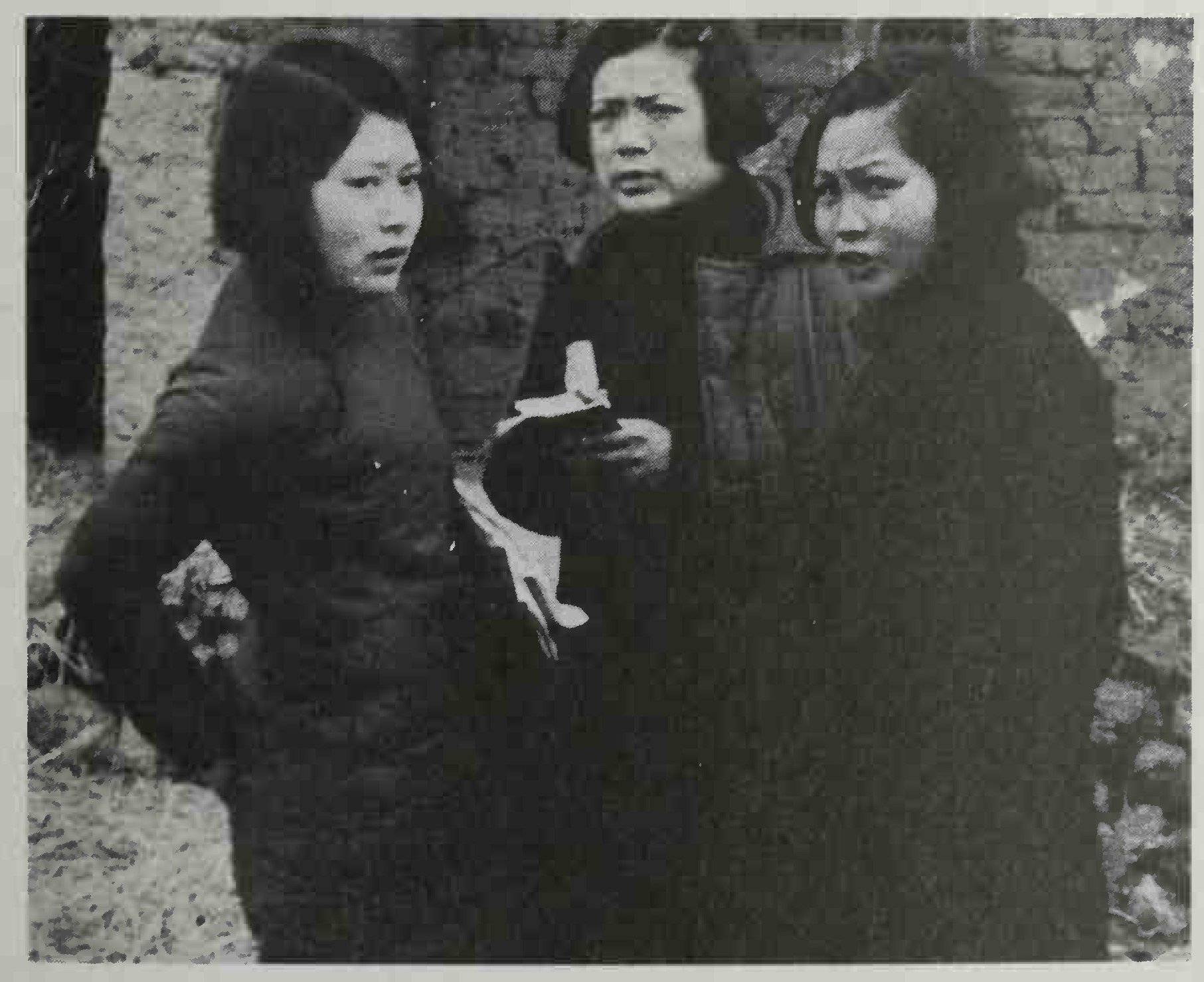
Shan-fei’s school comrades tried to prevent her from returning home for the funeral. But this was more than the death of a mother — it was the death of a pioneer for woman’s freedom. And Shan-fei, being young and unafraid and a bit proud that she had escaped the old forces twice, thought she could defeat them again. Lest anything did happen, she laid plans with her school comrades in the Students Union that they should look for her and help her escape if she did not return to Wuchang within a certain period.
The body of the old mother had scarcely been laid to rest when Shan-fei’s ancestral home was surrounded by armed men and she was violently captured and taken to her father-in-law’s home, where she was imprisoned in the bridal suit and left to come to her senses. She did not come to her senses, but instead, starved for one week.
Her hunger strike was broken only by another woman rebel within this landlord’s family. This woman was the first wife of the landlord, whom the Chinese call “Mother” to distinguish her from his concubines.
This old lady watched and listened to this strange, rebellious, rich girl, around whom a battle had been waged for years, and also used the ancient wiles of a woman to gain the girl’s freedom. This freedom, granted by the landlord, meant only the right to move about within the home and the compound, but did not extend beyond the high surrounding walls. In China, however, few or no secrets can be kept, and news travels on the wind. Perhaps that is how one girl and two men students from Wuchang happened to come to the neighborhood and bribed a servant to carry messages to Shan-fei. Anyway, one late evening Shan-fei mounted the wall by some means and disappeared into the dusk on the other side. That night she and her friends rode by starlight toward Wuchang.
This was the late summer of 1926, and China was swept by winds of revolution. Soon the southern armies lay siege to Wuchang. And Shan-fei gave up her studies and went to the masses. She became a member of the Communist Youth, and in this work she met a peasant leader whom she loved and who was loved by the peasants. She defied the old customs that bound her by law to the rich landlord’s son, and announced her free marriage to the man she loved. And from that day down to the present moment, her life has been as deeply elemental as are the struggles of mother earth. She has lived the life of the poorest peasant worker, dressed as they dress, eaten as they eat, worked as they work, and has faced death with them on many a battlefront. Even while bearing her unborn child within her womb, she threw all her boundless energy into the revolution, and when her child was born, she took it on her back and continued her work. In those days, the Kuomintang and the Communist Parties still worked together, and as one of the most active woman revolutionaries, Shan-fei was sent back to her ancestral home as head of the Woman’s Department of the Kuomintang. There she was further made a member of the Revolutionary Tribunal that tried the enemies of the revolution and that confiscated the lands of the rich landlords and distributed them among the poor peasants. She helped confiscate all the lands of her own family and the family of her former fiancé.
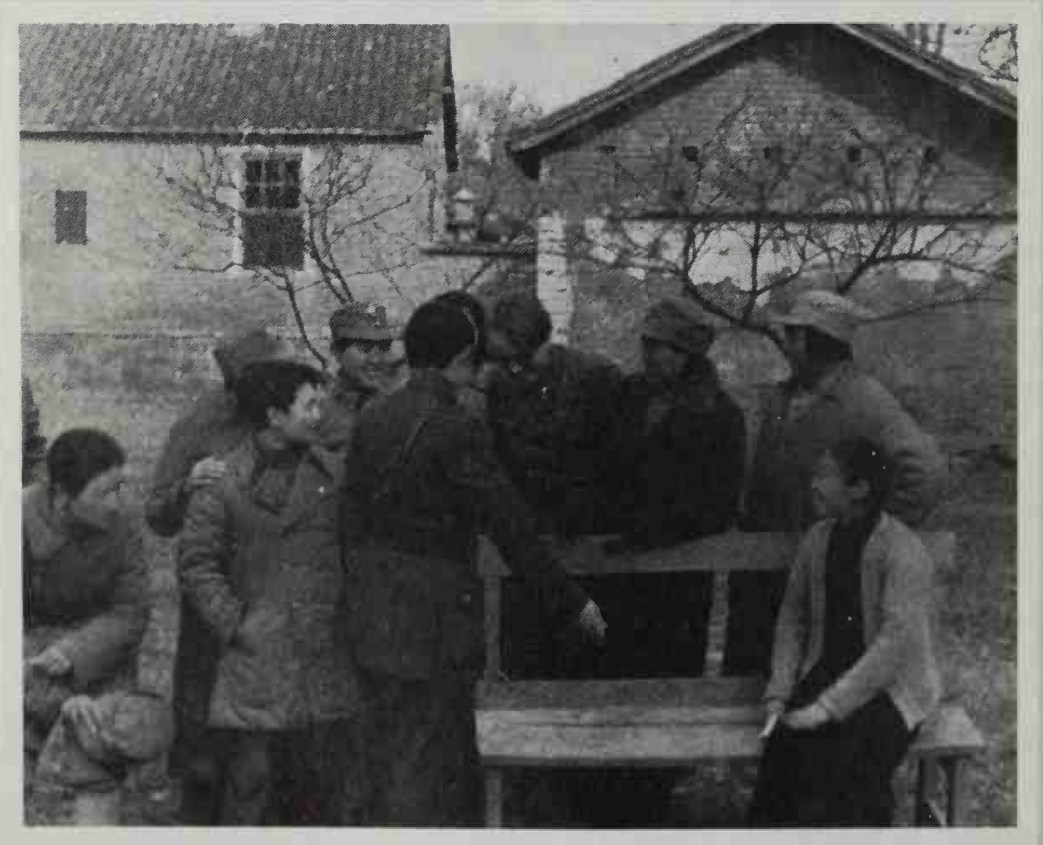
When the revolution became a social revolution, the Communists and the Kuomintang split, and the dread White Terror began, claiming tens of thousands of revolting peasants and workers. The militarists and the feudal landlords returned to power. Shan-fei’s family and the family of her fiancé asked the Kuomintang for her arrest. And this order was issued. It meant death for herself and her child. Two women and three men who worked with her were captured, the women’s breasts were cut off, and all five were beheaded in the streets. But the workers bored air-holes in a coffin, placed Shan-fei and her baby inside, and carried them through the heavily-guarded gates of the city out into the grave-yard beyond the walls. And from there she began her journey to Wuchang. Once she was captured because her short hair betrayed her as a revolutionary; but with her baby in her arms, she pleaded her innocence, and was released.
She reached the Wuhan cities only to be ordered by the Communist Party to return to the thick of the fight in western Hunan during the harvest struggle when the peasants armed themselves, refused to pay rent or taxes, and began the confiscation of the lands of the landlords. Shan-fei was with them during the days; at night she slept in the forests on the hills, about her the restless bodies of those who dared risk no night in their homes. Then troops were sent against them. The peasants were defeated, thousands slain, and the others disarmed. Again Shan-fei returned to Wuhan. But again she was sent back in the thick of the struggle. This time, however, she went, presumably as a Kuomintang member, to a city held by the militarists. Beyond the city walls were peasant armies. Inside, Shan-fei worked openly as the head of the Woman’s Department of the Kuomintang secretly, she carried on propaganda amongst the troops and the workers. Then in this city the chief of the Judicial Department met her and fell in love with her. He was a rich militarist, but she listened carefully to his love-making and did not forget to ask him about the plans to crush the peasants. He told her — and she sent the news to the peasant army beyond. And one of the leaders in this army beyond was her husband. At last the peasants attacked the city. And inside, so bold had Shan-fei become in her propaganda amongst the troops, that she was arrested, imprisoned and condemned to death. She sent for the official who was in love with her. He listened to her denials, he believed them, released her and enabled her to leave the city. But the peasant army was defeated and amongst those who emerged alive was her husband, who at last found her in Wuhan.
Shan-fei was next put in charge of technical work of the Party, setting type and printing. She would lay her child on the table by her side and croon to it as she worked. Then one day her home was raided by soldiers. Her husband was away and she had stepped out for a few minutes only. From afar she saw the soldiers guarding her house. A hours later she crept back to find her child. The soldiers had thrown it in a pail of water and left it to die. Not all the tender care of herself and her husband could hold the little thing to life. Shan-fei’s husband dried her bitter tears with his face — and Shan-fei turned to her work again.
Some things happen strangely. And one day this happened to Shan-fei: she went to visit the principal of the school where she had once been a student, and decided to remain for the night. With the early dawn the next morning, she was awakened by many shouting voices. She imagined she heard her husband’s voice amongst them. She sat up and listened and heard distinctly the shouts; “We die for the sake of Communism! Long live the Revolution!” Her friend covered her ears with a pillow and exclaimed: “Each day they bring Communists here to shoot or behead them — they are using that big space as an execution ground!” A series of volleys rang out, and the shouting voices were silenced. Shan-fei arose and blindly made her way to the execution grounds. The soldiers were marching away and only a small crowd of onlookers stood staring stupidly at the long row of dead bodies. Shan-fei stumbled down the line — and turned over the warm body of her dead husband.

The net of the White Terror closed in on Shan-fei until she was ordered to leave Wuhan. She went from city to city on the Yangtze, working in factories, organizing women and children. Never could she keep a position for long, because her crippled feet made it impossible for her to stand at a machine for twelve or fourteen hours a day. In the summer of 1929 she was again fighting with the peasants in Hunan. Sent into Changsha, one day, she was captured, together with the two men Communists, one a peasant leader. She sat in prison for six months, and was released then only because some new militarists overthrew the old, and in revenge freed many prisoners. But they did not free the peasant leader. Shan-fei bribed a prison guard and was permitted to see him before she left. About his neck, his waist, his ankles and his wrists, are iron bands, and these are connected with iron chains. The life of such prisoners in China is said to be two years. Shan-fei herself was not chained. But she emerged from prison with a skin disease, with stomach trouble, with an abscess, and she was a pasty white from anemia. In this condition she returned to the peasantry and took up her fight. And in the spring of 1930 she was sent as a peasant delegate to the All-China Soviet Congress. Friends afterwards put her in a hospital and she was operated on for the abscess. During this period she kept the translation of Marxian studies under her pillow, and she once remarked: “Now I have time to study theory.”
There are those who will ask: “Is Shan-fei young and beautiful?”
Shan-fei is twenty-five years of age. Her skin is dark and her face broad; her cheekbones are high. Her eyes are as black as midnight, but they glisten and seem to see through a darkness that is darker than the midnight in China. She is squarely built like a peasant and it seems that it would be very difficult to push her off the earth — so elemental is she, so firmly rooted to the earth. Beautiful? I do not know — is the earth beautiful?
Shanghai, China.
The New Masses was the continuation of Workers Monthly which began publishing in 1924 as a merger of the ‘Liberator’, the Trade Union Educational League magazine ‘Labor Herald’, and Friends of Soviet Russia’s monthly ‘Soviet Russia Pictorial’ as an explicitly Communist Party publication, but drawing in a wide range of contributors and sympathizers. In 1927 Workers Monthly ceased and The New Masses began. A major left cultural magazine of the late 1920s and early 1940s, the early editors of The New Masses included Hugo Gellert, John F. Sloan, Max Eastman, Mike Gold, and Joseph Freeman. Writers included William Carlos Williams, Theodore Dreiser, John Dos Passos, Upton Sinclair, Richard Wright, Ralph Ellison, Dorothy Parker, Dorothy Day, John Breecher, Langston Hughes, Eugene O’Neill, Rex Stout and Ernest Hemingway. Artists included Hugo Gellert, Stuart Davis, Boardman Robinson, Wanda Gag, William Gropper and Otto Soglow. Over time, the New Masses became narrower politically and the articles more commentary than comment. However, particularly in it first years, New Masses was the epitome of the era’s finest revolutionary cultural and artistic traditions.
PDF of full issue: https://www.marxists.org/history/usa/pubs/new-masses/1931/v06n12-may-1931-New-Masses.pdf
 Revolution's Newsstand