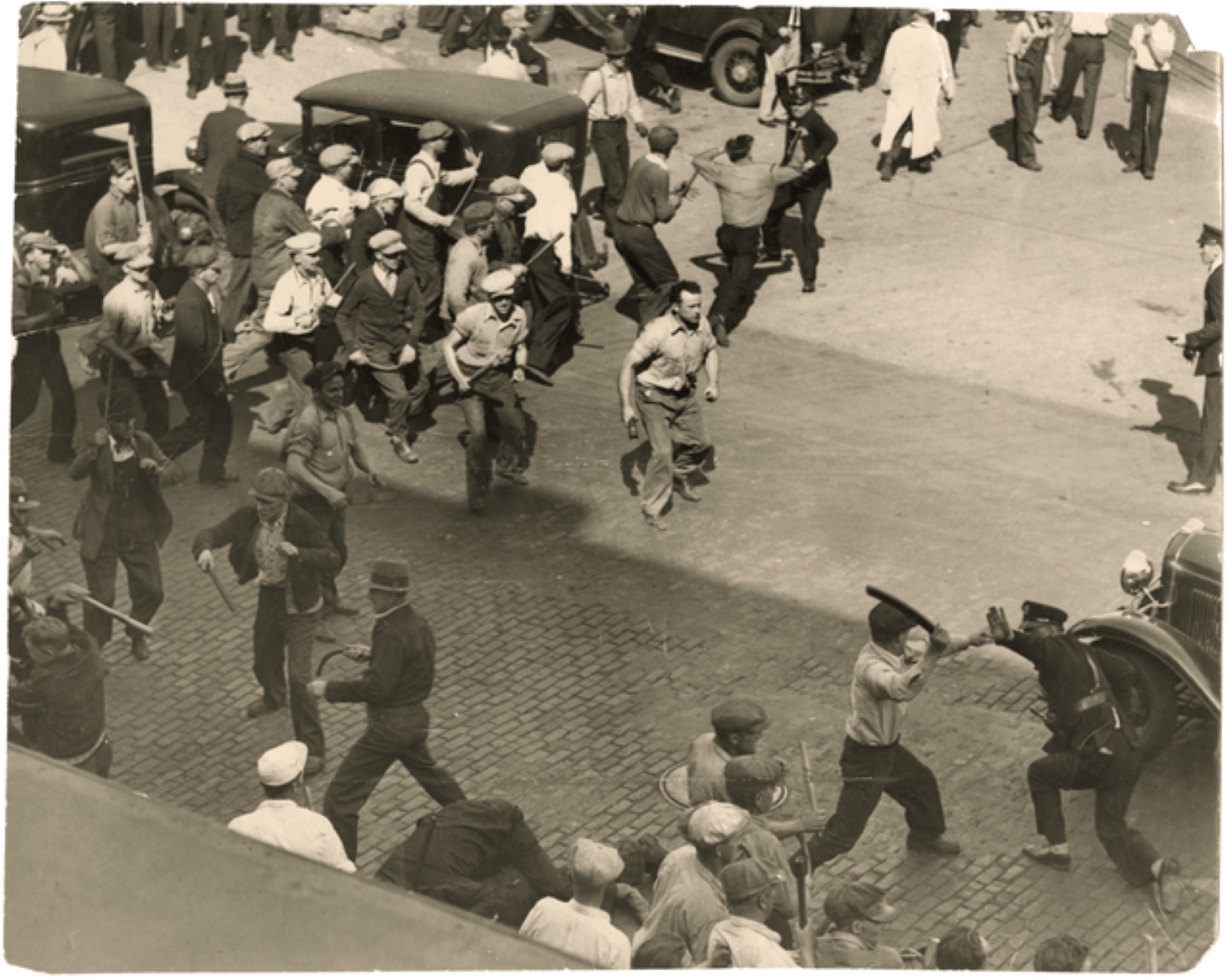
A turning point in the 1934 Minneapolis Teamsters’ strike was the ‘Battle of Deputies Run’ on May 22 ,1934 in which the workers turned the tables on the cops and strike-breakers, driving police form the city’s central market and resulting the death of two civilian deputies. A report from the ‘Militant’ by one who was there.
‘The Battle of ‘Deputies Run’’ by a Striker from the Militant. Vol. 7 No. 22. June 2, 1934.
From the inception of the organization work in connection with the General Drivers strike, it was correctly estimated that our strategic position was the so-called central market place seemed that it was hardly touched. This takes in an area of approximately six square blocks. It is bounded on one whole side by the railroad tracks, which are the team tracks where practically all of the market produce is unloaded.
In concentrating on the market, we were guided by the fact that the food situation, especially at this time of the year, was the real point to attack. At the start of the strike this strategy was not so apparent. But on the second and third days, it became plainly visible that the perishable food supply was running low and that the market bosses were going to attempt some drastic action to move their perishable foods.
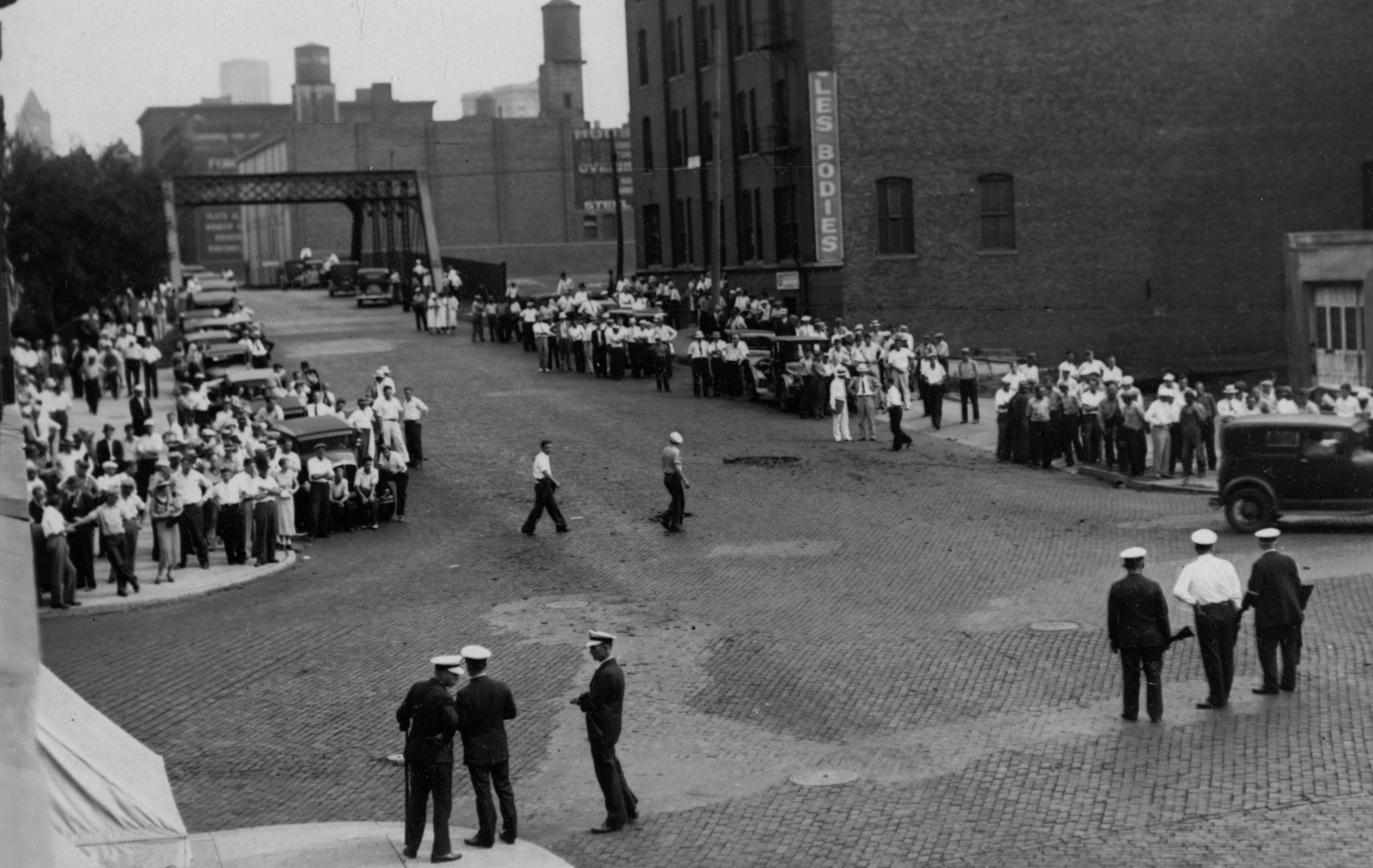
Through our connections in the market houses it was learned that on Saturday morning mere was to be a concerted effort to make deliveries. The strike committee held a conference and it was decided that we would relieve some of our forces from positions where there was not so much activity and hold them in reserve. It developed that although we had a little skirmish on that day that a serious threat was not made for any wholesale delivery.
The Battle of “Deputies Run”
The market situation was watched closely and, after waiting for Sunday and Monday to pass, we learned through unquestionable sources, that the big offensive was to be made Tuesday about eleven o’clock. This information was received about midnight Monday. Immediate action became compulsory. “Concentrate the Pickets”, was the slogan. “Cruising squads” of pickets were dispatched, motorcycle riders roared out, street car motormen and conductors on the owl cars carried the word to our pickets at outlying points, telephones and other messengers were utilized for the mobilization of every available picket.
Soon the outlying positions were deserted except for a skeleton picket line. The pickets came pouring in to strike headquarters, thousands of the tired but eager fighters, anxious to defend their rights with their lives if necessary. Tons of food had been prepared and was waiting for these fighters; but it so anxious were these workers for the job to be done.
No raised voices; no milling quietly questioning each other: “Where do we go? When do we start?” The word goes from the dispatcher to the microphone announcer in the big strike headquarters: “Start moving”! Then trucks lined up. Noiselessly they were pushed into place. Next order: “Fill the trucks”! Like one man these eager fighters filled the trucks to capacity.
In code the drivers only were given the destination. “Move out!” Motors roared and in an instant three hundred pickets were on their way to a destination, unknown then, that was to make new history for the American workers.
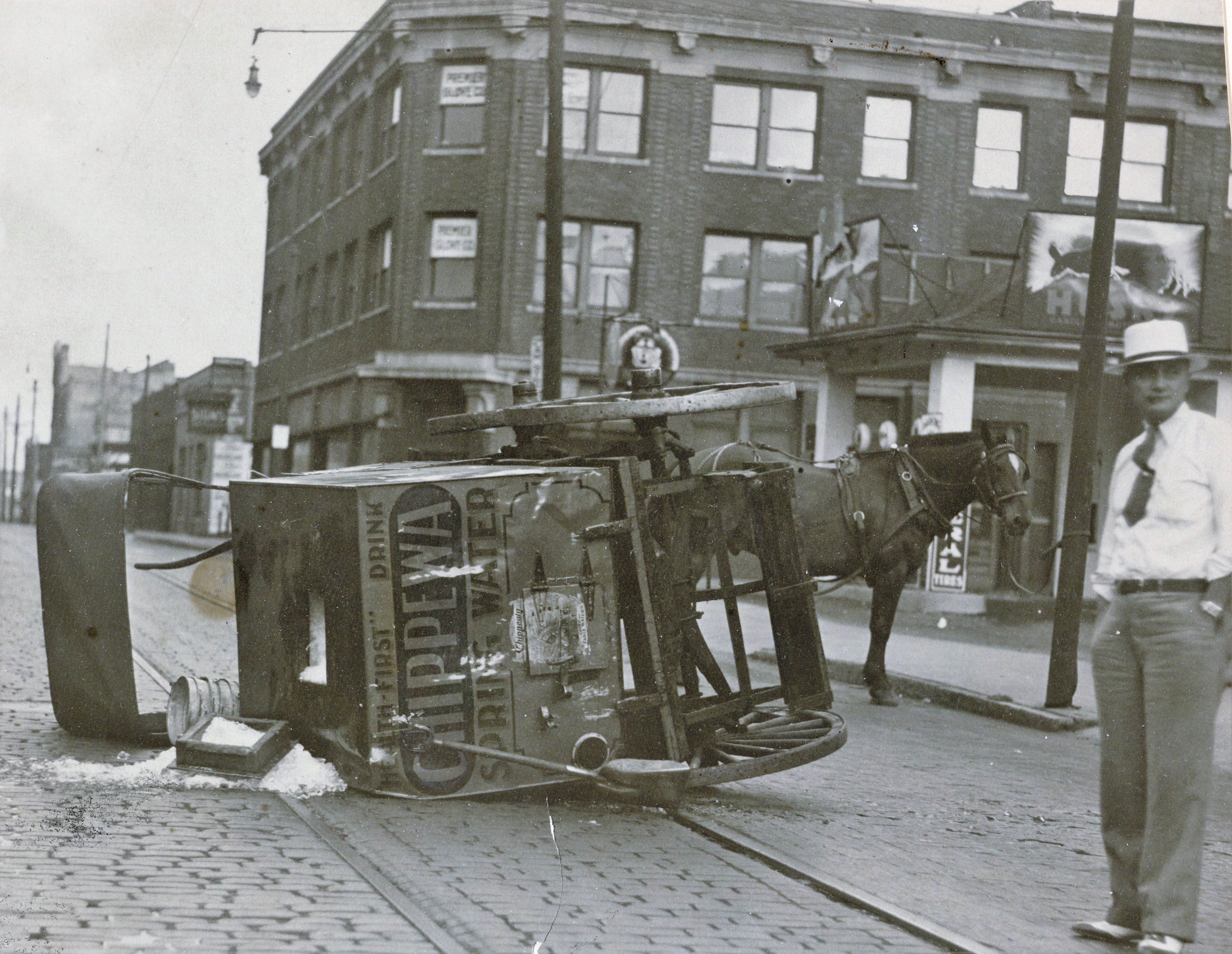
Adjacent to the market and on one of the border streets, Labor Headquarters is located. Into this hall holding about two thousand men our pickets were concentrated. A skeleton patrol was sent to patrol the market streets and to report any move to start delivery. Word quickly comes back: hundreds of special deputies, special police and harness bulls armed with clubs and guns, squad cars of police with sawed off shot guns and vomiting gas. Quietly the pickets patrolled the streets, curiosity seekers hurling curses at the hired strikebreakers. A truck starts to move, our pickets jump to the running boards and demand that the scab driver stop. A hired slugger raises his club and slashes at a picket. Down the picket drops as if dead. The fight is on. Phone rings at the concentration hall: “Send the reserves!” Orderly, but almost as if by magic, the hall is emptied. The pickets are deployed by their leaders to surround the police and sluggers. The police raise their riot guns but the workers ignore and rush through them. “Chase out the hired sluggers”, is their battle cry. The cowardly sluggers take to their heels and run. The police and strikers use their clubs freely. Many casualties on both sides. The workers have captured the market!
—A STRIKER.
The Militant was a weekly newspaper begun by supporters of the International Left Opposition recently expelled from the Communist Party in 1928 and published in New York City. Led by James P Cannon, Max Schacthman, Martin Abern, and others, the new organization called itself the Communist League of America (Opposition) and saw itself as an outside faction of both the Communist Party and the Comintern. After 1933, the group dropped ‘Opposition’ and advocated a new party and International. When the CLA fused with AJ Muste’s American Workers Party in late 1934, the paper became the New Militant as the organ of the newly formed Workers Party of the United States.
PDF of full issue: https://www.marxists.org/history/etol/newspape/themilitant/1934/jun-02-1934.pdf
 Revolution's Newsstand