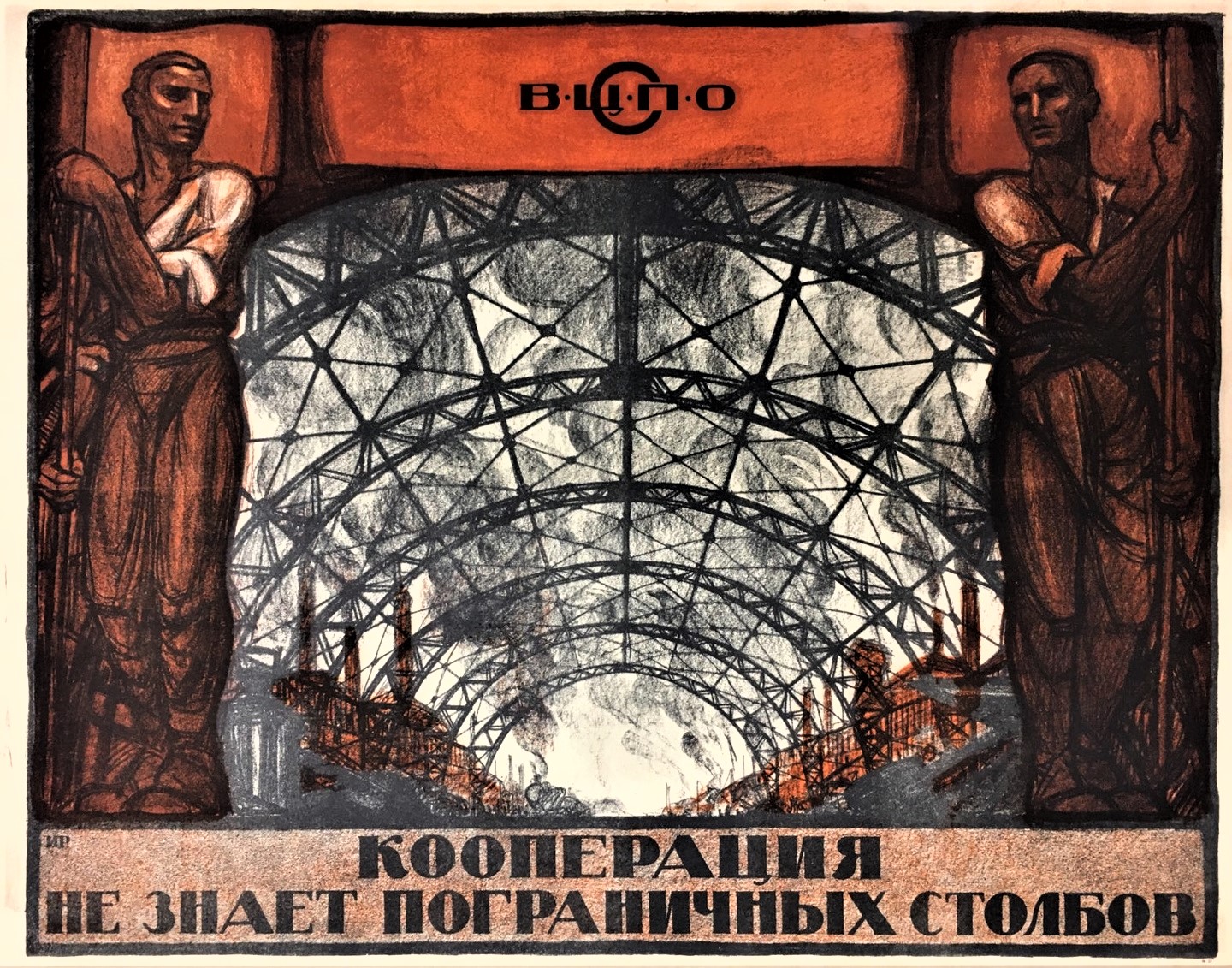
One of the most nuanced and fiercely fought debates of the Revolution in Lenin’s life was the role of the trade unions in the new proletarian state before and during the 10th Party Congress in 1921. As this publication of three leading voices in a multi-sided discussion shows, the debate was largely held in public, with factory Soviets voting on the various positions. The conflict of the unions had huge implications for the Soviets as they moved away from War Communism to the New Economic Policy throughout 1921.
‘Trade Unions in Soviet Russia: Speeches by Zinoviev, Trotsky, and Lenin’ from Soviet Russia (New York). Vol. 4 No. 13. March 26, 1921.
We print here the speeches of Zinoviev, Trotsky, and Lenin on the role of the trade unions in production, as expressing the different viewpoints on this question existing in the ranks of the Russian Communist Party.
Zinoviev’s Report

The trade unions are at present the organizations in which the controversy between the Social Revolution and bourgeois social-democracy is being finally fought out, not only in Russia but on an international scale. This is especially manifest in those countries in which the bourgeoisie is in power because there the social democrats have shifted the center of the struggle on an international scale to the field of the trade union movement. It is no exaggeration to say that nine-tenths of the whole struggle waged at present by the Communist International, will in the near future be carried on in and round the trade unions, The trade union movement on an international scale is the last foothold of international Menshevism; and to conquer Menshevism in the trade union movement, will mean our final victory over the bourgeoisie. The trade unions are the largest organization of the workers that the history of the labor movement has known. That is why the struggle of the social-traitors on an international scale is waged within their boundaries.
The trade unions are the backbone of the dictatorship of the proletariat. Without the trade unions, as was correctly stated by Comrade Lenin, our Revolution would not have lasted for two weeks, The trade unions are the most important element of proletarian dictatorship, but this does not mean that the unions themselves are a direct instrument of the dictatorship. No, for this purpose we have the State, we have the Soviets backed by the Party. The trade unions have other functions to accomplish; first of all, they carry out the rough work of organizing the working masses, and they begin the great work of educating the workers in the proletarian, and then in the purely Communism, in which we are to educate millions of trade unions. We must not deal carelessly with these vast organizations. We must remember that these organizations have their specific and important tasks, which consist, in the first place, in the work of directing the masses into the current of the organized proletarian movement, of attracting into that movement the millions of non-party workers. We must remember that we have at present seven million workers organized, and badly organized, in the trade unions. This is all we have in the enormous territories of our country.
In order that the seven million members of the trade unions may influence the peasantry and draw it closer to themselves, we must have the fullest unity in the camp of this trade union movement. There can be no talk of our being able to carry out the Dictatorship of the Proletariat, if we do not pay the greatest attention to the trade unions. Every one should comprehend that we must regard the trade unions as an enormous laboratory of

Communism, in which we are to educate millions of the workers, and without which there can be no talk of the serious education of the workers.
Now I shall touch upon the question of democracy of production. In my opinion, it is an empty combination of words, which conveys no intelligible meaning at all. At our last All-Russian Party Conference, we attached special emphasis to the question of labor democracy. The difficulty does not lie in the fact that we weakened our democracy while the war was going on. That was necessary. It would be bad if, now that the war is ended, our Party hesitated and waited. But the Party immediately took the course of restoring labor democracy. We say that we are revolutionists, and, as soon as conditions changed, it was our duty to be the first to put forward this question and solve it together with the Party. This is the way we put the question of democracy in work.
At the same time a new term was introduced; “democracy of production.” Of course, production is the most important thing at present. None of us doubts that it is the most important problem at present. But in order to solve this economic question, it is not at all necessary to resort to tangled and vague terms. It is true that at elections we shall have to put the question: Do you understand anything about economy; are you able to organize? But we say that this will be the only question which we shall put to the candidate. We require some political traits, Party experience, and the ability to organize, etc. I maintain, that the term “democracy of production” is lacking in sense, and is a false term, only likely to breed confusion in the Party. It points to no firm course; it does not help us to grasp the situation as it is. We say that in the same way as we educated the fighter, the Red Army man, the commissar, we shall also educate the trade-unionist, the economist, the man who can accomplish something real for the improvement of the conditions of the working class.
I return to the state of things in the trade unions at present. There are very many people who say that the trade unions are going through a crisis just now. It is with this that Comrade Trotsky starts out. Of course nobody would say that in our trade unions everything is perfectly correct. On the contrary, the apparatus of the trade unions is very weak, but this is only because we have not given them sufficient attention. We should have the right to ask more of the trade unions, if we had given them as much of our attention and love, as we have given to the Revolutionary War Council of the Republic. It is true that the trade unions are weak, owing to the civil war and our inattention to them. But the trade unions exist, and during the three years of the dictatorship they have rendered us great services. However it may have been they held together the masses, the nonpartisan and semi-partisan masses that were feeling their way to us, they held them together, kept them in their organization, and, in one way or another, they contributed to the fact that these masses are for us. We should consider the trade union movement in its present state as a result of three years of war strain, when the Party could not sufficiently care for them. We are dealing with transitional forms of the trade union movement, and we should see not only its weak points, but its great and strong aspects as well, assets which have proved a support for the proletarian dictatorship during the past years. We shall now start out to refine this apparatus and to strengthen it. I will quote figures to show what the trade unions have accomplished, in spite of the difficult conditions under which they were obliged to work. In 1919, when a special mobilization, beside all other mobilizations, was made of the members of the trade unions, 79,368 men came forward. The number of the members of the food-supply detachments mobilized by the trade unions during the first year exceeded 80,000, and all this was accomplished while the number of all the responsible administrative workers in the trade unions, including the All-Russian Central Council of the Trade Unions, was, according to latest data, not more than 1,313.
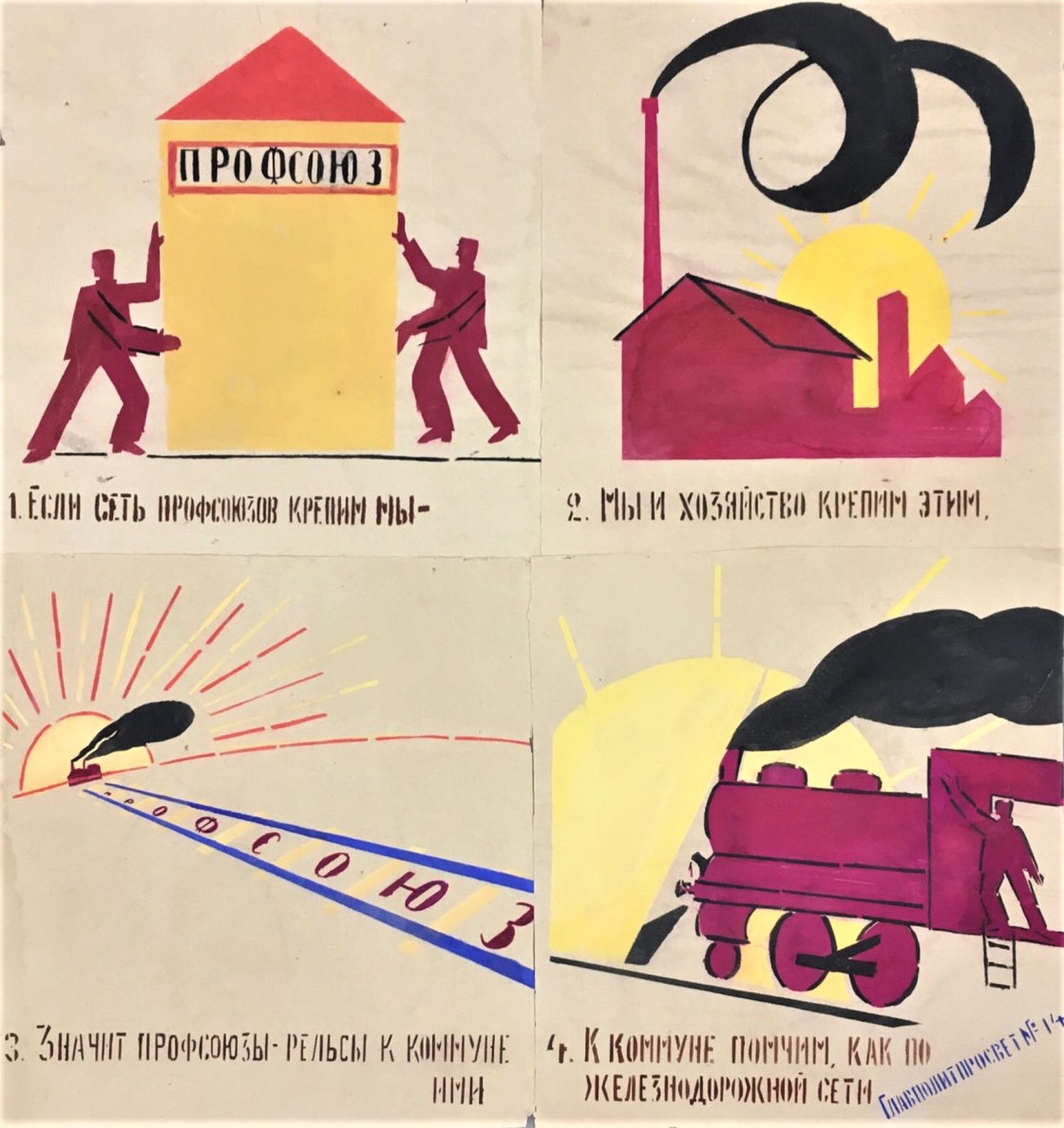
We now approach the basic and most important question, which is the main point in the controversy. Our trade unions have been little engaged in production—this is true. Our trade unions should increase their participation in production— this is also true. Our trade unions should start out to become more fused with the State organs— this is true, too. But everything following this is absolute confusion, an absolute misunderstanding of what the trade unions could and should be at the present moment. Fusion is certainly necessary. We do not oppose fusion on points of principle, — it is the decision of the Party Congress. The question is how this fusion is to be carried out. The Ninth Congress of the Party pointed out the way of fusing the trade unions with the Soviet organs. In the resolutions of the Congress there is a special chapter devoted to the forms of the participation by trade unions in production. This chapter dwells at length on these forms, beginning with the shop committees and ending with the councils of public economy. Practical methods for accomplishing this fusion, and the way in which the trade unions should participate in working out the programs of production are also pointed out. But if you understand by fusion, that the unions should be completely welded and fused with the organs of the State, we do not want it, and the trade unions do not want it, and they are perfectly right. They do not want this kind of fusion, because it would mean the absolute destruction of the trade union movement, which we must keep up in order to accomplish the Dictatorship of the Proletariat.
I declare openly that I am against the immediate turning of the trade unions into organs of the State, and a great part of the Central Committee is also against it. We have more State organizations than we want. We have organizations for compulsion and for everything you can think of. We know that we have not yet cleared our State organization of bureaucracy.
What is the position of the working class in Russia? We have 700,000 members of the Party and 7,000,000 members of the trade unions, It is an enormous mass of non-partisan workers still connected with the villages. When are we going to educate them? Why should we tum the trade unions into State institutions? I have seen a leaflet about illegal trade unions which the Right Social-Revolutionists intend to organize. I have no doubt but that they will fail. But don’t you think that by turning the trade unions into State institutions we should only assist the Right Social Revolutionists? I am sure that such would be the case. Every comrade will confirm the statement that by such a policy we should only assist them.
It is in our power to give the trade unions an opportunity to play a greater role in production.
Comrade Trotsky maintains that the essential traits of the trade unions in bourgeois society have become superfluous. This is not quite right. The necessity for striking has become superfluous, But there is still the necessity for educating the workers in the spirit of Communism, there is still the need to maintain the revolutionary organization of the wide non-partisan masses.
We should never forget that the trade unions represent 7,000,000 workers, and only when the relations between the trade unions and the Party are based on a mutual understanding of the tasks of the trade unions, shall we be really in a position to accomplish the dictatorship and build up our economy.
Trotsky’s Report

The role and significance of the trade unions should be considered in the light of the developed and strengthened Communist Revolution, and it is evident that the definition of the trade union, the definition of its tasks, is different now from what it was before. The old definitions are not sufficient to embrace and determine the tasks of the trade unions in the workers’ State, in a society which is passing from bourgeois to Communist relations.
“The trade unions are a school of Communism” —no doubt. But what of the soviets, of workers’ meetings, congresses, non-partisan conferences of workers and peasants—are these not also schools of Communism? It would be very bad if the various organizations and the soviets, while carrying out their regular work, did not at the same time serve as schools of Communism. Perhaps the trade unions are a broader school of Communism. But what is the qualitative difference between them and mass-meetings, clubs, non-partisan conferences, etc.? What is the primary difference between them? Why are the unions constructed as unions of production? The definition “a school of Communism” is a very valuable, theoretically and practically correct definition, but we should take care not to turn this definition into an empty commonplace phrase, which people use without realizing its real significance.
What should be the difference between my work in the trade unions and my work at any meeting of workers? We have heard no answer to this.
We have to face the question: what are the workers to do who are in the trade unions and are called upon to manage them? In the report of Comrade Zinoviev there was not a single word about this. There was not a single word about what a Communist should do in his trade union, what work he is to carry out, what contents he should put into his propaganda work.
I am reminded of the decisions of the Ninth Congress of the Party. If you would only consider these decisions from the standpoint of the experience of our work during the past year, there should be no differences between us. The essence of the problem is that the decisions of the Ninth Congress, which were an important as compared with the previous decisions, should be subject to revision now. On the one hand we should make a new step forward, and on the other, we should deal with the problem of the trade unions along broader and more concrete lines and on a basis of principle.
There was much talk about the fact that the trade unions participated in the mobilization for the front, and for the food-supply campaigns, and statistical data have been cited to this effect.
Comrades, it is quite evident that, since the working class is the basis and the support of the dictatorship of the Soviet State, every organization and institution which has need of workers, must get them from the ranks of the trade unions, which enclose, theoretically at least, the whole working class. And it is quite evident that, when the Party had need of 500,000—700,000 workers, only the trade unions could give them. The unions expended their forces to create the different military and food-supply organizations, and so they weakened themselves. But was this the role of the trade unions; was this their destination? During the period when the trade anions mobilized their members, the whole attention of the Soviet State and of the Party was directed to the front. During that period the unions were becoming weaker, they were deprived of their best workers, the apparatus became exceedingly poor, because everything was given for the front.
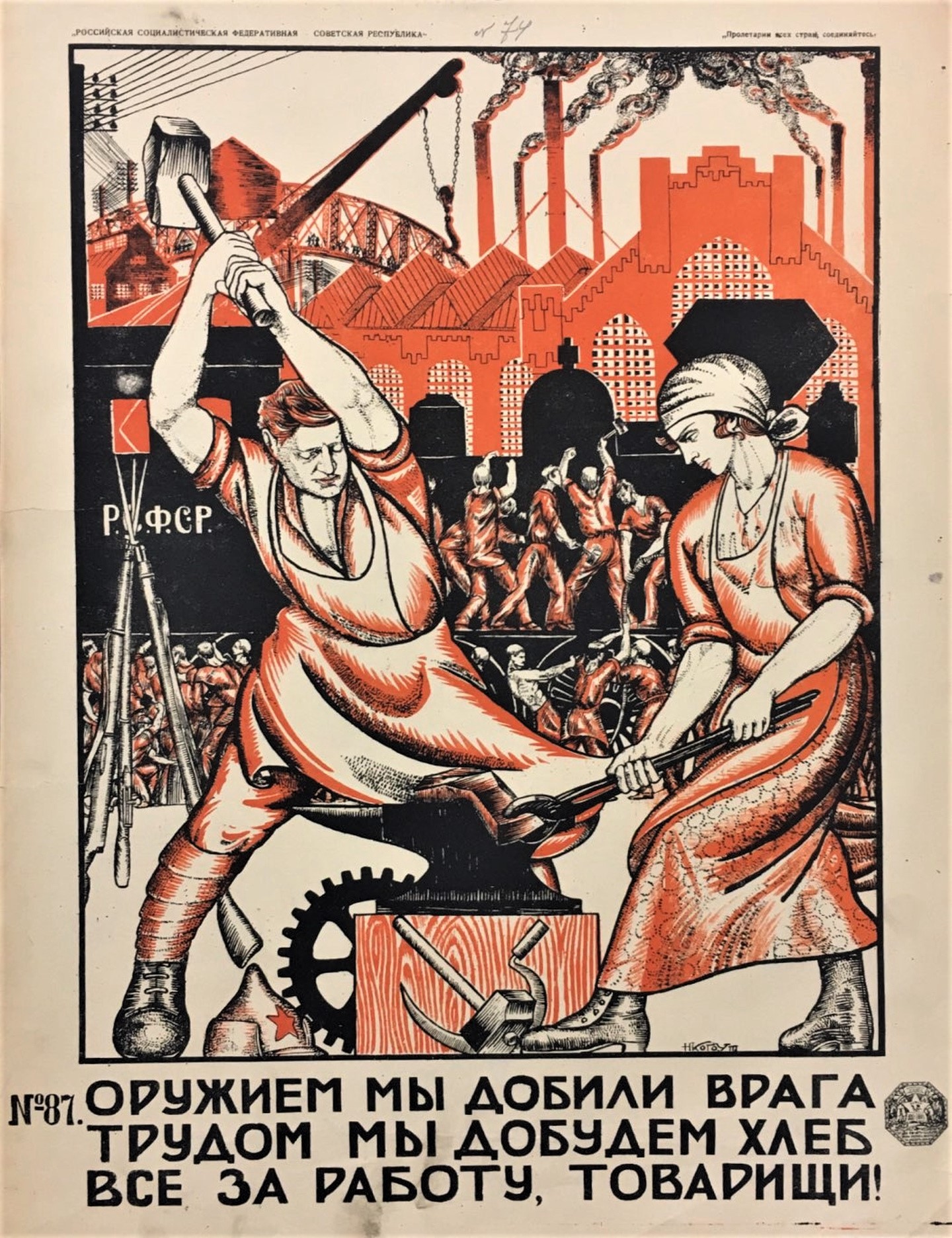
Now, can we determine the work of the trade unions by their mobilization for the front, for the food-supply work? This is absolutely incorrect.
No doubt, we must preserve the unity of the trade unions. My standpoint is, in my opinion, an expression of the development of the primary postulate of this problem, the postulate of our Party program as to the role of the trade unions, which should master the whole of production, and become fused with the corresponding organs of the workers’ State. From this standpoint the problem is so great, that it should be made the work of a whole historical epoch. It is a problem of educating every worker of the Party, of the trade unions, and every worker in general to the full consciousness of the new role, the new attitude of the working class to production itself, and to the main task at present before the working class—the organization of production on Communist bases.
And here we approach the question of the role of the trade unions as such. What is a member of a trade union? Comrade Zinoviev has made no reply to this question. What was a member of the trade union in the bourgeois society and what is he all over the world? He is a worker who joins the union individually because he has learned by the experience of his life, by the experience of some strike or lockout, how necessary it is for him to have a collective organization. The joining of a trade union marks an epoch in the life of the individual worker; it introduces him to the collective struggle for his class.
I ask, do we observe this fact in our present conditions? Nothing of the kind. With us, every one who is working at a factory becomes a member of the trade unions by the mere fact of his so working.
I ask, what are our present day trade unions? On the whole they represent not subjective but objective groups. A subjective group we call one which everybody joins consciously, after having come to the conclusion that it is necessary. Such were the trade unions before the Revolution. But since then the trade unions have been made to include every worker. As soon as a man or woman starts to work at any industrial enterprise, he or she automatically becomes a member of the trade union. They have become members of the union not consciously, not from any subjective motives.
We ought clearly to understand what is going on. There is a certain small cadre of leading workers in the trade union movement. They enjoy the confidence of the older members of the trade unions. Then there are three-quarters, or a half, or quarter, and in some places even nine-tenths of so-called members of the unions who are not connected with the unions personally, subjectively. Previously, we used to be connected with the trade unions through the strike-committees. The strike-committees managed the strikes, which were the greatest event in the life of every particular group of workers. It would be the greatest disaster if the workers thought that this connection, which was created during the fight against bourgeois society, is the very connection which should determine the sense of the movement and its work under our present conditions too. No, Comrade Zinoviev himself and others have pointed out that during the period just concluded the trade unions became merely enlistment bureaus for the front. It was a great work; it corresponded to the need of the moment. connection with this work, a general class propaganda was carried on which had nothing to do with the special problems of production.
What should be the basis of the trade unions in a workers’ State? Nothing else than participation in production, the organization of the workers for production itself. In the midst of the working masses, a new productive atmosphere must be created. The same exertion and interest which was manifested in regard to the fronts, where, as we know, the fate of Soviet Russia depended on the steadiness of each section of the line, —the same exertion and interest should be manifested in regard to the economic front. It is only in this sense that we talk of an atmosphere of production. This atmosphere must be created. What we are doing now is, in its essence, only a first installment of the work, the educational activity that we must develop, if we want to change, at every factory, the attitude of the workers toward their work.
And here we come to the essence of the problem. Have the workers this productive education? No. Previously, the task of both the revolutionary and opportunist unions was limited to the necessity of exerting a certain pressure on capital, for higher wages and a shorter work day, for a larger share in the sum total of the wealth produced. This was the practical work of the trade unions in bourgeois society, and it was also the basis of the work of the revolutionary trade unions, which also developed an agitational-educational activity. And I ask, what should replace these bases now? We should say at every factory that, in a workers’ State, there is no more need to exert pressure on the State. In order to protect the interests of the toilers, we should increase the productivity of labor, improve the technique. And now I ask: has our working class acquired the habit of thinking not of how to defeat capital, but of how to use its time at the given machine or in the given factory in the best way, in the interest of higher production? Of course, some individual workers may have i this habit. But we want to make it the habit of the whole mass of the workers.

If we try to find what it is that fills up the life of the trade unions, we must admit that the whole work going on in Soviet Russia is being accomplished outside the trade unions. We have arrived at the conjunction of the economic Commissariats for the sake of this systematic economy. But do we observe in the trade unions a development corresponding to this apparatus? The trade unions are staying outside of the work, and they are satisfied with being a school of Communism.
We must have fusion. We should accomplish this seriously and systematically. Fusion means that the organs of the trade unions should gradually become welded together. What does the Council of Public Economy represent at present? It represents Communists who have specialized in the work of production, but we have no workers connected with the organizations of the producers, which should be represented by the trade union. On the other hand, we have representatives of the trade union movement, which is still to be turned into a mass organization of production. These two groups should become fused together.
Of course, this would not give us an immediate solution of the problem. But it would give us the direction in which the trade unions should develop in their relation to the soviet economic organs. Otherwise we shall only be allowing disunion to develop. It is not a matter of nationalizing the unions in twenty-four hours. This is nonsense. It is only a matter of taking our course toward nationalization. But what should be the basis of our work? We ought to work on the basis of direct productive construction, on the basis of turning the workers’ democracy into a democracy of production. These are not phrases only. What is our State? It is not a permanent organization. Our State must become a Commune. During the transitional stages, political democracy and workers’ democracy which includes both is gradually turning into a democracy of production, in the degree that we apply these terms to the Party and trade unions.
The Party will always correct the work of the trade union worker. Comrade Zinoviev says that this should not be done in a sudden manner. Certainly. But the task of which I speak: productive education, fusion of the trade unions in their leading links, construction of trade unions along the lines of productive problems, the education of every single worker with a view to the new attitude toward production, —all this is a task for a very long period.
Lenin’s Speech
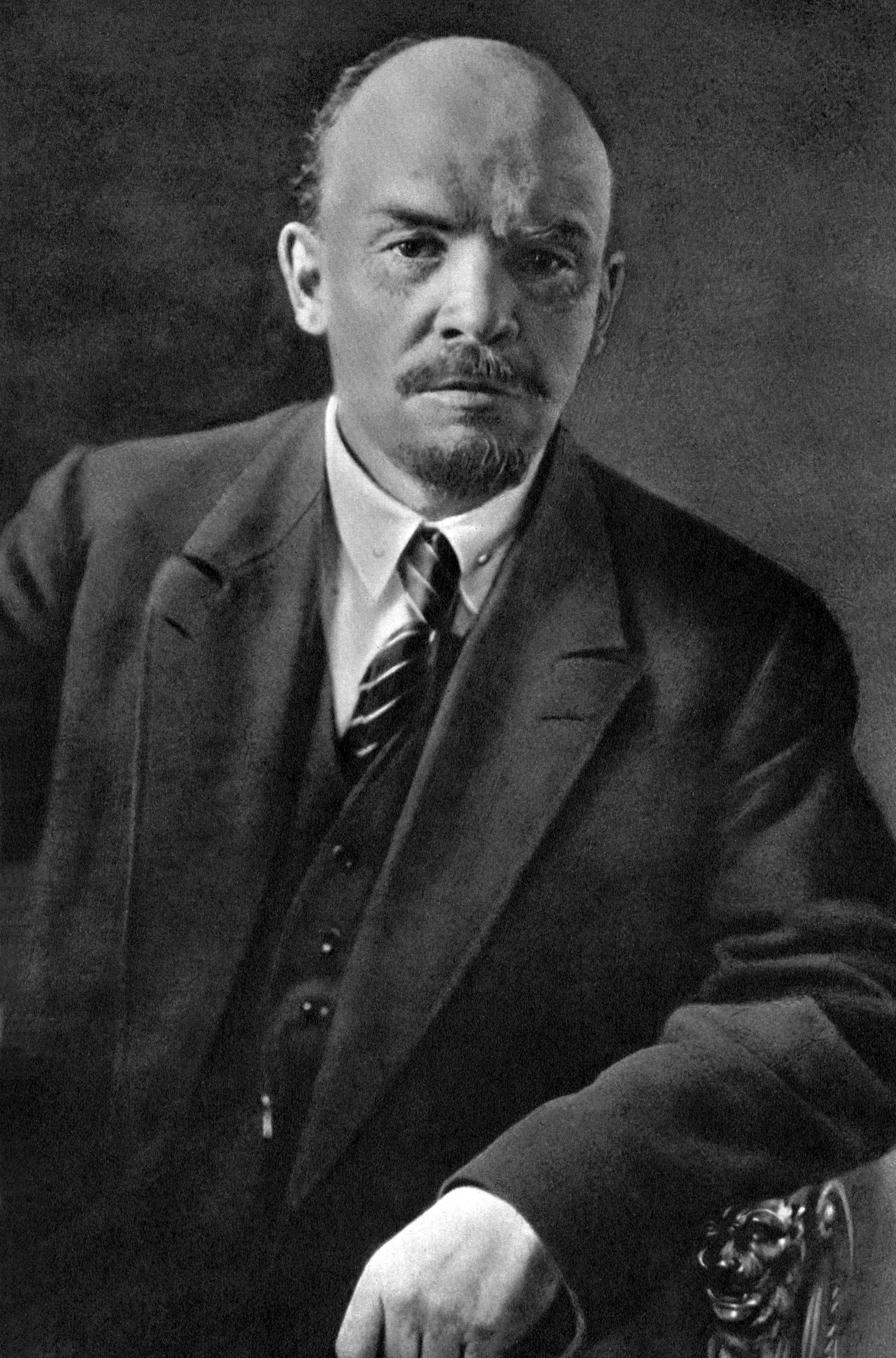
The trade unions are not only an historically necessary but an historically inevitable form of the movement of the industrial proletariat, a form which, under conditions of proletarian dictatorship, includes almost the whole proletariat. This is the primary postulate, and from this we conclude that the trade unions play an essential role in the accomplishment of the dictatorship by the proletariat. But what is this role?
On the one hand the trade unions, including within the limits of their organization the industrial workers, are an organization of the ruling class, of the class which has accomplished its dictatorship, the class which accomplished State compulsion. But the trade unions themselves are not a State organization, they are not an organization of compulsion. They are an educational organization, — a school, a school of managing, a school of economy, a school of Communism. It is a school of an uncommon type, because in it we have to deal with the odd combination of remnants of capitalism, with new forms and new features born out of the dictatorship of the revolutionary vanguard of the proletariat. When we talk of the role of the trade unions, we should always bear in mind this particular nature of theirs, otherwise we shall always be in danger of arriving at false conclusions.
We are at present confronted with the problem of how to approach the masses, how to become connected with them. Now, where does the divergence of opinion come in?
According to Trotsky, the defence of the material and spiritual interests of the working class is not a task for the trade unions in a Workers’ State. Comrade Trotsky talks of a “Workers’ State.” But this is an abstract idea. When we wrote about a Workers’ State in 1917, it was quite justified. But when you say: “Why and against whom defend the working class, if there is no bourgeoisie, if we have a Workers’ State?” then we reply: “Not quite a Workers’ State.” As a matter of fact, our State is not of the workers, but of the workers and peasants. This is the first thing. And this means a great deal. But it is not all. The very program of our Party shows that we have a Workers’ State with too much bureaucracy. It was a disagreeable necessity for us to put this label on our State. This is the reality of the transitional period. Now, would you say that there is no need for the trade unions to defend the material and spiritual interests of the working class in this bureaucratic State?
In reality the State is such, that the fully organized proletariat is in a position to defend itself, and we should make use of these labor organizations for defence against their own State, by a peculiar blending of our State measures and by agreement and fusion with the trade unions. This word “fusion” shows, that it would be a blunder to make an enemy of soviet trade-unionism; because there are different kinds of fusion, and the idea of fusion implies also something which should still be made use of by the State Government, viz., the defense of the material]and spiritual interests of the fully organized working class against this State bureaucracy.

Now, I shall]dwell on “productive democracy.” The more I think of this “democracy of production,” the more I see the theoretical faultiness of it.
Production is always necessary. Democracy however, is a category of thought and a political one at that. We can have no objection to using this term in a speech or a newspaper article. But it sounds quite strange, when you attempt to make a thesis out of it, or put it forward as a slogan to unite all those who do or do not agree. Production is always necessary. Not so democracy. “Productive democracy” leads to ideas which are absolutely faulty.
Then comes the question of fusion. The best thing would be to keep silent on this point of fusion just now. “Speech is silver, silence is golden.” For we have tried fusion. There is not a single provincial council of public economy of any importance in which fusion has not been tried in one way or another. But did it prove useful?
We should learn from experience how fusion was worked and what was accomplished by it.
We entered the course of fusion, and I do not doubt but that it was a correct step, but we had not studied the experiment well enough. Therefore it is the wisest policy not to talk at all about fusion just now.
We should learn from experience. We have no doubt made many blunders. In the same way the greatest part of our decrees should, perhaps, be changed. I agree with this and I am not especially in love with decrees. —Russian Press Review, January 19, 1921.
Soviet Russia began in the summer of 1919, published by the Bureau of Information of Soviet Russia and replaced The Weekly Bulletin of the Bureau of Information of Soviet Russia. In lieu of an Embassy the Russian Soviet Government Bureau was the official voice of the Soviets in the US. Soviet Russia was published as the official organ of the RSGB until February 1922 when Soviet Russia became to the official organ of The Friends of Soviet Russia, becoming Soviet Russia Pictorial in 1923. There is no better US-published source for information on the Soviet state at this time, and includes official statements, articles by prominent Bolsheviks, data on the Soviet economy, weekly reports on the wars for survival the Soviets were engaged in, as well as efforts to in the US to lift the blockade and begin trade with the emerging Soviet Union.
PDF of full issue: https://www.marxists.org/history/usa/pubs/srp/v4-5-soviet-russia%20Jan-Dec%201921.pdf
 Revolution's Newsstand