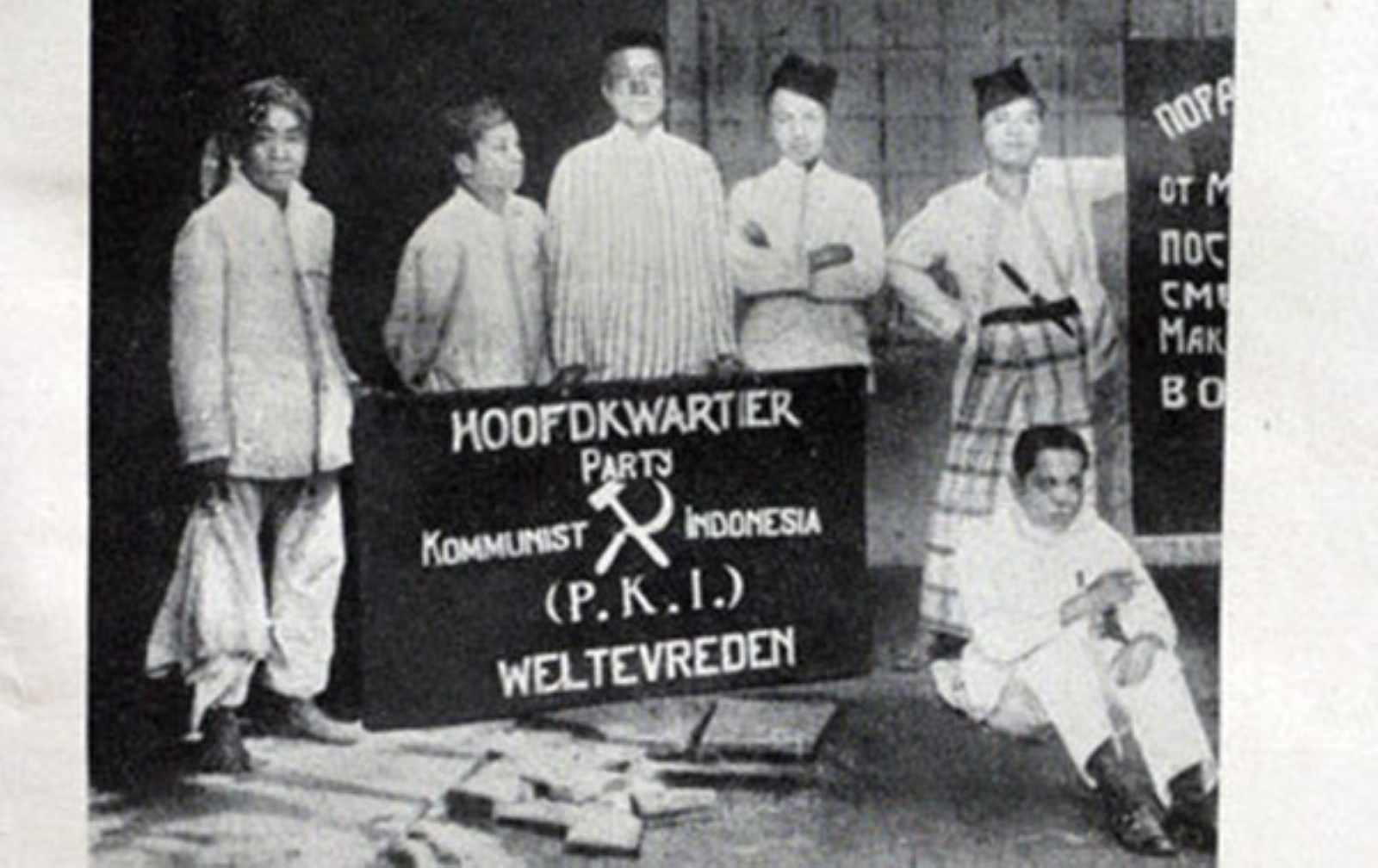
‘The Sharpening of the Class War in Indonesia’ by P. Bergsma from International Press Correspondence. Vol. 5 No. 18. March 5, 1925.
In the month of January on the island of Java, numerous comrades were wounded. and some killed at several communist meetings, because the police made use of their weapons in the attack against the population.
These acts of terror began in Bandoeng where an assembly of 1500 communist workers and peasants refused to obey an order to disperse. The police dispersed the assembly, consisting of men and many women, by force of arms, with the result that there were several wounded on each side. The bourgeois press expressed great satisfaction and hoped that this disgraceful behavior of the police would intimidate the revolutionaries. It had however an exactly opposite effect, for about a fortnight later the Communist Party held protest meetings against the measures of the government, which had suspended communist schools. The enormous attendance at these meetings showed how greatly the population are interested in communist schools and how great is the embitterment against the government. At these meetings the hatred of the people against the foreign yoke was expressed in the strongest terms.
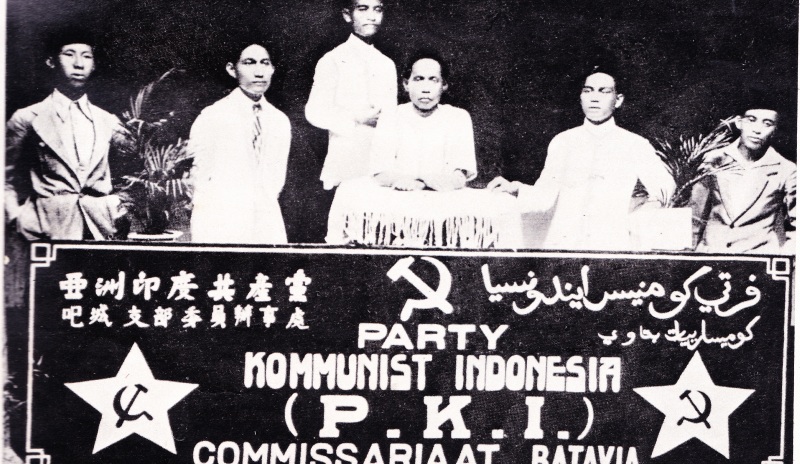
This also occurred in Ngawi, a small place in the interior of the island of Java, at a meeting attended by about 2000 workers and peasants, at which the government was severely criticized. The police went so far as to attempt to arrest one of the speakers during this meeting, which was immediately violently resisted by the crowd. In the struggle several of the police were wounded with knives and one of the revolutionaries shot, another was cut down with swords, besides this 30 revolutionaries were wounded: The police were immediately reinforced by auxiliary troops from the nearest town of Madioen.
The police also roughly interfered in other places, with the result that there were many wounded on both sides. In Tjiamis a speaker was arrested, hundreds. of women had to flee before the superior force, and the building in which the meeting was held was destroyed. Protest meetings were also held in the capital city Batavia. and in Meester-Cornelis. With this barbarian behavior of the police the colonial policy of the government entered a new phase. The police had, it is true, previously harried the speakers, and now and then threatened to dissolve this or that meeting, but armed attacks, such as now occur, had not happened before.
In the year 1918 and previously, the government, on the basis of existing laws, had formally granted the police the right to call the speakers to order. The growing revolutionary movement had forced the government to alter the right of assembly in a way which was favourable to the population, so that formally the police themselves had to come before the Court when they had unduly interfered. The Chief of Police has, however, cancelled the right of assembly by instructions issued to his subordinates. It soon became evident in practice that the right was only on paper, as the police molested the meetings in the old way and were sly enough to give false reports as to what had been spoken, thus giving the Court an argument for throwing the leaders into prison.
This had gone on since 1918 until quite recently without the government in any way attaining its aim. On the contrary, the public interest in political questions grew, more and more workers and peasants took part in the meetings, and the leadership remained in the hands of the Communists. At the same time the economic situation steadily grew worse. The increasing number of unemployed received no allowances, they were simply left to starve. Many Europeans who, for long time had good posts in the plantations, are now, with their families, in the greatest distress and live in huts without bedsteads or other furniture.
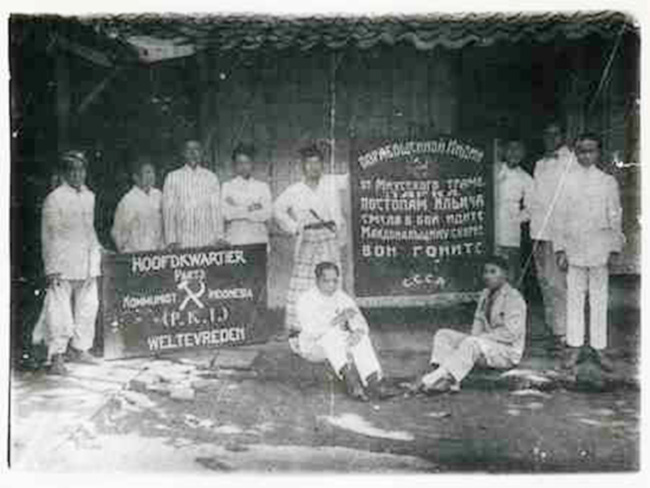
As the political and economic factors favour the growth of a revolutionary movement, and the Communist Party of Indonesia knows how to make the best of the situation, our influence over the masses is increasing. For this reason the bourgeois press has raised a volley of abuse against the communist danger.
The trade unions are also increasing their numbers. In December 1924, a national organisation of transport workers, seamen and dock workers was founded, which unites the already existing associations. At the opening of the Congress in Soerabaya more then 5000 workers were present. This organisation is also affiliated to the seamen’s organisation founded in Amsterdam with about 1300 members. Nearly all the leaders of the trade unions of the natives are communists. Comrade Gonhdojoewono, also a communist, who has served a four year’s sentence, was elected chairman and thereupon immediately arrested and imprisoned by the police.
It is evident that, in spite of all the drastic measures of the law, the ruling classes have not succeeded in suppressing the revolutionary movement in Indonesia, and that, along the whole line, an enormous growth of the revolutionary forces is to be observed.
This is reflected in the nervous attitude of the ruling classes and their servants who. now, all over the country, are using their arms with increasing effrontery. But the fact that the population is not intimidated by deeds of force and is not afraid, if necessary, to defend itself with weapons, proves that the old spirit of slavery is disappearing, and that the population of Indonesia, numbering millions, is beginning to be conscious of its power. All this justifies us in anticipating with confidence a further development of affairs of Indonesia.
After the completion of the above article news has been received that the government has limited the right of assembly, in fact, has practically suspended it. Persons under 18 are forbidden to attend political meetings, and the chairman of the meeting or of the organisation which has called the meeting; is held criminally responsible for seeing that this prohibition” is carried out. Persons under 18 must be turned out by the police, who further have the right to suspend the whole meeting. As, in spite of 300 years of “cultural work” on the part of the Dutch imperialists, no regular register exists in Indonesia, and as the date of birth of most of the workers and peasants is officially unknown, the regulation that persons to whom objection is raised, must, at the meeting, be able to bring evidence that they are over 18, is in effect a mere mockery!
The revolutionary will of the masses can, at the present day, no longer be held in bounds by such measures. The government is playing a dangerous game. A tremendous struggle of the masses against this colonial terror is setting in, and will be continued until the liberation of the workers from the yoke of the bourgeoisie is accomplished.
International Press Correspondence, widely known as”Inprecorr” was published by the Executive Committee of the Communist International (ECCI) regularly in German and English, occasionally in many other languages, beginning in 1921 and lasting in English until 1938. Inprecorr’s role was to supply translated articles to the English-speaking press of the International from the Comintern’s different sections, as well as news and statements from the ECCI. Many ‘Daily Worker’ and ‘Communist’ articles originated in Inprecorr, and it also published articles by American comrades for use in other countries. It was published at least weekly, and often thrice weekly. The ECCI also published the magazine ‘Communist International’ edited by Zinoviev and Karl Radek from 1919 until 1926 monthly in German, French, Russian, and English. Unlike, Inprecorr, CI contained long-form articles by the leading figures of the International as well as proceedings, statements, and notices of the Comintern. No complete run of Communist International is available in English. Both were largely published outside of Soviet territory, with Communist International printed in London, to facilitate distribution and both were major contributors to the Communist press in the U.S. Communist International and Inprecorr are an invaluable English-language source on the history of the Communist International and its sections.
PDF of full issue: https://www.marxists.org/history/international/comintern/inprecor/1925/v05n18-mar-05-1925-inprecor.pdf
 Revolution's Newsstand