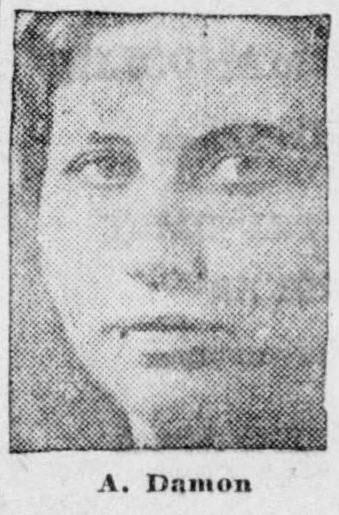
‘Women’s Role in the National Hunger March’ by Anna Damon from the Daily Worker. Vol. 8 No. 267. November 6, 1931.
The misery of the unemployed working women and girls thruout the country in the third year of the capitalist crisis has now reached new depth with the official federal and municipal government still refusing to give unemployment relief to the 12 million starving workers and their families.
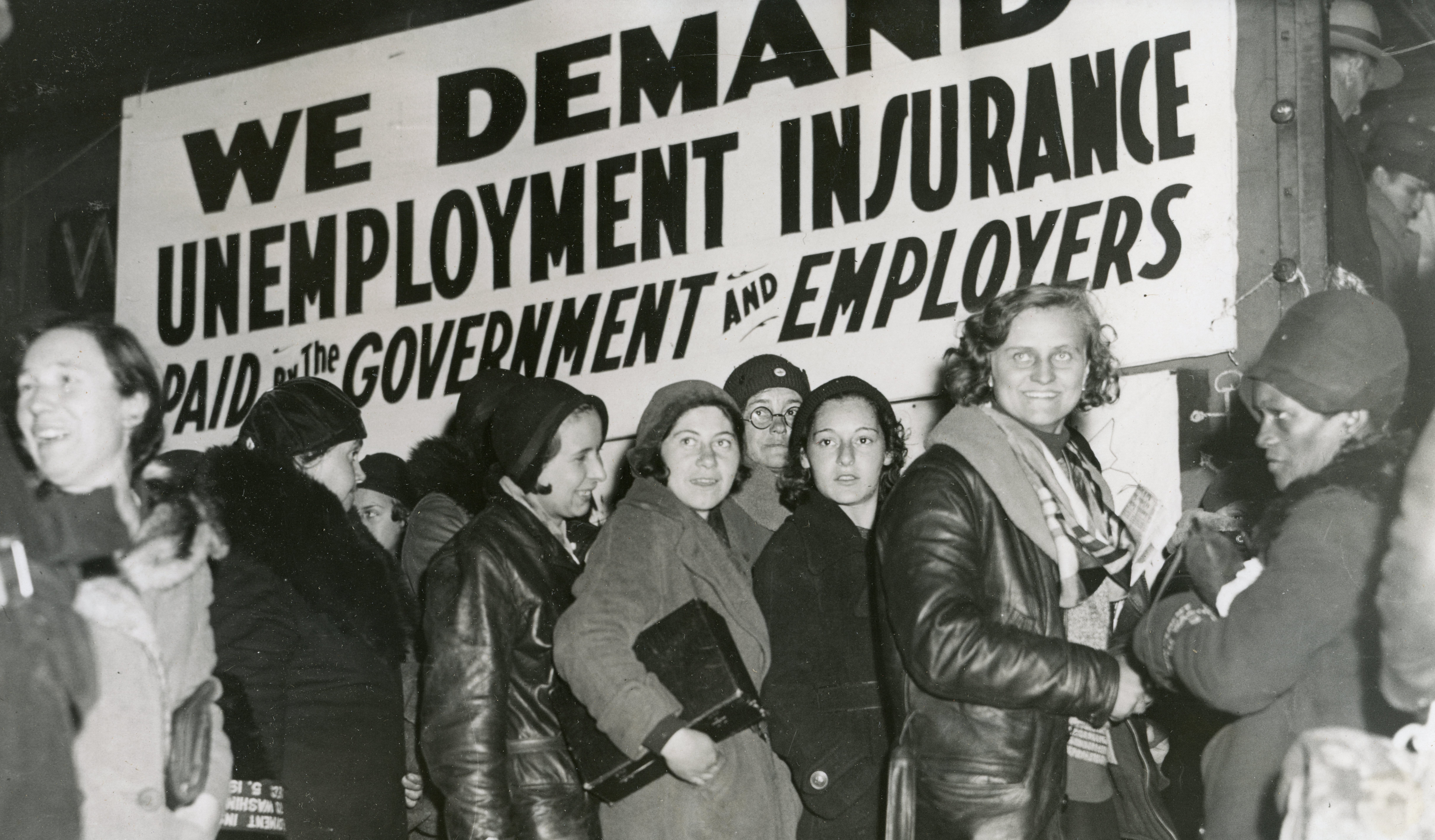
Slow gnawing hunger saps the vitality and Ute of the women workers, reducing them to physical and nervous wrecks. The fear of having no root over their heads leaves its tell-tale marks on the unemployed women. Furtive, silent hiding in dark insanitary places, ashamed to reveal their misery—capitalism has taught them they must hide their misery, for they are women. Mothers of children have no milk or food for their babies. The children of the unemployed working women are dying by the thousands. Sickness and misery among the families of the working class is on the increase. More than one-tenth of the working class unemployed consists of unemployed working women.
In New York City alone, out of a total of 1,000,000 unemployed workers, at least 135,000 are working women and girls. Many of these jobless women are the sole supporters of families of themselves and three years of unemployment crisis has placed upon them such cruel miseries as have never before been seen.
Forced ruthlessly into ever lower standards of living, thousands of working women are bewildered and crazed by the daily grind of a slow hunger, despair and the fear of eviction or personal degradation. So strong is the misery of the unemployed working women that they seek away out of self-destruction or abandonment to degradation in this situation working women, employed and unemployed, must join in the great struggle of the Unemployed Councils, and the Trade Union Unity League and the Communist Party for unemployed Insurance, against evictions, and for immediate cash relief of jobless women and girls, colored and white, married and unmarried.
More than ever before working women of all races must plunge into the election campaign of the Communist Party to strengthen the fight for Unemployment Insurance, against wage-cuts, part time work and speed-up, against discrimination and lower wages for colored women, against dismissals of married women.
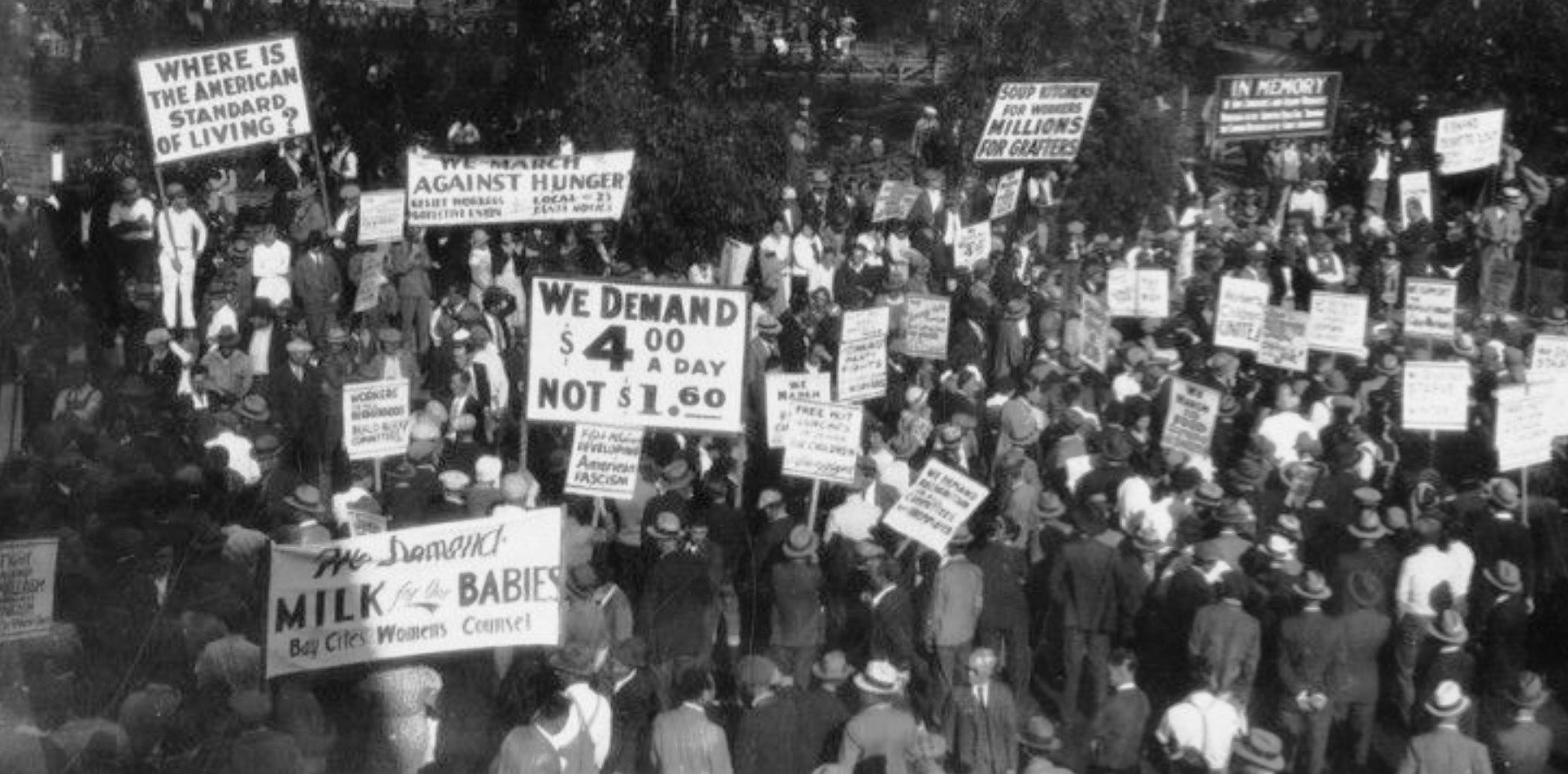
The Communist Party is the only political Party in the United States that lights in the interest of the working class. It is the only Party that has taken steps to organize the American workers to force the U.S. federal and municipal government to give some relief to the millions of starving workers and their families.
The relief given to the workers so far has been very meager charity relief—but even that would not have been granted if not for the determination and militancy of the workers under the leadership of the Communist Party, the Trade Union Unity League and the Councils of the Unemployed.
Recognizing this fact the workers and especially the women of the working class must throw their full support and energy in mobilizing for the National Hunger March to Washington on December 7. The National Hunger March which will be preceded by local hunger marches must have among its ranks hundreds of women’s organizations, must go hand in hand with the mobilization of the masses of women for the public hearings conducted by the TUUL.
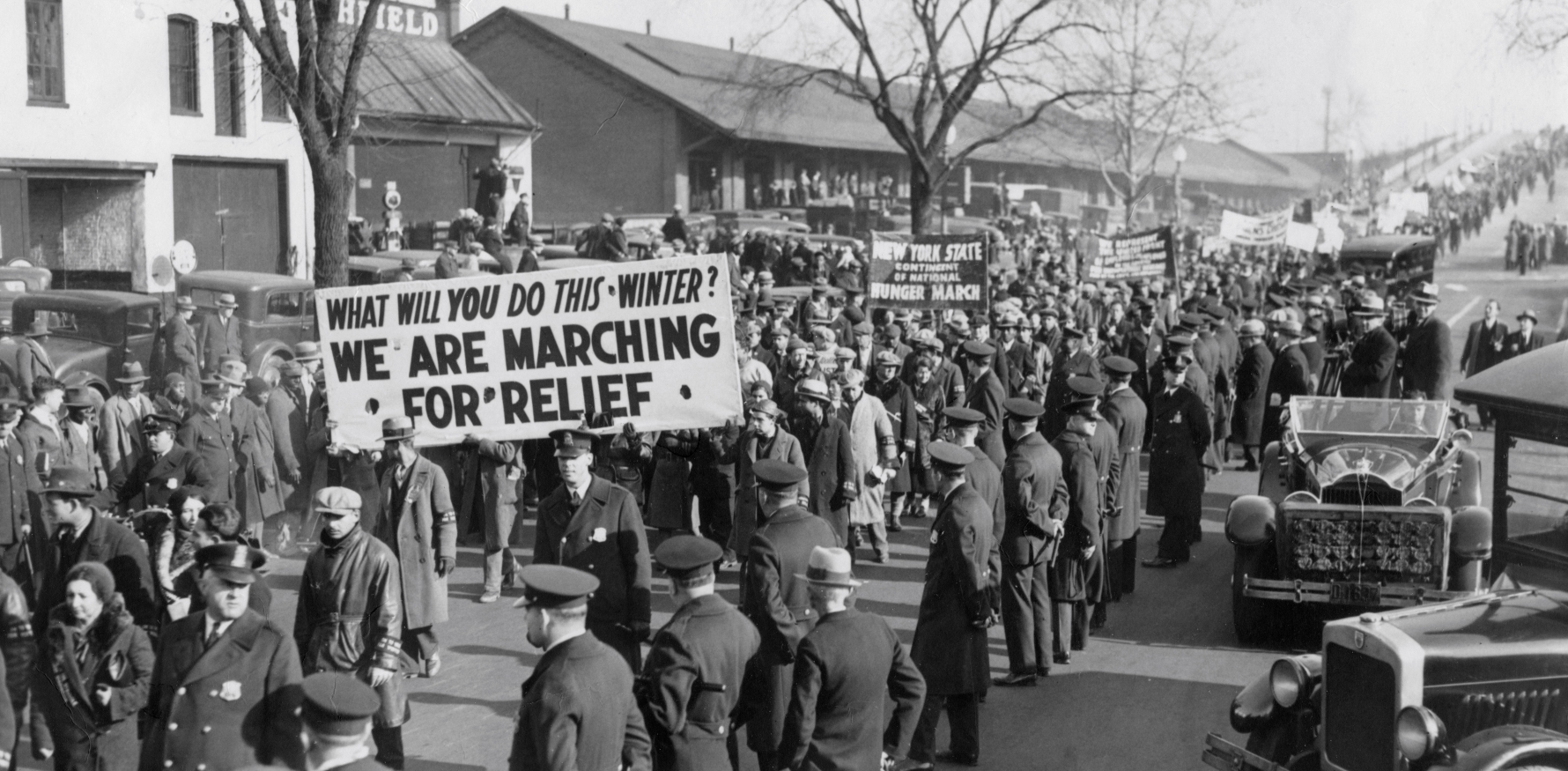
In connection with the drawing of women in the struggle for unemployment relief and participation in the public hearings, State and National hunger marches the district women’s departments of the Party must be strengthened and the methods of work among women employed and unemployed placed on the basis of mobilization for day to day demands.
Masses of working women and housewives, especially wives of unemployed workers, can be organized around issues that immediately affects them as well as general demands as exemplified in the Pittsburgh and Cleveland school demands activities, this task has been neglected and overlooked by the Unemployed Councils.
At the same time Individual working women have proved militant fighters in the front ranks of the unemployed, in local demonstrations for immediate relief, in the fight on evictions. Unfortunately, however, our women comrades themselves did not raise and develop women’s issues to mobilize women jobless and housewives around specific concrete issues.
The district women’s departments should without delay draw up a plan of work among the unemployed women and wives of unemployed workers. Especially in connection with the public hearings and the National Hunger March. The program of immediate work to be realistic. The tasks to be those that can be accomplished rather than what the department would like to accomplish.
TASKS TO BE CONSIDERED.
1) How to mobilize the working class women (non-party) for participation in the public hearings.
2) How best to activate the trade unions and other mass organizations of women for participation and support in the local and National Hunger Marches.
3) To develop and extend the struggles for immediate demands for school children of the unemployed, part-time employed workers.
4) Initiating and developing protest movements. boycotts, rent strikes, against high cost of living, gas, electric and rents.
5) Drawing women into the councils of unemployed and into direct leadership of the councils. Toward the building of house and block committees paying special attention to Negro women.
6) Formulating and embodying into the unemployed and social insurance demands, special local women’s demands
7) Recruiting Negro and Industrial women into the Communist Party.
8) Building the “Working Women” into a mass paper.
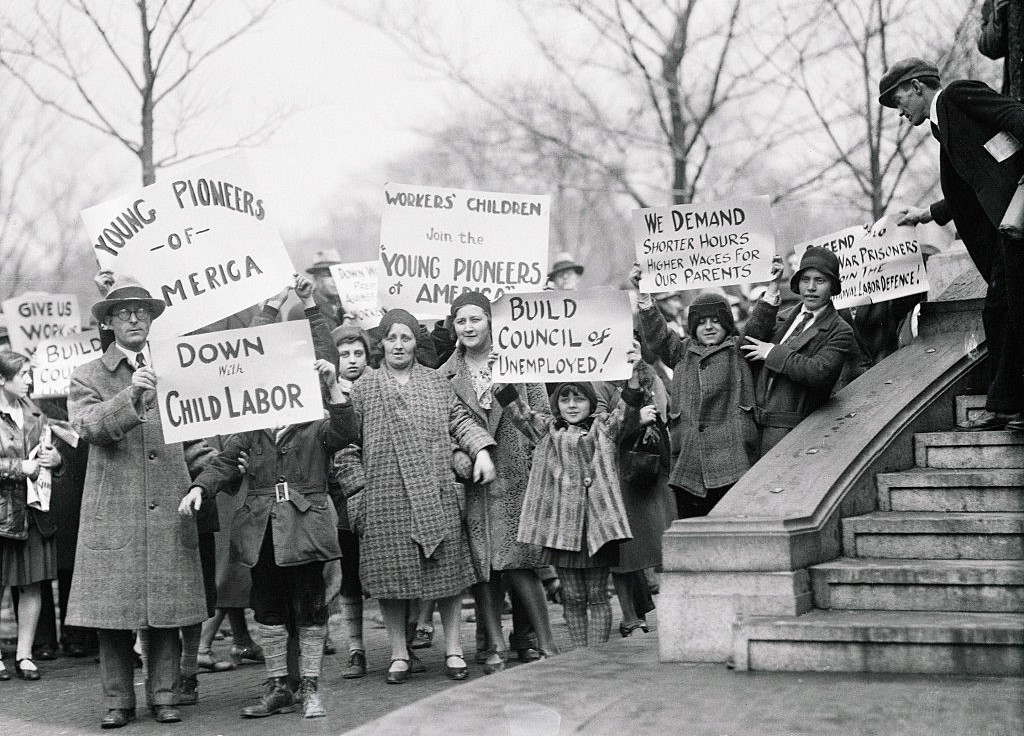
The great response and readiness of the working women to follow the lead of the Communist Party and the revolutionary unions has already been proven through their militant participation in the recent strikes in the textile, Lawrence, Paterson, in the mining areas in Pittsburgh and the South, in the needle trades strikes and so forth.
We have also seen in recent months the active participation of the working class women for the struggle of Negro rights in the Scottsboro campaign. In Chicago, Cleveland struggles against evictions, and the South.
The masses of women are eager and ready to follow the Party and the revolutionary unions. It is due to our organizational shortcomings and general underestimation of importance of work among women that we have today so small a number of Industrial and Negro women in the Party and in the Industrial unions.
The correct carrying through of mass work among women in the struggle for Unemployment Insurance and the mobilization of the masses of women for the National Hunger March and above all the organizational results for the Party and the councils of the unemployed, will be successful with the proper political and organizational guidance by the District Committees.
SPECIAL WOMEN’S AND CHILDREN’S DEMANDS.
1) Equal Unemployment Insurance for men and women workers.
2) Equal Unemployment Insurance for all single and married, Negro and white women workers.
3) Unemployment winter relief for wives of workers (non-industrial equal to that of adult dependents).
4) No dismissals of married women.
5) Special medical care for unemployed pregnant women at the expense of the state.
6) Special free municipal lodging houses for unemployed women.
7) Free hospital care, curing, confinement and two weeks after confinement for mother and child —for Negro and white unemployed women.
8) Free food, clothing and shoes for children of unemployed and part time employed workers.
9) Free car fare, school supplies and transportation for the children of the unemployed.
10) Free medical care and dental work for the children of the unemployed.
The Daily Worker began in 1924 and was published in New York City by the Communist Party US and its predecessor organizations. Among the most long-lasting and important left publications in US history, it had a circulation of 35,000 at its peak. The Daily Worker came from The Ohio Socialist, published by the Left Wing-dominated Socialist Party of Ohio in Cleveland from 1917 to November 1919, when it became became The Toiler, paper of the Communist Labor Party. In December 1921 the above-ground Workers Party of America merged the Toiler with the paper Workers Council to found The Worker, which became The Daily Worker beginning January 13, 1924. National and City (New York and environs) editions exist
PDF of full issue: https://www.marxists.org/history/usa/pubs/dailyworker/1931/v08-n267-NY-nov-06-1931-DW-LOC.pdf
 Revolution's Newsstand